Ontario's provincial bird is the common loon (Gavia immer), officially designated as the province's "avian emblem" under the Avian Emblem Act, 1994 (S. Nova Scotia’s provincial bird is the common tern provincial bird of Nova Scotia. O. 1994, c. 15). The designation became official on June 23, 1994, making the loon a formal legal symbol of Ontario, not just a popular association.
What Is the Provincial Bird of Ontario?

Marcus Webb
19 May 2026

Is it actually official? What the law says

Yes, it's fully official. The exact wording in the Avian Emblem Act reads: "blank" rel="noopener noreferrer">The bird known as the common loon (Gavia immer) is the avian emblem of the Province of Ontario." That language matters. Ontario didn't just informally adopt the loon through popular vote or tradition. The provincial legislature passed a specific act that enshrined it in law. Before 1994, Ontario had no official bird at all. The Legislative Assembly of Ontario confirms that the province went without one until the Avian Emblem Act filled that gap. what is the provincial bird of british columbia.
The term "avian emblem" is the statute's own wording, though the Government of Canada's official symbols resource and the Legislative Assembly of Ontario both use the phrase "official bird of Ontario" interchangeably when describing the designation. If you are also curious about the provincial bird of Prince Edward Island, that is a related question you can look up next. Either way, the legal foundation is solid: this is a provincial statute, not a marketing campaign or a school contest.
How to recognize the common loon
The common loon is a large, heavy-bodied diving bird that sits low in the water. In breeding plumage, which you'll see across Ontario from late spring through summer, the field marks are unmistakable: a jet-black head and bill, a boldly checkered black-and-white back, a white breast, and a distinctive black-and-white striped collar around the neck. Adults in this plumage look almost formally dressed.
Outside of breeding season, the plumage shifts to a drabber gray-brown above and white below. In winter or on immature birds, look for a pale collar, a white spur extending into the dark neck, and the thick, dagger-like bill that distinguishes the common loon from smaller diving birds. The bill alone is one of the most reliable field marks year-round.
Sound is often how you know a loon before you see it. The call most people recognize is a loud, echoing wail, but loons also produce a yodeled oo-AH-ho (used mainly by males defending territory) and a shorter kee-a-ree call. On a quiet Ontario lake at dusk, that wailing call carries a long distance and is one of the most distinctive sounds in North American birding.
Key field marks at a glance
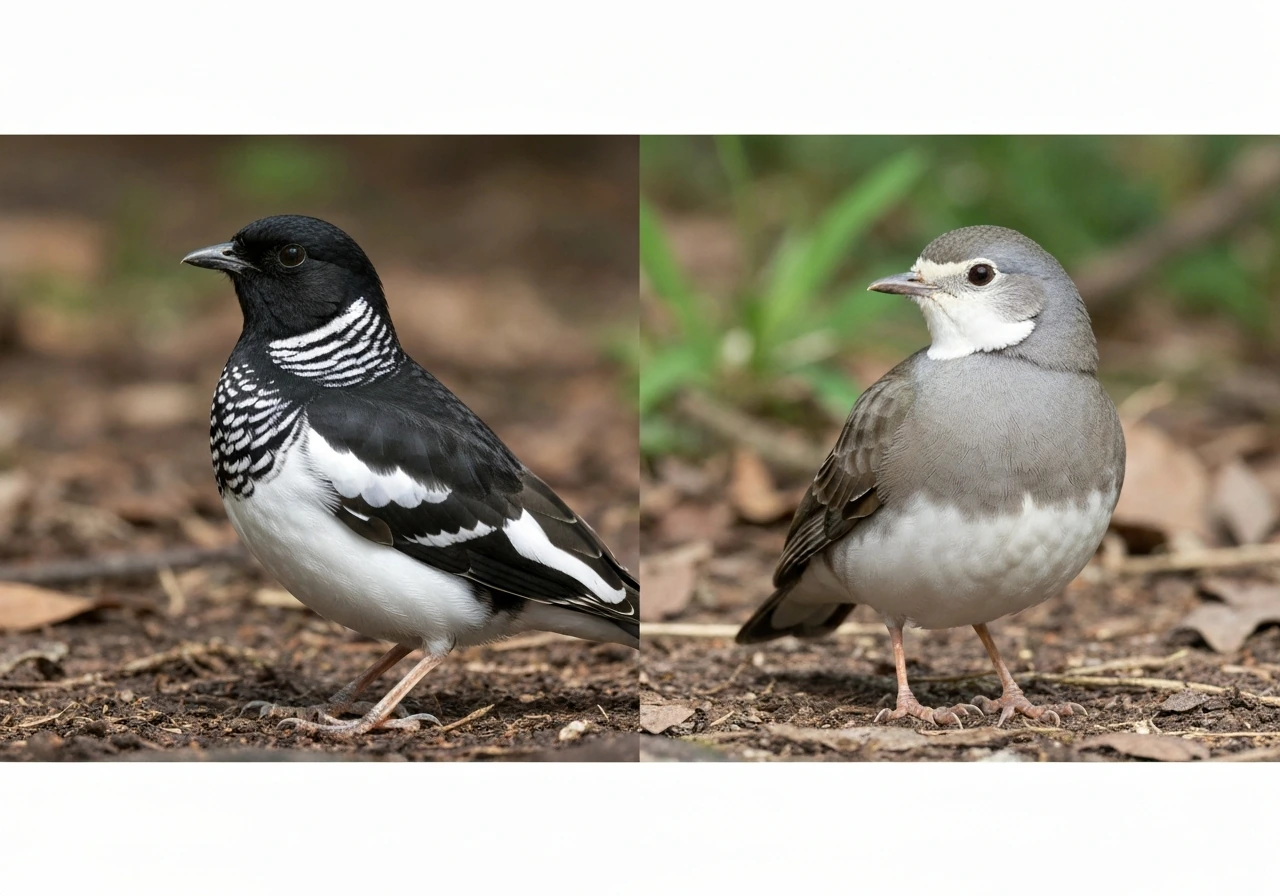
- Breeding: black head and bill, black-and-white checkered back, white breast, striped neck collar
- Non-breeding: gray-brown above, white below, pale collar, white neck spur
- Year-round: thick, straight, dagger-like bill; sits very low and flat on the water
- In flight: hunchbacked silhouette with feet trailing behind the tail
- Voice: loud wailing call, yodeled oo-AH-ho, and shorter contact calls
Where you'll find loons in Ontario
Ontario is prime loon territory. Common loons breed on clear, fish-rich lakes across the province, and Ontario has an enormous number of those. Their range spans broadly across Canada and into the northernmost United States, but Ontario sits squarely in the heart of that breeding range. You're most likely to encounter them on larger inland lakes with good water clarity, since loons hunt by diving and need to see their prey.
Cottage country in central and northern Ontario, including the Muskoka, Haliburton, and Algonquin regions, offers reliable loon sightings throughout the summer. Birds Canada established the Canadian Lakes Loon Survey in Ontario in 1981, specifically because Ontario's lake systems represent such a significant portion of the species' breeding habitat. In migration, loons also pass through southern Ontario and can show up on larger bodies of water including the Great Lakes.
Why Ontario chose the loon
The choice makes complete cultural and ecological sense. The common loon is deeply embedded in the identity of Ontario's lake country. Its image appears on the Canadian dollar coin (the "loonie"), and its wailing call is practically synonymous with the experience of a summer evening at a Canadian lake. For a province with hundreds of thousands of lakes and a strong outdoor and cottage culture, the loon was the obvious candidate.
The legislative push came in 1994. Hansard records from the Legislative Assembly show that prior to the Avian Emblem Act, Ontario had no official avian designation, a gap that lawmakers moved to close. The bill passed and received royal assent on June 23, 1994. The designation was a recognition of a bird that Ontarians already closely identified with, formalized into provincial law.
Ontario isn't alone: which other places share the loon
The common loon is also the official state bird of Minnesota, designated under Minnesota statute 1.145, which reads: "The loon, Gavia immer, is the official bird of the state of Minnesota." That makes Ontario and Minnesota the two major jurisdictions in North America that have chosen the same species as their official bird symbol. The shared choice reflects geography: both places are defined by lake-dotted landscapes where loons are a prominent and beloved presence.
| Jurisdiction | Official Bird | Species | Year Designated |
|---|---|---|---|
| Ontario (Canada) | Common Loon | Gavia immer | 1994 |
| Minnesota (USA) | Common Loon | Gavia immer | 1961 |
Other Canadian provinces have taken different routes with their bird emblems. South Australia, meanwhile, uses a different bird emblem than Ontario's common loon what is the bird emblem of south australia. British Columbia, Nova Scotia, Prince Edward Island, and Saskatchewan each have their own distinct provincial bird designations, reflecting the different landscapes and wildlife of those regions. Saskatchewan's provincial bird is also an officially designated symbol under provincial law.
Prince Edward Island also has an official provincial bird, and it is designated in law. Nova Scotia’s provincial bird is also officially designated, and it’s a different species than Ontario’s common loon provincial bird of nova scotia. British Columbia’s provincial bird is the Anna’s hummingbird provincial bird of British Columbia. Queensland also has an official bird emblem, which is used to represent the state in an official, symbolic way bird emblem of Queensland.
Ontario's choice of the loon stands out as one with the strongest cross-border resonance, given the Minnesota connection, and one of the most culturally loaded picks of any jurisdiction in the country.
FAQ
Is Ontario’s provincial bird officially designated in law, or just a popular symbol?
Yes, it has legal status. The Avian Emblem Act, 1994 specifies the common loon as Ontario’s “avian emblem,” and the statute text is what makes it official, not a ballot result or tradition.
Did Ontario have a provincial bird before 1994?
Ontario did not have an official bird designation before 1994. The Avian Emblem Act filled that gap by creating a formal, province-wide symbol.
Why do some sources call it “avian emblem” while others say “official bird”?
The law uses the term “avian emblem,” while some government or reference sources describe the same designation as the “official bird.” They point to the same statutory designation, so you can treat them as synonymous for practical purposes.
How can I tell a common loon apart from other diving birds when it is not in breeding plumage?
If you want to identify one in the field, focus on the combination of a thick, dagger-like bill and the collar pattern. In non-breeding or immature plumage, the bill shape and pale collar or neck spur are often more reliable than the color pattern alone.
What loon call should I listen for if I want to confirm I am hearing a common loon?
Loons produce multiple calls, but the loud, echoing wail is the most recognizable at dusk. The yodeled oo-AH-ho is commonly associated with territorial behavior, so you might hear it when loons are actively defending a lake or section of shoreline.
Where in Ontario are common loons most likely to be seen, and what lake conditions help?
Your best chances are on larger inland lakes with good visibility and clear water, because loons hunt by diving and need to see prey. Smaller, muddy, or heavily stained water bodies are less likely to produce reliable sightings even if loons are present.
When is the best time of year to see and identify the common loon in Ontario?
Late spring through summer is usually the easiest time to match plumage, because breeding adults have the crisp black-and-white checkered back and the bold striped neck collar. In winter or on immature birds, expect a more subdued gray-brown look above, with more emphasis on bill shape for identification.
Is Ontario’s provincial bird the same thing as a general provincial emblem, or is it specific to birds?
People often ask about “provincial bird” versus “provincial emblem” generally. In Ontario’s case, this specific symbol is created through the Avian Emblem Act, and the loon is the avian emblem named in that law.
Why do Ontario and Minnesota share the same bird symbol?
Minnesota also designated the common loon as its official state bird. If you are looking for the reason for the cross-border connection, it is largely tied to shared lake-dotted landscapes and the loon’s strong cultural presence in both regions.
Next Articles
Which Is Karnataka State Bird? Identification and Facts
Discover Karnataka’s official state bird, key ID traits, where to spot it, and why it was chosen.
What Is the Telangana State Bird? Official Bird and How to Spot It
Discover Telangana’s official state bird, key traits to spot it, and why it was chosen, with quick context.
What Is Andhra Pradesh State Bird? ID and Habitat Guide
Learn the Andhra Pradesh state bird, how to identify it, its habitat, and tips to spot it in the wild.