
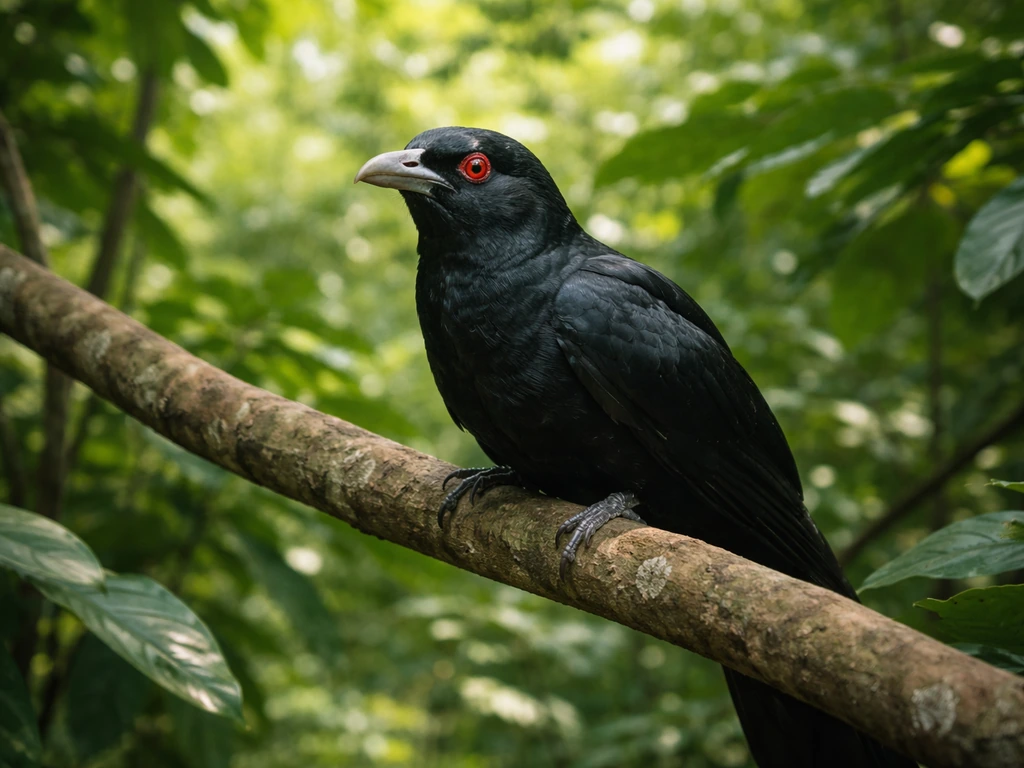
The state bird of Jharkhand is the Asian Koel (Eudynamys scolopaceus), also commonly called just "Koel." This is confirmed on the official Government of Jharkhand website, the Jharkhand Biodiversity Board, and district-level government portals. One quick note before diving in: Jharkhand is a state in eastern India, not one of the 50 U.S. states, so if you were actually searching for a U.S. state bird, you'll want to scroll down to the "Related searches" section at the end of this article.
What Is the State Bird of Jharkhand? Answer and Details

Marcus Webb
9 Jun 2026
Jharkhand is not a U.S. state, here's why that matters
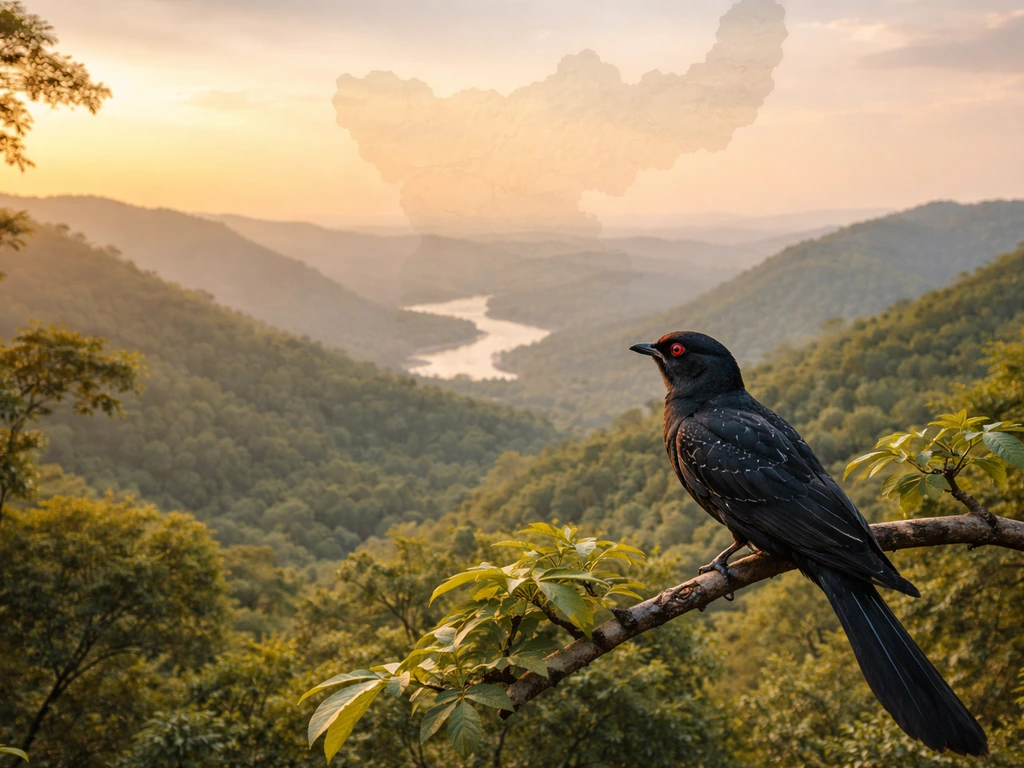
This site is primarily a reference for the official state birds of all 50 United States, so it's worth being upfront: Jharkhand does not appear on any U.S. state bird list because it is an Indian state, carved out of Bihar in 2000. If you arrived here looking for the state bird of a U.S. state with a similar-sounding name or by accident, the related lookup pages at the bottom of this article will point you in the right direction. If you were specifically looking for Jharkhand's official state bird, you're in exactly the right place.
The official state bird: Asian Koel
Jharkhand's official state bird is the Asian Koel, scientific name Eudynamys scolopaceus. The Jharkhand Biodiversity Board’s “State-Symbol-of-jharkhand.pdf” lists the state bird as the Asian Koel and gives its scientific name as Eudynamys scolopaceus. You'll see it listed in government documents under several names: "Koel," "Asian Koel," and occasionally just "Cuckoo" (which reflects its family membership, as the koel is a member of the cuckoo family Cuculidae). All three names refer to the same species. The scientific name is consistently given as Eudynamys scolopaceus across the state government's own pages and the Jharkhand Biodiversity Board.
| Detail | Information |
|---|---|
| Common name | Asian Koel / Koel |
| Alternate name | Common Koel, Cuckoo |
| Scientific name | Eudynamys scolopaceus |
| Family | Cuculidae (cuckoo family) |
| Official status | State Bird of Jharkhand (Government of Jharkhand) |
How to recognize the Asian Koel
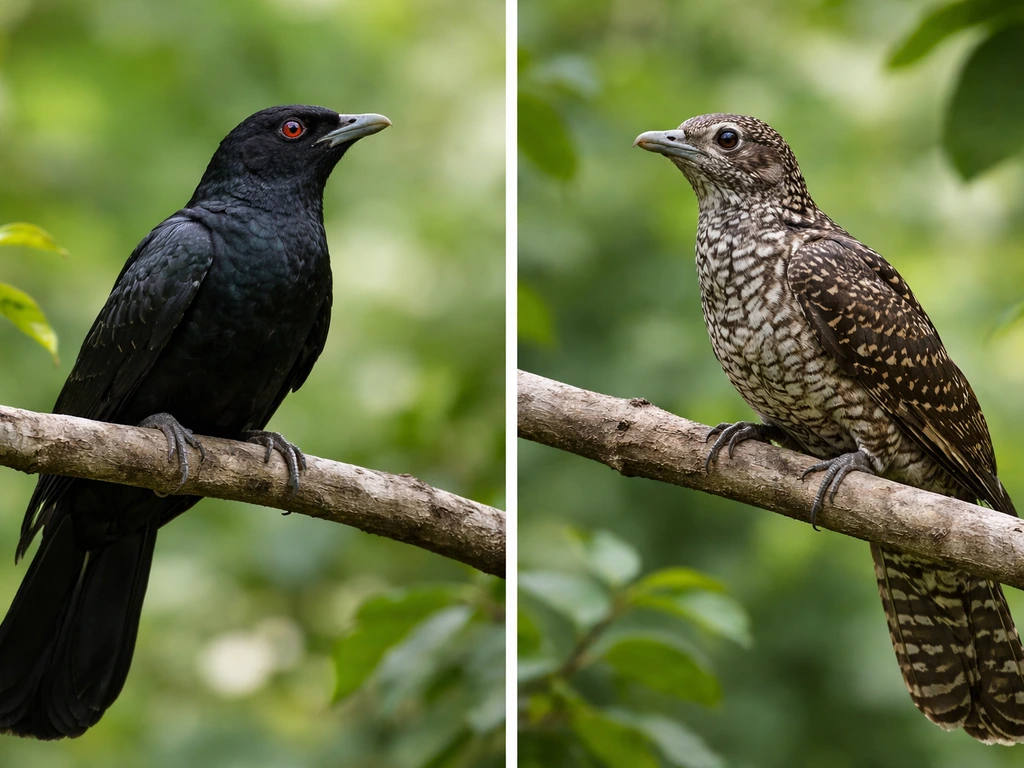
The Asian Koel is a medium-to-large bird, measuring roughly 40 to 44 cm from bill to tail tip. Males and females look completely different from each other, which is unusual enough to be a useful field-ID clue on its own.
Male vs. female plumage
- Male: Entirely glossy black with a greenish sheen across the body and wings. The eye is a bright crimson-red, which stands out sharply against the dark plumage.
- Female: Brown overall with heavy white spotting and streaking across the upperparts, and barring on the underparts. Much easier to confuse with other species than the male.
- Both sexes: Long, slightly curved, pale yellowish bill and a fairly long tail.
Behavior and habitat
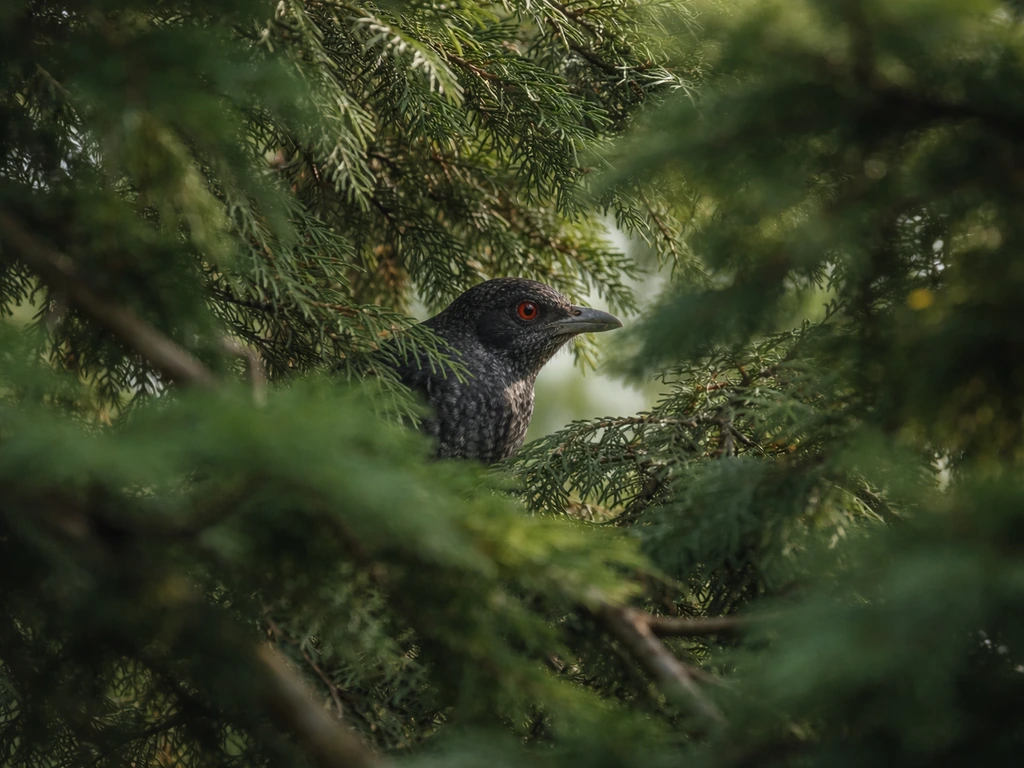
The koel is famously secretive. It tends to stay hidden deep within the canopy of dense trees, which means you'll usually hear it long before you see it. The call is the most reliable way to locate one: a rising, repetitive "ko-el" or "ku-wee" that builds in pitch and intensity. The name "koel" is itself onomatopoeic, derived directly from this call. The species occupies wooded areas, gardens, and forest edges across South and Southeast Asia. In Jharkhand specifically, they've been documented in forested divisions like Koderma and in bird-rich habitats around Udhwa Lake Bird Sanctuary in Sahebganj district.
Why Jharkhand chose the Koel
Jharkhand was formed as a separate state from Bihar on November 15, 2000, and the Asian Koel was designated as its state bird as part of establishing the new state's official symbols. The koel has deep cultural roots across the Indian subcontinent. Its call has been referenced in classical Sanskrit poetry, Hindi literature, and folk traditions for centuries, often associated with the arrival of spring and the mango blossom season. In many Indian traditions, the koel's song is considered auspicious and beautiful, giving it an emotional and cultural weight that made it a natural choice as a state symbol. Its presence throughout Jharkhand's forests and rural landscapes also made it ecologically representative of the region.
Other places that share the same state bird
Jharkhand is not the only jurisdiction to have chosen the Asian Koel as an official symbol. The Union Territory of Puducherry (also in India) shares the same state bird designation. This kind of overlap is not unusual in state-symbol designations, whether in India or in the United States, where multiple states often adopt the same popular species. For example, the Northern Cardinal is the official state bird of seven U.S. states. The Asian Koel is not the state bird of any U.S. state, as its native range does not extend to North America.
Related searches and where to confirm official status
If you want to verify Jharkhand's state bird directly from official sources, the Government of Jharkhand's "About State" page and the Jharkhand Biodiversity Board website both list the Asian Koel with its scientific name. Those are the two most authoritative sources available.
If you actually meant to look up a U. S. state bird or an Indian state bird nearby Jharkhand, here are the most relevant lookups to explore next. Odisha, which borders Jharkhand to the south, has its own designated state bird.
If you’re trying to find it, the state bird of Odisha is listed in the same way as other Indian state symbols Odisha, which borders Jharkhand to the south, has its own designated state bird. . So do Assam, West Bengal, and other eastern Indian states. The state bird of Assam is the White-rumped Vulture (Gyps bengalensis).
For readers curious about other Indian state birds, the state birds of Sikkim, Arunachal Pradesh, Uttarakhand, and Maharashtra each have their own designations with interesting ecological and cultural stories behind them. The state bird of Arunachal Pradesh is the Great Indian Hornbill. You can find the answer in the state symbol information for Sikkim, which lists its official bird state birds of Sikkim.
You can find which is the state bird of maharashtra by checking the Maharashtra state bird page state birds of Sikkim, Arunachal Pradesh, Uttarakhand, and Maharashtra. The state bird of Uttarakhand is another good next stop if you want to compare India’s official bird symbols state birds of Sikkim, Arunachal Pradesh, Uttarakhand, and Maharashtra. Punjab and Rajasthan also have officially recognized state birds worth looking up if you're building out a regional comparison.
Rajasthan’s state bird is the Great Indian Bustard (Choridion/Ardeotis nigriceps). In Punjab, the state bird is the Northern Oriole the state bird of Punjab.
For U.S. state bird lookups specifically, this site covers all 50 states with individual pages for each bird, including identification details, why each state chose its bird, and which states share the same species.
FAQ
If I can’t see the bird clearly, how can I reliably confirm it is the Asian Koel?
Because the Asian Koel and some other koel-like birds can look similar in brief views, focus on the male's distinctive dark, iridescent plumage and the strong, repetitive call. In practice, the call is the most reliable cue since the bird often stays hidden in the canopy.
Do “Koel,” “Asian Koel,” and “cuckoo” refer to different birds in Jharkhand?
The “Koel” name is used informally, but official and conservation documents commonly standardize the species using the scientific name Eudynamys scolopaceus. If you see a different label such as “cuckoo,” treat it as a family-level descriptor unless the scientific name matches.
Is the Asian Koel only around in certain seasons in Jharkhand, or is it always there?
Jharkhand’s designation is for a state symbol, not a seasonal visitor. The Asian Koel is present across suitable wooded habitats, but you will usually notice it more during times when its calling is strongest, since that is when detection is easiest.
Where in Jharkhand should I go, habitat-wise, to have the best chance of hearing the state bird?
You are most likely to hear the call in dense trees and forest edges rather than open fields. Gardens and village tree lines can also work, so if you are birdwatching, target dawn and late afternoon listening in areas with mature canopy.
How do I avoid confusing Jharkhand’s state bird with other “koel” or cuckoo species?
Yes, related species or similarly named birds can cause confusion, especially if you search broadly online for “koel.” Verifying the scientific name (Eudynamys scolopaceus) is the quickest way to avoid mixing it up with other members of the cuckoo family.
What’s the best way to cite Jharkhand’s state bird for a report or exam?
Jharkhand does have a state bird designation, and it was adopted when the state was established in 2000. If you need a dependable primary reference for a school or quiz, use the Government of Jharkhand state-symbol page or the Jharkhand Biodiversity Board entry where the scientific name is shown.
Why doesn’t Jharkhand show up on U.S. state bird lists, even though it has an official state bird?
If you are actually looking for a U.S. state bird, Jharkhand will not appear on U.S. state-bird lists because Jharkhand is an Indian state. You can instead compare U.S. birds that share a similar theme, like songbirds, but the official state-bird system is separate.
Can I spot the Asian Koel in towns or cities within Jharkhand, or does it prefer forests only?
Asian Koels are generally associated with wooded habitats, so if you are in a very urban or deforested area with few large trees, you may hear fewer calls. Urban sightings are possible where mature trees and gardens provide cover, but the likelihood drops as canopy cover declines.