Yes, the roadrunner is an official U.S. state bird. New Mexico designated the Greater Roadrunner (Geococcyx californianus) as its state bird on March 16, 1949. It is the only U.S. state to claim a roadrunner as its official bird, and no other state uses the name or species in its designation.
Is the Roadrunner a State Bird? Which State Bird

Marcus Webb
3 May 2026
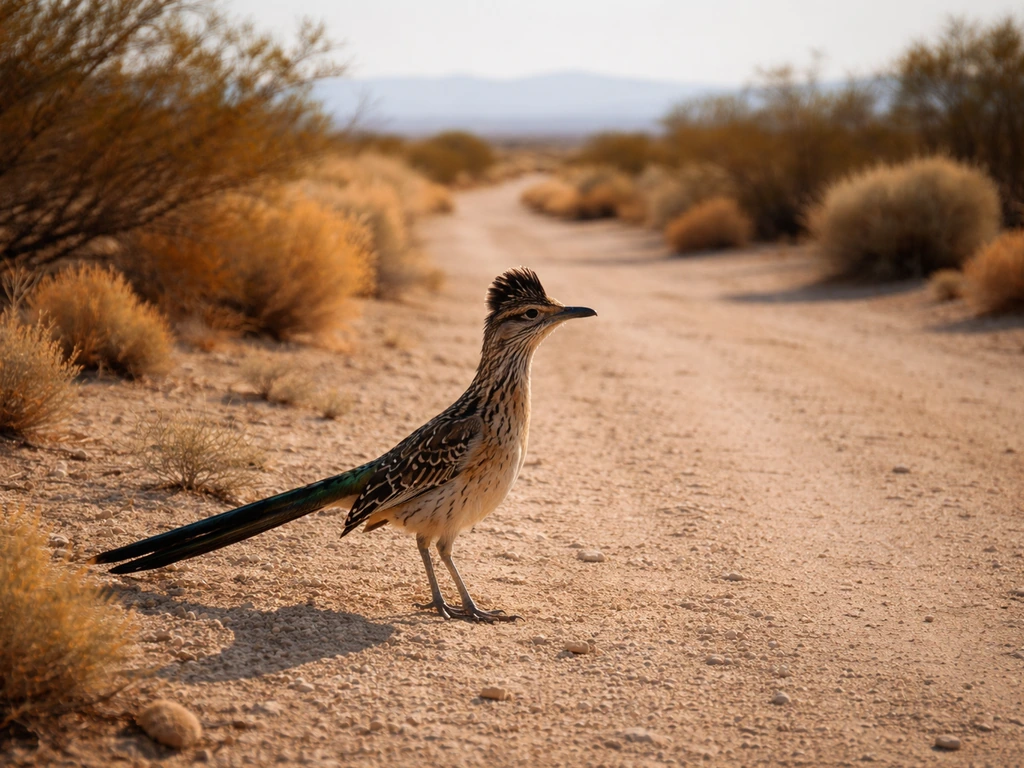
New Mexico's State Bird: The Greater Roadrunner
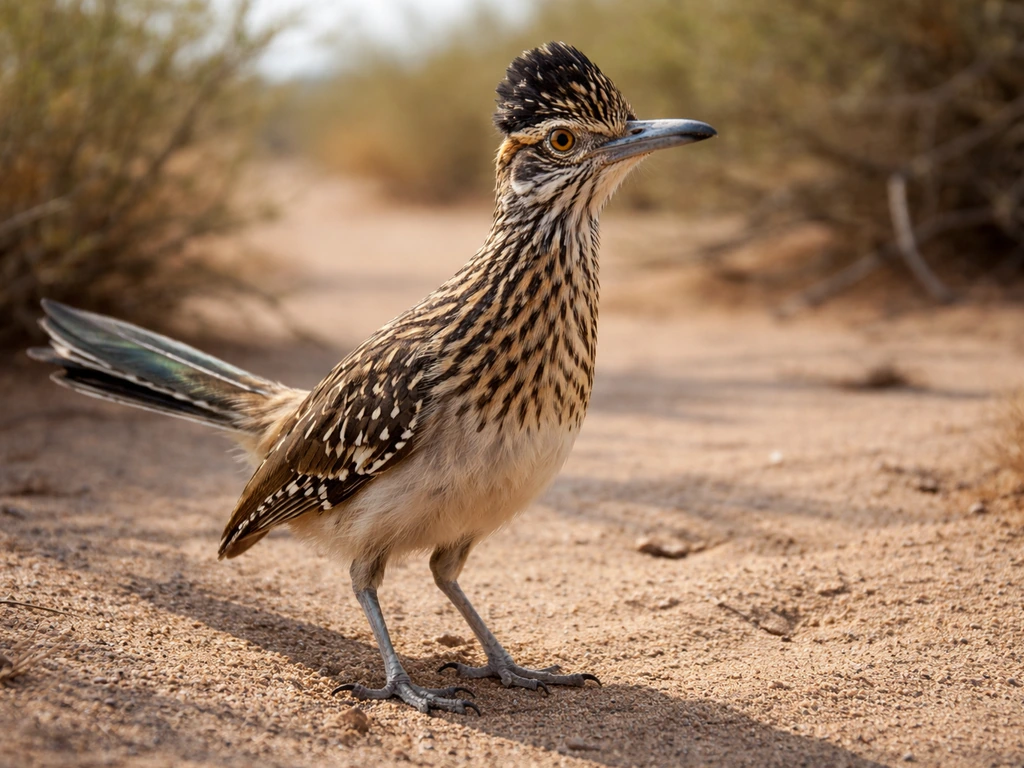
New Mexico's official state bird is the Greater Roadrunner, and the designation is enshrined in New Mexico Statutes Annotated (NMSA 1978, Section 12-3-4). Interestingly, the statute itself does not say 'Greater Roadrunner' outright. It calls the bird the 'chaparral bird, commonly called roadrunner,' which is actually one of the Greater Roadrunner's most widely used regional nicknames. The New Mexico Secretary of State's official symbols page uses 'Greater Roadrunner' as the primary name, alongside the scientific name Geococcyx californianus, so both names refer to exactly the same bird.
The U.S. National Park Service's White Sands National Park page also confirms the Greater Roadrunner as New Mexico's official state bird, so there is consistent agreement across state and federal sources. The adoption date of March 16, 1949, is listed on the Secretary of State's page. To go deeper on why New Mexico chose this particular bird, including its cultural significance to the region and its connection to the Southwestern desert landscape, the dedicated page on why the roadrunner is New Mexico's state bird covers that in full detail.
How to Identify a Greater Roadrunner (and Avoid Confusing It with Another Bird)
The Greater Roadrunner is hard to mistake once you know what to look for. It runs along the ground rather than flying away, which is the behavior most people notice first. The Greater Roadrunner’s natural-history account emphasizes its running behavior, noting that it is a bird “born to run.” blank" rel="noopener noreferrer">running along the ground rather than flying away. Here are the key field marks:
- Size: About 56 cm (22 inches) long from bill tip to tail tip, making it one of the larger ground-dwelling birds in North America
- Plumage: Streaked olive-brown and white, giving it a mottled, camouflaged look against desert terrain
- Crest: A bushy, shaggy crest on the head that can be raised or lowered
- Tail: Long, dark, and graduated, often held at an upward angle, with white tips visible on the outer feathers
- Bare skin patch: Striking bare skin behind each eye in blue and red, especially visible up close
- Body shape: Long neck, long legs, and a long straight tail give it an unmistakably stretched-out silhouette when running
One species people sometimes mix up with the Greater Roadrunner is the Lesser Roadrunner (Geococcyx velox), also in the genus Geococcyx. The Lesser Roadrunner is found in Mexico and Central America, not in the United States, so it is never in play when talking about U.S. state birds. If you are looking at a roadrunner in New Mexico or anywhere in the American Southwest, it is always the Greater Roadrunner.
Another common confusion involves mockingbirds, which are prolific in the Southwest and share some desert habitat with roadrunners. Mockingbirds are slender, gray-and-white birds that perch and sing, while roadrunners run low to the ground and rarely vocalize in an obvious way. These are very different birds, and the mockingbird is actually the official state bird of five states (Texas, Florida, Arkansas, Mississippi, and Tennessee). Similarly, some people assume any iconic desert bird in the Southwest must be a roadrunner, which leads to mix-ups with Arizona's state bird, the Cactus Wren.
Roadrunner vs. Other Southwest State Birds
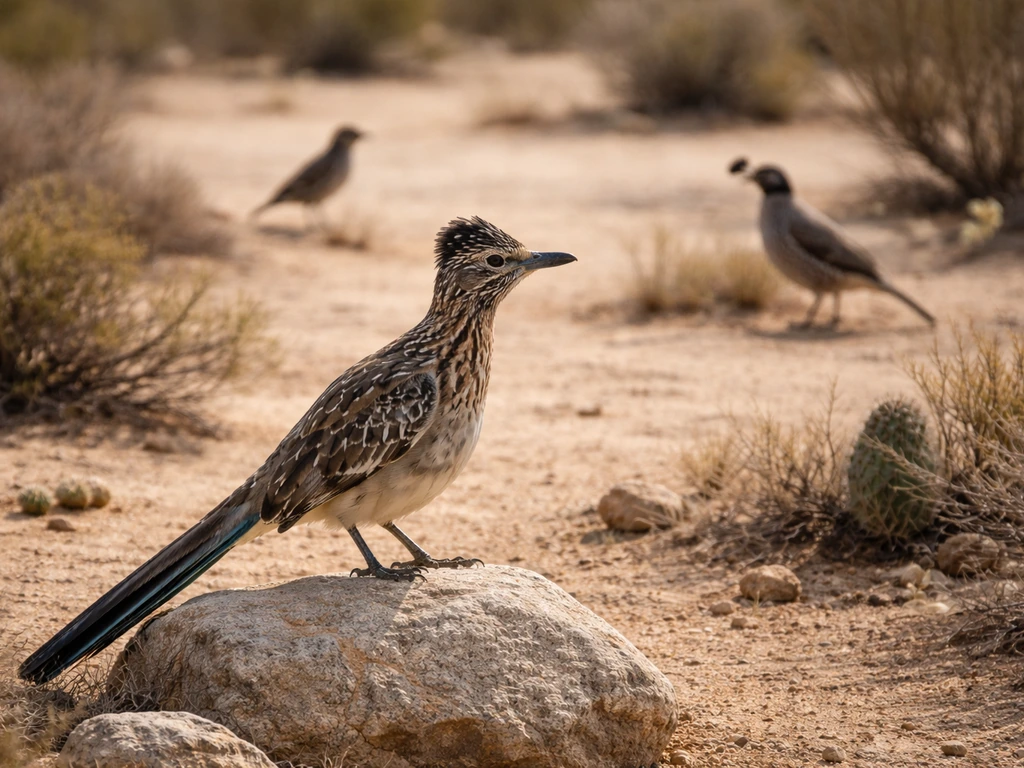
If you searched 'roadrunner state bird' wondering whether a neighboring Southwestern state might also use it, here is a quick comparison. The Greater Roadrunner's range covers much of the Southwest, but only New Mexico made it an official state symbol.
| State | Official State Bird | Is It the Roadrunner? |
|---|---|---|
| New Mexico | Greater Roadrunner (Geococcyx californianus) | Yes, adopted March 16, 1949 |
| Arizona | Cactus Wren (Campylorhynchus brunneicapillus) | No |
| Nevada | Mountain Bluebird (Sialia currucoides) | No |
| Utah | California Gull (Larus californicus) | No |
| Texas | Northern Mockingbird (Mimus polyglottos) | No |
Arizona's Cactus Wren is probably the most common source of geographic confusion. Both the Cactus Wren and the Greater Roadrunner inhabit similar Sonoran and Chihuahuan Desert terrain, so people sometimes associate the wrong bird with the wrong state. Arizona's state bird is firmly the Cactus Wren, while New Mexico's is the roadrunner, full stop. No other U.S. state uses 'roadrunner' or 'Greater Roadrunner' in its official state bird designation.
How to Verify This Officially (and Where to Go Next)
If you want to confirm this directly from primary sources, here are the three most authoritative places to check:
- New Mexico Secretary of State's official State Bird page: This is the definitive state government source. It lists the Greater Roadrunner as the state bird, gives the scientific name Geococcyx californianus, mentions the Chaparral Bird alias, and notes the March 16, 1949 adoption date.
- NMSA 1978, Section 12-3-4: The actual enabling statute. It uses the phrasing 'chaparral bird, commonly called roadrunner,' which confirms the legal designation even if the wording differs slightly from modern common usage.
- National Park Service, White Sands National Park: A federal source that independently confirms the Greater Roadrunner as New Mexico's official state bird, along with natural history notes on the species.
For a full breakdown of why New Mexico specifically chose the roadrunner, including the historical and cultural reasons behind the 1949 designation, check the dedicated article on why the roadrunner is New Mexico's state bird. If you are wondering why is the roadrunner the new mexico bird, that dedicated guide explains the historical and cultural reasons behind the 1949 designation.
If you are wondering why the ruffed grouse is Pennsylvania's state bird, the reasons focus on the bird's significance and statewide presence. That piece goes into the bird's symbolic significance in the region and how it became closely tied to New Mexico's identity.
If you are comparing state bird choices across the region, the articles on Arizona's Cactus Wren and the reasoning behind other states' selections, like the Eastern Bluebird in New York or the Blue Hen in Delaware, give good context for how and why states pick their official birds. You can use the same approach to find out what New York chose as its state bird and state flower New York state bird and flower.
If you are wondering why Delaware chose the Blue Hen as its state bird, that article explains the history and symbolism behind the designation why the Blue Hen is Delaware's state bird. The Eastern Bluebird is the New York state bird, so it is the correct answer when you are asking why New York chose that species.
The bottom line: if you are looking for a roadrunner on a list of U.S. state birds, go straight to New Mexico. It is the only one.
FAQ
Is the roadrunner the state bird of any state other than New Mexico?
No. While several states have birds with overlapping desert associations, the only official U.S. state bird that is literally designated as a roadrunner species is New Mexico (the Greater Roadrunner). Other states may have similar-looking desert birds, but they are different official symbols.
Does New Mexico officially say “Greater Roadrunner” in the law, or is that just the nickname?
The designation in New Mexico’s statute uses a descriptive phrase (chaparral bird) commonly called roadrunner, then the state’s official symbols materials spell out “Greater Roadrunner” with the scientific name. Practically, both references point to the same species, Geococcyx californianus.
What if I see a roadrunner in another state, is it still the “state bird” bird?
If you see a roadrunner anywhere in the Southwest, it does not automatically mean it is tied to that state’s official bird designation. For example, Arizona’s official state bird is the Cactus Wren, so even if roadrunners occur there, the official bird is not a roadrunner.
Are the Lesser Roadrunner and Greater Roadrunner considered the same for state-bird purposes?
No. They are different species within the same genus. The Lesser Roadrunner occurs in Mexico and Central America, so it is not the species New Mexico designated as its official state bird.
How can I tell a roadrunner from a mockingbird quickly?
Look at behavior first. Roadrunners typically move along the ground and rarely give obvious vocalizations, while mockingbirds are more likely to perch in view and sing. Size and coloration can overlap in casual viewing, so behavior is the fastest practical clue.
If I’m looking at a list online, why might “roadrunner state bird” answers be wrong?
Mistakes usually come from mixing up neighboring states’ symbols (for example, confusing New Mexico’s roadrunner with Arizona’s Cactus Wren) or assuming any desert icon must be the same state bird. Another common error is listing a non-U.S. “roadrunner” type or using the wrong genus/species name.
Is the roadrunner’s state-bird status based on the bird’s scientific name or common name?
Both are used for clarity. New Mexico’s official materials tie the common designation to the scientific name Geococcyx californianus, which helps prevent confusion with similar species in the genus.
Where is the most reliable way to verify the official state bird name and date?
Use New Mexico’s official symbols listing (the state administrative page) and the statute itself, then cross-check with a federal site that reproduces the state symbol. If a source disagrees on the wording, confirming with the statute and the state symbols page usually resolves it.
Next Articles
Which Is Karnataka State Bird? Identification and Facts
Discover Karnataka’s official state bird, key ID traits, where to spot it, and why it was chosen.
What Is the Telangana State Bird? Official Bird and How to Spot It
Discover Telangana’s official state bird, key traits to spot it, and why it was chosen, with quick context.
What Is Andhra Pradesh State Bird? ID and Habitat Guide
Learn the Andhra Pradesh state bird, how to identify it, its habitat, and tips to spot it in the wild.