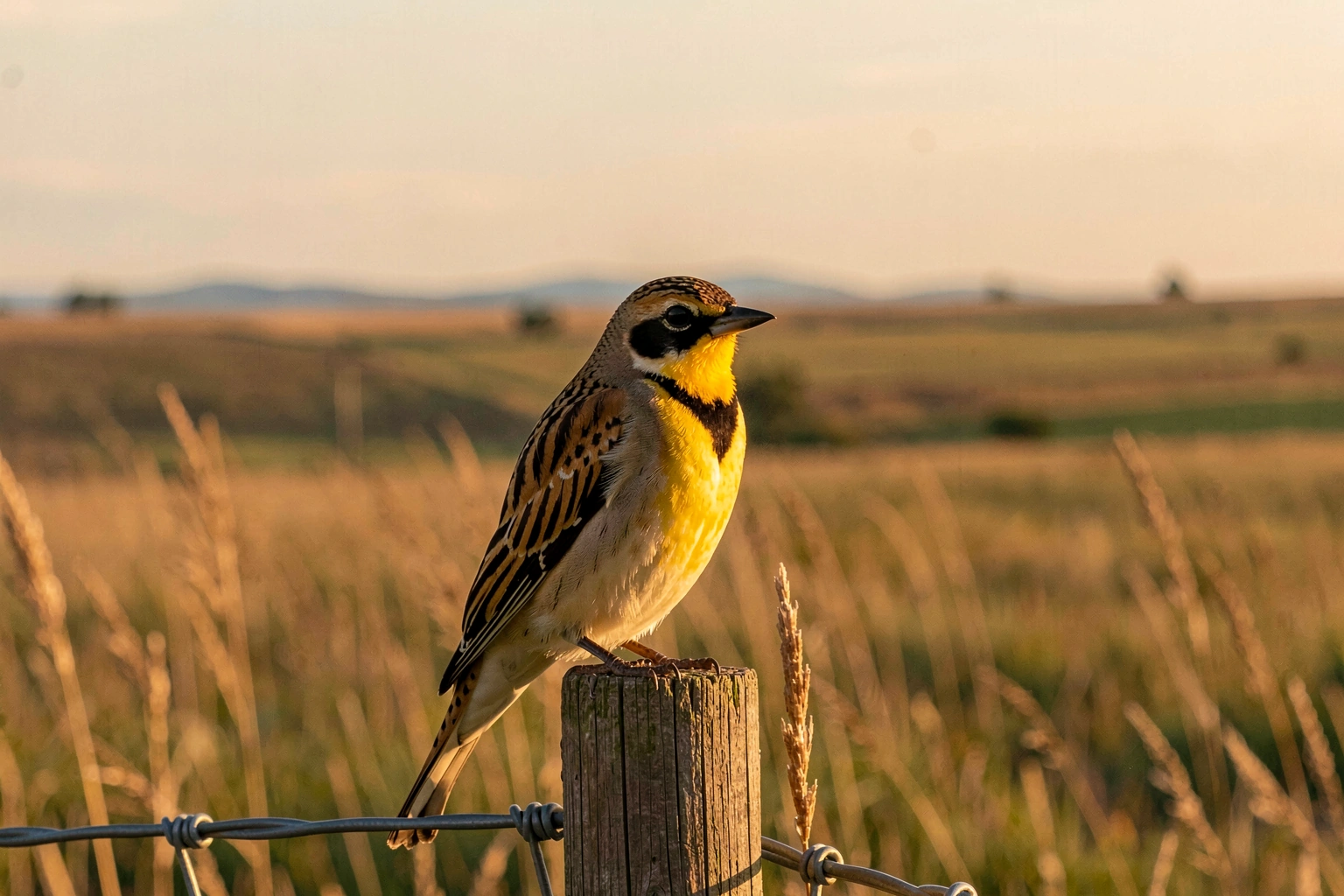
The state bird of Kansas is the western meadowlark, a bright, vocal grassland bird that has officially represented the Sunflower State since 1937.
What Is the State Bird of Kansas? Western Meadowlark Facts

Marcus Webb
27 Mar 2026
What the law actually says
Kansas Statutes § 73-901 makes it official in plain language: 'The bird known as the western meadow lark, Sturnella-Neglecta (Audubon) … is hereby designated and declared to be the official bird of the state of Kansas.' That statute has been on the books since June 30, 1937, enacted as Laws of 1937, Chapter 319, Section 1. The Kansas Historical Society's state symbols list confirms it the same way: '1937 - State Bird: Western Meadowlark.' So if you ever need a citable source for a class project or trivia night, those two are your most reliable go-tos.
How the western meadowlark became Kansas's bird
The story behind the designation is genuinely fun. Back in 1925, the Kansas Audubon Society ran a statewide election, inviting schoolchildren across Kansas to vote for their favorite bird. The western meadowlark won by a wide margin, pulling in nearly 125,000 votes. The bobwhite came in second, and the northern cardinal finished third. It took the Kansas Legislature another twelve years to make it official, but in 1937 they did exactly that, codifying what Kansas kids had already decided more than a decade earlier.
How to recognize a western meadowlark
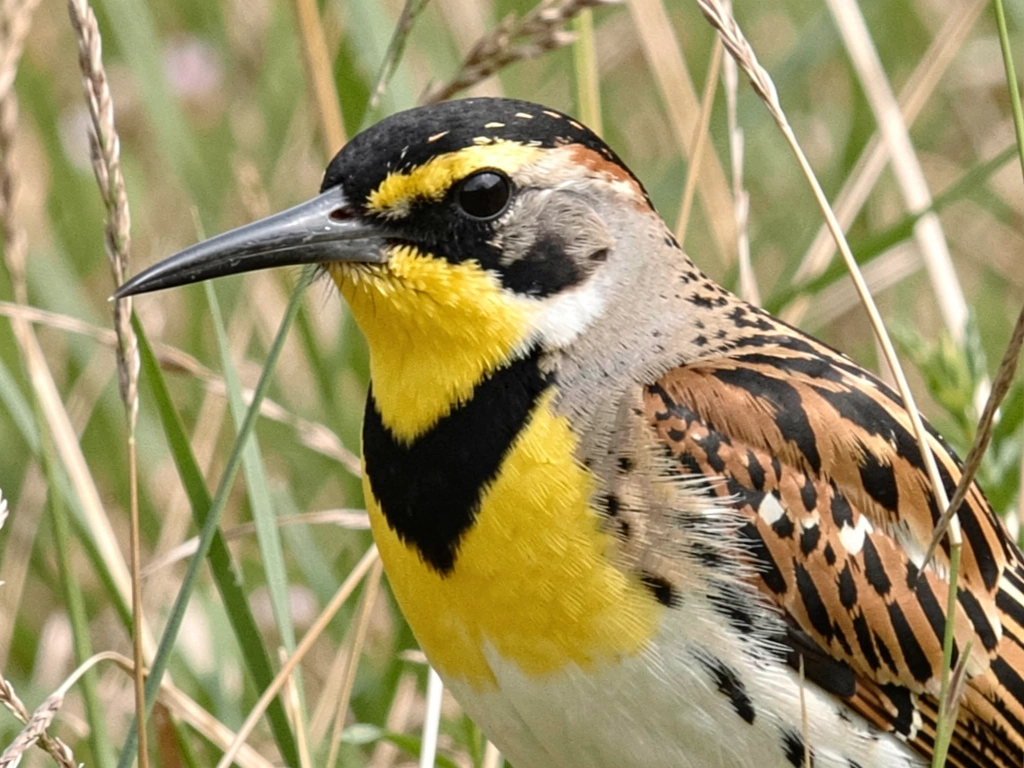
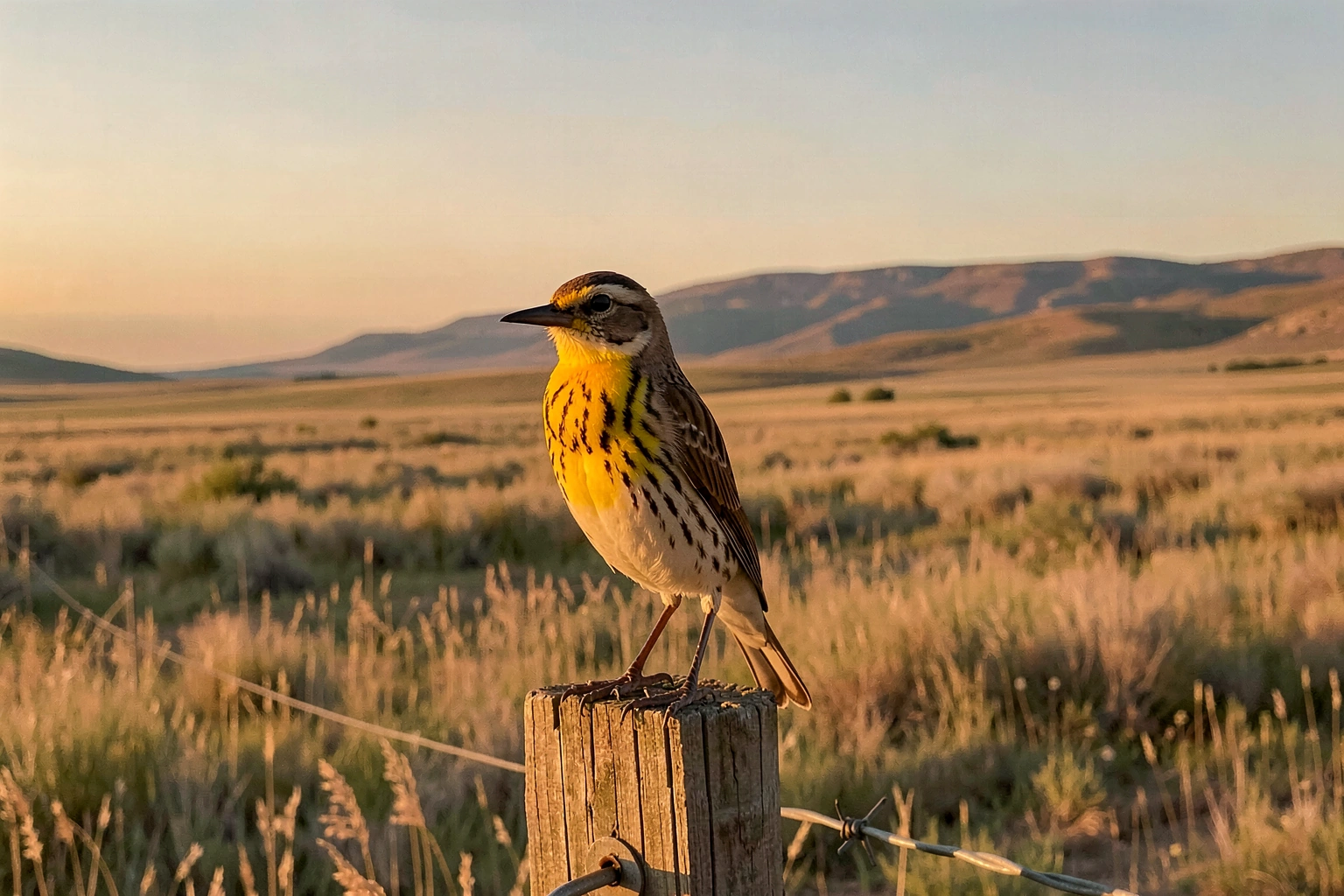
If you spot one in the field, the western meadowlark is hard to mistake once you know what to look for. The most distinctive feature is a bold black V-shaped band across a bright yellow chest and throat. The back is a mottled mix of black, brown, and buff-colored feathers that blends surprisingly well with tall grass, but that yellow belly gives it away the moment it faces you. It also has a long, pointed bill built for digging into the ground after grasshoppers, caterpillars, and beetles.
A quick field tip: listen before you look. The western meadowlark has one of the more recognizable songs of any Great Plains bird, a rich, flute-like series of notes that carries a long way across open grassland. If you hear it, scan fence posts and wire lines first. That is usually where the males perch to sing.
Key ID markers at a glance
- Bright yellow throat, chest, and belly
- Bold black V-shaped band across the chest
- Mottled brown, black, and buff back that blends into grass
- Long, pointed bill
- Rich, flute-like song that carries across open fields
- Scientific name: Sturnella neglecta
A little more about its behavior
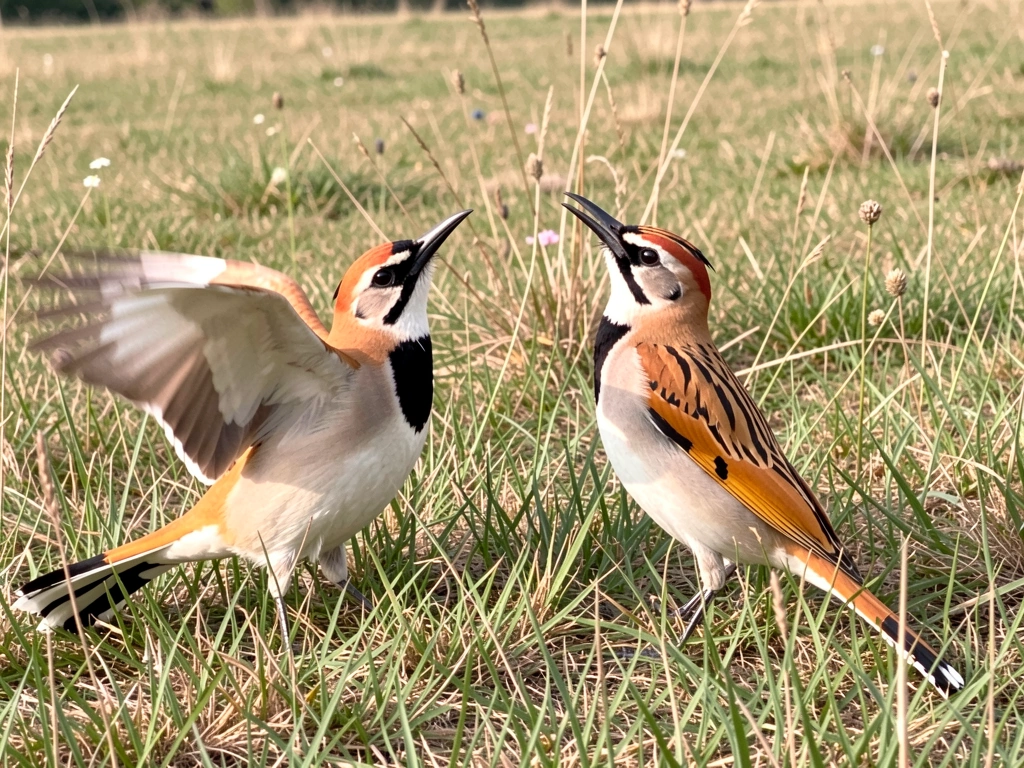
Western meadowlarks have a pretty dramatic courtship display. The male faces the female, puffs out his chest feathers, points his bill straight up to show off that black V, spreads his tail, and flicks his wings. It is a lot of effort, and it works. They are birds of open country, thriving in the grasslands, pastures, and farmlands that cover much of Kansas, which is a big reason they resonated so strongly with the state's schoolchildren back in 1925.
Kansas's state bird and state flower together
People sometimes search for the Kansas state bird and flower together, so here is the short version. The state flower is the wild native sunflower (Helianthus annuus), adopted in 1903, about 34 years before the western meadowlark became the official bird. Both symbols reflect the wide-open, sun-drenched landscape that defines Kansas. The sunflower was designated first, but the meadowlark arguably took longer to earn its spot, given that it had to win a statewide vote before the legislature would act.
| State Symbol | Official Name | Year Designated |
|---|---|---|
| State Bird | Western Meadowlark (Sturnella neglecta) | 1937 |
| State Flower | Wild Native Sunflower (Helianthus annuus) | 1903 |
Why it still fits Kansas today
The western meadowlark is not just a historical symbol. It is still a common sight across Kansas, especially in the Flint Hills and the broad agricultural plains of the western part of the state. For anyone teaching Kansas history or ecology, it is a great entry point because the bird is actually findable. You do not need a rare sighting or a lucky trip to appreciate it. Step outside in the right habitat on a spring morning, and there is a solid chance you will hear one before you see it. That accessibility is part of what made it such a popular choice with kids in 1925, and it holds up just as well today.
If you are curious about how neighboring states made similar choices, states like Oklahoma, Missouri, and Arkansas each have their own designated birds with their own interesting backstories worth exploring.
FAQ
What is the exact species name for Kansas’s state bird?
Yes. The official state bird is the western meadowlark (Sturnella neglecta). If you are checking a bird field guide, you may see similar names like “meadowlark” used generally, so confirm the species name matches Sturnella neglecta to avoid mixing it up with other meadowlarks.
Why do some people say the bobwhite is the Kansas state bird?
People sometimes think the bobwhite is the state bird because it came in second in the 1925 school election. However, Kansas made the western meadowlark official in 1937 through statute, so the final designation is not the winner by popular vote alone, it is what the legislature codified.
How can I confirm it is actually a western meadowlark and not a lookalike?
If you are looking at a photo and the bird has a heavy yellow breast but not the black V, don’t assume it is the western meadowlark. The black V-shaped band across a yellow throat/chest is the quick “yes” marker, and the call is usually easier to confirm than color alone.
When and where should I go looking to actually see a western meadowlark in Kansas?
Best bet is to search open grassland habitat, fence posts, and wire lines in the morning. Western meadowlarks are more detectable when males are singing, so plan a short walk at dawn or early morning and scan for the perching behavior before you rely on sight alone.
Are western meadowlarks easier to spot at certain times of year?
Season helps. You are most likely to hear and see them during spring and early summer when they are actively singing and doing courtship displays. In winter, they can be less obvious, but in the right grassland habitat you can still locate them by song.
If I’m filling out a Kansas symbols worksheet, what should I put for the state flower too?
Kansas’s state symbols include the wild native sunflower (Helianthus annuus) as the state flower, but that does not change the state bird answer. If you are doing a school worksheet that asks for both, just list “Western Meadowlark” for the bird and “Wild native sunflower” for the flower, they were designated in different years.
What’s the best source to cite for the official state bird of Kansas?
For a citation, use Kansas Statutes § 73-901 for the legal designation (the statute names the western meadowlark as the official state bird). For a quick secondary reference, the Kansas Historical Society state symbols listing is also commonly used.
Does being the state bird mean the western meadowlark is rare in Kansas?
No. The western meadowlark is Kansas’s state bird, but that does not mean it is the only bird you might see there. If you are turning this into a project, you can add value by noting that it is a common grassland bird in Kansas rather than a rare or endangered species.
What if I only get a partial view of the black V band on the bird?
The “V” pattern can look fainter at certain angles, but the general layout is consistent: yellow on the throat/chest plus a dark V-shaped band. If you only see yellow without the dark pattern, wait for a better angle or verify by the flute-like song.
What is the simplest correct way to answer this question in one sentence?
If you’re using this answer for trivia or a quick write-up, the safest one-sentence response is: “Kansas’s state bird is the western meadowlark.” If you need extra accuracy, add the species name Sturnella neglecta, since some readers recognize “meadowlark” only generally.