Wisconsin's official state bird is the American robin (Turdus migratorius). It became the official state bird in 1949 during Wisconsin's centennial legislative session, though Wisconsin schoolchildren had already voted for it back in 1926–1927. If you've ever spotted that familiar orange-breasted bird tugging a worm out of a lawn in spring, you already know this bird well.
What Is the Wisconsin State Bird? Facts and Identification

Marcus Webb
24 Apr 2026
Wisconsin's Official State Bird at a Glance
| Detail | Information |
|---|---|
| Common name | American robin |
| Scientific name | Turdus migratorius |
| Designated | 1949 (Wisconsin centennial legislative session) |
| Weight | 2.7–3.0 oz (77–85 g) |
| Key field mark | Warm orange-red breast, dark gray-black head |
| Song | "Cheer-up, cheerily, cheer-up" whistling carol |
How to Identify an American Robin
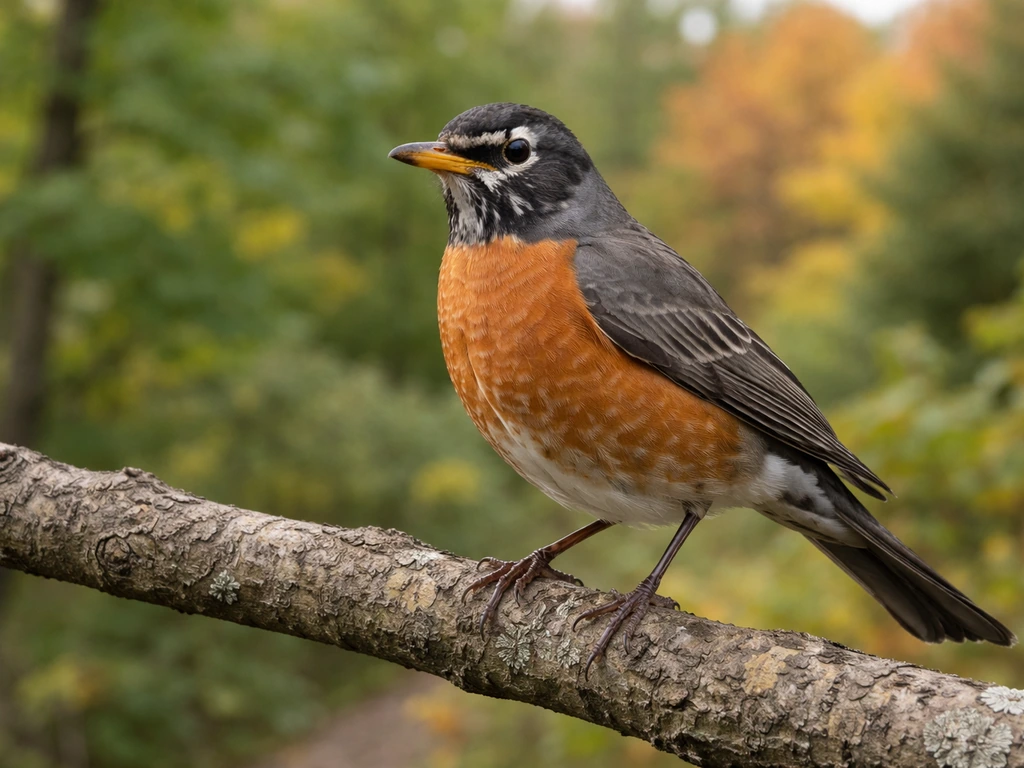
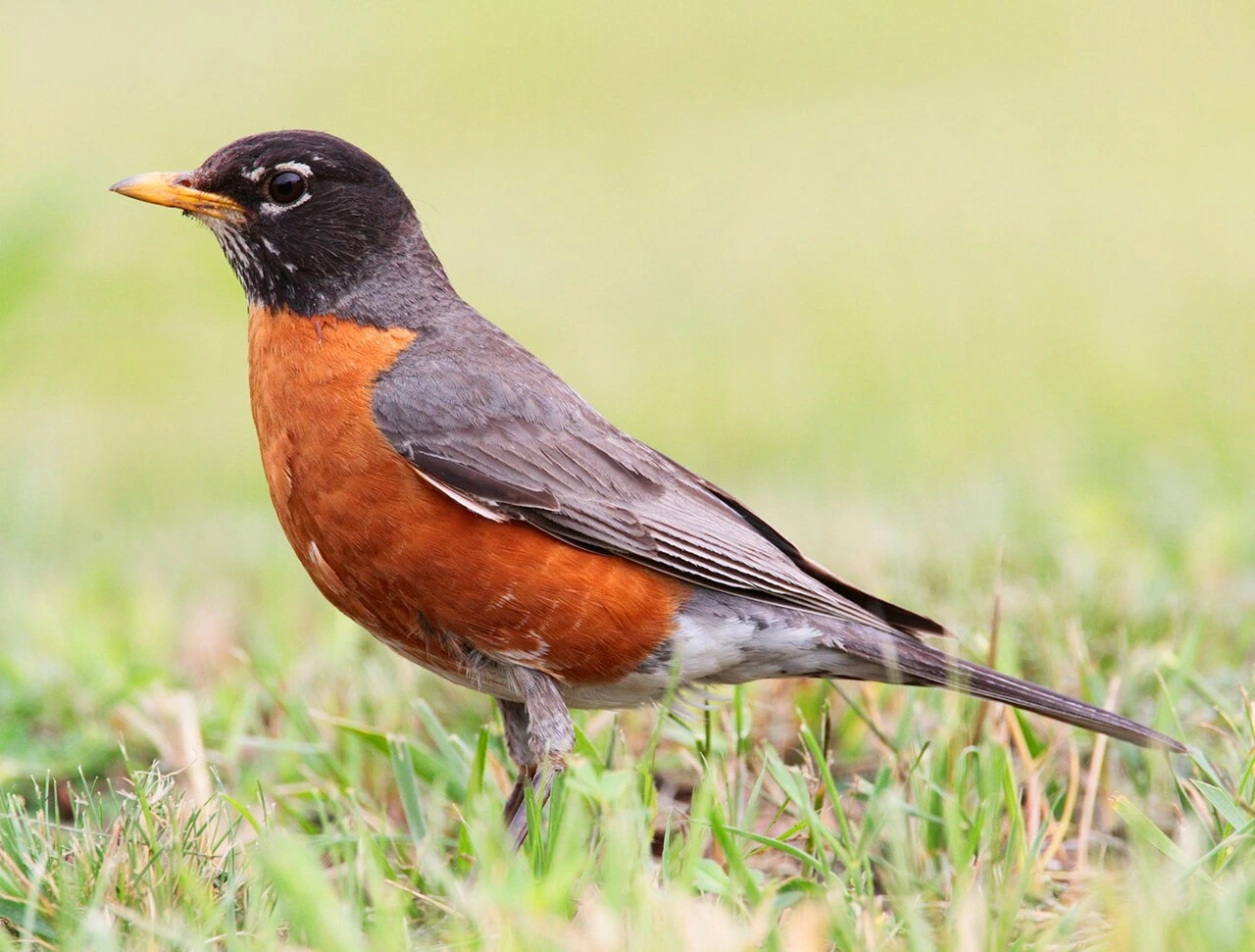
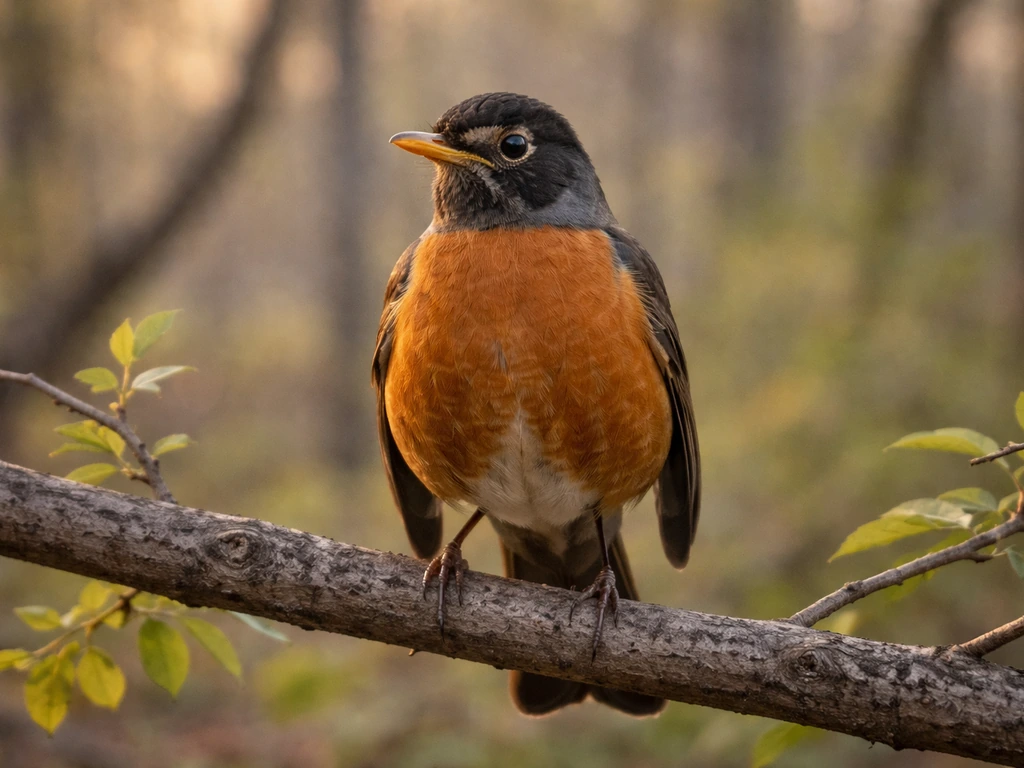
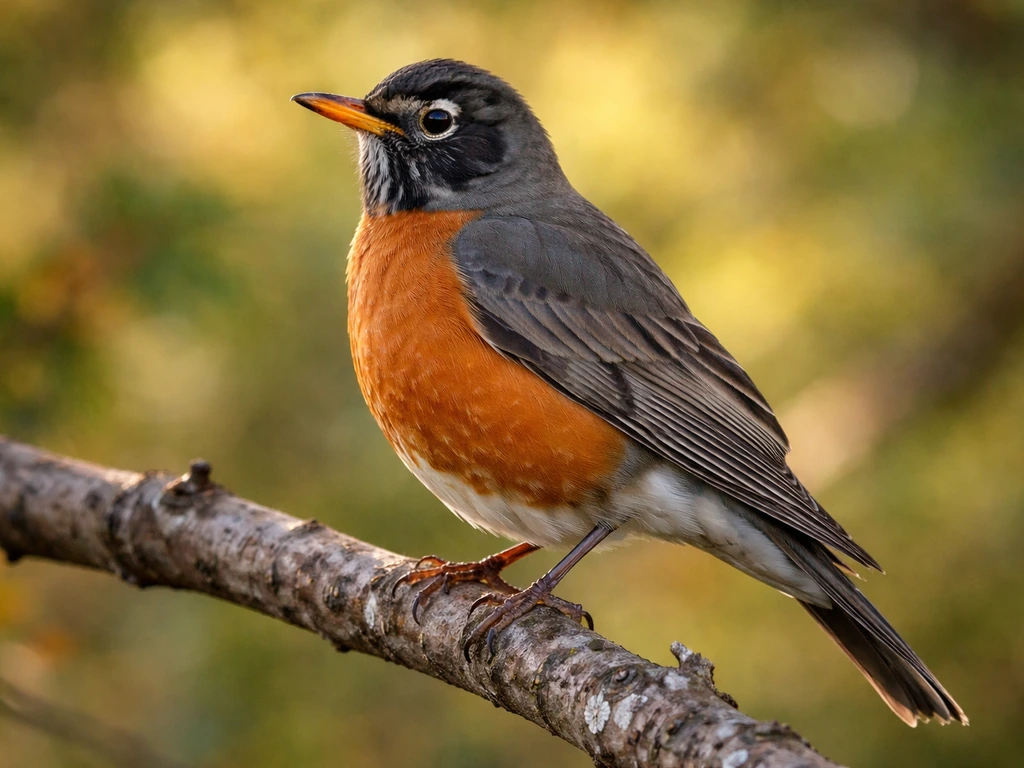
The American robin is one of the easiest birds to identify in North America, which is a big part of why it's so beloved in Wisconsin. The most obvious feature is the warm, brick-orange breast that contrasts sharply with the bird's dark gray to black head and back. Look for a broken white eye ring and white corners on the tail in flight. Males tend to have darker, more richly colored heads than females.
Size-wise, robins weigh in at around 2.7 to 3.0 ounces and are about the size of a large thrush, which makes sense since they are in the thrush family. Their upright posture on the ground while they hunt for worms is also a giveaway. If you're ever unsure, the song seals the deal: a rich, whistling series that sounds like "cheer-up, cheerily, cheer-up" repeated with a relaxed, caroling quality. You'll hear it starting early in the morning, often before sunrise.
Quick Field Marks Summary
- Warm orange-red breast (brick red, not bright orange)
- Dark gray to black head with a broken white eye ring
- Yellow-orange bill
- White spots on the outer tail corners, visible in flight
- Upright stance when foraging on lawns and open ground
- Whistling song: "cheer-up, cheerily, cheer-up" pattern
Why Wisconsin Chose the American Robin
The robin's selection wasn't arbitrary. Wisconsin schoolchildren voted for it in a statewide poll in 1926–1927, and the result reflected something real: the American robin is one of the most visible, widespread birds in the state. It appears early in the season, often treated as a reliable sign that winter is finally loosening its grip. Wisconsin winters are long and serious, so a bird that shows up at the end of February or early March carries a genuine cultural weight as a harbinger of spring.
Beyond timing, the robin is simply present everywhere across Wisconsin. It nests in backyards, parks, forests, and farmland alike. It's a bird that essentially every Wisconsin resident recognizes, which makes it a practical and inclusive choice for a state symbol. The legislature made it official in 1949, cementing what residents had already informally recognized for decades.
A Little History Behind the Designation

Wisconsin became a state in 1848, but its formal collection of official state symbols came together much later. The 1949 centennial legislative session was a big moment for state symbols: that single session officially designated the state bird (American robin), the state tree (sugar maple), and the state flower (wood violet) all at once. The robin had been the popular choice since the schoolchildren's vote more than two decades earlier, so the 1949 designation was really formalizing what had long been the public favorite. It's a good example of how state symbol designations often follow cultural consensus rather than leading it.
Wisconsin's State Bird vs. State Flower
A common search pairs these two together, so here's the clear answer: Wisconsin's state bird and state flower are two completely separate official symbols. The state bird is the American robin. The state flower is the wood violet (Viola papilionacea), a small, purple-blue wildflower common throughout the state. Both were officially designated during the same 1949 centennial session, but they are distinct designations covering different categories of Wisconsin's natural heritage.
If you're filling out a trivia card, doing a school project, or just satisfying curiosity: robin for the bird, wood violet for the flower. They share a birth year as official symbols, but that's where the overlap ends.
Other States That Share the American Robin as Their State Bird
Wisconsin isn't alone in claiming the American robin. Connecticut and Michigan have also designated the American robin (Turdus migratorius) as their official state bird, making it one of a handful of species shared across multiple states. Michigan’s official state facts page notes that in 1931 the [American robin was chosen as the state bird](https://www. michigan.
gov/som/about-michigan/state-facts-and-symbols). Michigan DNR's American robin critter card identifies the American robin (Turdus migratorius) as the state bird of Michigan [the American robin (Turdus migratorius) as their official state bird](https://www. michigan. gov/dnr/-/media/Project/Websites/dnr/Documents/Education/WILD/Critter-Cards.
pdf? hash=2D019C55E619171529E8CBDF92D5C50A&rev=59a7c393b0b148c2b020b1b45a3ba879). If you're wondering what is the Michigan state bird, the answer is the American robin (Turdus migratorius) Michigan have also designated the American robin. That's actually a pretty select group: most commonly shared state birds, like the northern cardinal or the western meadowlark, appear on more state lists, but the robin holds its own with three states.
The Michigan connection is especially interesting given how geographically close the two states are. Both sit in the upper Midwest, both experience that same dramatic seasonal shift where the robin's early return marks the end of winter, and both chose the same bird to represent that feeling. If you want to explore how Michigan made its choice and how it compares to Wisconsin's selection, that's a natural next stop.
Where to Go From Here
If you want to verify Wisconsin's official symbols directly, Wisconsin.Gov maintains a consolidated state symbols page (sometimes listed under "Wisconsin for Kids") that lists the state bird and state flower side by side. For identification help, Cornell Lab of Ornithology's All About Birds and the Audubon Field Guide both have detailed American robin entries covering plumage, song recordings, and range maps.
If this research started with Wisconsin but your curiosity goes further, it's worth browsing state bird pages for other states, especially the ones that share the robin (Connecticut and Michigan) or states where you might be surprised by the choice. You can also look up what the official bird of your state is to see which native species a state has chosen to represent it what is the official bird of your state.
You might also find it interesting to look up what the official bird of Madison, Wisconsin specifically refers to, or to dig into how state birds connect to sports team mascots, since a few states have birds that do double duty in both roles. If you want to connect the dots, explore which sports teams mascot is also its state's official bird and why some teams borrow state symbols sports team mascots.
If you're specifically looking for what is the official bird of Madison, Wisconsin, it's the American robin, just like the rest of the state what the official bird of Madison, Wisconsin specifically refers to.
FAQ
How can I tell an American robin from a similar bird like a thrush in Wisconsin?
Use a combination of cues: the robin’s brick-orange breast, dark gray to black head, and a broken white eye ring. In flight, also look for white corners on the tail, and note the upright, ground-hunting posture while it probes for worms.
Are male and female American robins easy to distinguish by appearance?
They are similar, but males usually show a darker, richer head color than females. If you are trying to identify sex in the field, rely on head color depth plus overall contrast rather than assuming breast color alone.
When should I expect to see the Wisconsin state bird in spring?
Robins commonly appear late February to early March, often before sunrise. Exact timing shifts by year and local weather, so if you are tracking a “first robin” date, compare your observation to your nearest NOAA weather station temperatures rather than using a fixed calendar day.
Does the American robin stay in Wisconsin year-round, or does it migrate?
Some robins remain through winter in parts of Wisconsin, but many leave when insects and food sources drop. If you are observing in midwinter, focus on areas with reliable food like parks with remaining berries or neighborhoods with people feeding birds.
Is the Wisconsin state bird different from a local bird species mascot, like for towns or schools?
Yes. The state bird is an official statewide symbol, but cities, counties, and schools often adopt related birds informally or for mascots. If you are answering a school question, make sure it specifically asks for the “state” bird, not a local or team symbol.
What is the Wisconsin state flower, and does it get confused with the state bird?
The wood violet is the official state flower, it is a different category from the state bird. If you are making a trivia card, verify you list “robin” for the bird and “wood violet” for the flower, both designated during the same 1949 session but representing different things.
Why is the American robin chosen as Wisconsin’s symbol if it is found in other states too?
State symbols are not required to be unique. The robin is widely visible and familiar across Wisconsin, and it already had strong public support, which makes it a good “shared experience” symbol even if other states adopted the same species.
What should I write if I need the scientific name for the Wisconsin state bird?
The American robin’s scientific name is Turdus migratorius. If you are entering it into a worksheet, use the full binomial form, and remember Wisconsin uses the American robin as the official common name.
If I hear a bird song but do not see the bird, can I still confirm it is a robin?
Song is a strong clue. Robins have a rich, whistling pattern commonly described like “cheer-up” repeated, often heard early in the morning. Still, environmental noise and similar thrushes can confuse things, so pair the sound with a visual check for the orange breast and eye-ring when possible.