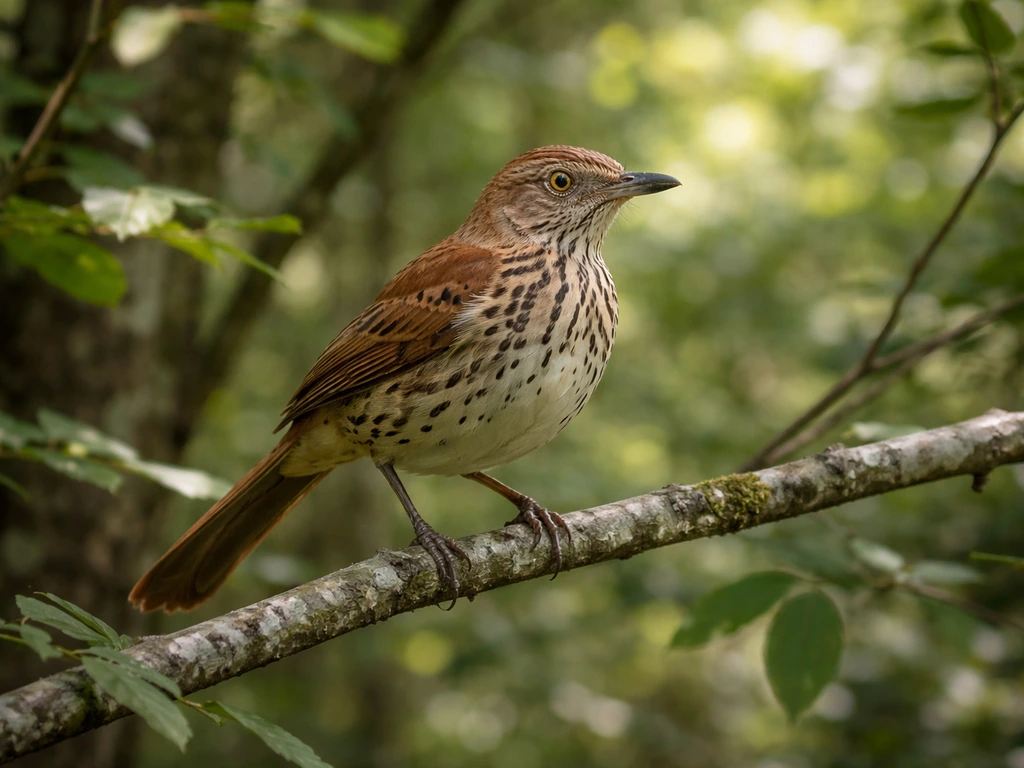
Georgia's official state bird is the brown thrasher (Toxostoma rufum). That's it, straight answer. If you're just here for the name, you've got it. But if you want to know what the bird actually looks like, why Georgia picked it, and how it fits into the broader picture of state birds across the South, read on.
What Is Georgia’s State Bird? Identification Guide

Marcus Webb
18 Apr 2026
Georgia's State Bird: The Brown Thrasher
The brown thrasher is codified as Georgia's official state bird under GA Code § 50-3-50. It's not a recent designation either. The Georgia General Assembly made it official in 1970, following a persistent 35-year campaign by the Garden Club of Georgia. That's decades of advocacy to get one bird recognized, which tells you something about how seriously Georgians take this particular species.
What the Brown Thrasher Actually Looks Like
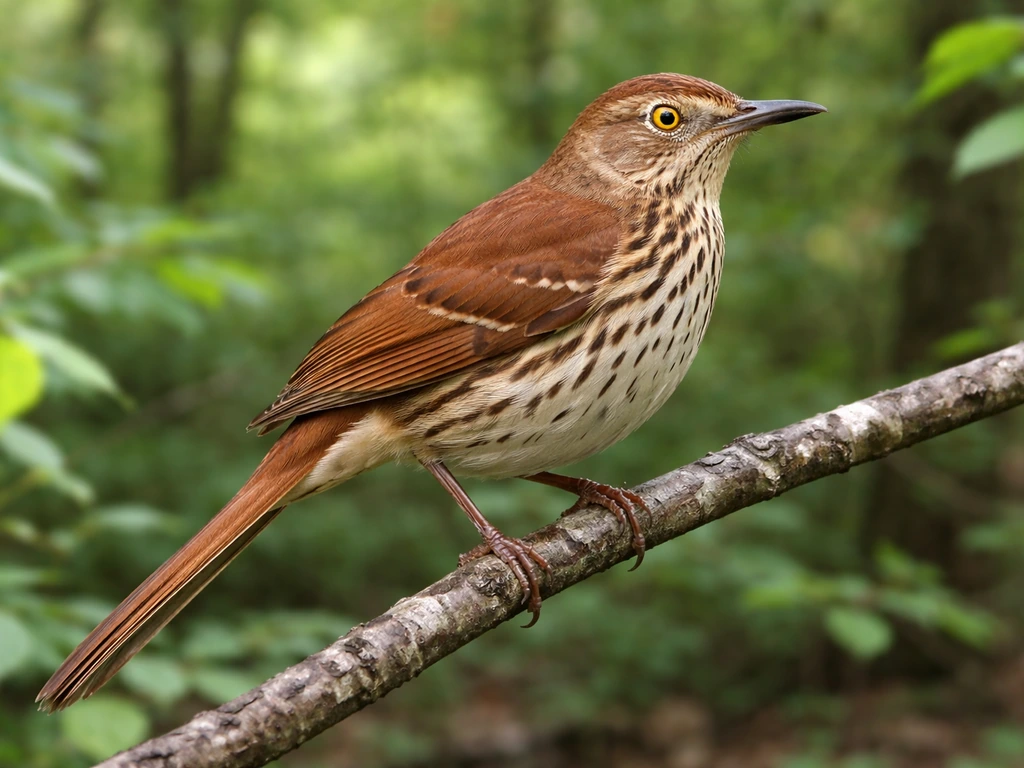
The brown thrasher is a large songbird, roughly robin-sized, with a few features that make it easy to pick out once you know what you're looking for. The most distinctive details are its reddish-brown upper parts, its heavily streaked white-and-brown chest, its long tail, and its striking yellow eye. The bill is long and slightly curved, which gives the bird a slightly predatory look compared to something like a sparrow.
- Reddish-brown back, wings, and tail
- Bright yellow eye (a reliable field mark at close range)
- Long, slightly curved bill
- Heavy dark streaking on a whitish breast
- Long tail, often held low or cocked upward
- Roughly the size of an American robin
The brown thrasher is also a remarkable singer. It runs through one of the largest song repertoires of any North American bird, often repeating each phrase twice in succession. If you hear a loud, varied song coming from the top of a shrub or small tree and can't immediately place it, a brown thrasher is a strong candidate.
Why Georgia Chose the Brown Thrasher
The choice makes a lot of practical sense. The brown thrasher is not a rare or exotic bird that Georgia needed to claim before another state did. It's the opposite: a species deeply woven into everyday Georgia landscapes. Georgia DNR notes it's common in backyards across all 159 of Georgia's counties. That kind of statewide presence is exactly what you want in a state symbol.
The Garden Club of Georgia spent 35 years pushing for this designation, eventually succeeding in 1970. The brown thrasher was designated as Georgia's state bird through a long push by the Garden Club of Georgia, leading to its official recognition in 1970. Their advocacy reflected a broader appreciation for native species that were familiar to Georgians at every level, rural or urban, north or south of the state. A bird that turns up in nearly every county isn't just symbolic, it's genuinely representative.
How to Spot a Brown Thrasher in Georgia
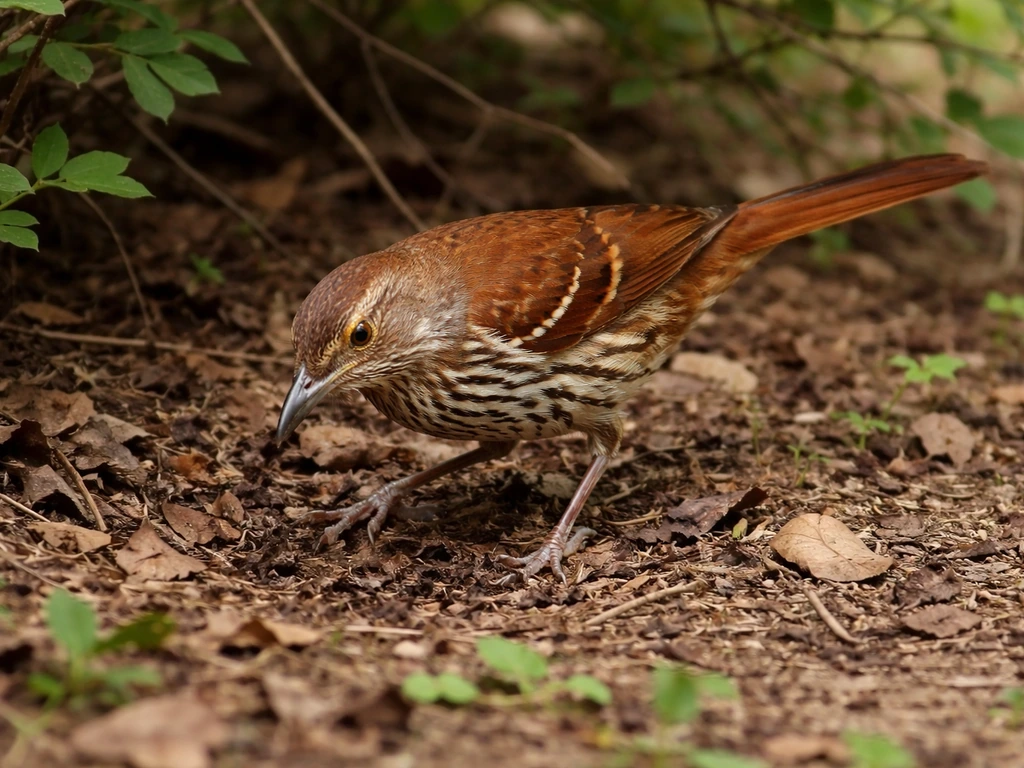
The good news is you don't need to go far. Brown thrashers favor habitat that's common all over Georgia: thickets, hedgerows, forest edges, and overgrown clearings in deciduous forest. Suburban yards with brushy borders, garden edges, and shrubby fence lines are all prime spots.
On the ground is where you'll most often see them working. Brown thrashers forage by sweeping their long bill sideways through leaf litter and soil in quick, energetic motions. They're looking for insects, berries, and small invertebrates buried under dead leaves. Watch any brushy woodland edge in Georgia and scan the ground around shrub bases. If something is flipping leaves aggressively and has a reddish back and a long tail, that's your bird.
- Look along forest edges and hedgerows, especially in the morning
- Scan the ground under dense shrubs for a leaf-flipping bird with a reddish-brown back
- Listen for a loud, repetitive song with phrases delivered in pairs from an exposed perch
- Check suburban yards with brushy borders year-round, as thrashers are present statewide in all seasons
- In 2026, Georgia officially declared it the Year of the Georgia Birding Trail, making this a great year to explore the state's birding sites where thrashers are likely on the checklist
Does Any Other State Share the Brown Thrasher?
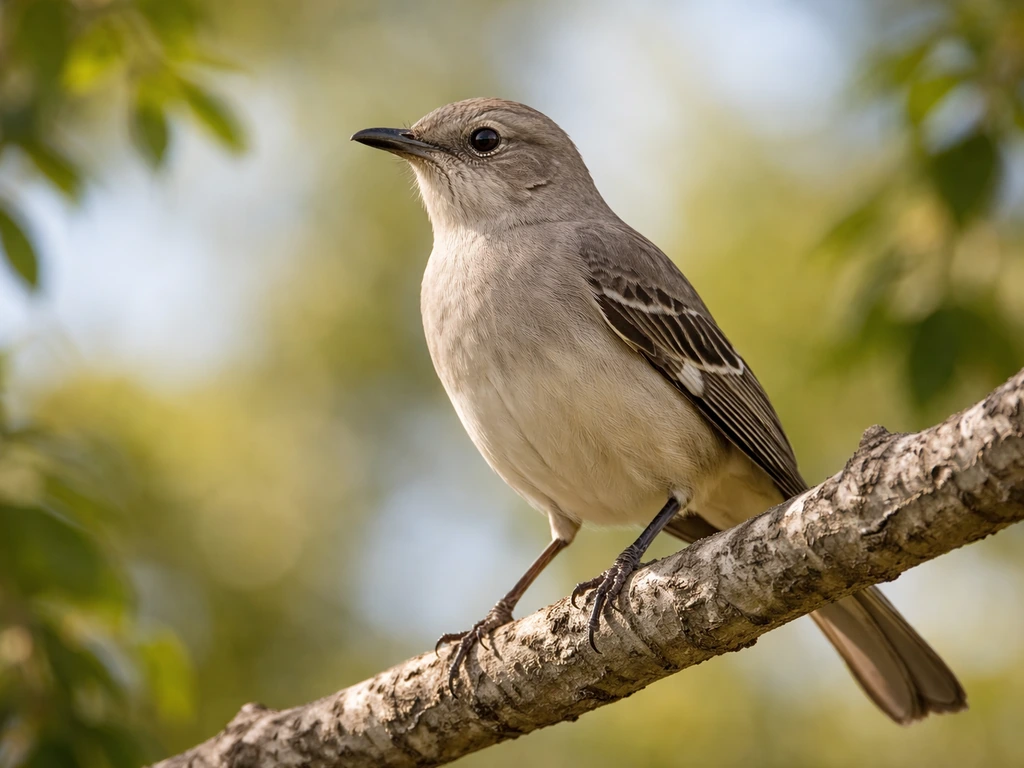
No. Georgia is the only state with the brown thrasher as its official state bird. It's a unique designation, which is actually somewhat unusual in the world of state birds. A turkey is not a federal bird; in the United States, there is no federal official bird for the whole country. Several popular species get claimed by multiple states at once. The northern mockingbird, for example, is the state bird of five states: Arkansas, Florida, Mississippi, Tennessee, and Texas. <a data-article-id="1BFD622A-7729-46E2-8F9D-D8B553C074AB"><a data-article-id="1BFD622A-7729-46E2-8F9D-D8B553C074AB">Tennessee’s state bird</a></a> is the northern mockingbird. The northern cardinal is shared by several Midwestern and mid-Atlantic states. Georgia's neighbors each went their own direction: South Carolina chose the Carolina wren, Alabama selected the northern flicker (also called the yellowhammer), North Carolina went with the northern cardinal, and Tennessee landed on the northern mockingbird.
| State | State Bird | Year Designated |
|---|---|---|
| Georgia | Brown Thrasher | 1970 |
| Tennessee | Northern Mockingbird | 1933 |
| South Carolina | Carolina Wren | 1948 |
| Alabama | Northern Flicker (Yellowhammer) | 1927 |
| North Carolina | Northern Cardinal | 1943 |
| Florida | Northern Mockingbird | Not specified |
The fact that Georgia holds an exclusive claim on the brown thrasher gives the designation a little more weight. It's not a bird shared across a dozen state capitols. If you see a brown thrasher, you're looking at Georgia's bird and Georgia's alone among state symbols.
Georgia's State Bird and State Flower: A Quick Note
If you searched for Georgia's state bird and flower together, here's the short version: Georgia's state flower is the Cherokee rose (Rosa laevigana), designated under GA Code § 50-3-53. The Cherokee rose has its own distinct history, tied to Georgia's landscape and to the narrative surrounding the Trail of Tears. It's a separate official symbol from the state bird, and the two don't have any direct biological connection. The brown thrasher doesn't depend on the Cherokee rose for habitat or food in any notable way. They're simply two of Georgia's official emblems, each chosen for its own cultural and historical reasons. If you want to go deeper on why the brown thrasher specifically was chosen, that story is worth exploring on its own.
FAQ
What does a brown thrasher sound like, and how can I tell it from a mockingbird?
Brown thrashers tend to have a loud, varied song but with a distinctive pattern where phrases are often repeated twice in a row. Mockingbirds also repeat phrases, but their repertoire is usually associated with more whistles and a broader “mimic” feel. If you hear fast, aggressive singing coming from the top of a shrub or small tree, then look for the reddish-brown upperparts, long tail, and yellow eye to confirm it.
Are brown thrashers only found in certain parts of Georgia, or are they truly statewide?
They are widespread across Georgia, including suburban areas, not just rural woodland. A practical way to think about it is habitat type, not region, since they commonly use thickets, hedgerows, forest edges, and brushy yard borders that exist throughout the state.
When is the best time of year to see a brown thrasher in my yard?
You can spot them most consistently when they are actively foraging, which is often noticeable during warmer months when leaf litter and insect activity are high. Even in other seasons, scan shrub bases and overgrown ground cover after leaf drop, since they still search for insects and invertebrates in the soil and leaf litter.
Do brown thrashers migrate out of Georgia, or are they here year-round?
They are generally residents in the sense that many individuals remain in the state, but seasonal movement can occur depending on local conditions. If you live in a very urban area with fewer brushy edges, your sightings may drop during colder periods even when the species is still present nearby.
What should I look for if I want to confirm a sighting without getting close to the bird?
Use a quick checklist: long tail, reddish-brown upper parts, heavily streaked white-and-brown chest, and a long slightly curved bill. The yellow eye is another strong clue, especially when the bird turns its head. Avoid relying on tail alone, since other thrushes or larger sparrow-like birds can confuse the impression.
What foods do brown thrashers eat, and do they ever use feeders?
Their natural diet centers on insects and small invertebrates, plus berries. They forage on the ground by sweeping the bill through leaf litter and soil, so they typically do not behave like finches at classic seed feeders. If you want to attract them, focus on brushy cover and berry-producing plants rather than only putting out seed.
How can I attract brown thrashers to my property in a way that matches their natural behavior?
Create ground-foraging habitat, give them cover, and reduce “clean” landscaping. Leaving some leaf litter in a managed area, planting dense shrubs or hedgerows, and keeping portions of yards with overgrown edges can make the environment more usable for their bill-sweeping foraging.
Are there any Georgia birds that people commonly mistake for a brown thrasher?
Yes. Gardeners often confuse them with larger thrushes or similarly colored songbirds that also move on the ground. The long tail, streaked chest pattern, and the yellow eye help separate brown thrashers from lookalikes, so use those features together rather than one trait.
Is the brown thrasher the only official state bird in the United States, or do other states share birds?
Other states can share the same species as state birds, and there is no single federal “official bird” for the entire country. Georgia’s distinction is that the brown thrasher is uniquely Georgia’s state bird among states, so your identification has an added “exclusive symbol” value when you confirm the bird.
Next Article
What Is the State Bird of Florida? Official Bird, ID Tips
Florida’s official state bird is the Northern mockingbird. Learn why it was chosen and how to spot it.