Florida's official state bird
Florida's official state bird is the Northern Mockingbird, known scientifically as Mimus polyglottos. The Florida Department of State lists it under the common name "mockingbird" (sometimes "common mockingbird") alongside that accepted species name. Either way you refer to it, it's the same bird: a medium-sized, gray-brown songbird famous for its extraordinary vocal range and its seemingly boundless energy on a warm Florida morning.
The bird's name, official and common
The species name Mimus polyglottos literally translates to "many-tongued mimic," which tells you a lot about why this bird stands out. In everyday conversation, most Floridians and birders simply call it the Northern Mockingbird. Official state documents and the Florida Department of State use both "mockingbird" and the Latin binomial Mimus polyglottos interchangeably. If you're writing a school project or filling out a form, the full accepted name is Northern Mockingbird (Mimus polyglottos).
Why Florida chose the mockingbird in 1927
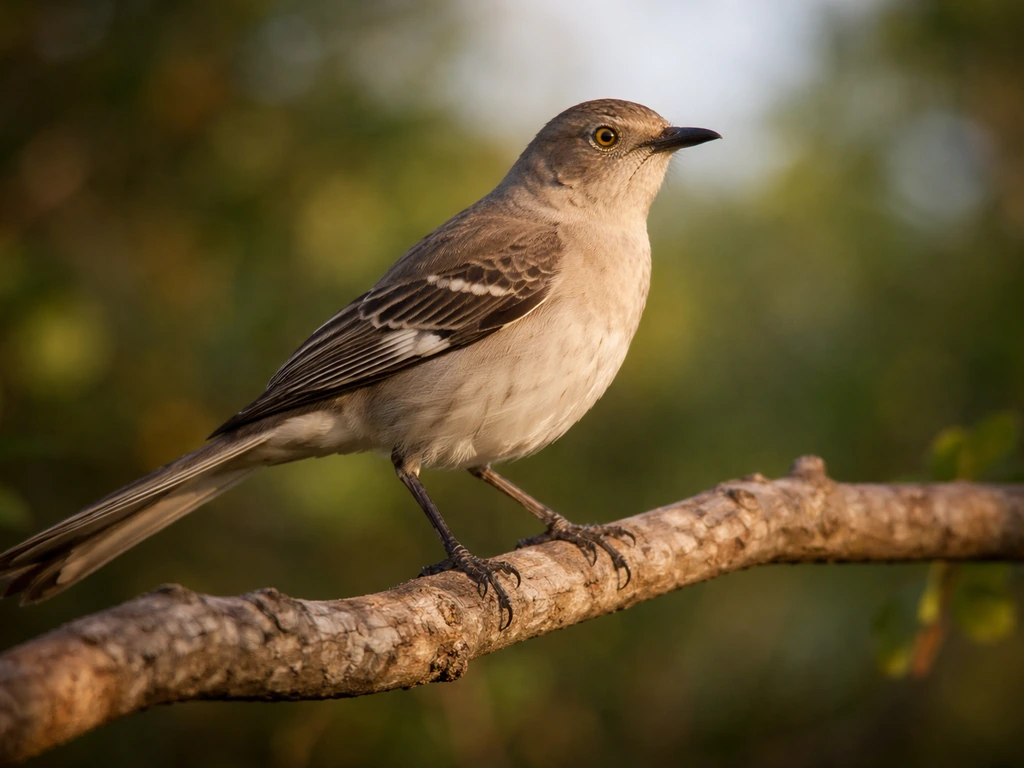
Florida designated the mockingbird as its official state bird through Senate Concurrent Resolution No. 3 during the 1927 legislative session. That makes the designation nearly a century old at this point. The reasoning at the time centered on what the Florida Department of State still describes as the bird being a "superb songbird and mimic," a recognition of just how remarkable its vocal abilities are. The mockingbird can cycle through dozens of imitated sounds in a single singing bout, pulling from the songs of neighboring birds, mechanical noises, and even frogs. For a state that prides itself on rich natural diversity, choosing a bird that essentially embodies the sounds of an entire ecosystem made a lot of sense.
It's worth noting that Florida's choice was far from unique at the time. Several Southern states were drawn to the same bird for similar reasons during the early 20th century, when state-symbol designations were becoming popular across the country. If you're curious about the full story behind the choice, why Florida's state bird is the mockingbird goes into much greater depth on the cultural and historical reasoning.
How to recognize the Northern Mockingbird in Florida
If you want to spot Florida's state bird on your next trip or in your backyard, the good news is that it's one of the easier birds to find and identify in the state. Here are the key traits to look for.
Size and plumage
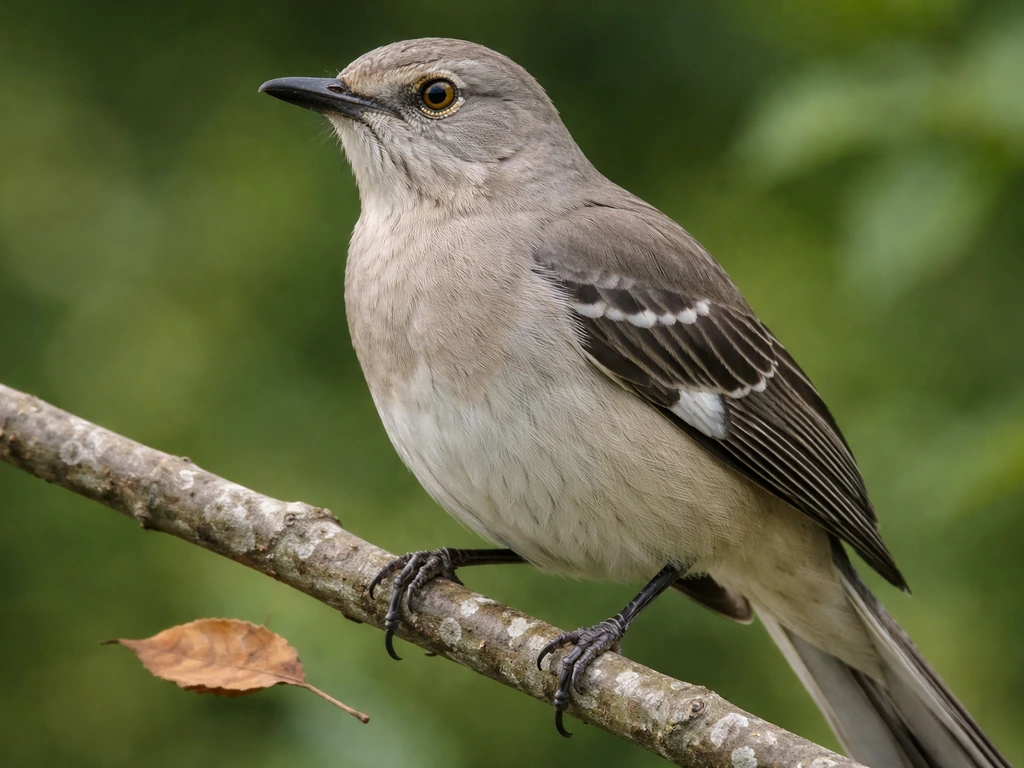
The Northern Mockingbird is roughly the size of an American Robin, which is a useful mental anchor if you already know what a robin looks like. Its overall color is gray-brown on the back with a noticeably pale, almost whitish belly. The most distinctive field mark in flight is the large white wing patch that flashes prominently against the gray feathers, and you'll also see white outer tail feathers fanning out when the bird lands or spreads its tail. At rest, look for two white wingbars on each wing.
Sound
The mockingbird's song is a long, rolling series of phrases where each phrase is typically repeated two to six times before the bird switches to a new sound. It's not just melodic: it's actively mimicking other birds, insects, and even man-made sounds it has heard in its territory. During nesting season, males will sing persistently into the night, which can surprise people who hear a complex bird chorus at 2 a.m. A sharp, harsh "chack" call is the other sound you'll notice, usually when the bird is alarmed or defending its space.
Where to find it in Florida
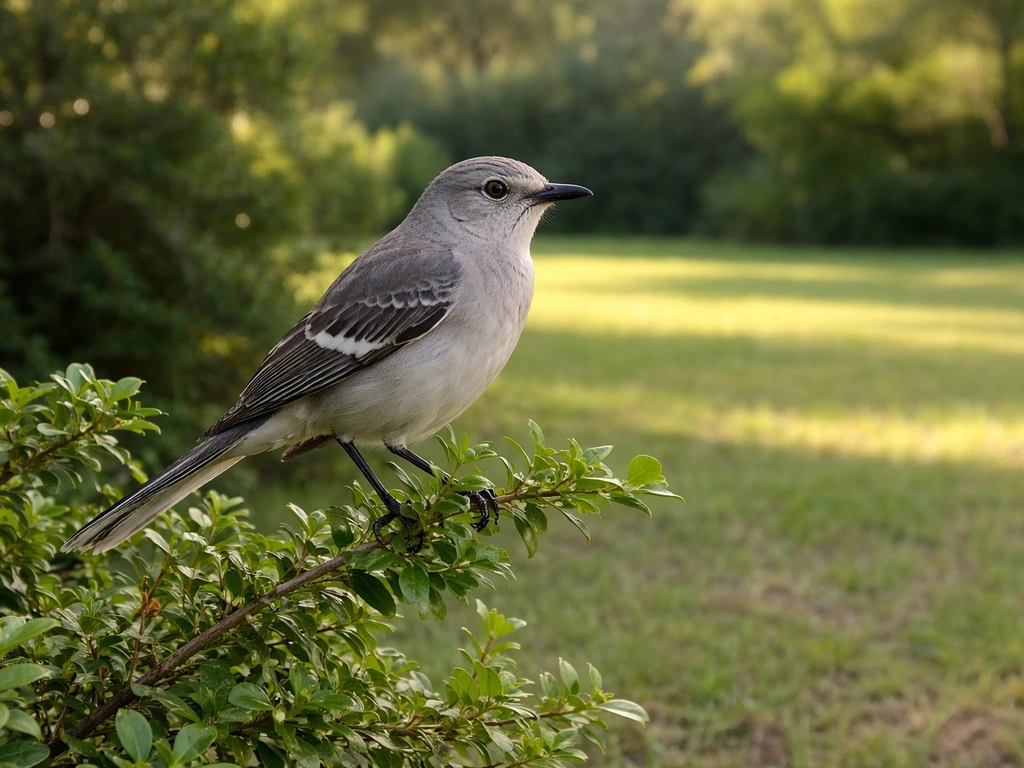
The Northern Mockingbird is a year-round resident throughout Florida, so you don't need to time a visit around migration. It thrives in open areas with shrubby vegetation: suburban lawns, hedgerows, fruiting bushes, thickets along roadsides, and the edges of parks. If you live in or visit a Florida neighborhood with hedges and a bit of open grass, you've almost certainly already heard one without realizing it. The species is equally comfortable in rural and urban settings, which is part of why it became such a recognizable Florida presence.
Florida vs. other states: who else claims the mockingbird
Florida is far from the only state that picked the Northern Mockingbird. According to the Florida Department of State, the mockingbird is also the official state bird of Arkansas, Mississippi, Tennessee, and Texas. That's five states total sharing the same species, making it one of the most common state bird designations in the country. It's a pattern concentrated heavily in the South, which reflects both the bird's natural range and the cultural affinity Southern states had for this particular species during the early 20th century when most of these designations were made.
If you want to see the full picture of how many states have the mockingbird as their state bird, that breakdown covers every state where the species holds official status. It's an interesting snapshot of regional bird preferences across American history. For state-by-state comparisons, you can also look at what state bird is the mockingbird for a broader overview of the pattern.
How Florida's choice compares to its neighbors
Texas and Tennessee made the same call as Florida, both citing the mockingbird's song as a core reason. The reasoning behind why the mockingbird is Texas's state bird closely parallels Florida's own designation story, focused on the bird's singing ability and its ubiquitous presence across the state. Similarly, why the mockingbird is the state bird of Tennessee comes down to many of the same cultural and ornithological reasons that appealed to Florida legislators in 1927.
| State | Year Designated | Official Name Used |
|---|
| Florida | 1927 | Mockingbird (Mimus polyglottos) |
| Texas | 1927 | Mockingbird (Mimus polyglottos) |
| Tennessee | 1933 | Mockingbird (Mimus polyglottos) |
| Mississippi | 1944 | Mockingbird (Mimus polyglottos) |
| Arkansas | 1929 | Mockingbird (Mimus polyglottos) |
Florida's state bird and flower together
Since many people search specifically for "Florida's state bird and flower" together, here's the quick answer: Florida's official state flower is the orange blossom. Both symbols are recognized by the Florida Department of State as official state emblems. The orange blossom, chosen to represent Florida's historic citrus industry, pairs with the mockingbird as a duo of symbols that reflect the state's natural character, one botanical, one avian. If you're studying Florida state symbols or putting together a reference list, those are your two core natural emblems: Northern Mockingbird and orange blossom.