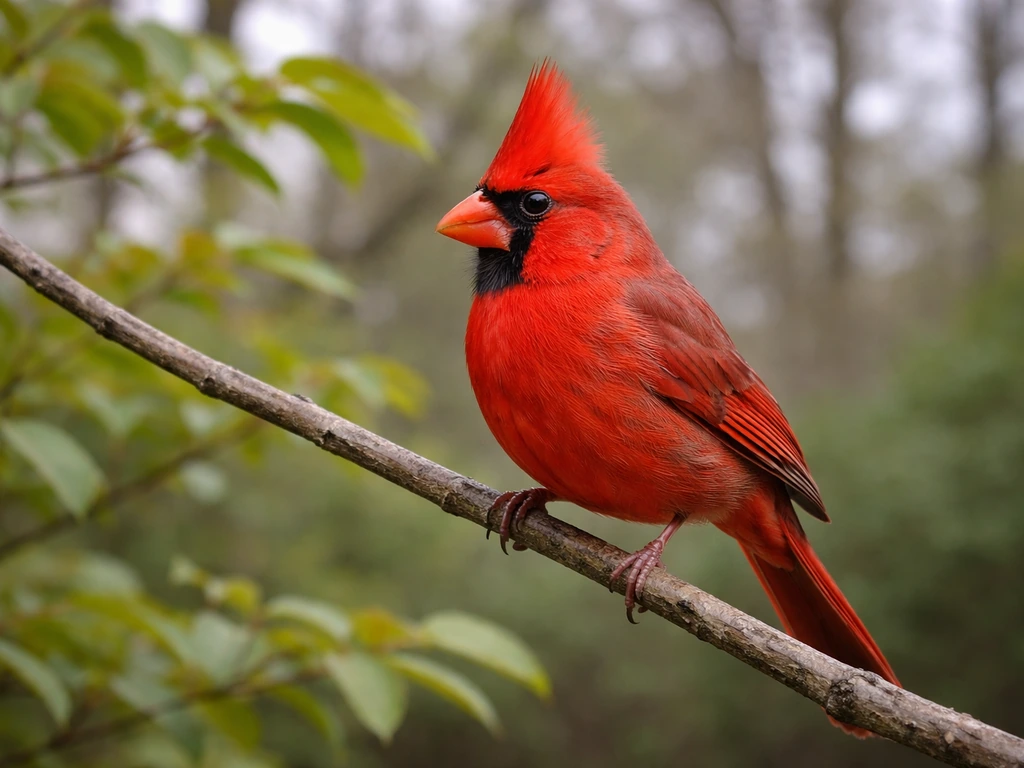
How to identify a Northern Cardinal
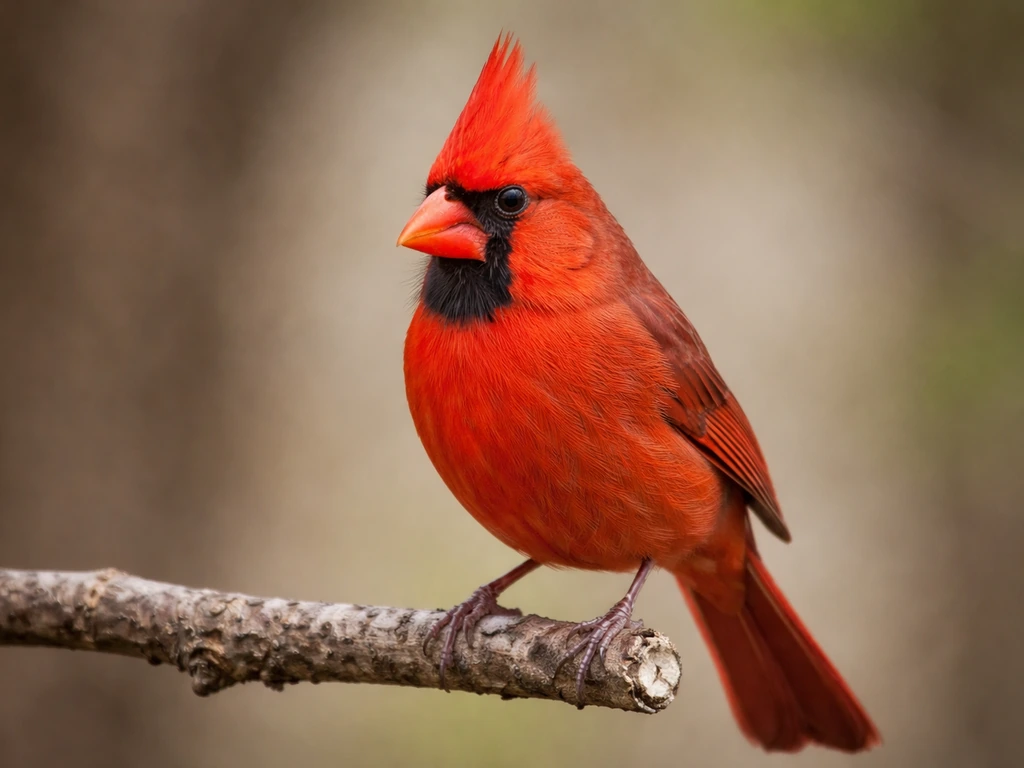
The male Northern Cardinal is one of the easiest birds to identify in North America. He is entirely blank" rel="noopener noreferrer">brilliant red with a distinctive pointed crest on top of his head and a bold black facial mask that covers his face from the forehead down through the throat. That combination of crest plus all-red plumage plus black mask makes him unmistakable. He measures about 8 to 9 inches from bill tip to tail tip, roughly the size of a robin but stockier, with a thick, cone-shaped orange-red bill built for cracking seeds.
Female Northern Cardinals look quite different from males, which trips up a lot of new birders. Females are mostly warm brownish-buff with reddish tinges on the crest, wings, and tail. They still have the same pointed crest as the male, which is the fastest way to confirm the species even when the red is absent. The female's facial mask is grayish and much less stark than the male's bold black one. Juveniles look similar to females but with a darker, dusky bill that gradually lightens as they mature.
The cardinal's song is another reliable identifier. Listen for a loud, clear, whistled 'what-cheer, cheer, cheer' pattern, often repeated insistently from a high perch. Both males and females sing, which is unusual among North American songbirds. Once you learn that song, you'll start hearing cardinals everywhere in Ohio.
Quick ID checklist
- Pointed crest on the head (present in both male and female)
- Male: all-red body plumage, black facial mask, orange-red bill
- Female: brownish-buff body with reddish tinges, grayish mask, same crest shape
- Size: 8 to 9 inches long, stocky build
- Song: loud, whistled 'what-cheer, cheer, cheer' pattern
- Thick, cone-shaped bill built for cracking seeds
Where to find cardinals in Ohio
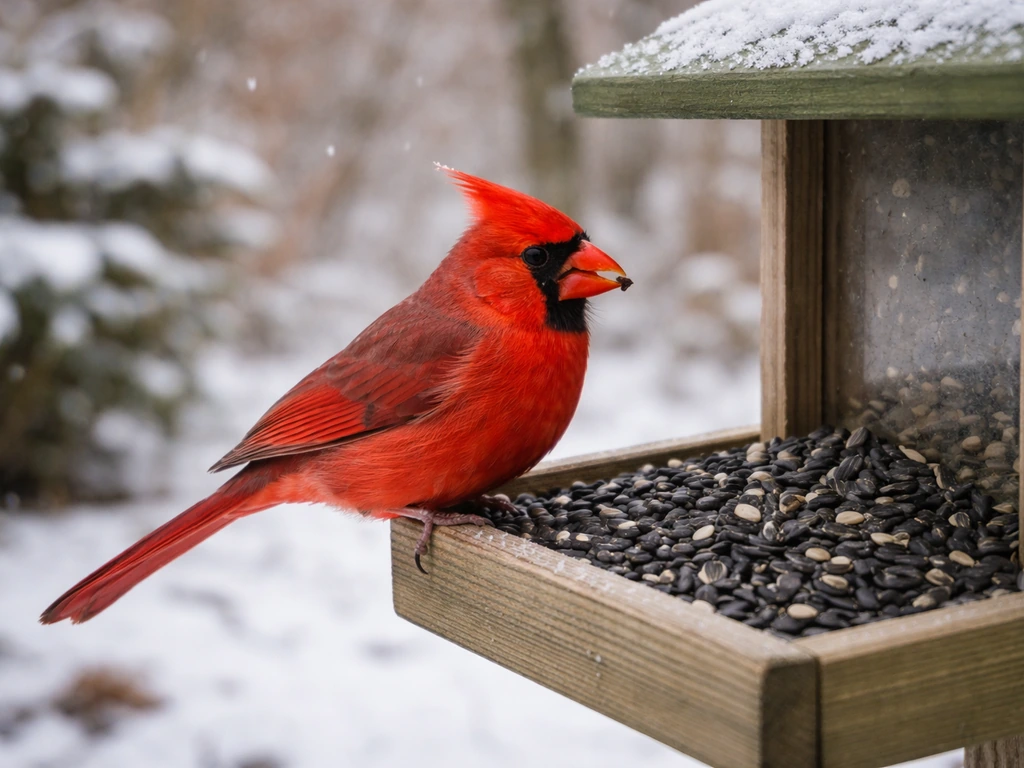
The Northern Cardinal is easily found throughout Ohio year-round. It does not migrate, so you can spot it in any season, including deep winter when that red plumage really pops against snow. Cardinals favor forest edges, hedgerows, overgrown fields, shrubby thickets, and backyard gardens. They tend to stay close to cover rather than venturing into open spaces, so look along the brushy edges of parks, yards, and woodland borders.
If you want a reliable sighting, set up a backyard feeder with black-oil sunflower seeds. Sunflower seeds are a cardinal favorite, and even in densely urban parts of Ohio, a well-stocked feeder will draw them in. Cardinals also visit feeders early in the morning and again around dusk, so those are the best windows if you're trying to get a good look. They're not particularly skittish once they've claimed a feeder as their own territory.
Why Ohio chose the cardinal in 1933
Ohio designated the Northern Cardinal as its state bird in 1933. The reasoning behind the choice follows a pattern common to several Midwestern and mid-Atlantic states: the cardinal is a permanent resident (no migration), it's widespread and easily recognized by everyday residents, and its striking appearance makes it a natural emblem. A bird that virtually every Ohioan could recognize, regardless of whether they were a birder, had obvious symbolic appeal as a state symbol.
The cardinal's year-round presence was particularly meaningful. Unlike migratory birds that only visit part of the year, the cardinal is a consistent, visible presence in Ohio landscapes through every season. That reliability and the male's unforgettable red plumage gave it a recognizability that other candidates simply couldn't match. It felt like a genuinely Ohio bird, even though it ranges much more broadly.
Ohio isn't alone: six other states picked the same bird
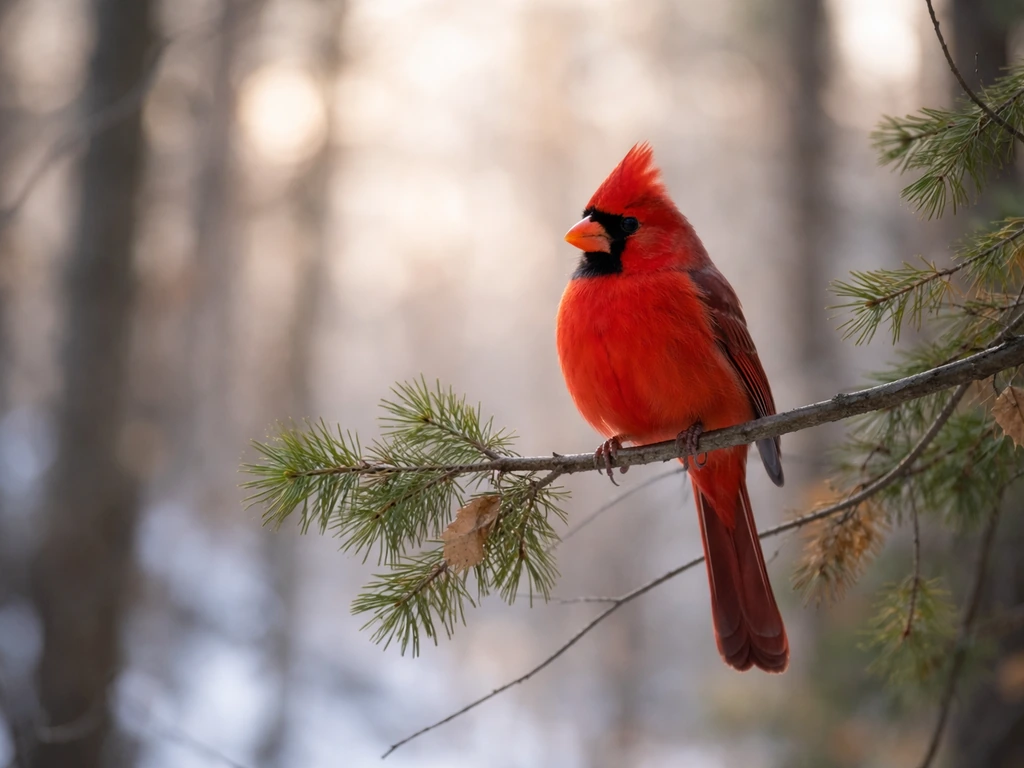
Here's a fun fact that surprises a lot of people: the Northern Cardinal is the state bird of seven states total. Ohio shares the designation with Illinois, Indiana, Kentucky, North Carolina, Virginia, and West Virginia. Kentucky’s state bird is the Northern Cardinal. That makes it the most commonly chosen state bird in the United States. All seven states adopted Cardinalis cardinalis, the same species, even if the exact wording in each state's legal code varies slightly.
| State | State Bird | Year Adopted |
|---|
| Ohio | Northern Cardinal | 1933 |
| Illinois | Northern Cardinal | 1929 |
| Indiana | Northern Cardinal | 1933 |
| Kentucky | Northern Cardinal | 1926 |
| North Carolina | Northern Cardinal | 1943 |
| Virginia | Northern Cardinal | 1950 |
| West Virginia | Northern Cardinal | 1949 |
Kentucky was actually the first state to officially designate the Northern Cardinal, doing so in 1926, making it the trailblazer for what became a popular choice across the region. If you're curious about the Kentucky or Indiana designations specifically, those states went through similar reasoning processes, emphasizing the bird's year-round presence and easy recognition by residents. If you're wondering what that means in Indiana, the Indiana state bird is the Northern Cardinal. The regional clustering makes sense: the cardinal is especially abundant in the Eastern and Midwestern United States, right where these seven states are located.
How to tell cardinals apart from similar red birds
In Ohio, the birds most likely to cause confusion with a Northern Cardinal are the House Finch (males have red on the head and breast but no crest and no black mask) and the Purple Finch (similar red wash but again, no crest). Once you know to look for the crest, the confusion usually clears up immediately. Female cardinals can occasionally be confused with female House Finches, but again the crest solves it: finches don't have one. The thick seed-cracking bill is also noticeably larger on a cardinal than on any of the finch species.
Where to go from here
If you want to go deeper on the Northern Cardinal specifically, the Cornell Lab's All About Birds and the Audubon Field Guide are the two best free resources online. Both include photos of males, females, and juveniles, audio recordings of songs and calls, and range maps that show exactly where and when you can expect to find the species across Ohio and the rest of the country. Cross-referencing both is a solid habit for any bird you're trying to confirm.
For Ohio-specific information, the Ohio DNR's common birds materials are a practical starting point, and they specifically confirm the cardinal as easily found throughout the state. If you're building out a broader knowledge of state birds, a compiled list from a source like Britannica gives you a quick overview of all 50 states, which you can then verify against each state's official code or symbol pages for accuracy.
Since the cardinal is shared across seven states, comparing Ohio's designation to neighboring Indiana or Kentucky is a natural next step if you're exploring the regional patterns behind state bird choices. If you want to compare Kentucky's bird-of-state choice as well, see what is the bird of kentucky. Each state has its own story for why it landed on the same species, and those stories reveal a lot about how Americans in the early-to-mid 20th century thought about wildlife, identity, and what made a fitting state emblem.
- Confirm Ohio's official state bird in Ohio Revised Code Section 5.03 directly if you need a primary legal source
- Use All About Birds or Audubon to learn the cardinal's full range, song, and plumage variations for identification
- Set up a sunflower seed feeder to attract cardinals to your own yard anywhere in Ohio
- Compare Ohio's cardinal designation to neighboring Indiana, Kentucky, and other cardinal states to understand the regional pattern
- Use a compiled state bird list to explore which other states chose unique birds, then verify each via official state symbol pages