South Carolina's <a data-article-id="463545D6-B78F-46C7-885C-6CB55769C5B2">official state bird</a> is the Carolina Wren (Thryothorus ludovicianus). It was designated by Act No. 693, signed into law on April 2, 1948, replacing an earlier state bird that had been chosen in 1939. If you hear a loud, ringing "tea-ket-tle, tea-ket-tle, tea-ket-tle" coming from a brushy thicket somewhere in South Carolina, that's almost certainly who you're looking for.
What Is the State Bird of South Carolina? Facts and History

Marcus Webb
24 Apr 2026
South Carolina's Official State Bird
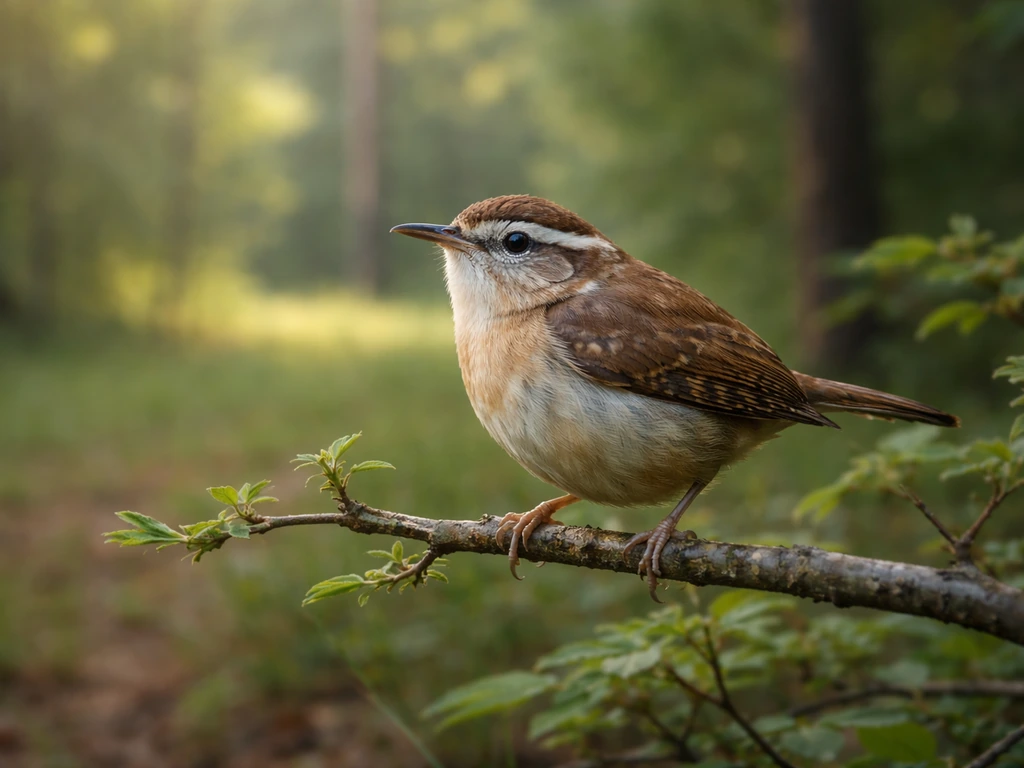
The Carolina Wren holds the official designation under the Code of Laws of South Carolina. It's one of those state symbols that genuinely makes sense geographically: the bird's common name literally includes the word Carolina, and it's a year-round resident across the entire state. You won't need to time a visit or wait for migration season. It's there in summer, winter, dawn, dusk, and just about any weather condition you can name.
How to Identify a Carolina Wren
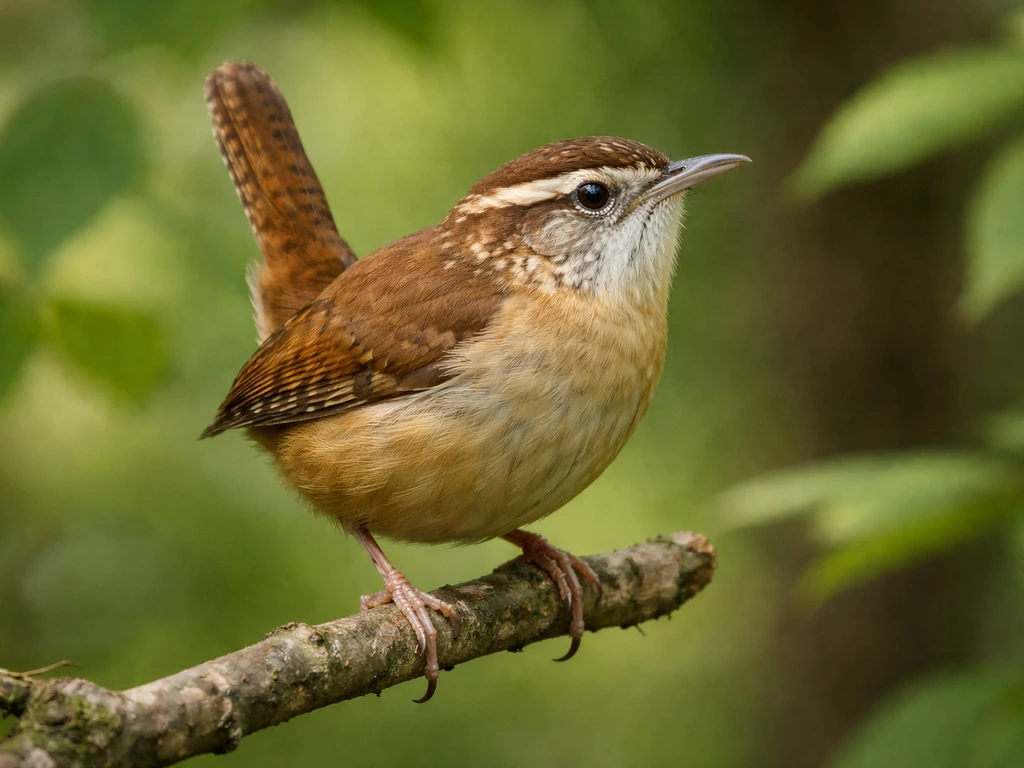
For a small bird, the Carolina Wren is remarkably easy to pick out once you know what to look for. It's chunky and round-bodied with a long tail it frequently cocks straight upward, almost like a flag. The coloring is warm and rich: chestnut to reddish-brown on the back, with butterscotch or cinnamon-orange underneath. The single most reliable field mark is a bold white eyebrow stripe that runs cleanly from the base of the bill across the side of the head. The bill itself is long and noticeably down-curved, which helps separate it from other small brown birds at a glance.
The call is arguably the easiest identifier of all. Carolina Wrens are famously loud for their size, and the classic song is a repeated, whistled "tea-ket-tle, tea-ket-tle, tea-ket-tle" that carries a long way through dense cover. They also throw in sharp chattering notes and alarm calls. Once you've locked in that song, you'll recognize it instantly anywhere in the Southeast.
| Feature | What You'll See or Hear |
|---|---|
| Body shape | Small and chunky with a rounded body |
| Tail | Long, often cocked upward |
| Back color | Rich chestnut or reddish-brown |
| Underparts | Warm cinnamon or butterscotch-orange |
| Eyebrow stripe | Bold, bright white |
| Bill | Long and down-curved |
| Song | Repeated "tea-ket-tle, tea-ket-tle, tea-ket-tle" |
Where to Find Carolina Wrens in South Carolina
Carolina Wrens thrive in dense, low vegetation: brushy forest edges, thickets, the undergrowth of deciduous and mixed woodlands, and wooded swamps. They're equally at home in suburban backyards as long as there's some tangled cover near the ground. You're not looking in open fields or high up in tree canopies. Check brush piles, dense shrubs near fences, and the edges where yards meet wooded areas.
One practical advantage of looking for this bird in South Carolina is that it's a true year-round resident. You can hear it singing on cold January mornings just as readily as on warm April afternoons. The State House symbols page notes the wren's song may be heard year-round, day and night, in all kinds of weather, which is a genuine description of its behavior, not marketing copy. Its broader natural range stretches from the Atlantic coast west through Texas, Nebraska, Kansas, and eastern Oklahoma, but the Carolinas are squarely in its sweet spot.
Why South Carolina Chose the Carolina Wren
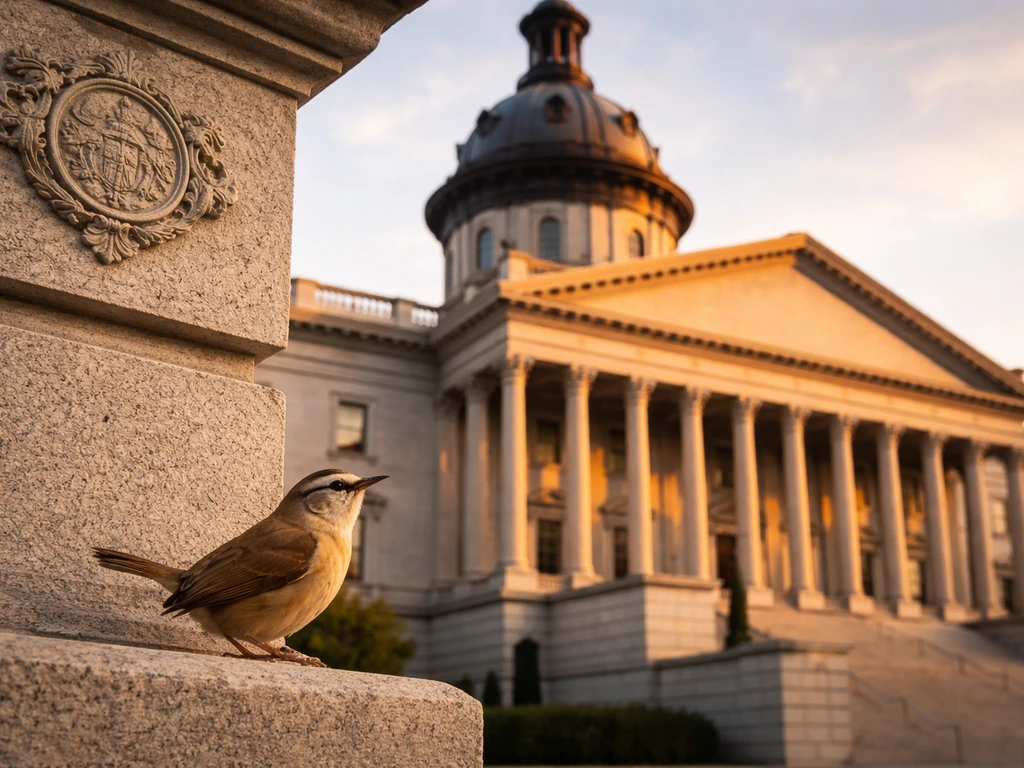
The reasoning is pretty straightforward when you think about it. South Carolina's official state bird is the Carolina Wren (Thryothorus ludovicianus) why is the carolina wren the state bird. The bird carries the state's name, it lives there permanently, it's found across the entire state rather than just one region, and it's vocal enough that nearly anyone who spends time outdoors in South Carolina will have heard it without necessarily knowing what it was. The song is distinct and recognizable, which matters when you want a symbol that resonates with everyday residents, not just birders.
The official State House materials lean into the song as a key feature, quoting the "tea-ket-tle" phrasing directly as a way for people to connect with the bird. A state symbol that even non-birders can identify by ear is a genuinely practical choice.
The History Behind the Designation
South Carolina's state bird history has a small wrinkle worth knowing about. The state first designated an official state bird back in 1939, but that bird was later replaced. Act No. 693, passed in 1948 and signed by Governor Strom Thurmond on approximately April 2-3, 1948, repealed the 1939 act and officially designated the Carolina Wren in its place. That 1948 act is the current legal basis for the designation, and it's the version codified in the South Carolina Code of Laws.
This history matters because some older sources still reference the 1939 designation without noting that it was repealed. If you've seen conflicting information online about South Carolina's state bird, that's likely the source of the confusion. The Carolina Wren has been the official bird since 1948, and that hasn't changed.
Which Other States Share the Carolina Wren?
South Carolina is the only U.S. state that has designated the Carolina Wren as its official state bird. Despite the species being common across much of the eastern and southern United States, no other state has claimed it as their own. That makes South Carolina's choice both regionally fitting and distinctive.
For comparison, neighboring North Carolina went a different direction entirely: the Northern Cardinal is North Carolina's state bird. The Northern Cardinal became the official state bird of North Carolina because it was a fitting statewide symbol tied to the bird’s presence and cultural familiarity. If you want the quick answer, North Carolina’s state bird is the Northern Cardinal North Carolina's state bird. If you're curious about that choice or want to understand why two states with nearly identical names picked completely different birds, that's a worthwhile comparison to explore. The Carolina Wren's range certainly extends into North Carolina as well, which makes the split an interesting piece of state-symbol trivia.
Quick Reference: Carolina Wren at a Glance
- Official state bird of South Carolina since 1948 (Act No. 693)
- Scientific name: Thryothorus ludovicianus
- Small, chunky bird with a cocked tail and bold white eyebrow stripe
- Rich cinnamon-orange underparts and reddish-brown back
- Long, down-curved bill
- Signature song: loud, repeated "tea-ket-tle, tea-ket-tle, tea-ket-tle"
- Year-round resident across all of South Carolina
- Found in brushy thickets, forest edges, wooded swamps, and suburban backyards
- The only U.S. state with the Carolina Wren as its official state bird
FAQ
Is the Carolina Wren the current official state bird of South Carolina, or did it change?
The Carolina Wren is the official state bird, so it is legally recognized by the state. If you are looking at a different wren or a different bird listed in a guide, that is usually a reference to older material from before the 1948 change.
Can you see or hear the state bird in South Carolina year-round?
Yes, the Carolina Wren is present year-round in South Carolina. That means you can plan a birding outing any month and still have a good chance of hearing its song, especially around dense shrubs near the ground.
Where should I look for the Carolina Wren in South Carolina?
Your best odds come from listening first, then looking low. The species favors brushy edges and thickets, so scanning open fields or high tree canopies is usually the fastest way to miss it.
What is the easiest way to identify the Carolina Wren if it stays hidden?
The most reliable visual field mark is the bold white eyebrow stripe across the side of the head, plus its long down-curved bill. Even when the bird is partially hidden, that eyebrow line is often visible during brief pauses.
What sound should I listen for to confirm it is the Carolina Wren?
For confirmation, focus on the call pattern. The classic repeated “tea-ket-tle” whistled phrase carries far through dense cover, and alarm or chattering notes often come right after brief, excited movements.
Can I rely on bird ID apps to confirm the state bird, and what should I watch out for?
If you use audio-recording apps, be aware that background noise in wooded or swampy areas can cause misidentifications. For a quick check, match both the loud “tea-ket-tle” sequence and the location (low brush, thickets, yard edges).
Why do I hear the bird but cannot find it visually?
Carolina Wrens are frequently heard before they are clearly seen, and they may call from inside cover or at the edge of a brush pile. Try to watch for tail-cocking behavior (tail held up) when you finally spot the bird.
Why do some older sources disagree about South Carolina’s state bird?
Older references sometimes list South Carolina’s 1939 state bird without noting that it was replaced in 1948. If a source disagrees with the Carolina Wren, check whether it is referencing the pre-1948 designation.
Is any other state besides South Carolina using the Carolina Wren as its state bird?
South Carolina is the only U.S. state that has designated the Carolina Wren as its state bird. Other states may have similar “common backyard bird” choices, but the legal designation is unique to South Carolina.
How does South Carolina’s state bird compare to North Carolina’s state bird?
Neighboring North Carolina chose the Northern Cardinal instead. If you are comparing states, the key takeaway is that both birds are common in the region, but the symbolic choices are different and not tied to the shared bird range alone.