Kansas's state bird is the western meadowlark (Sturnella neglecta). It was chosen by a statewide vote of Kansas schoolchildren in 1925, organized by the Kansas Audubon Society, and the Kansas Legislature made it official by statute in 1937. The reason it won comes down to simple fit: the western meadowlark is a bird of open prairies and grasslands, and Kansas is one of the great grassland states. That connection between bird and landscape made it a natural, almost obvious choice.
Why Is the Western Meadowlark Kansas State Bird? Year, Reasons

Marcus Webb
16 May 2026
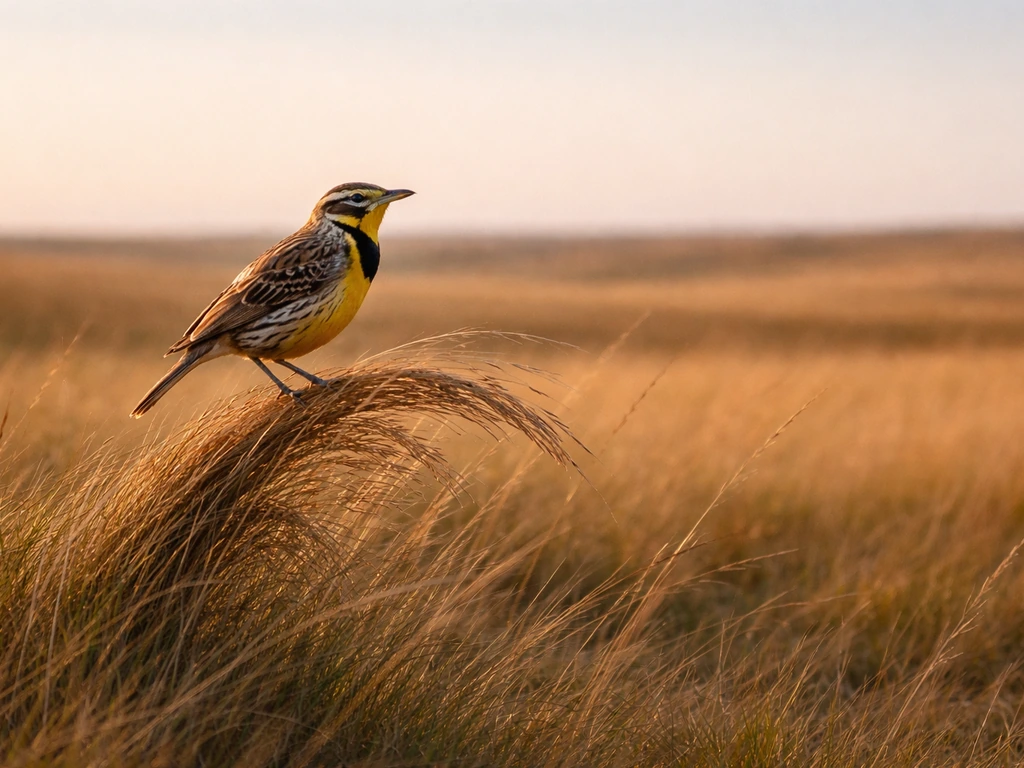
Kansas's State Bird Is the Western Meadowlark
Kansas designated the western meadowlark as its official state bird under Kansas Statute 73-901, which reads: "The bird known as the western meadow lark, Sturnella-Neglecta (Audubon), as preferred by a vote of Kansas school children, is hereby designated and declared to be the official bird of the state of Kansas." That statute was enacted June 30, 1937, as Chapter 319, Section 1 of that year's legislative session.
What the Vote Actually Was (and Why 1937 Matters)

There's a gap of twelve years between the vote and the law, and it's worth understanding. In 1925, the Kansas Audubon Society ran a statewide election asking Kansas schoolchildren to pick a state bird. According to contemporary reporting, more than 300,000 children participated. The western meadowlark came out on top with nearly 125,000 votes, beating the bobwhite (which took second) and the northern cardinal (third). That's a convincing plurality, not a squeaker.
But a school vote isn't a law. The legislature didn't act on that result until 1937, when it passed the formal statute codifying the children's choice. So if you see references to 1925 and 1937 in different sources, both are accurate: 1925 is when the people (well, the schoolchildren) voted, and 1937 is when it became binding state law.
Why Kansas Picked the Western Meadowlark
The symbolism isn't complicated, and that's probably why it resonated with voters of all ages. The western meadowlark lives in open grasslands, meadows, prairies, and agricultural fields. Kansas is all of those things. The Flint Hills, the High Plains, the wheat fields of central Kansas: this is exactly the habitat the meadowlark prefers. It's not a species that occasionally passes through. It breeds here, raises young here, and fills the Kansas summer with one of the most recognizable bird songs in North America.
The Kansas Historical Society describes the meadowlark's song as having a "flute-like quality and range of melody" that conjures "a pastoral scene of prairie grasses and clear blue skies on a warm June day in Kansas." That's not just poetic: it captures exactly why this bird feels like a Kansas bird. You hear it before you see it, perched on a fence post or a tall grass stem, and the sound fits the landscape perfectly. When thousands of Kansas schoolchildren were asked to pick a bird that meant something to them, this is the one that came to mind.
Know the Bird: What the Western Meadowlark Looks and Sounds Like
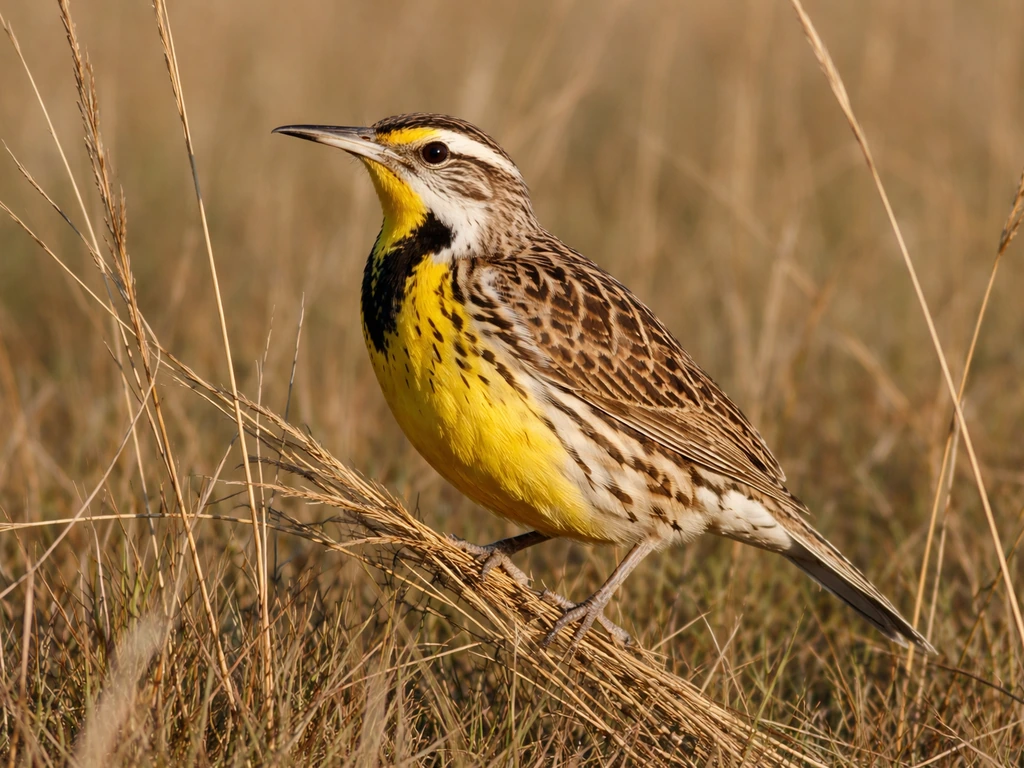
If you're going to look for Kansas's state bird, you need to know what you're looking for. The western meadowlark is a medium-sized songbird, roughly robin-sized but stockier. The field marks are distinctive and easy to lock onto once you know them.
- Bright yellow underparts on the chest and belly, vivid enough to stand out at distance
- A bold black V-shaped band across the chest (sometimes called a necklace or bib), which is the single best field mark
- Upperparts are intricately patterned brown, black, and buff, providing excellent camouflage in grass
- Short tail with white outer tail feathers that flash when the bird flushes
- Distinctive low, quail-like wingbeats when flying from a perch
The song is what you're most likely to notice first. It's a rich, flute-like jumble of gurgling notes that generally descend the scale. This is distinct from the eastern meadowlark, which has a simpler, cleaner whistle. If you hear something that sounds like a musical waterfall pouring downward, that's a western meadowlark. Kansas sits in western meadowlark country, so in most of the state you won't have to worry about confusing the two species.
Where to Find Them in Kansas
Western meadowlarks are a year-round presence across most of Kansas, with numbers peaking during the breeding season in spring and early summer. They stick to open country: grasslands, pastures, wheat fields, roadsides with adjacent meadows. Singing males perch conspicuously on fence posts, utility wires, or tall vegetation. Driving rural Kansas roads in May or June, you can hear the song clearly from the car window. That roadside detectability makes this one of the easier state birds to actually find in the wild.
For Kansas specifically, the Flint Hills region is one of the best places in the country to encounter meadowlarks in native tallgrass prairie habitat. The bird's song is essentially the soundtrack of a Kansas spring morning in that landscape.
Kansas Isn't Alone: Other States with the Same Bird
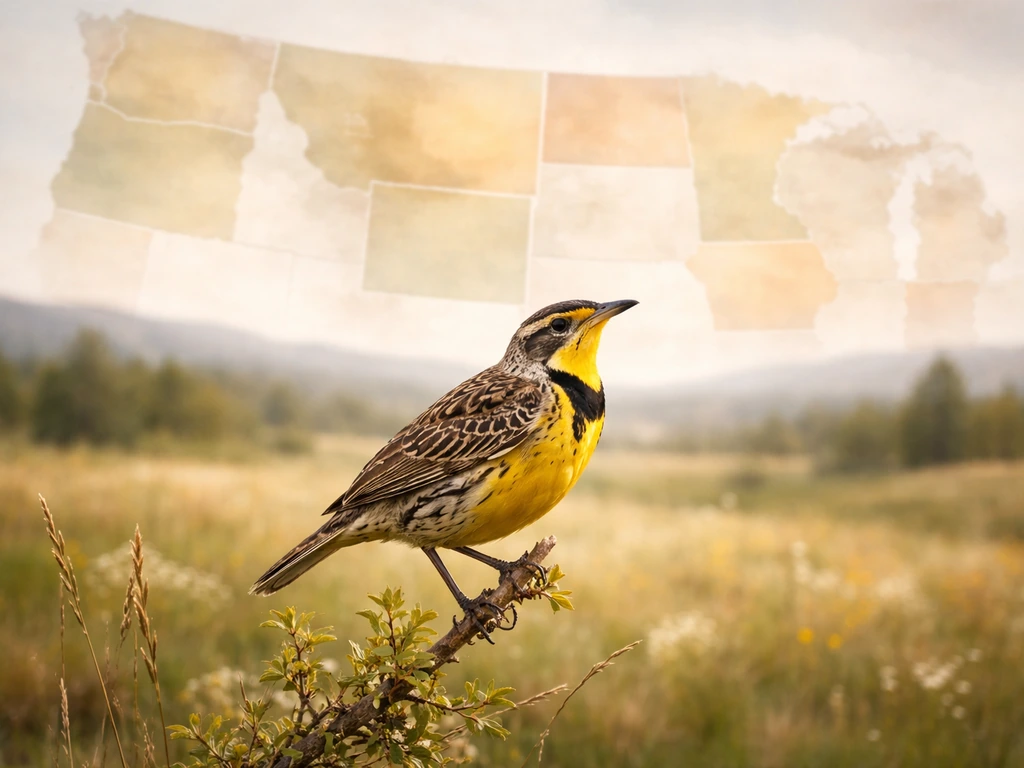
The western meadowlark is the state bird of six states total: Kansas, Nebraska, Montana, North Dakota, Oregon, and Wyoming. That's more states than any other bird except the northern cardinal. All six share one thing: substantial open grassland or prairie habitat where meadowlarks thrive. Nebraska adopted it in 1929, just four years after Kansas schoolchildren voted.
Other states have also named the western meadowlark as their state bird, and the list depends on each state's election or statute. [Oregon's schoolchildren made the same choice in 1927](https://www. dfw. state.
or. us/conservationstrategy/docs/Meadowlarkfactsheet. pdf), two years after Kansas. If you're wondering why Oregon went with the western meadowlark, the reasoning comes down to the bird's strong tie to open grasslands and prairie habitat Oregon's schoolchildren made the same choice in 1927. Oregon also picked the western meadowlark for the same basic reason: it is strongly tied to open grasslands and prairie habitat.
So if you're exploring pages on why Wyoming or Oregon chose the meadowlark, the core reasoning is similar: abundance, strong song, and a perfect match to the landscape. The same habitat-match logic also explains why the western meadowlark is the state bird of Wyoming why Wyoming or Oregon chose the meadowlark. The western meadowlark was chosen as Wyoming's state bird because it is a prairie grassland bird that fits the state's landscape state bird of Wyoming.
Where to Go From Here
If you want to verify the statute yourself, Kansas Statute 73-901 is the primary source and it's publicly available on the Kansas Legislature's website. For natural history and identification help, the Kansas Historical Society's Kansapedia entry on the western meadowlark is a solid starting point, and the Cornell Lab's All About Birds site has range maps and audio of the song so you can learn to recognize it by ear before heading out. If you're planning a trip to Kansas and want to hear the bird in its best habitat, the Flint Hills National Scenic Byway runs through some of the most intact tallgrass prairie remaining in North America, and meadowlarks are common there from April through August.
| State | Year Voted / Selected | Year Made Official |
|---|---|---|
| Kansas | 1925 (schoolchildren vote) | 1937 |
| Oregon | 1927 (schoolchildren vote) | 1927 |
| Nebraska | 1928 (schoolchildren vote) | 1929 |
| Wyoming | 1927 | 1927 |
| Montana | 1931 | 1931 |
| North Dakota | 1947 | 1947 |
Kansas is a clear case of a state symbol that earned its status from the ground up: children voted, the bird won decisively, and the legislature eventually followed. The western meadowlark fits Kansas not because someone in government decided it should, but because hundreds of thousands of Kansas kids already knew it belonged there.
FAQ
What is the official scientific name on the Kansas statute, and why do you sometimes see it written differently?
Kansas Statute 73-901 uses a spelled-and-hyphenated form (Sturnella-Neglecta). In modern field guides you will usually see it styled as Sturnella neglecta, which is the same species name updated for standard formatting.
How can I tell a western meadowlark from an eastern meadowlark when I am in Kansas?
In Kansas, the main practical ID risk is noticing calls versus songs. The western meadowlark’s song is more obviously flute-like and tends to descend, while the eastern meadowlark’s song is simpler and whistle-like. If you hear a downward, waterfall-like musical phrase, that pattern usually points west.
If meadowlarks are year-round in Kansas, when is the best time to hear them?
Although they persist through winter in much of the state, the highest activity comes in spring and early summer during breeding. Peak roadside singing is often May through June, especially in open grasslands near fence lines and tall stems.
Do western meadowlarks stay in one place year-round, or do they move around?
They are generally resident across most of Kansas rather than being strongly migratory. That said, individuals will still shift to suitable open habitat as local conditions change (for example, where grass is cut or where crop fields are fallow).
Are they common in towns, or do you have to go to prairies?
You do not have to be in remote prairie to find them. They commonly use open country features inside the broader Kansas landscape, like pasture edges, wheat fields, roadsides with adjacent meadows, and places with fence posts and grasses where males can perch and sing.
Where in Kansas should I go if I want the highest chance of seeing them?
For native tallgrass prairie habitat, the Flint Hills is a top bet. Within that region, meadowlarks are especially reliable in open prairie landscapes from about April through August, and they often sing from conspicuous perches.
Why did the state wait from 1925 to 1937 to make it official?
The 1925 vote was a schoolchildren contest, which established a public preference but was not automatically binding law. The legislature later passed a statute that codified the children’s choice, which is why references to both years appear.
How does the Kansas legislature’s statute language connect to the school vote?
The statute’s key phrase designates the bird “as preferred by a vote of Kansas school children.” That ties the legal authority directly to the outcome of the statewide election rather than to a later state agency recommendation.
Could another bird have been chosen, and how close was the vote in 1925?
It was not close. The western meadowlark won with nearly 125,000 votes, ahead of the bobwhite in second and the northern cardinal in third, which made the result a clear plurality rather than a narrow margin.
Next Articles

What Is the State Bird of Wyoming? Western Meadowlark
Wyoming’s state bird is the western meadowlark, Sturnella neglecta, designated Feb 5, 1927.
Which Is Karnataka State Bird? Identification and Facts
Discover Karnataka’s official state bird, key ID traits, where to spot it, and why it was chosen.
What Is the Telangana State Bird? Official Bird and How to Spot It
Discover Telangana’s official state bird, key traits to spot it, and why it was chosen, with quick context.