Saskatchewan's provincial bird is the sharp-tailed grouse (Pedioecetes phasianellus james). Prince Edward Island has its own provincial bird, which is different from Saskatchewan’s sharp-tailed grouse what is the provincial bird of Prince Edward Island. It was officially adopted as the provincial bird emblem in 1945 and is enshrined in Saskatchewan's Provincial Emblems and Honours Act. It's a prairie-native gamebird that fits Saskatchewan's landscape perfectly, and it's the only Canadian province to claim this species as its official bird.
What Is Saskatchewan’s Provincial Bird? Identify It Fast

Marcus Webb
23 May 2026

Saskatchewan's Provincial Bird at a Glance
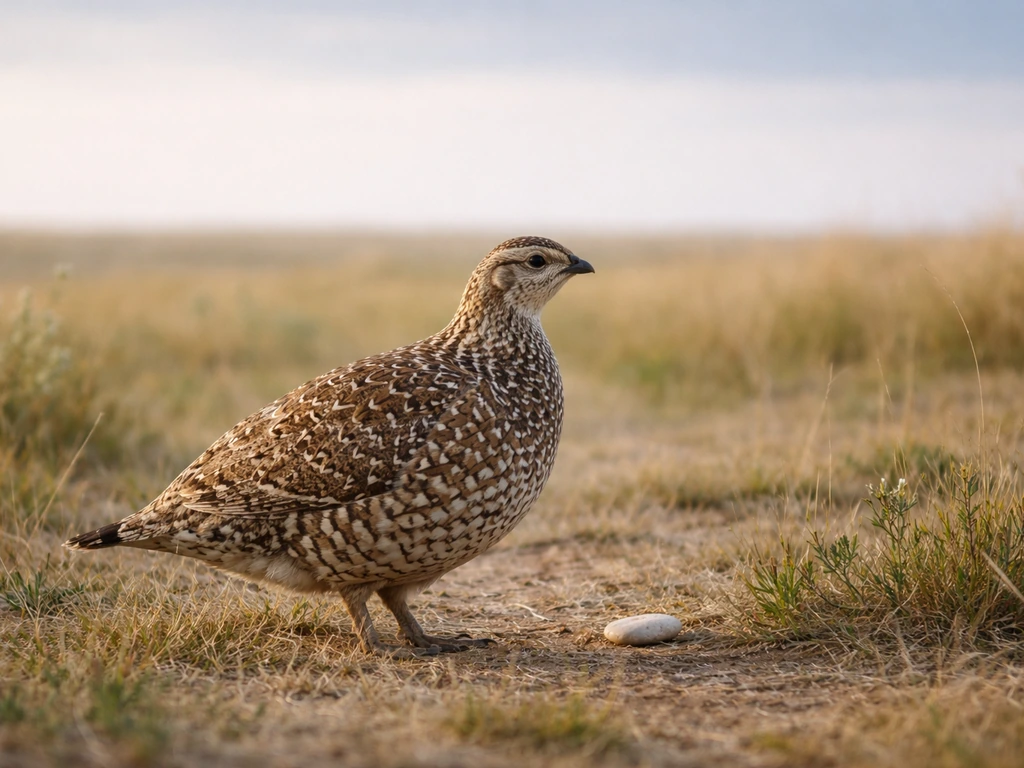
The sharp-tailed grouse is a chunky, chickenlike bird that sits in the 41 to 47 cm range in total body length. Think of it as blank" rel="noopener noreferrer">a tubby, ground-dwelling bird with a small head, a short bill, short legs, and the feature that gives it its name: a medium-long, graduated (pointed) tail that sticks up noticeably in flight and during display. The overall plumage is a streaked brown and buff pattern, designed for blending into grassland and open brush terrain.
If you're watching males during spring, you'll know you've found a sharp-tailed grouse immediately. They gather on traditional dancing grounds called leks, inflate their purple neck sacs, rattle their tail feathers rapidly, and produce a hollow, cooing sound as the sacs deflate. It's one of the more dramatic courtship displays among North American gamebirds and is a reliable behavioral ID marker during the spring months.
How to Recognize It in the Field
The sharp-tailed grouse's most important identification detail is its underparts pattern: the belly and breast are covered in V-shaped spots, not horizontal bars. This matters because the bird is frequently confused with the Greater Prairie-Chicken and Lesser Prairie-Chicken, both of which have barred underparts. If you're looking at a grouse-sized bird in open grassland and the underparts are spotted rather than barred, you're looking at a sharp-tailed grouse.
- Body length: 41 to 47 cm
- Build: stocky, chickenlike, with a small head and short bill
- Tail: pointed, medium-long, graduated — the key structural feature
- Underparts: spotted (V-shaped marks), not barred — critical ID vs. prairie-chickens
- Plumage: streaked brown, buff, and white overall
- Display: males inflate purple neck sacs, rattle tail feathers, and coo at leks in spring
Where to Find It in Saskatchewan
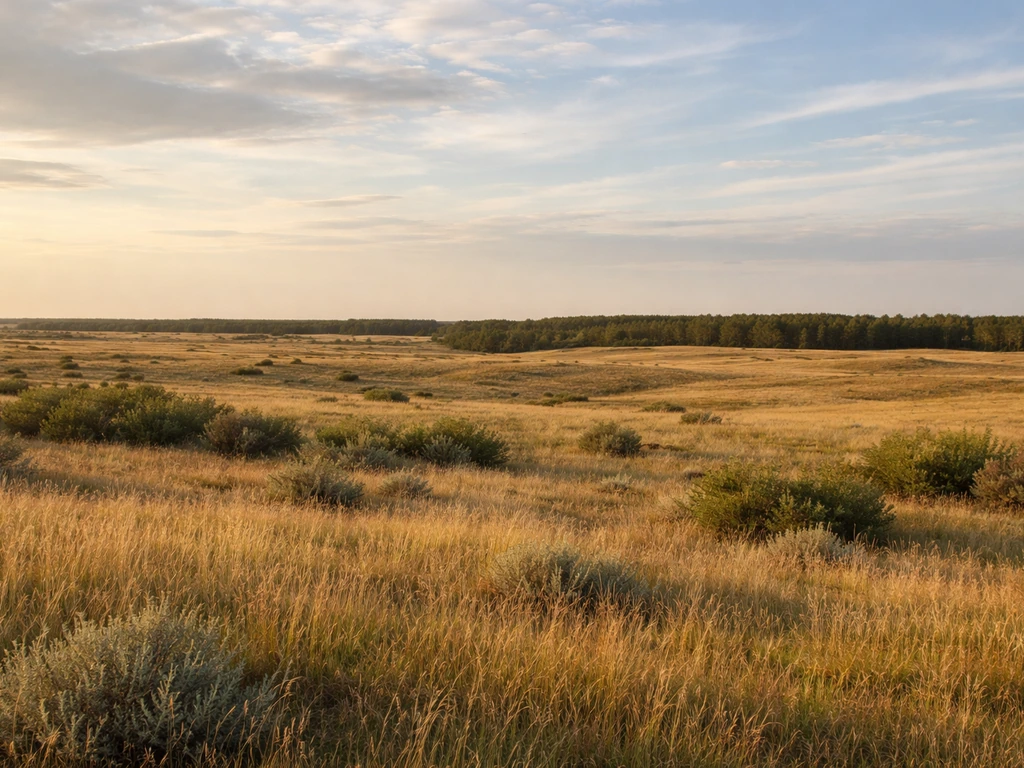
The sharp-tailed grouse is most common in Saskatchewan's grassland and parkland regions, which cover a large swath of the southern and central parts of the province. It's also found in openings within the boreal forest further north, so its range covers more of Saskatchewan than you might expect. As a prairie gamebird, it's tracked through Saskatchewan's prairie game bird population review programs, which means population data is relatively well-documented compared to many species.
Why Saskatchewan Chose the Sharp-Tailed Grouse
The choice makes intuitive sense for a province defined by its prairies. The sharp-tailed grouse is one of the most characteristic birds of Saskatchewan's grassland and parkland ecosystems. Selecting it in 1945 was a statement about prairie identity, linking the province's official symbol directly to its dominant landscape and wildlife heritage. The Encyclopedia of Saskatchewan specifically describes the bird as a 'prairie inhabitant,' reinforcing that the emblem was chosen to represent the ecology of the province, not just to pick a popular or showy bird.
It also helps that the sharp-tailed grouse has practical visibility. It's a gamebird with a long history of being hunted in the prairies, so it was well-known to Saskatchewan residents in 1945 in a way that, say, a rarer or more secretive species would not have been. The combination of ecological relevance, cultural familiarity, and genuine abundance in the province made it a natural fit.
The History Behind the Designation
Saskatchewan officially adopted the sharp-tailed grouse as its provincial bird in 1945. The designation is recorded on Canada.ca's official provincial and territorial symbols page, which lists both the common name and the scientific name (Pedioecetes phasianellus james). The symbol was later codified in The Provincial Emblems and Honours Act, Saskatchewan's governing statute for official provincial symbols, which names the sharp-tailed grouse as 'the bird emblem of Saskatchewan.' This legal codification makes the designation one of the more formally anchored provincial bird choices in Canada.
How to Verify This Yourself
If you want to confirm the designation from primary sources rather than taking anyone's word for it, there are four solid places to check:
- Canada.ca (Canadian Heritage provincial and territorial symbols page): Lists Saskatchewan's bird as the sharp-tailed grouse with scientific name and the 1945 adoption year.
- The Provincial Emblems and Honours Act (Publications Saskatchewan): The actual statute text, which names the sharp-tailed grouse as 'the bird emblem of Saskatchewan.'
- Government of Saskatchewan publications on prairie game bird populations: Explicitly refers to 'Saskatchewan's provincial bird, the sharp-tailed grouse' in official program documents.
- The Encyclopedia of Saskatchewan (ESASK, Royal Saskatchewan Museum / University of Regina): Provides both symbol context and species identification details.
The Canada.ca page and the statute text are the two strongest sources since they come directly from government. The ESASK entry is the most useful for understanding the bird itself in a Saskatchewan-specific context.
How Saskatchewan's Choice Compares to Other Provinces
The sharp-tailed grouse is unique to Saskatchewan among Canadian provincial birds. No other province has designated it as their official bird, which gives Saskatchewan's emblem a distinctiveness that not every province can claim. For comparison, Ontario's provincial bird is the common loon, and British Columbia's is the Steller's jay. British Columbia’s provincial bird is the Steller's jay British Columbia's provincial bird.
Ontario's provincial bird is the common loon. Nova Scotia and Prince Edward Island have also chosen birds tied to their regional identity. Prince Edward Island’s provincial bird is the American oystercatcher provincial bird of Prince Edward Island. Nova Scotia's provincial bird is the Atlantic puffin what is the provincial bird of nova scotia.
Saskatchewan's choice stands apart because it's rooted specifically in prairie ecology rather than a more universally recognizable species. what is the provincial bird of nova scotia Other provinces' provincial birds.
| Province | Provincial Bird | Habitat Connection |
|---|---|---|
| Saskatchewan | Sharp-tailed grouse | Grassland and parkland prairies |
| Ontario | Common loon | Lakes and boreal waterways |
| British Columbia | Steller's jay | Pacific coastal and mountain forests |
| Nova Scotia | Osprey | Coastal and freshwater fisheries |
| Prince Edward Island | Blue jay | Mixed woodland and farmland |
Outside Canada, the sharp-tailed grouse has a range that extends into parts of the northern United States, including Minnesota, where it's found in open grassy and brushland habitat. It's not a state bird in any US state, which reinforces how fitting Saskatchewan's claim to it is. The bird is genuinely a symbol of the northern Great Plains and boreal transition zone, and Saskatchewan sits right at the heart of that range.
If you're exploring provincial bird emblems across Canada, Saskatchewan's sharp-tailed grouse is one of the more regionally specific and ecologically meaningful choices on the list. For a comparison, Queensland has its own bird emblem as well bird emblem of Queensland. It's a bird that genuinely belongs to the landscape it represents.
FAQ
Is Saskatchewan’s provincial bird the sharp-tailed grouse or the greater prairie-chicken?
It is the sharp-tailed grouse. A common mix-up happens because both are prairie gamebirds, but sharp-tailed grouse underparts show V-shaped spots, while prairie-chickens have barred (horizontal line) underparts.
How can I tell a sharp-tailed grouse from a lesser or greater prairie-chicken in the field?
Focus on the belly and breast pattern (V-shaped spots versus bars), and also watch for males displaying at leks in spring with purple neck sacs and a rattling tail-feather action. If you see barred underparts, it is much more likely to be a prairie-chicken.
When was Saskatchewan’s provincial bird officially adopted?
It was adopted in 1945. The article notes the emblem was later codified in the Provincial Emblems and Honours Act, so if you are checking official wording, the statute is the clearest legal statement.
Does Saskatchewan’s provincial bird have an official scientific name spelled differently in some sources?
The article gives Pedioecetes phasianellus james, but you may see different authority formatting or older taxonomic conventions in other references. For an official identification, rely on Saskatchewan’s governmental sources for the name used in the designation.
Where in Saskatchewan is the provincial bird most likely to be found?
Most commonly in grassland and parkland regions, especially in southern and central Saskatchewan, with additional presence in openings within the boreal forest to the north. So sightings are possible beyond the far south, particularly near suitable open habitat patches.
Is the sharp-tailed grouse only found in Saskatchewan?
No. It is found across parts of the northern United States as well, including Minnesota, and also occurs in Canada beyond Saskatchewan. Saskatchewan’s uniqueness is that it is designated as Saskatchewan’s official provincial bird, not that the species is exclusive to the province.
Is Saskatchewan’s provincial bird also a state bird or regional bird outside Canada?
No US state lists the sharp-tailed grouse as its state bird. That helps explain why Saskatchewan’s emblem feels more regionally specific than symbols elsewhere.
Are there practical reasons the sharp-tailed grouse was chosen as the emblem?
Yes. Beyond prairie identity, it has long been a familiar prairie gamebird because it has been hunted historically. That level of local familiarity likely made it easier for residents to recognize and rally around as an official symbol when it was adopted in 1945.
How do I verify the designation if I want primary sources?
Use Saskatchewan’s Provincial Emblems and Honours Act for the official legal wording and the Government of Canada Canada.ca page for a consolidated government listing. The ESASK entry is best for bird-specific background, but the government pages are strongest for the designation itself.
Next Article
What Is the Provincial Bird of Ontario?
Ontario provincial bird is the Eastern Bluebird, with ID tips and whether it is the official symbol.
