
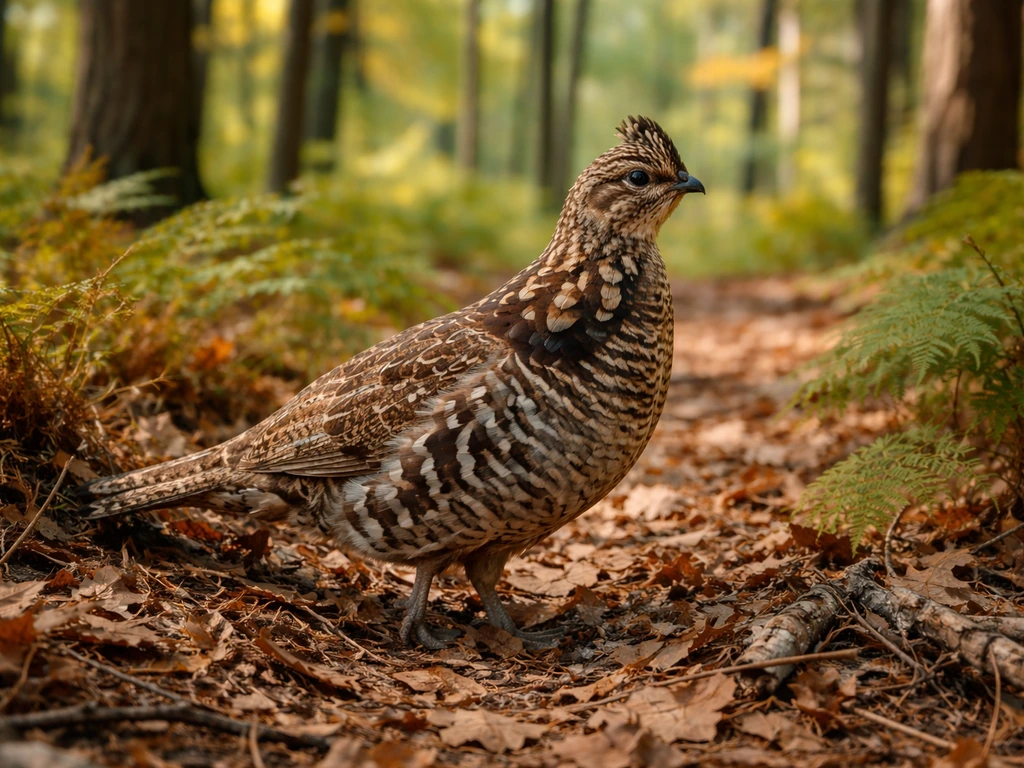
Pennsylvania chose the ruffed grouse as its state bird because the species is deeply woven into the state's identity as a woodland and hunting culture. The Pennsylvania General Assembly made it official on June 22, 1931, designating Bonasa umbellus as the state game bird. The ruffed grouse isn't just a symbolic choice on paper, it's genuinely one of the most characteristic birds of Pennsylvania's forested landscape, and the state has built conservation programs, management plans, and wildlife policy around keeping it thriving.
Why Is the Ruffed Grouse Pennsylvania’s State Bird?

Marcus Webb
5 May 2026
Pennsylvania's official state bird designation
The Act of June 22, 1931 (P.L. 662, No. 234) is the formal legal foundation. The law's explicit purpose was "to select and adopt the ruffed grouse as the State game bird of Pennsylvania," and the text names the species by its scientific name, Bonasa umbellus. Notice the wording: it says "state game bird," not just "state bird", that framing tells you a lot about why this species was chosen over songbirds or waterbirds. Pennsylvania's lawmakers were recognizing a bird tied to hunting heritage and woodland ecology, not just aesthetics. Today the Pennsylvania Game Commission refers to the ruffed grouse simply as "Pennsylvania's official state bird" in all its public materials and management documents.
How to identify a ruffed grouse in the field
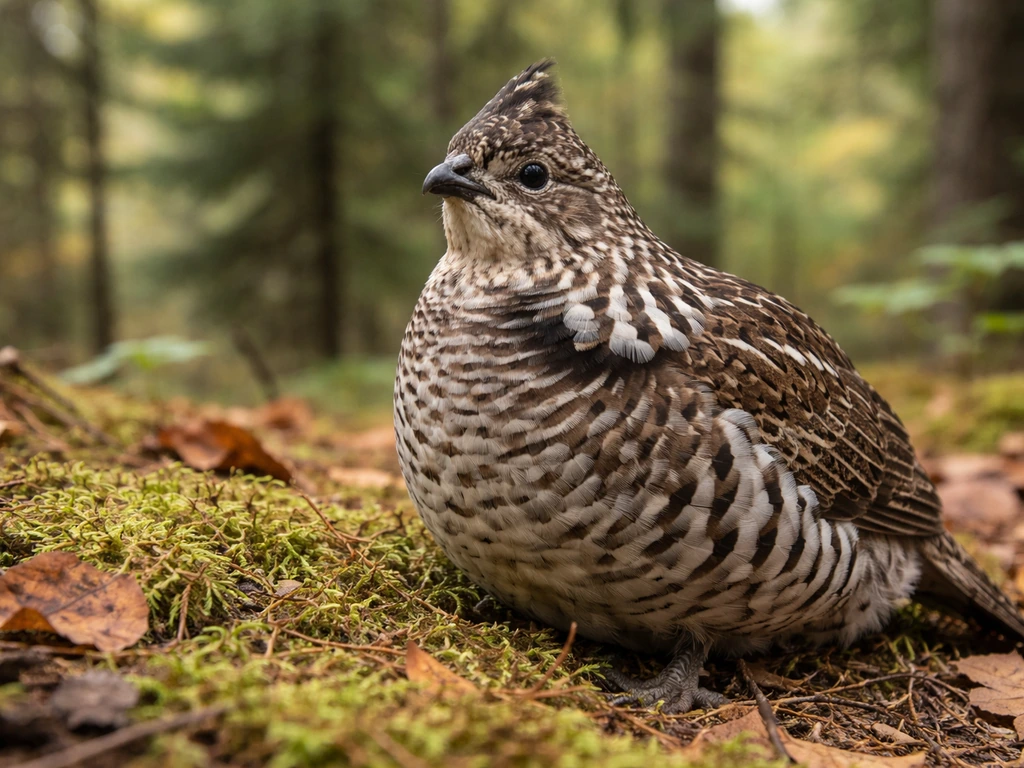
Knowing what you're looking at matters, especially since a few other grouse species can cause confusion. The ruffed grouse is a medium-sized bird, think roughly the size of an American Crow, distinctly smaller than a Wild Turkey. Pennsylvania Game Commission measurements put body length at 15.5 to 19 inches, with a wingspread of 22 to 25 inches and a weight of about 1.5 pounds (Cornell Lab gives a range of 15.9 to 26.5 oz).
The plumage is rich brown above with white and black markings, and the underside is white with horizontal dark brown bars across the breast. The single most reliable field mark is the tail: it has a wide, dark black band near the tip, flanked by narrower grayish bands. That dark subterminal tail band is the feature you want to lock onto. Males also have a small crest on the head and the iconic "ruff", a collar of elongated neck feathers that can be raised into a dramatic display. When a male (called a "drummer") is displaying, he fans his tail to show off the banding and erects that ruff into a full circle around his neck.
Telling males from females
The tail band is also your best tool for sexing a bird in the hand or at close range. On an adult male, the black tail band is uniform and continuous all the way across every tail feather. On hens and first-year males, that band tends to look grainy, fuzzy, or broken, especially on the two center tail feathers. Hens also have a shorter tail overall and less prominent ruffs.
Avoiding look-alikes
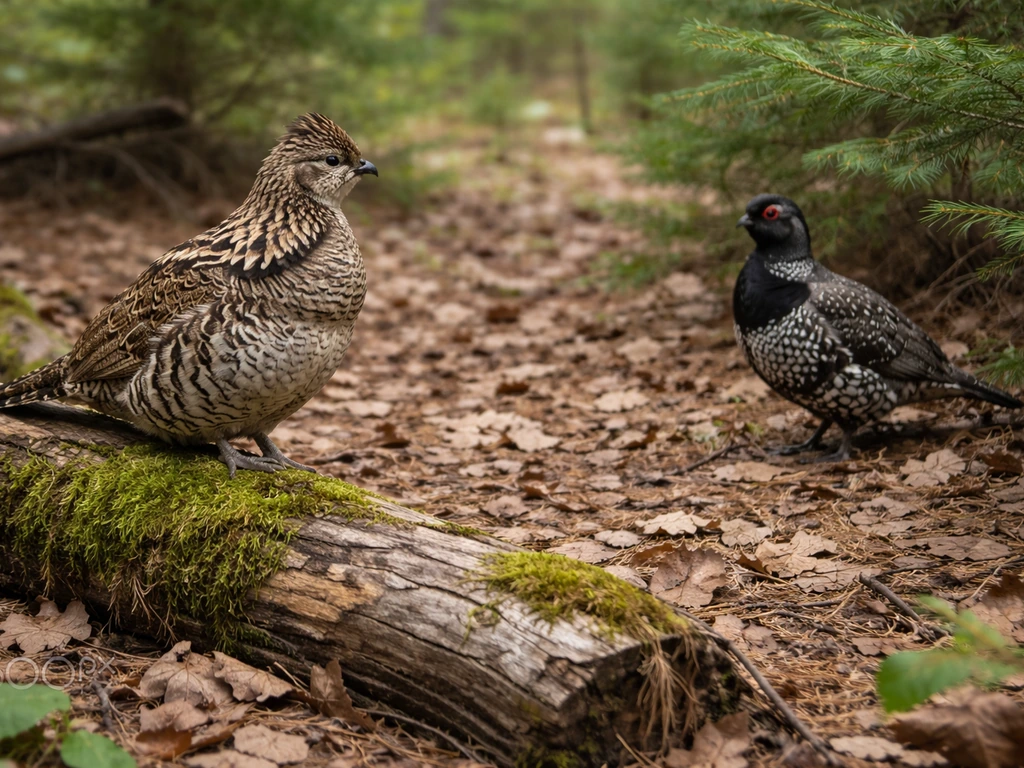
In Pennsylvania you're not likely to confuse a ruffed grouse with much else, but if you ever encounter a spruce grouse (which does not occur in Pennsylvania but comes up in comparisons), the key differentiator is that spruce grouse lack the broad black tail band. The head crest and dark tail banding together are what make a ruffed grouse unmistakable.
Why Pennsylvania picked the ruffed grouse: history and culture
The timing and language of the 1931 law says it all. Pennsylvania has a long, serious hunting tradition, and the ruffed grouse was one of the most prized upland game birds in the state for generations of hunters and sportsmen. Penn State's Earth Archives puts it plainly: the ruffed grouse was adopted as the state bird "perhaps owing to Pennsylvania's hunting tradition." This wasn't a bird chosen by schoolchildren voting on their favorite species, it was a deliberate recognition of a game bird that meant something concrete to Pennsylvania's rural and sporting communities.
The ruffed grouse is also an "iconic forest species" in Pennsylvania's own conservation language. Audubon Pennsylvania uses that exact phrase when discussing forest stewardship and prescribed fire programs aimed at keeping grouse habitat healthy. The Pennsylvania Game Commission's management plan frames the ruffed grouse as a high-profile species with "a unique opportunity to appeal" to hunters, birders, and conservationists alike. Stakeholders named in that plan include the Ruffed Grouse Society and the Audubon Society, a broad coalition that only forms around a genuinely significant species.
How the ruffed grouse fits Pennsylvania's landscape
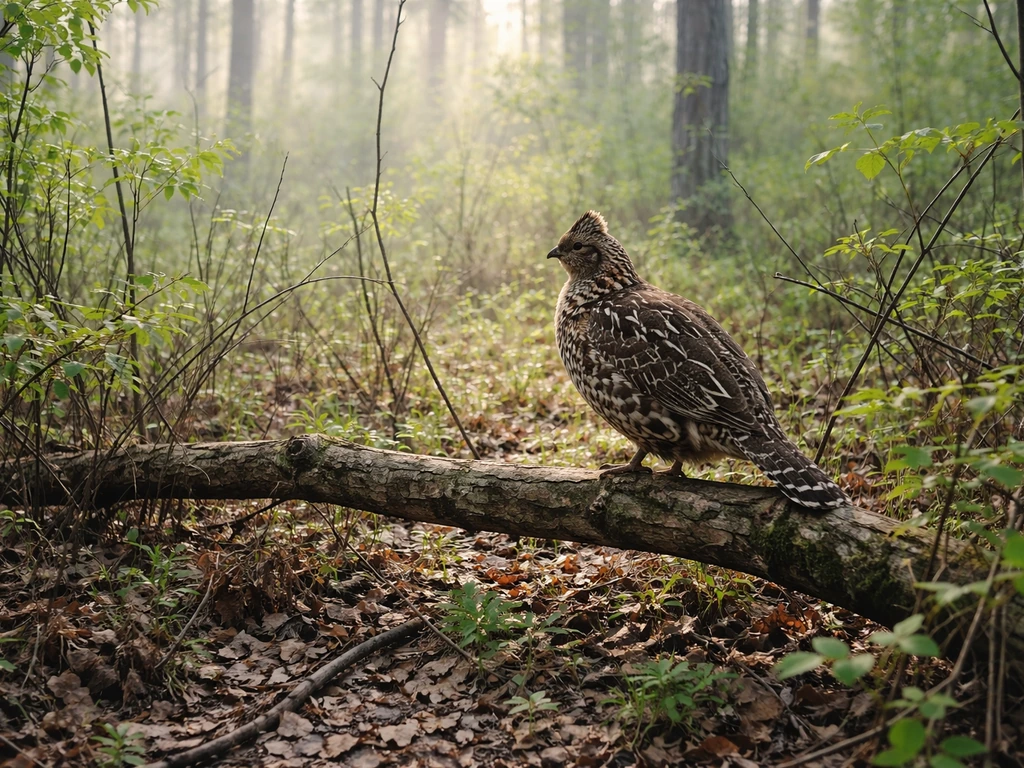
Pennsylvania is one of the most heavily forested states in the eastern U.S., and the ruffed grouse is a bird that needs precisely the kind of young, brushy woodland that covers huge swaths of the state. A Pennsylvania Game Commission habitat-management document emphasizes the need for diverse young-forest conditions, including young, brushy woodland, to support ruffed grouse. The Game Commission states it directly: wherever you find brushy conditions and young forests less than 20 years old within a wooded landscape, there's a real possibility of finding ruffed grouse. That description fits large parts of Pennsylvania's rural interior, state forests, and game lands.
The species is also dependent on what ecologists call successional habitat, the transitional forest stage that follows logging, fire, or natural disturbance. Audubon Pennsylvania ties grouse conservation directly to this forest dynamic, which means the species has shaped how Pennsylvania thinks about active forest management. The fact that the state's official bird requires actively managed, working forest land has given wildlife managers a flagship species to point to when making the case for habitat work.
Where and when to find ruffed grouse in Pennsylvania
Ruffed grouse are year-round residents in Pennsylvania, they don't migrate. Your best chances of seeing or hearing one are in the state's north-central and northeastern forests, where large blocks of mixed hardwood and young-growth habitat exist. State game lands, state forests like Sproul and Tiadaghton, and areas that have seen recent timber harvesting are productive spots. The birds tend to stay on the ground, moving through dense brush and aspen stands, and they flush explosively when startled, that sudden burst of wingbeats is often the first (and only) view most people get.
Spring is the best season for finding males. From late March through May, drummers perform their famous display from a favorite log, rapidly beating their wings to create a low, accelerating thumping sound that carries well through the forest. The Game Commission describes the wingbeats as creating an air rush that "sounds much like drumming." If you hear it, stop and scan the forest floor slowly, the bird is usually perched on a log within a short distance of where the sound is loudest.
- Target young forest (under 20 years old) and brushy edge habitat within a wooded setting
- North-central and northeastern Pennsylvania offer the densest populations
- Listen for drumming displays from late March through May on quiet mornings
- Walk slowly on trails through aspen, alder, and mixed hardwood stands
- Be ready for a sudden explosive flush — grouse often hold tight and then burst upward at close range
- Check state game lands and recently timbered state forest tracts for prime habitat
How the ruffed grouse compares to other states' choices
The ruffed grouse is not a widely shared state bird. You might be wondering the same thing about another famous runner, so is the roadrunner a state bird? Pennsylvania stands largely alone in choosing a grouse as its official symbol, which makes the designation more distinctive than you might expect. It may surprise some people, but the Roadrunner is New Mexico’s famous state bird too, and its selection has its own story Pennsylvania stands largely alone in choosing a grouse as its official symbol. Many eastern states went with songbirds, New York chose the eastern bluebird, for instance, which reflects a very different cultural priority. Delaware's blue hen choice similarly leans toward historical symbolism over wildlife ecology. Pennsylvania's grouse selection stands out because it's a genuine working-bird choice rooted in hunting culture and forest management rather than sentiment. If you’re also curious about New York’s symbols, you can look up what the state considers its official bird and flower.
Some states do share state birds, the northern cardinal, for example, is the state bird of seven states, and the western meadowlark is claimed by six. The ruffed grouse isn't in that category. It's a Pennsylvania-specific designation that reflects what makes the state's natural heritage distinct from its neighbors. If you're comparing state bird choices across the region, Pennsylvania's ruffed grouse is a genuinely unusual pick that rewards closer attention.
| State | State Bird | Category / Notes |
|---|---|---|
| Pennsylvania | Ruffed Grouse | State game bird; hunting and woodland tradition |
| New York | Eastern Bluebird | Songbird; aesthetic and agricultural symbolism |
| Delaware | Delaware Blue Hen | Historical/military symbolism, not a wild species |
| New Mexico | Greater Roadrunner | Iconic regional species; not widely shared |
| Multiple states (7) | Northern Cardinal | Most shared state bird in the U.S. |
The ruffed grouse choice tells you something real about Pennsylvania: this is a state that takes its forests and its hunting heritage seriously, and the official state bird reflects both. If you visit Pennsylvania's back-country forests in spring and hear that drumming sound rolling through the trees, you're hearing exactly why this bird was worth enshrining in law back in 1931.
FAQ
Why does the law call it a “state game bird,” not just a state bird?
It is the ruffed grouse’s identity as a “state game bird” that matches the bird’s role in Pennsylvania’s upland hunting culture and habitat policy. In practice, that legal framing aligns the bird with management goals like maintaining young, brushy forest conditions rather than treating it purely as a decorative symbol.
If it is year-round, when are the best times to see or hear ruffed grouse in Pennsylvania?
No, ruffed grouse do not migrate in Pennsylvania, so you can plan around seasonal behavior instead. In spring, listen for drumming, in summer and fall you will mostly rely on spotting well-camouflaged birds in brushy cover, and in winter you may find them along edge habitat with more access to foraging areas.
How can I tell the drumming I hear is actually from a ruffed grouse?
The “drumming” is most often made by an adult male on a traditional display perch, usually a log. If you only hear sporadic wingbeats or see birds too high in trees, you may be dealing with another forest species, so focus your search on the ground-level area near where the sound concentrates.
What is the most reliable way to tell males from hens (or first-year males)?
In the hand or at close range, sexing hinges on the tail banding pattern. Adults have a continuous, uniform black subterminal tail band on males, while hens and first-year males tend to show a broken or fuzzy band, especially toward the center tail feathers.
What are the most common mistakes people make when trying to identify a ruffed grouse?
A common mistake is focusing only on overall brown coloration, which overlaps with other forest birds. Use the tail pattern first, specifically the wide dark subterminal tail band near the tip, then confirm with a head crest and ruff display behavior when you get a clear view.
How do I avoid confusion with spruce grouse when I see photos or field guides?
If you are comparing with spruce grouse, the key practical point is that spruce grouse lack the broad black tail band characteristic of ruffed grouse. Since spruce grouse do not occur in Pennsylvania, you are mostly using this comparison to verify field marks rather than expecting an overlap.
What habitat clues should I look for if I want to find them beyond “forested areas” in general?
Because they rely on young and successional forest stages, the birds are more likely near areas with recent disturbance or active habitat work. Look for transitions like logged sites, areas with patchy brush and young hardwood regeneration, and forest edges rather than mature closed-canopy stands.
If I do not spot one immediately, does that mean the area is not good?
Not necessarily. Ruffed grouse are typically ground-bound in dense cover and can flush suddenly, so even a “no sighting” outing can still be productive if you use listening and slow scanning along forest-floor travel lanes, especially in known display areas during spring.
Are there ethical considerations or best practices for observing ruffed grouse during spring drumming?
They will flush when startled, but ethics matter, especially during periods of concentrated display. If you are searching with binoculars or a camera, minimize noise and avoid approaching directly toward potential display logs, because repeated disturbance can disrupt drumming and feeding.
Why is Pennsylvania’s ruffed grouse choice different from many other states’ state-bird selections?
Pennsylvania’s designation is distinctive because many states choose popular, widely recognized songbirds, while Pennsylvania selected a forest and hunting-associated game bird that requires active habitat conditions. That means the “symbol” is also a management tool, not just an aesthetic one.