Kansas's official state bird is the Western Meadowlark (Sturnella neglecta), and the official state flower is the wild native sunflower (Helianthus). Both are deeply rooted in Kansas's prairie identity: the meadowlark for its song ringing across open grasslands, and the sunflower for its tie to the frontier trails and wide-open plains that define the state.
What Is Kansas State Bird and Flower? Official Picks

Marcus Webb
7 Jun 2026
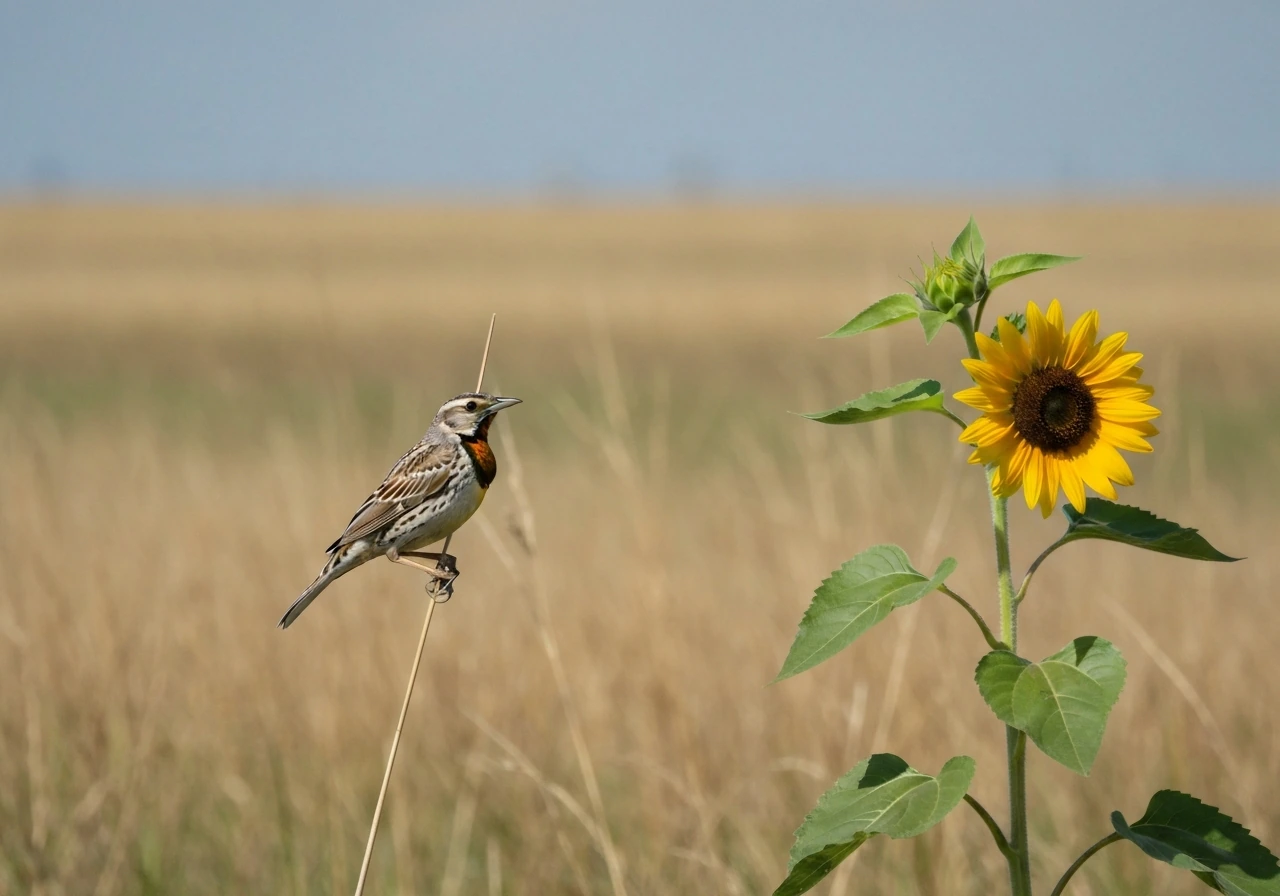
Kansas State Bird: The Western Meadowlark
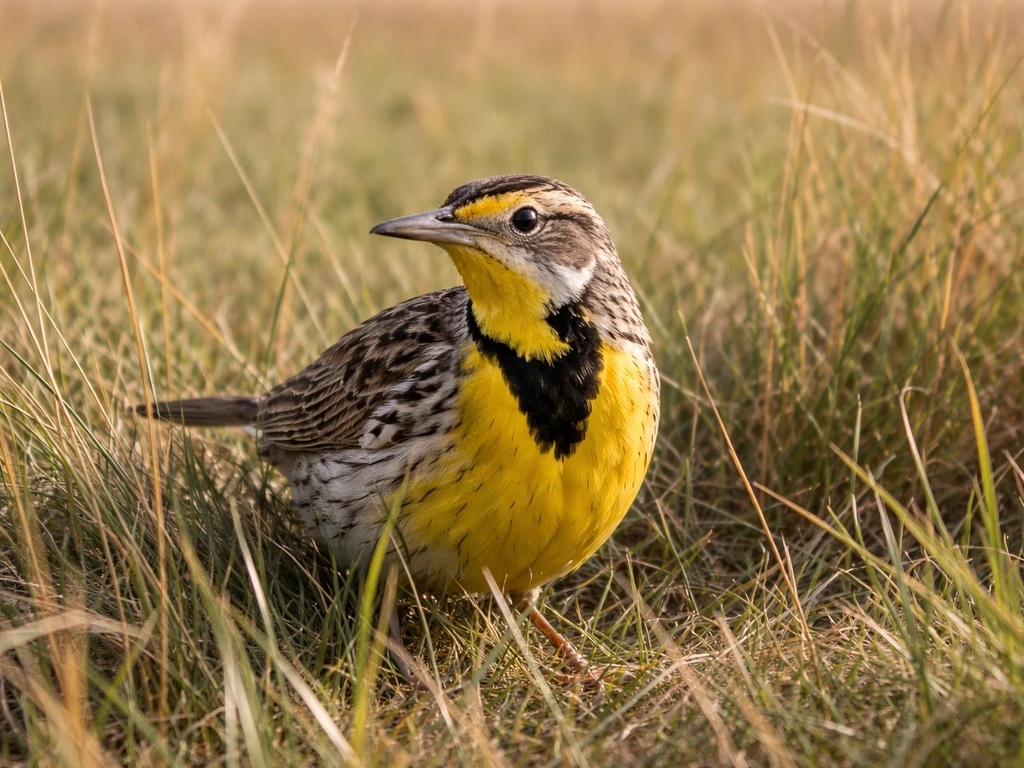
The Western Meadowlark is a chunky, short-tailed grassland bird with a flat head and a long, slender bill. The field marks you need to lock in are simple: bright yellow underparts with a bold black "V" across the breast, and cryptic brown-streaked patterning on the back and wings. In summer that yellow is especially vivid, making the bird hard to miss when it's perched on a fence post or wire. Size-wise, think robin-sized but stockier and closer to the ground.
The song is the clincher. Western Meadowlarks produce a rich, flute-like, complex series of notes that sounds almost musical. If you hear a meadowlark and the song sounds like it could have been composed rather than improvised, you're almost certainly looking at a Western. This matters a lot because the Eastern Meadowlark looks nearly identical in plumage, and the two species overlap in Kansas. When they share territory, Western Meadowlarks tend to favor higher, drier grassland and the Eastern prefers lower, moister areas, so habitat gives you an extra clue when the bird isn't singing.
Quick ID checklist for Western Meadowlark
- Bright yellow breast with a black "V" (bold and unmistakable)
- Brown streaked upperparts (cryptic, blends into dry grass)
- Flat head, chunky body, short tail with white outer feathers visible in flight
- Long, pointed bill suited for probing the ground
- Rich, flute-like, multi-note song (not the simpler, buzzy whistle of the Eastern Meadowlark)
- Found in open grasslands, cultivated fields, pastures, and prairies
How the Western Meadowlark Became Kansas's State Bird
The story behind the designation is genuinely charming. In 1925, the Kansas Audubon Society ran a statewide vote specifically involving schoolchildren to choose a state bird. The Western Meadowlark won. The Kansas Legislature then made it official in 1937 under statute 73-901, and the law itself includes the rationale directly in the text: the bird was chosen "as preferred by a vote of Kansas school children." That's not just a fun footnote; it tells you the bird already had broad popular recognition among people who spent time outdoors across the state.
It's an easy choice to defend. The Western Meadowlark is a signature bird of the Great Plains, common across Kansas's open landscapes, and its song is one of the most recognizable sounds in the state's prairies and farmlands. Picking an obscure or purely symbolic bird would have felt wrong. The meadowlark is genuinely everywhere in Kansas.
Kansas State Flower: The Wild Native Sunflower
Kansas's state flower is the wild native sunflower, designated in law as "the helianthus or wild native sunflower." This isn't referring to a single cultivated garden variety; it's the wild Helianthus species native to the Kansas landscape. The most immediately recognizable feature is the composite flower head: what looks like one large flower is actually hundreds of tiny individual florets. The outer ring of yellow ray flowers surrounds a central disk of small, tightly packed florets, usually brownish or dark in the center.
Kansas has 11 native sunflower species, with 9 of them found in the Flint Hills region alone, so when you're out in the field, you'll often see multiple Helianthus species growing near each other. The common sunflower (Helianthus annuus) is the most familiar and tends to bloom from late spring through early fall, roughly April into October or November in warmer areas. If you want the best chance of finding wild sunflowers in bloom across Kansas, mid-summer to early fall is the sweet spot, when warm-season prairie plants are at their peak.
Quick ID checklist for Wild Native Sunflower
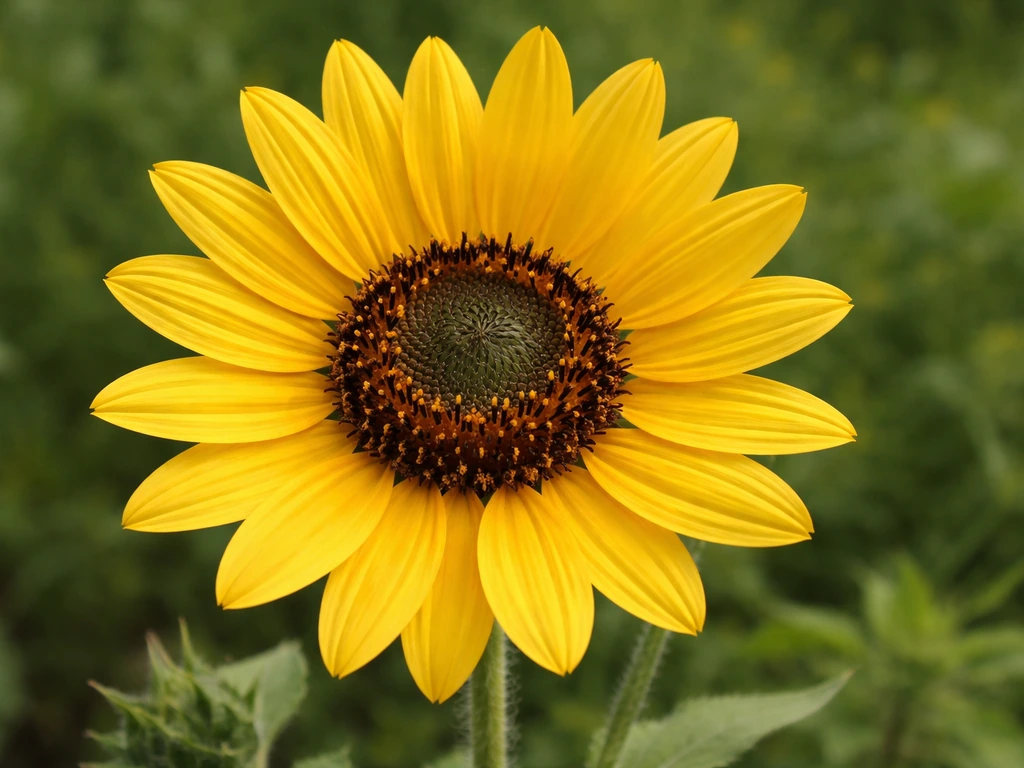
- Large composite flower head made up of many individual florets (not a single flower)
- Bright yellow ray flowers radiating outward from a dark central disk
- Rough, hairy stems and broad, coarse leaves
- Typically tall, often reaching 3 to 6+ feet in open sunny areas
- Blooms mid-summer through early fall (peak viewing: July through September in Kansas)
- Found in open fields, roadsides, disturbed ground, and prairies statewide
Why Kansas Made the Sunflower Its State Flower
The Kansas Legislature adopted the wild native sunflower as the state flower and floral emblem in 1903, making it one of the earlier state-symbol designations in Kansas history. The statute's language is unusually expressive for a piece of legislation. The "WHEREAS" clauses describe the sunflower as having historic symbolism tied to frontier days and the prairie trails that shaped Kansas, calling it "richly emblematic" of the state's present pride and its future. The law also notes the flower's "armorial capacities," which is a formal way of saying it has the kind of bold, recognizable shape that works well on emblems, seals, and flags.
That practical point about the sunflower's striking shape is actually astute. The flower's strong, defined silhouette photographs well, reproduces clearly on official materials, and is instantly associated with the Great Plains. Kansas isn't just leaning on sentiment here; the sunflower genuinely earns the designation on both symbolic and visual grounds.
How Kansas Compares to Other States
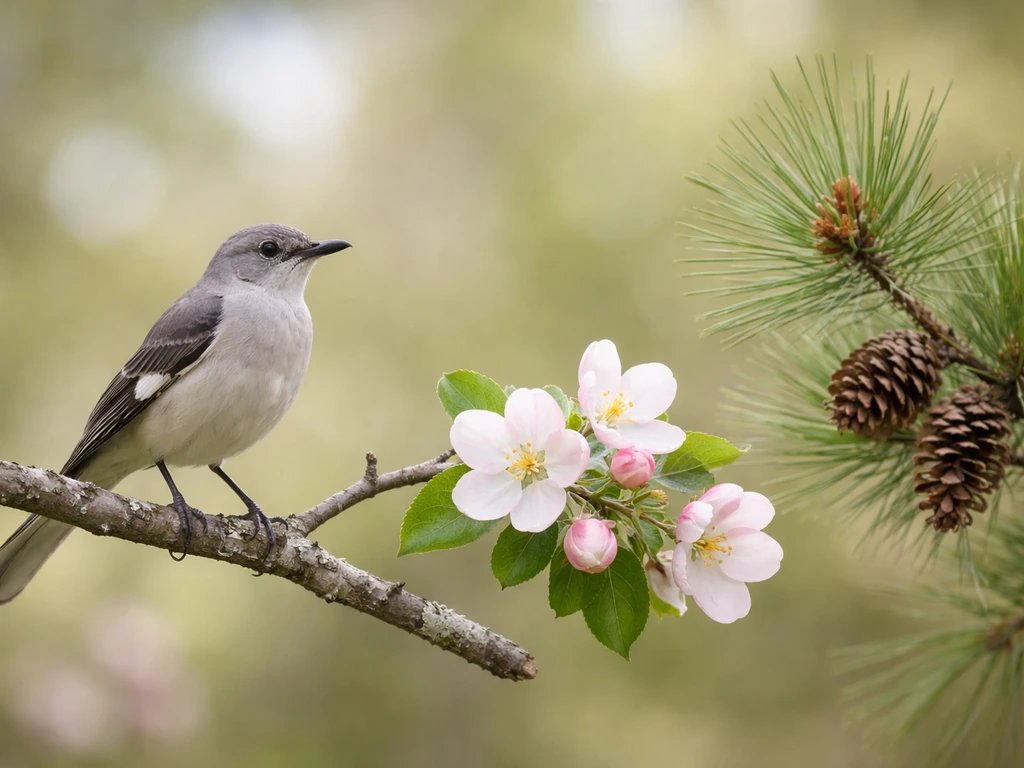
The Western Meadowlark is one of the most shared state birds in the country. blank" rel="noopener noreferrer">Six states have adopted it as their official bird: Kansas, Montana, Nebraska, North Dakota, Oregon, and Wyoming. That's a strong signal of just how dominant the meadowlark is across the western and central United States. Nebraska is probably the most directly comparable to Kansas given the shared geography, and if you're interested in how neighboring states approach their bird designations, the Arkansas state bird offers an interesting contrast since that state went a different direction with its symbol choices. For the state bird of Arkansas, the official choice is the mockingbird, known for its song Arkansas state bird.
| State | State Bird | Year Designated |
|---|---|---|
| Kansas | Western Meadowlark | 1937 |
| Nebraska | Western Meadowlark | 1929 |
| Montana | Western Meadowlark | 1931 |
| North Dakota | Western Meadowlark | 1947 |
| Oregon | Western Meadowlark | 1927 |
| Wyoming | Western Meadowlark | 1927 |
For the sunflower, Kansas doesn't share that particular designation with other states in the same way, which makes it a more distinctive state symbol. The sunflower's association with Kansas is so strong culturally that the state is commonly nicknamed "The Sunflower State." If you're exploring what combinations of bird and flower other states have chosen, the Arkansas state bird and flower page covers a very different regional pairing worth comparing. To compare a different state pairing, see what the Arkansas state bird and flower are.
Finding and Verifying These Symbols in Kansas
If you want to see both symbols in person, Kansas gives you good opportunities without needing to go far off any main road. For a quick answer to what our state bird and flower are, Kansas recognizes the Western Meadowlark as the state bird and the wild native sunflower as the state flower Western Meadowlark and wild native sunflower.
Western Meadowlarks are active from late winter through summer and are easiest to spot perched on fence posts or power lines along rural highways, especially in the Flint Hills and western Kansas. Listen for the song in the morning. Wild sunflowers line roadsides statewide by mid-July and reach their most visible stage in August and September. The Flint Hills is also an excellent area for native sunflowers given the high concentration of Helianthus species there.
To verify the official designations, the controlling legal sources are Kansas statutes 73-901 (state bird) and 73-1801 (state flower). Kansas’s state statute (73-1801) designates the “helianthus or wild native sunflower” as the official state flower and floral emblem. Both are publicly available through the Kansas State Legislature's website. The Kansas Historical Society's Kansapedia resource also maintains a list of official Kansas symbols with adoption years and is a useful secondary reference for cross-checking. If you're ever unsure whether a symbol is official or just popular tradition, those statutory sources settle the question definitively.
One thing worth keeping in mind: because the meadowlark is shared by five other states, you'll encounter it frequently if you're working through a state-by-state bird reference. The Kansas designation specifically cites the schoolchildren's vote as the selection rationale, which distinguishes how Kansas arrived at its choice compared to states that designated the bird through more straightforward legislative action.
FAQ
If I can’t find the bird’s “V” on the breast, does that mean I’m not seeing a Western Meadowlark?
Not necessarily. In some views (distance, shade, or the bird holding its body at an angle), the black V can look faded or partially obscured. Use the combination of cues together, bright yellow underparts plus the generally stockier, robin-sized shape close to the ground, and confirm with the song if you can.
How can I tell a Western Meadowlark from an Eastern Meadowlark when they overlap in Kansas?
Plumage alone is unreliable because the species are very similar. The highest-confidence approach is to check the song and habitat: Westerns more often use higher, drier grasslands, while Easterns tend toward lower, moister areas when both occur nearby.
Are meadowlarks easier to see in winter or summer?
Western Meadowlarks are active from late winter through summer, but visibility is often better in warmer months when they are frequently perched along open rural lines and their yellow underparts look most vivid. For best chances, pair a morning listen with roadside scanning during the warmer seasons.
Do wild native sunflowers in Kansas include the common garden sunflower?
The state flower refers to wild native Helianthus species, not a cultivated garden variety. You may see the common sunflower in Kansas too, but the key idea is that the designation is tied to wild Helianthus occurring naturally across the state.
When is the best time to spot Kansas wild sunflowers blooming statewide?
Mid-summer through early fall is the prime window. If you’re aiming for the highest likelihood of blooms in many locations, plan for roughly July, August, and September, then adjust based on whether you’re in cooler uplands or warmer lowlands.
Why are there often multiple sunflower species growing close together in Kansas?
Kansas supports many native Helianthus species, and they overlap in habitat. The Flint Hills alone has a particularly high native sunflower diversity, so it is common to see different species near one another rather than a single uniform “sunflower patch.”
What if I find a sunflower that looks different from the classic “single big flower head” shape?
Most Helianthus still show the composite flower head, with a ring of ray florets around a central disk. If the plant has a very different overall look, double-check whether it is actually Helianthus and not another roadside species, since the state symbol is specifically the wild native sunflower group described as Helianthus.
Are these Kansas bird and flower designations official, or could they be just tradition?
They are official. The controlling sources are Kansas statutes 73-901 for the state bird and 73-1801 for the state flower, and those statutes are the definitive way to confirm whether a symbol is legally recognized versus a popular local choice.
If I’m comparing state symbols, is it unusual that other states also chose the Western Meadowlark?
It is somewhat unusual because only a handful of states adopt the same bird, and the Western Meadowlark is shared by several (including Kansas and neighbors like Montana and Nebraska). If you are building a comparison across states, expect it to show up repeatedly in bird lists, but note that Kansas’s selection process is tied to the schoolchildren’s vote.
Next Article
What Is Arkansas State Bird and Flower, Plus Tree
Discover Arkansas state bird, flower, and state tree, how to identify each, and why they were chosen.