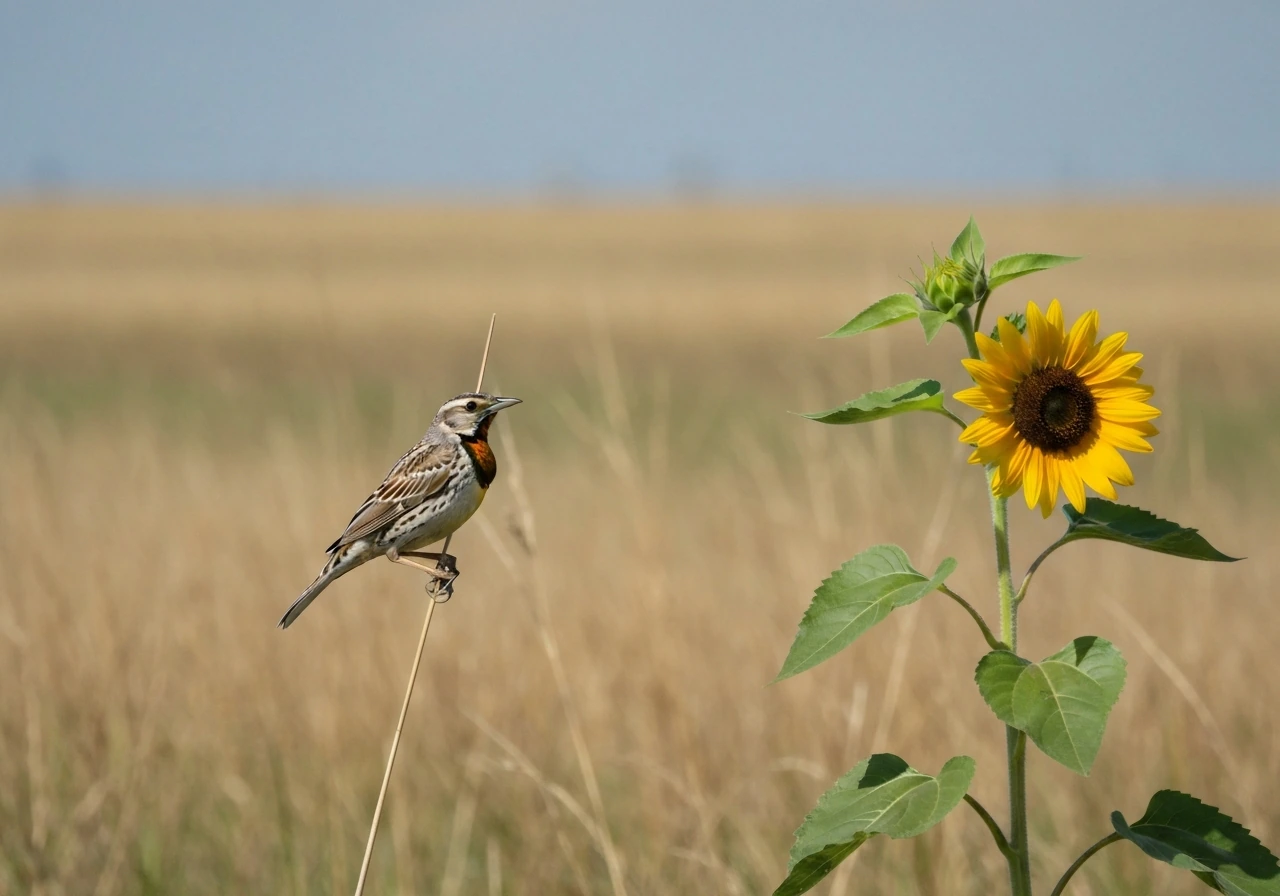
If you're in North Carolina, your official state bird is the cardinal (Cardinalis cardinalis), adopted in 1943, and your official state flower is the dogwood blossom (Cornus florida), adopted in 1941. Both are codified in Chapter 145 of the North Carolina General Statutes and confirmed by the North Carolina General Assembly. If you're in a different state, keep reading: below you'll find exactly how to look up your own state's symbols in under two minutes.
What Is Our State Bird and Flower? Quick Lookup Guide

Marcus Webb
8 Jun 2026
Find your state (and confirm the right symbols)
The word 'our' in this question does a lot of work. Because state birds and flowers are designated at the state level, the answer changes completely depending on where you live. Before you trust any list you find online, you need to confirm two things: which state you're asking about, and whether the source you're reading cites that state's official statute.
Before you trust any list you find online, you need to confirm two things: which state you're asking about, and whether the source you're reading cites that state's official statute what is the state bird of arkansas? (Arkansas state bird) — check the official statute for your state symbols list before you trust any list online, since the answer changes by state like it does for Arkansas too. .
If you're not certain which state you're in (or if you're researching on behalf of someone in another state), the fastest way to pin it down is to use a ZIP code lookup. Type your ZIP into any mapping tool and it will confirm your state in seconds. Once you know the state, you can go straight to that state legislature's website and search 'state symbols' in their statute index.
For North Carolina specifically, the authoritative source is the North Carolina General Assembly's Chapter 145, titled 'State Symbols and Other Official Adoptions.' Section 145-1 covers the state flower (dogwood) and Section 145-2 covers the state bird (cardinal). Those are the two sections you want.
How to look up your official state bird
Every U.S. state designates its official bird through a state legislature vote, and that vote gets written into codified law. The most reliable lookup workflow takes about two minutes:
- Go to your state legislature's official website (search '[state name] general assembly' or '[state name] statutes').
- Search for 'state symbols' or look for a chapter titled something like 'Official State Symbols' or 'State Emblems.'
- Find the section specifically labeled 'state bird' and read the exact language. The statute will say something like 'the cardinal is hereby designated the official state bird.'
- Note the adoption year and session law citation if you need to trace the original act.
For North Carolina, G.S. 145-2 reads that 'the cardinal' is the official state bird, adopted via Session Laws 1943, chapter 4. The statute uses the common name 'the cardinal,' not the scientific name, though the species is universally recognized as Cardinalis cardinalis. NCpedia, a state-supported reference, confirms both the common name and the Latin name, and is a solid secondary source when you want more context beyond the raw statute text.
Getting to know the cardinal: ID basics and why North Carolina chose it
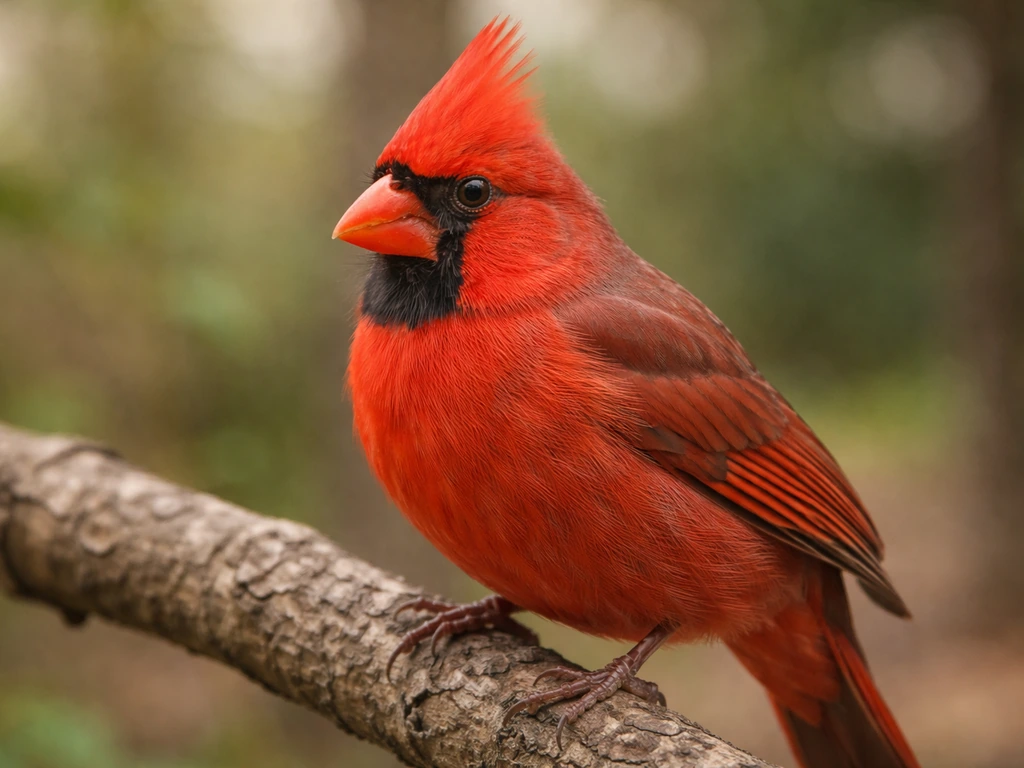
The northern cardinal is one of the most recognizable backyard birds in eastern North America. Males are a vivid, unmistakable red with a pointed crest and a heavy orange-red bill. Females are brownish-tan with reddish tinges on the crest, wings, and tail, and the same distinctive crest shape. Both sexes have a black mask around the face and bill. The bird is a mid-sized songbird, roughly 8 to 9 inches long, and it doesn't migrate, so you can spot it year-round in North Carolina at feeders, woodland edges, and suburban gardens.
The cardinal was adopted on March 4, 1943, by the North Carolina General Assembly. It had already become one of the most beloved and visible birds in the state, with a strong, clear song and year-round presence that made it a natural fit for a state symbol. Unlike migratory birds that only appear seasonally, the cardinal is a constant in the landscape, which likely made it an appealing choice for a permanent emblem. It's also a bird that adapts well to both rural and suburban environments, making it genuinely representative of where most North Carolinians live.
How to look up your official state flower
The lookup process for the state flower mirrors the bird lookup exactly. Use your state legislature's official statute index, find the state symbols chapter, and locate the section labeled 'state flower.' Read the exact statutory language rather than relying on secondary sites, which can sometimes list the wrong species or use outdated information.
For North Carolina, G.S. 145-1 designates 'the dogwood' as the official state flower, adopted March 15, 1941, via Session Laws 1941, chapter 4. The NC Department of Natural and Cultural Resources (DNCR) also confirms this adoption date and the connection to the flowering dogwood tree (Cornus florida). When you see 'dogwood blossom' mentioned in North Carolina state contexts, Cornus florida is the species being referenced.
Getting to know the dogwood blossom: ID basics and why North Carolina chose it
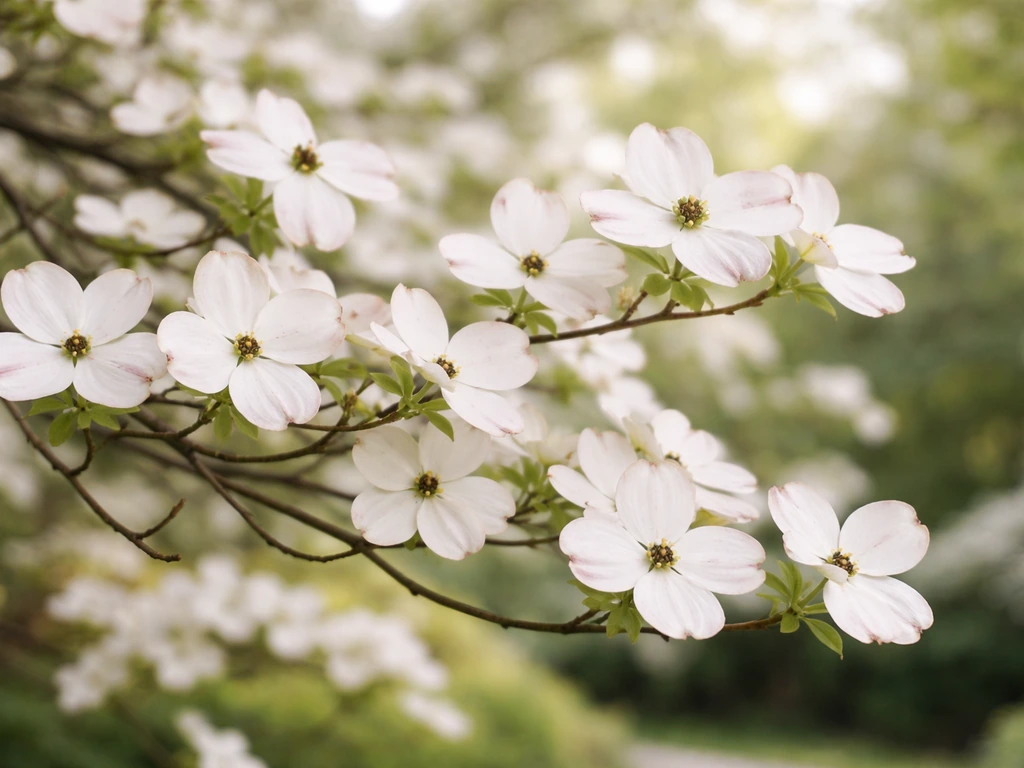
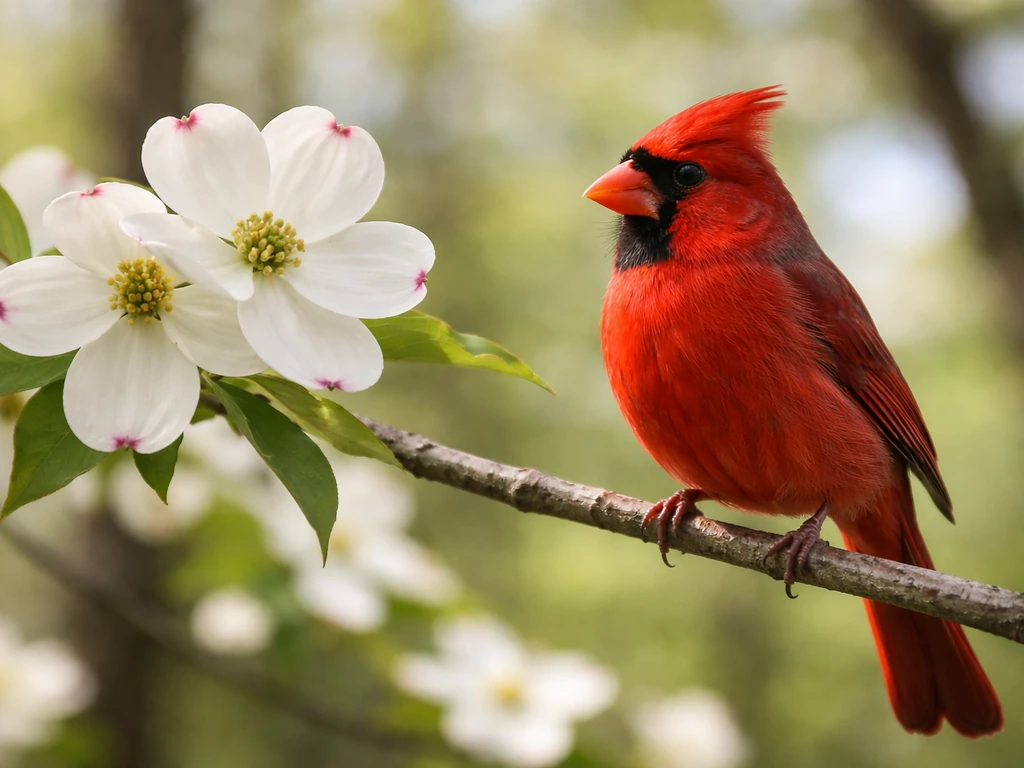
Here's something worth knowing before you go looking for the dogwood 'flower': what you're actually seeing on a flowering dogwood tree in spring are blank" rel="noopener noreferrer">not true flower petals. The USDA Forest Service also clarifies that flowering dogwood's showy blank" rel="noopener noreferrer">petal-like bracts are not true flowers. They are bracts, which are modified leaves that surround the actual flowers. The true flowers are the small, inconspicuous cluster at the center of the four showy white (or sometimes pink) structures. The USDA Forest Service and NC State Extension both point this out, and it's one of those ID details that makes dogwood enthusiasts feel immediately more knowledgeable.
Flowering dogwood (Cornus florida) is a small understory tree that typically grows 15 to 30 feet tall. In North Carolina, it blooms in March and April, before the leaves fully emerge, which is why the white bracts are so eye-catching against bare branches in early spring. The tree also produces red berries in fall and has attractive horizontal branching. It grows in woodlands across the state and is widely planted as a landscape tree.
North Carolina adopted the dogwood in 1941, two years before the cardinal. The flowering dogwood is deeply woven into the state's spring landscape and has long been associated with North Carolina's identity. The NC DNCR frames it as one of the state's most recognizable natural spring displays, which explains why the General Assembly moved to codify it as an official symbol when it did.
States that share the same bird or flower
North Carolina is far from alone with either of its state symbols. The northern cardinal is one of the most popular state birds in the country, and the flowering dogwood shows up as an official symbol in multiple states as well.
The cardinal club: seven states share this bird
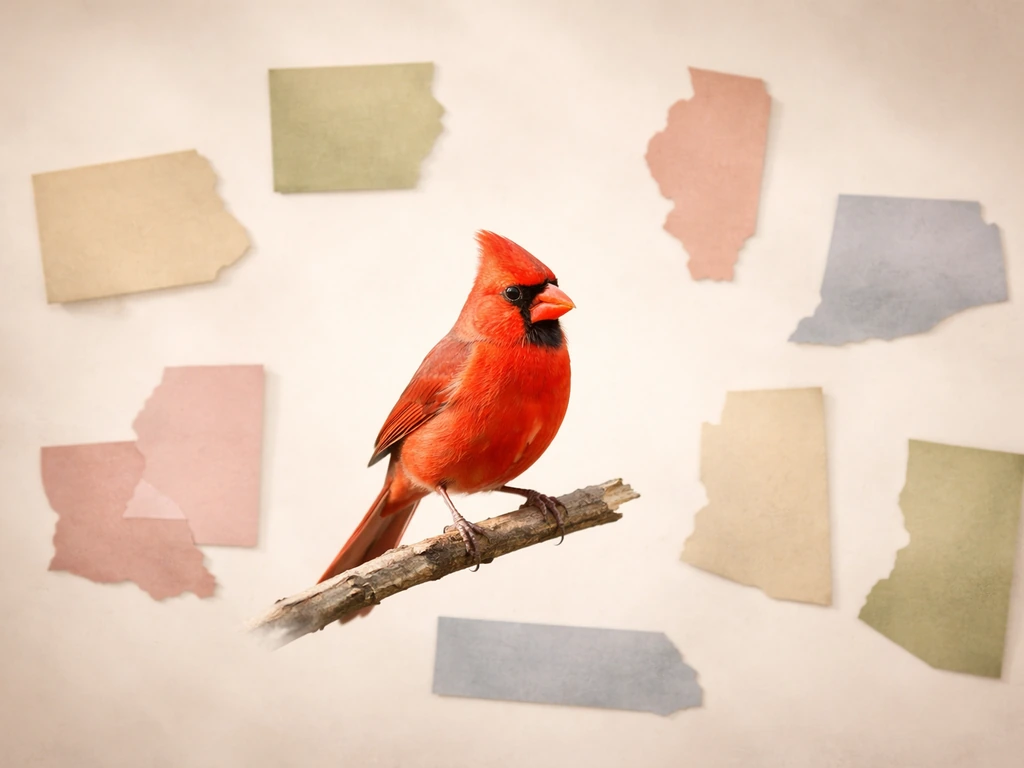
According to Britannica, the northern cardinal is the official state bird of seven U.S. states. Wikipedia identifies them as Illinois, Indiana, Kentucky, North Carolina, Ohio, Virginia, and West Virginia. That's a geographically tight cluster in the eastern and midwestern United States, which makes sense given the cardinal's natural range. It's worth verifying each state's specific statute if you need a citation-grade confirmation, but the seven-state overlap is widely documented.
| State | Official State Bird | Adoption Year |
|---|---|---|
| Illinois | Northern Cardinal | 1929 |
| Indiana | Northern Cardinal | 1933 |
| Kentucky | Northern Cardinal | 1926 |
| North Carolina | Cardinal | 1943 |
| Ohio | Northern Cardinal | 1933 |
| Virginia | Northern Cardinal | 1950 |
| West Virginia | Northern Cardinal | 1949 |
If you're exploring state bird comparisons and want to go deeper on neighboring states, the state bird profiles for Kansas and Arkansas are worth a look since they represent different regional choices that contrast interestingly with the cardinal-heavy southeast and midwest. If you need the specifics for Kansas, look up the Kansas state bird and state flower in the same statute index you use for any other state state bird profiles for Kansas.
For Arkansas, you can use the same verification steps to find the state bird and the state flower named in the state statute Arkansas state bird and flower. For Arkansas, the next step is to check the state’s official statute for the designated state bird state bird profiles for Kansas and Arkansas. To answer that, you can check Kansas's official state symbols statute, which names the state's state bird.
The dogwood: shared across state lines
Cornus florida, the flowering dogwood, appears as an official symbol in multiple states beyond North Carolina, sometimes as the state flower and sometimes as the state tree. Virginia, for instance, designates the flowering dogwood as its state tree. Missouri references the same species in official state emblem contexts as well. If you're comparing symbols across states, always check whether the designation is for the flower or the tree, since states use the same species in different symbolic roles.
How to verify and explore more official state symbols
Once you've confirmed the bird and flower, you may find you want to keep going. Most states have dozens of official symbols: state trees, state mammals, state insects, state reptiles, state songs, and more. All of them are codified in the same statute chapter that holds the bird and flower designations.
Here's the verification workflow that works for any state:
- Go to the official state legislature website and navigate to the codified statutes.
- Search for 'state symbols' or browse the chapter index for a title like 'Official State Symbols and Adoptions.'
- Read each section heading to find the specific symbol you want (bird, flower, tree, etc.).
- Note the exact language the statute uses, including the common name and, if listed, the scientific name.
- Note the adoption year and any session law citation in case you need to trace the original legislative act.
- Cross-check with a state-supported reference like your state's equivalent of NCpedia or your state's Department of Natural Resources blog for beginner-friendly context.
- For scientific naming and species identification, use USDA resources or a field guide to connect the common name in the statute to the correct species.
For North Carolina specifically: the NC General Assembly's Chapter 145 index is your starting point, NCpedia gives you readable background on each symbol, and the NC DNCR blog fills in the cultural and ecological context. If you want to apply the same verification steps to a different state, like learning what is the state bird of kansas, use the state legislature statute index for your answer and then cross-check with a reputable reference. Between those three sources, you'll have everything you need to understand not just what the symbols are, but why they matter and how to recognize them in the field.
FAQ
What if a website lists a different state bird or flower than the one I find in my state?
If your source says “state flower” but names a plant that is not native to your area, the symbol is still the legal one for that state, but the plant name might refer to a different species or subspecies. Verify by reading the exact statute text for your state and note whether it uses a common name (like “dogwood”) or a scientific binomial (like “Cornus florida”).
Can the same species be a state bird or flower in some places, but a different symbol type in other states?
Yes, some states use the same species for different roles (for example, a flowering dogwood might be designated as a state flower in one place and a state tree in another). When you look up the statute, confirm whether the section label says “state flower” versus “state tree,” since the legal designation determines what the symbol actually is.
Do state birds and flowers ever change, and how can I make sure I have the current version?
State symbols can change over time, especially if the legislature updates the statute or corrects an earlier adoption. If you need the most accurate “current” answer, rely on the latest statute version on the state legislature site rather than a general list posted years ago.
If the statute uses only a common name, how do I know the scientific species it refers to?
Legislatures sometimes describe the bird or flower using a common name that does not include scientific naming. In those cases, you can cross-check the common-to-scientific mapping using a reputable secondary reference, but treat the statute language as the final authority for what the state officially designated.
What should I do if the statute language seems ambiguous or doesn’t name a single clear species?
Not always. Some states specify “bird” or “flower” with more than one possible interpretation (for example, they may describe a group or a type rather than a single species). If the statute wording is ambiguous, search for any later amendments or session laws in the same chapter to see whether the legislature clarified the intent.
What is the fastest reliable way to navigate a state legislature site to find the official section?
Use your state’s legislature statute index and search the chapter that contains “state symbols” or “official adoptions.” If your first search result is a summary page, keep going until you reach the codified section text that includes the bird or flower designation.
I live near a state border, how do I make sure my ZIP code points to the right state for symbol lookup?
If you are researching outside your own state, ZIP-based location is a quick way to determine which state’s laws apply, but ZIP codes can sit near borders and sometimes map to nearby communities. If your ZIP falls near a state line, consider confirming with the actual city or county address to ensure you pick the correct state symbols statute.
When the symbol is described as a “flower,” what am I actually supposed to look for in the real plant or tree?
For the common “dogwood blossom” wording, the visible spring show is often bracts rather than petals. If you want to identify what the symbol means in real life, use the statute and then learn the distinguishing field features, like the clustered center flowers on flowering dogwood.
Next Article
What Is Kansas State Bird and Flower? Official Picks
Official Kansas state bird and flower with ID traits, common lookalikes, and history of the selections