The state bird of Texas is the Northern Mockingbird (Mimus polyglottos). It was officially adopted in 1927 and remains one of the most recognizable birds in the state. If you have seen or heard a bold, gray-and-white bird singing its heart out from a fence post or treetop in Texas, you have almost certainly already met it.
What Is the State Bird in Texas? Facts, Meaning

Marcus Webb
17 Apr 2026
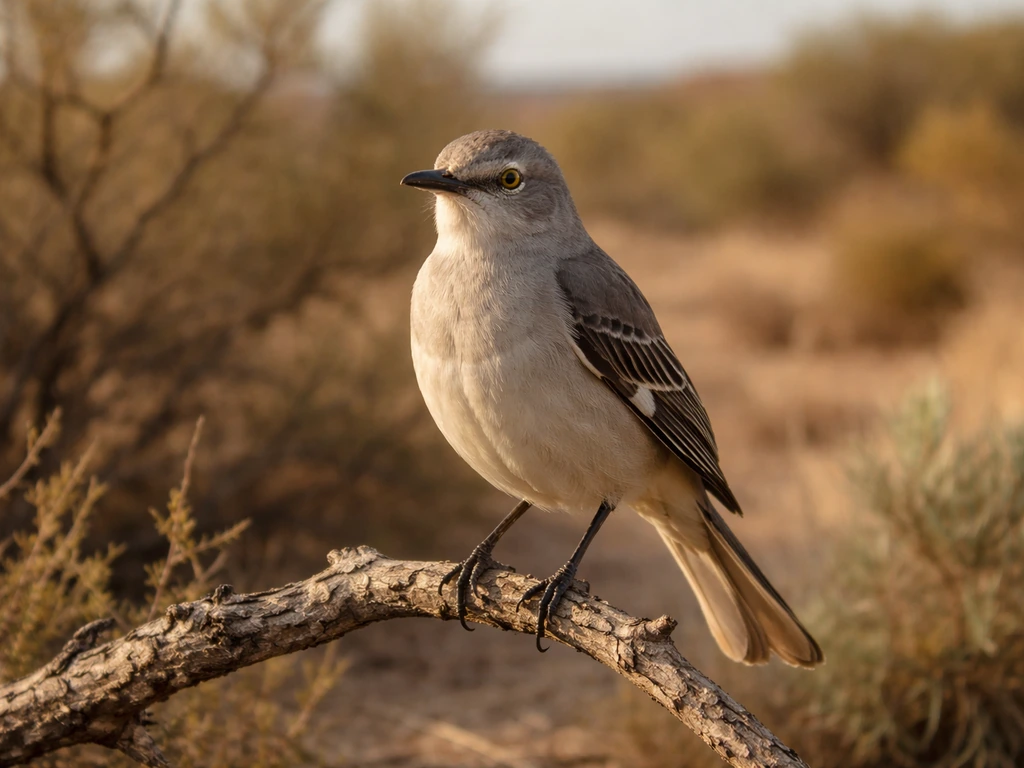
Texas's official state bird: the Northern Mockingbird
Texas Parks and Wildlife Department and the Texas State Library and Archives Commission both list the Northern Mockingbird as the state's official bird symbol. You may see it written simply as "Mockingbird" in older Texas symbol summaries, but the full species name is Northern Mockingbird. Either way, they refer to the same bird.
If you are curious how this fits into the broader landscape of what a state bird designation actually is, the short version is that each U.S. state has independently chosen a bird to represent its identity, culture, and natural environment through a formal legislative process.
How the mockingbird became Texas's bird in 1927
The story behind the selection is worth knowing. On January 31, 1927, the Texas Federation of Women's Clubs formally appealed to the 40th Texas Legislature to adopt the mockingbird as the state's official bird. The Legislature agreed, and the designation was made law that same year. The Federation's case rested on the bird's bold character, its presence across every corner of Texas, and its reputation as a tireless, gifted singer.
Texas Parks and Wildlife describes the mockingbird as "the most noticeable bird in Texas" during breeding season, when males sing and display almost constantly. That visibility and voice made it a natural cultural fit for a state that prides itself on being impossible to ignore. To understand more about why states pick particular birds and what those choices tend to represent, the deeper look at state bird meaning is worth reading.
What the Northern Mockingbird looks like and where to find it
The Northern Mockingbird is a medium-sized songbird, slender and long-tailed, with gray upperparts and whitish underparts. Its most distinctive field marks are the large white patches on its wings and outer tail feathers, which flash prominently in flight. The bill is slightly curved and dark, and the eye has a hint of yellow. Males and females look alike, which is unusual among songbirds.
The bird's call is its real signature. It mimics dozens of other bird species (and sometimes car alarms or other sounds), stringing them together in long, looping phrases. Males often sing at night during spring and early summer, which makes them hard to miss even if you are not actively watching for birds.
As for range within Texas, the Texas Breeding Bird Atlas describes the Northern Mockingbird as "nearly ubiquitous" across the state. The only places it tends to avoid are the higher mountain zones and dense forest interiors. Everywhere else, from desert scrubland to suburbs to city parks, it is at home. Texas Parks and Wildlife notes that mockingbirds are "one of the few birds found in every kind of habitat, from desert to forest to city," which helps explain why it was such an obvious choice as a state symbol.
For nesting, the mockingbird builds in shrubs and low trees, using thorny twigs for the outer layer of the nest. If you spot a gray bird aggressively dive-bombing a cat or dog in your yard during spring, that is almost certainly a mockingbird defending its nest.
Texas state bird, flower, and tree all in one place
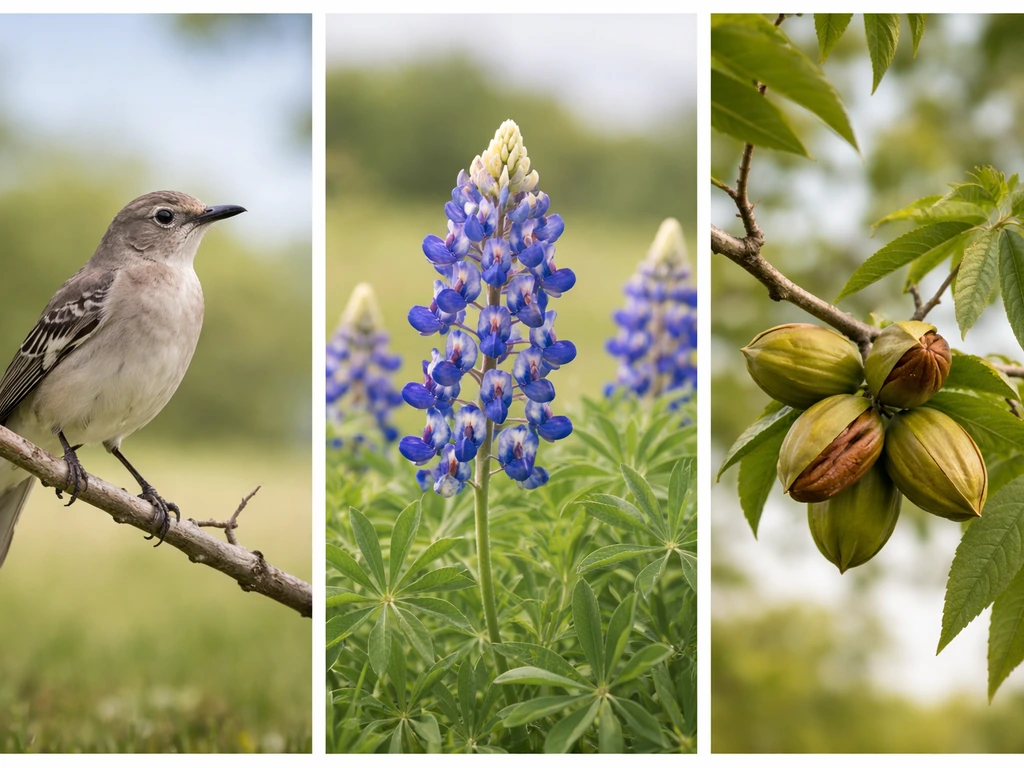
A lot of searches around "state bird of Texas" come bundled with questions about the state flower and state tree, so here is the quick rundown of all three official symbols together.
| Symbol | Official Designation |
|---|---|
| State Bird | Northern Mockingbird |
| State Flower | Bluebonnet |
| State Tree | Pecan |
The bluebonnet is probably the most photographed wildflower in Texas, blanketing roadsides and fields in brilliant blue-purple every spring. Texas actually recognizes several species of bluebonnet under its state flower designation, not just one variety. The pecan tree was designated the state tree and is equally fitting, given that Texas produces more wild pecans than any other state. The TSHA Handbook of Texas notes that an act of the Thirty-sixth Legislature (regular session, 1919) made the pecan tree the official state tree of Texas. All three symbols appear together on the Texas Parks and Wildlife Department's official symbols page.
Clearing up common confusion around Texas's state bird
There is no "national bird of Texas"
Some searches phrase it as "national bird of Texas," but that framing does not quite apply. Texas is a U.S. state, not a nation, so it has a state bird rather than a national one. The national bird of the United States as a whole is the Bald Eagle. If you are curious about which states have claimed the Bald Eagle as their own symbol, the answer might surprise you: the bald eagle as a state bird is less common than you might expect. Texas is not among those states. Texas's official designation is the Northern Mockingbird, full stop.
Texas is not alone: four other states share the mockingbird
The Northern Mockingbird is actually one of the more popular state bird choices in the American South. In addition to Texas, it is the official state bird of Arkansas, Florida, Mississippi, and Tennessee. That makes it a five-state bird, which puts it in the company of a small group of species that multiple states have independently claimed. The Northern Cardinal holds the record for most adoptions, as you can see if you look into the most common state bird across all 50 states.
It is worth noting that the mockingbird's widespread adoption across Southern states is not really a coincidence. The bird's range overlaps heavily with the American South and Southeast, making it a natural regional symbol. Each state had its own legislative process and reasoning, but the result is a cluster of mockingbird states in roughly the same part of the country.
How to verify this and keep exploring
To confirm Texas's official state bird directly from primary sources, the Texas State Library and Archives Commission and the Texas Parks and Wildlife Department both publish their official state symbols lists online. Texas Parks and Wildlife’s “Symbols and Signs” page lists the Texas state bird as the “Mockingbird.”. Either source will give you the same answer: Northern Mockingbird, adopted 1927.
If you want to dig into how Texas stacks up against other states, the full rundown of what the state bird is for all 50 states is a great starting point. You will see patterns by region, shared species, and a few genuinely unusual choices. And if you are curious about one particular quirk in state bird history, there is even a fascinating corner case involving a state bird that is no longer alive as a species, which puts Texas's very much alive and singing mockingbird in an interesting perspective.
The bottom line: Texas's state bird is the Northern Mockingbird, chosen in 1927 for its bold personality, statewide presence, and legendary voice. Pair it with the bluebonnet and the pecan tree, and you have three official symbols that together paint a pretty accurate picture of the Texas landscape.
FAQ
Is Texas’s state bird ever called something different than “Northern Mockingbird” on official materials?
Yes. Some older symbol summaries use the shorter label “Mockingbird,” but they refer to the same state bird. When checking an official list, confirm the species name is Northern Mockingbird (Mimus polyglottos) to avoid confusion with other mockingbird species elsewhere.
How can I tell a Northern Mockingbird apart from other similar birds in Texas?
Look for the combination of a slender, long-tailed gray bird with prominent white patches on the wings and outer tail, which flash in flight. The other strong clue is vocal behavior, it mimics lots of sounds in long phrases rather than singing only a single tune.
Do Northern Mockingbirds sing all year in Texas?
They are most noticeable during spring and early summer breeding season, when males display and sing frequently. Outside that window, they may still sing, but the intensity and nighttime singing are typically most evident in the warmer months.
Are Northern Mockingbirds only found in the wild, or do they show up in neighborhoods?
They commonly live near people. Texas descriptions note they occur across many habitat types, including city parks and suburbs, so you can often spot them on fence posts, in treetops, or around yards in addition to open natural areas.
Do Northern Mockingbirds ever bother people, especially in nesting season?
They can be protective. If you see an aggressive dive-bombing behavior directed at a cat or dog in spring, it is usually a defense of a nest built in shrubs or low trees nearby.
What’s the difference between asking “state bird of Texas” and “national bird of Texas”?
Texas is a U.S. state, so it does not have a “national bird.” The correct comparison is to the U.S. national bird, which is the Bald Eagle. Texas’s official bird designation is separate and is Northern Mockingbird.
If I’m doing a school assignment, what adoption year should I cite?
Cite 1927. Texas adopted the Northern Mockingbird as the state bird in that year, and both major Texas symbol listing sources identify the bird and the 1927 adoption together.
Why would multiple southern states pick the same bird as their state bird?
Because the Northern Mockingbird’s natural range overlaps heavily with the southern and southeastern U.S. Its familiarity across many habitats makes it an easy legislative choice, even though each state’s adoption process was independent.