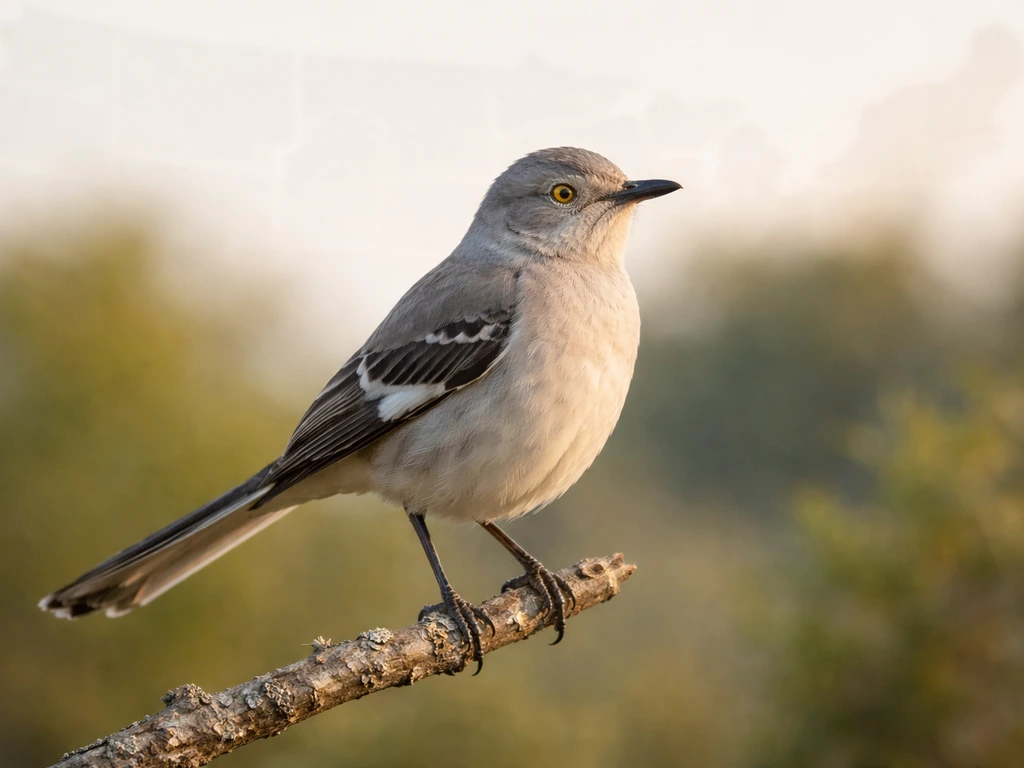
Five U.S. states have the mockingbird as their official state bird: Arkansas, Florida, Mississippi, Tennessee, and Texas. Every one of them has designated the same species, the Northern Mockingbird (Mimus polyglottos), though the exact wording each state uses in its official statutes or resolutions varies slightly.
How Many States Have the Mockingbird as State Bird

Marcus Webb
28 Apr 2026
The five states and their official designations

Here's a quick breakdown of each state's designation, including when it happened and the official language used:
| State | Official Designation Wording | Year Designated | Legal Source |
|---|---|---|---|
| Arkansas | The mockingbird / Mocking Bird | 1929 | House Concurrent Resolution No. 22 (47th General Assembly) |
| Florida | Common mockingbird (Mimus polyglottos) | 1927 | Senate Concurrent Resolution No. 3 (1927 Legislature) |
| Mississippi | The bird commonly called the mocking bird | 1944 | Mississippi Code § 3-3-11 |
| Tennessee | Northern Mockingbird, Mimus polyglottos | 1933 | Official state statute / Secretary of State symbols page |
| Texas | The mockingbird | Codified in Gov't Code | Texas Government Code § 3101.007 |
Arkansas was actually the first to act, with Governor and the Forty-seventh General Assembly adopting House Concurrent Resolution No. The Encyclopedia of Arkansas reports that on March 5, 1929, Governor Harvey Parnell and the Forty-seventh General Assembly adopted House Concurrent Resolution Number 22 proclaiming the mockingbird as the state bird of Arkansas blank" rel="noopener noreferrer">House Concurrent Resolution No. 22 proclaiming the mockingbird the state bird. 22 on March 5, 1929, proclaiming the mockingbird the state bird. Florida followed just two years earlier in 1927 via legislative concurrent resolution, making it technically the earliest official designation. Florida has officially named the mockingbird as its state bird, which is why many people ask why it is the state's symbol Florida followed just two years earlier in 1927. Tennessee came next in 1933, and Mississippi waited until 1944. Texas codified the mockingbird into its state statutes without a specific designated year tied to a single resolution, but it is firmly established in Texas Government Code § 3101. blank" rel="noopener noreferrer">Texas Government Code § 3101.007 specifies the mockingbird as the state bird. Texas adopted the Northern Mockingbird as its state bird, which helps explain why this question comes up so often why is the mockingbird Texas state bird. 007 as the state bird.
It's always the Northern Mockingbird, even when states don't say so
This is the one nuance worth clarifying. When states say simply "the mockingbird" in their statutes, they mean the Northern Mockingbird, Mimus polyglottos. There are no other mockingbird species native to the continental United States that would cause any real ambiguity. The Bahama Mockingbird occasionally shows up in South Florida, and the Tropical Mockingbird has been spotted in Texas, but neither is a regular breeding species across these five states. When Mississippi's statute says "the bird commonly called the mocking bird" and Texas's code says "the mockingbird," both refer to the same gray, white-winged songbird you're likely already picturing.
Tennessee and Florida are the most explicit: Tennessee's official wildlife page and Secretary of State symbols page both use the full name "Northern Mockingbird, Mimus polyglottos." Florida's Department of State designation includes the scientific name Mimus polyglottos as well. So if you ever need to cite the species precisely, the scientific name is your safest bet regardless of which state you're referencing.
Why so many Southern states picked the mockingbird
The mockingbird's appeal as a state symbol comes down to a combination of visibility, song, and cultural resonance. The Northern Mockingbird is a year-round resident across the South, meaning it isn't a seasonal visitor that disappears in winter. It's vocal in a way that few other birds can match, capable of mimicking dozens of other bird species and even man-made sounds like car alarms and squeaky gates. Florida's Department of State called it a "superb songbird and mimic" when describing the 1927 designation, and that phrase really captures it.
Culturally, the mockingbird was already deeply embedded in Southern identity by the time these states made their designations in the late 1920s through the 1940s. It appears in literature and folklore, and its fearless territoriality (it will dive-bomb cats, dogs, and humans who get too close to its nest) gave it a reputation as a tough, resourceful bird that resonated with state pride. Texas Parks and Wildlife explicitly connects the bird's mimicry and bold personality to why it became such a widely shared state symbol across the region.
Each state has its own specific story. Florida's 1927 resolution came partly through advocacy from women's clubs and birding organizations that pushed for an official state bird. Tennessee's 1933 designation similarly reflects a period when states across the country were formalizing their official symbols. Arkansas's 1929 resolution language is particularly emphatic, declaring the mockingbird "everywhere recognized" as the state bird before it was even officially adopted, suggesting it was already seen as a natural fit. Mississippi's 1944 designation came later but used the same instinct, codifying a bird that already felt like part of the state's identity.
How to verify any of this quickly
If you want to confirm the official designation for any of these five states, the most reliable sources are the official state government portals and statutory compilations. Here's where to look for each:
- Texas: Texas Government Code Chapter 3101 (the state symbols chapter), specifically § 3101.007. It's available as a PDF or through the Texas Legislature's online statutes portal.
- Tennessee: The Tennessee Secretary of State's state symbols page lists the Northern Mockingbird with its scientific name. The Tennessee Wildlife Resources Agency (TWRA) also has a dedicated species page.
- Florida: The Florida Department of State's official state symbols page and the Florida Memory archive both document the 1927 Senate Concurrent Resolution No. 3.
- Mississippi: Mississippi Code § 3-3-11, widely mirrored on legal databases like Justia, contains the exact statutory language designating the mockingbird.
- Arkansas: The Encyclopedia of Arkansas (a project of the Central Arkansas Library System) documents the original House Concurrent Resolution No. 22 language from 1929.
For a fast cross-check, the American Bird Conservancy's Northern Mockingbird species page also lists all five states, which is handy if you just need quick confirmation from a single source. Texas Parks and Wildlife's mockingbird page does the same thing. If you're looking for individual state breakdowns with deeper historical context, this site's per-state pages for each of the five states cover the full story.
How the mockingbird compares to other shared state birds

Five states sharing the same state bird is actually pretty common in the U.S. The Northern Cardinal is the state bird of seven states, making it the most widely shared. The Western Meadowlark is the state bird of six states. So the mockingbird's five-state count puts it solidly in the middle of the pack for shared state birds.
| State Bird | Number of States | Which States |
|---|---|---|
| Northern Cardinal | 7 | Illinois, Indiana, Kentucky, North Carolina, Ohio, Virginia, West Virginia |
| Western Meadowlark | 6 | Kansas, Montana, Nebraska, North Dakota, Oregon, Wyoming |
| Northern Mockingbird | 5 | Arkansas, Florida, Mississippi, Tennessee, Texas |
| American Robin | 3 | Connecticut, Michigan, Wisconsin |
| American Goldfinch | 3 | Iowa, New Jersey, Washington |
What's notable about the mockingbird's five states is how geographically concentrated they are. All five are Southern or South-Central states, which makes sense given the bird's range and cultural significance in that region. The Cardinal states and Meadowlark states, by contrast, are spread across broader geographic regions. The mockingbird cluster is a tight regional pattern that reflects a shared cultural and ecological context more clearly than almost any other state bird group.
If you're researching a specific state's connection to the mockingbird, each of the five states has a distinct story worth exploring. Florida's designation is the oldest, Texas's is codified in a comprehensive state symbols statute, Tennessee's page is one of the most detailed in terms of species information, Mississippi's reflects a mid-century formalization of an already-beloved regional symbol, and Arkansas's proclamation language is one of the most emphatic of any state bird designation in the country.
FAQ
If a statute just says “the mockingbird,” does it always mean the Northern Mockingbird?
No. The Northern Mockingbird is the state bird in all five states that have adopted a mockingbird symbol, and their wording refers to the same species even when the statutes use shorter phrases like “mockingbird” or “mocking bird.” If you need to be extra precise for a report, use “Mimus polyglottos,” since Florida and Tennessee explicitly include the scientific name.
Where can I verify the exact statute or resolution text for a state’s mockingbird designation?
To double-check the exact legal wording, look for a specific state citation, then compare the text to the state government symbols pages or statutory code. For Texas specifically, rely on the Government Code entry rather than secondary summaries, since Texas’s designation is codified in the code without a single memorable resolution date.
What should I do if I find sources claiming a different mockingbird species in one of these states?
If you saw a different “mockingbird” species mentioned, it’s usually about occasional sightings outside the typical breeding range. The Bahama Mockingbird and Tropical Mockingbird are not regular breeding species across these states, so they should not replace the official state-bird designation in Arkansas, Florida, Mississippi, Tennessee, or Texas.
Are there any other states besides Arkansas, Florida, Mississippi, Tennessee, and Texas that officially use the mockingbird?
No additional states are commonly cited beyond the five listed. For adjacent research, the safest approach is to search state-by-state official symbols pages or statutory compilations, rather than relying on websites that may blend bird species sightings with official designations.
How should I write the species name in a paper or citation so it matches what the states say?
If you are writing academically or for a form that requires standard formatting, use the scientific name and the common name together once (Northern Mockingbird, Mimus polyglottos), then cite the specific state’s wording for the rest. This avoids confusion when one state’s language is shorter or uses older phrasing.
What’s a reliable quick method to confirm whether “mockingbird” on a website matches an official state symbol?
For a quick, practical check, confirm whether each state’s symbol page or state code names the Northern Mockingbird and includes the scientific name or a clear reference to it. If a source says “mockingbird” but doesn’t specify which one, treat it as incomplete and verify against an official state source.
Why do some sources list different years for Texas or other states when the bird is already codified?
The year can be confusing because states may designate through different legislative instruments (resolutions versus code) and some do not tie the bird to a single easily quoted resolution. If your goal is historical sequencing, use the adoption dates stated in official histories or symbols pages, and treat codified entries as “adopted by statute” rather than “adopted on a single day.”
Does this five-state list include the mockingbird in any other state symbol categories, or only the state bird?
If you are planning an event, school project, or trivia game, be careful not to mix “state bird” with other symbols like state animal or state songbird references. The mockingbird count here is specifically about the official state bird designation, not general state wildlife symbolism.
Next Articles

What Is the State Bird of Florida? Official Bird, ID Tips
Florida’s official state bird is the Northern mockingbird. Learn why it was chosen and how to spot it.
Which Is Karnataka State Bird? Identification and Facts
Discover Karnataka’s official state bird, key ID traits, where to spot it, and why it was chosen.
What Is the Telangana State Bird? Official Bird and How to Spot It
Discover Telangana’s official state bird, key traits to spot it, and why it was chosen, with quick context.