Tennessee's official state bird is the Northern Mockingbird (Mimus polyglottos). It was designated the state bird in 1933 and remains one of the most recognizable songbirds in the state today. If you searched for 'Tennessee bird' or any variation of that phrase, this is the official answer: the Mockingbird. If you were wondering, “is Tennessee a bird,” the state bird is the Northern Mockingbird Tennessee bird.
What Is the Tennessee State Bird? Identification and History

Marcus Webb
19 Apr 2026

Quick facts for identifying the Northern Mockingbird
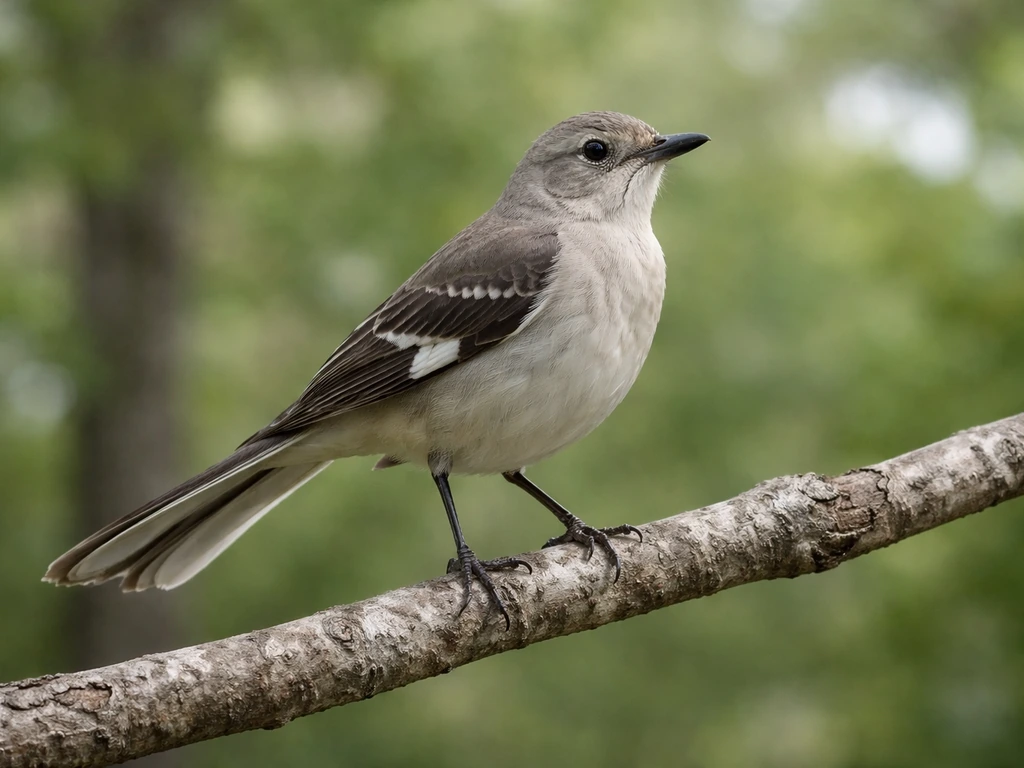
The Northern Mockingbird is a medium-sized songbird that's easy to spot once you know what to look for. Here are the key traits at a glance.
| Feature | Detail |
|---|---|
| Scientific name | Mimus polyglottos ("many-tongued mimic") |
| Length | 8.3–10.2 inches (21–26 cm), including a long tail |
| Wingspan | 12.2–13.8 inches (31–35 cm) |
| Upperparts | Ashen gray |
| Wings | Darker with two white wingbars and white edges visible in flight |
| Underparts | Whitish to pale gray breast and belly |
| Song | Mimics dozens of other birds plus man-made sounds; males can have up to 200 distinct song types |
In the field, the white wing patches are your best visual cue, especially when the bird is in flight or spreading its wings. Cornell’s All About Birds also lists the Northern Mockingbird’s typical size range as 8.3, 10.2 in (21, 26 cm) and notes key patterning such as two white wingbars blank" rel="noopener noreferrer">typical size range of 8.3–10.2 in (21–26 cm). USGS/PWRC identification tips also emphasize key field marks, including a length of about 9 inches for the Northern Mockingbird white wing patches. The mockingbird is also a year-round resident across most of Tennessee, so you can encounter it in any season. It favors suburban areas with dense, berry-producing shrubs, which makes backyards and neighborhood parks reliable spots. One behavioral cue that's hard to miss: males will sing persistently on moonlit spring nights, sometimes well past midnight. If you hear what sounds like five or six different birds coming from one spot, it's almost certainly a mockingbird.
Why Tennessee chose the Mockingbird
The designation came about through a formal process, not a casual legislative decision. On April 11, 1933, the Tennessee Ornithological Society held an election among its members specifically to choose a state bird for Tennessee, which had none at the time. The mockingbird won that vote. The choice was then officially confirmed by the Tennessee General Assembly through Senate Joint Resolution 51, adopted on April 19, 1933.
The reasoning behind the choice is embedded in the resolution's language. The mockingbird was described as 'one of the finest singers' among North American birds, praised for its melodious song and especially for its extraordinary ability to mimic the songs of other species. That mimicry is exactly what its scientific name, Mimus polyglottos, captures: 'many-tongued mimic.' The bird doesn't just copy other birds, either. It can reproduce man-made sounds like musical instruments, warning bells, cell phones, car horns, and creaky hinges. For a state proud of its musical heritage, the choice made a lot of cultural sense.
Clearing up common confusion around 'Tennessee bird'
A few things trip people up when searching for Tennessee's state bird, so it's worth addressing them directly.
- "Mockingbird" vs. "Northern Mockingbird": Tennessee's official designation uses the simpler label "Mockingbird," but it refers to the same species the TWRA and ornithological community call the Northern Mockingbird (Mimus polyglottos). These are the same bird.
- State bird vs. state game bird: Tennessee also has a separate state game bird designation, which is the Bobwhite Quail. When someone asks about Tennessee's "state bird" without qualification, the answer is the Mockingbird, not the Quail.
- "Tennessee bird" as a generic search: If you typed "Tennessee bird" looking for the official state symbol, the Northern Mockingbird is your answer. That phrasing is commonly used as shorthand for the state bird, and this site interprets it that way.
How Tennessee fits into the bigger state bird picture
Tennessee is far from alone in its choice. The Northern Mockingbird is actually one of the most shared state birds in the country. Five states have designated it as their official state bird: Arkansas, Florida, Mississippi, Tennessee, and Texas. That makes it the state bird of a large swath of the American South, which reflects how common and beloved the species is throughout the region.
For comparison, Georgia chose a different bird entirely: the Brown Thrasher, which is also a mimic thrush in the same family as the mockingbird. If you are wondering what is Georgia's state bird, look for the Brown Thrasher. The two birds are often confused by beginners, but the Brown Thrasher has a streaked brown breast and rusty-brown upperparts, making it visually distinct from the gray mockingbird. If you're browsing state birds across the Southeast, that Georgia comparison is a useful one to keep in mind.
Tennessee's state flower: the companion symbol
Some searches for Tennessee's state bird come bundled with curiosity about the state flower as well. That same kind of curiosity also comes up with questions like whether a turkey is a federal bird is a turkey a federal bird. Tennessee's official state cultivated flower is the Iris, designated by Senate Joint Resolution 53. The Iris falls under the genus Iridaceae and is the floral counterpart to the mockingbird in Tennessee's collection of official state symbols. If you're putting together a full picture of Tennessee's official symbols, the Iris is the flower to pair with the Northern Mockingbird.
FAQ
What is the Tennessee state bird, and has it ever changed since 1933?
The official Tennessee state bird is the Northern Mockingbird, designated in 1933, and it remains the same today. Tennessee has not replaced the bird with a different species in subsequent state-bird updates.
How can I tell the Northern Mockingbird from similar birds in Tennessee?
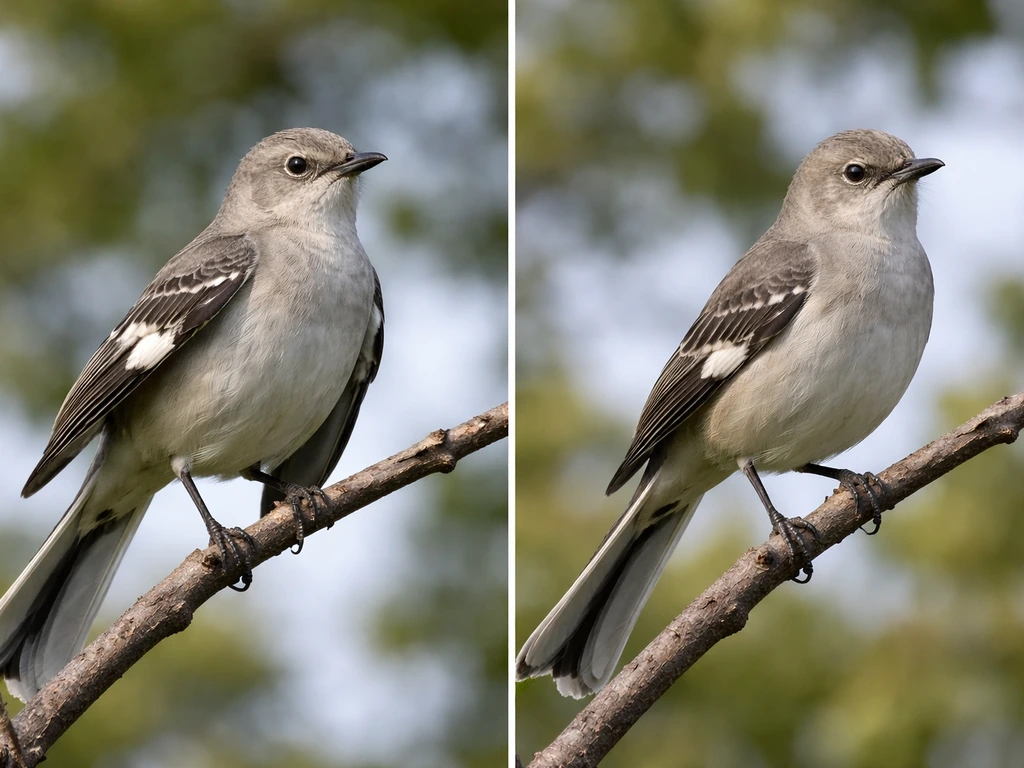
Look for the bold white wing patches, especially during flight or wing-spreading. Also note the generally gray body with a clean face pattern, which helps separate it from the Brown Thrasher (rusty-brown upperparts and a streaked brown breast).
Are mockingbirds the same as “mockingbirds” people see in other states?
Most people are looking at the same type of bird, the Northern Mockingbird, because it is widely shared as a state bird across the South. However, local appearance can vary slightly by region, so wing patches and overall gray tone are more reliable than color alone.
When is the best time to spot Tennessee’s state bird?
Because males sing persistently on moonlit spring nights, late evening and early night in spring can be especially productive. You can still find them year-round, so daytime sightings in parks and suburban areas are common too.
Do Northern Mockingbirds only live in the wild, or can I see them in my neighborhood?
They commonly use suburban landscapes with dense, berry-producing shrubs, so backyards and neighborhood parks are reliable. If you add or already have shrubs that attract berries, you are more likely to see them.
If I hear animal-like sounds from one spot, does that always mean it is a Northern Mockingbird?
It strongly suggests a mockingbird, since their mimicry can make it seem like multiple birds are present. Still, verify with visual cues, especially white wing patches, because other songbirds can also imitate calls.
Do mockingbirds mimic only other birds, or can they copy human sounds too?
They can copy man-made noises such as musical instruments, warning sounds, phone tones, car horns, and even creaky sounds. This is one reason they can feel “busier” acoustically than other local birds.
What if someone searches “Tennessee state bird” but means a different official symbol category?
Some searches mix up state birds and other state symbols. If you meant a plant, Tennessee’s official state cultivated flower is the Iris, so pairing the Iris with the Northern Mockingbird is the correct “bird plus flower” combination.