Minnesota's official state bird is the common loon, scientifically known as Gavia immer. That's the exact name used in the legal designation: Minnesota Statutes § 1.145 reads "The loon, Gavia immer" is "the official bird of the state of Minnesota." There's no ambiguity here, no historical controversy, no competing claimant. It's the loon, full stop, and it has been since March 13, 1961.
What Is the Minnesota State Bird? Official Answer and Tips

Marcus Webb
22 Apr 2026
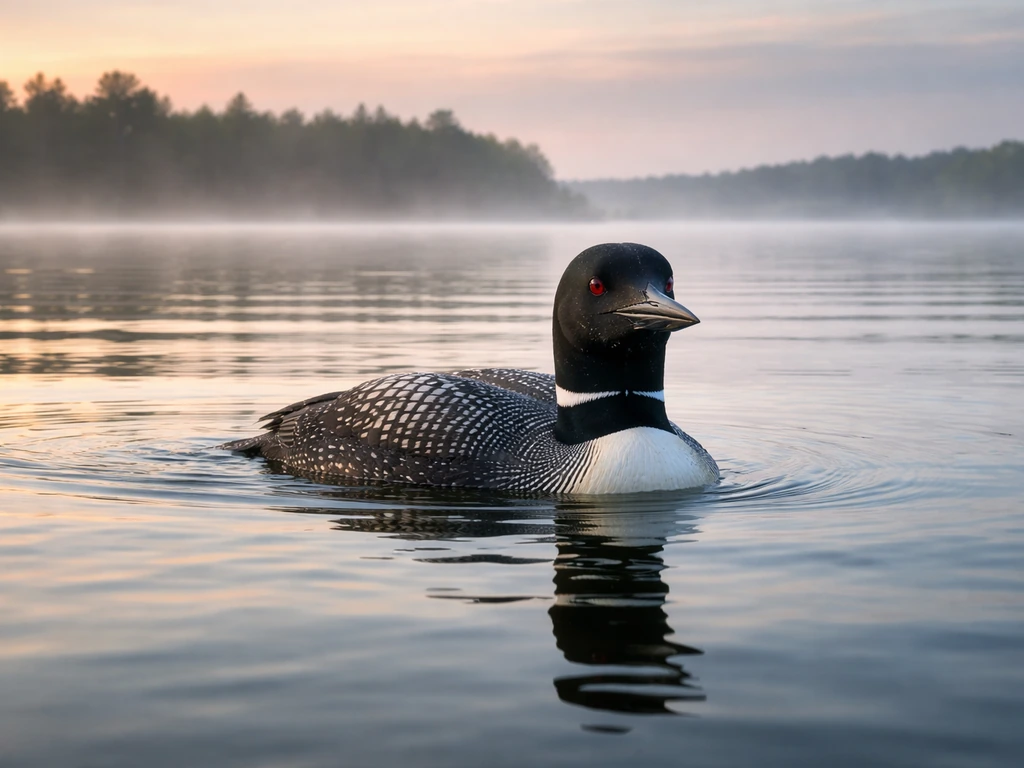
Minnesota's official state bird: the common loon
The common loon (Gavia immer) was designated Minnesota's state bird when Governor Elmer Andersen signed House File No. 79 (Chapter 76) into law on March 13, 1961. The statute is still on the books today as Minnesota Statutes § 1.145, and it even includes a quirky follow-up requirement: a photograph of the loon must be preserved in the Office of the Secretary of State. That's how seriously Minnesota takes this designation.
If you're looking this up for a crossword clue, a trivia question, or a school project, the answer you want is simply "common loon" or "loon." If you need the scientific name, it's Gavia immer. Both are correct and both match the statute.
How to recognize a common loon in the real world
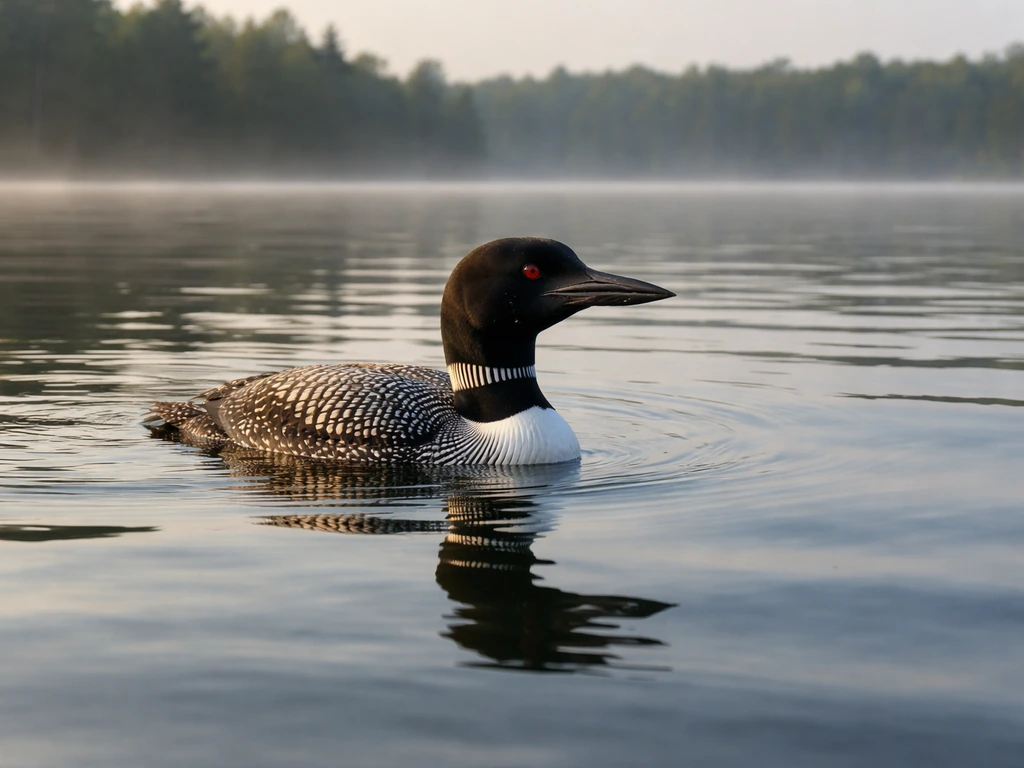
Knowing the name is one thing, but spotting an actual loon on a Minnesota lake is a lot more satisfying. Here's what to look for. The common loon is bigger than a mallard but smaller than a goose, with a thick neck and a long, black bill. In summer plumage, which is when most people encounter them on Minnesota's lakes, the bird has a striking iridescent green head and a spotty black-and-white body pattern. The red eye is a reliable field mark year-round, and the black bill is consistent regardless of season.
Behavior is just as useful for identification as appearance. The loon is far more at home in the water than on land, so you'll almost always see one swimming low in the water or diving. It rarely ventures ashore. If you want to identify a loon by ear, listen for the tremolo call, which the Minnesota DNR describes as sounding "a bit like maniacal laughter." It's an aggressive call, and once you've heard it, you won't forget it. The loon's wail and yodel are equally iconic and distinctive.
| Feature | What to Look For |
|---|---|
| Size | Larger than a mallard, smaller than a goose |
| Bill | Long, thick, black |
| Eye | Red (year-round) |
| Summer head | Iridescent green |
| Summer body | Spotty black-and-white pattern |
| Habitat | Open water on lakes; rarely on land |
| Key call | Tremolo ("maniacal laughter"); also wail and yodel |
Why Minnesota chose the loon

The reasoning behind the choice is straightforward and genuinely fits the state. Legislators argued that the loon "typified the wilderness and the lake areas" of Minnesota, and that's hard to argue with. Minnesota has more than 10,000 lakes, and the common loon is deeply tied to that landscape. The National Park Service notes that Minnesota supports the largest loon population in the lower 48 states, so the choice wasn't symbolic in an empty way. The loon actually lives here, breeds here, and defines the soundscape of Minnesota summers in a way no other bird does.
The Minnesota DNR actively monitors loon populations using volunteers, which reflects how seriously the state treats its responsibility to the bird it chose as its symbol. That monitoring work is designed to ensure the loon maintains a "strong, healthy presence" in Minnesota. Choosing a bird you're then legally and institutionally committed to protecting is a meaningful kind of state symbol.
How the loon got the designation: the history behind the 1961 vote
The state bird wasn't always the loon. Before 1961, Minnesota had no official state bird, and when the legislature took up the question, several species were in the running. The candidates that were seriously considered included the Eastern goldfinch, the mourning dove, the pileated woodpecker, the scarlet tanager, and the wood duck. The Minnesota Legislative Reference Library notes that before the legislature chose the loon, several other suggested birds were considered, including the eastern goldfinch, mourning dove, pileated woodpecker, scarlet tanager, and wood duck suggested birds were in the running before the loon. Each had its advocates, but the loon ultimately won out because of its deep cultural and geographic connection to Minnesota's identity.
House File No. 79 passed the legislature and was signed by Governor Elmer Andersen on March 13, 1961. House File No. 79, recorded as Chapter 76, was approved March 13, 1961, and designates the loon as Minnesota's official state bird House File No. 79, approved March 13, 1961. The session law is recorded as Chapter 76, and the statutory language it created, codified as Minnesota Statutes § 1.145, remains unchanged today. The Minnesota Legislative Reference Library, the Secretary of State, and the Minnesota DNR all point to 1961 as the year and § 1.145 as the legal foundation. It's about as clean and well-documented a state symbol designation as you'll find anywhere.
Does any other state share the loon as its state bird?
The common loon is not a widely shared state bird. The common loon state bird is also a big part of why Minnesota’s symbol feels so distinctive. Minnesota is the most prominent state associated with the common loon as an official symbol. This sets it apart from more commonly shared birds like the northern cardinal (adopted by seven states) or the western meadowlark (six states). If you're curious about how the loon compares across state designations, or whether other states have designated it, that's worth digging into further, particularly if you're exploring which states have the same bird or how the loon ranks among U.S. state bird choices.
Keep exploring: loon facts and state bird comparisons
If the quick answer is what you needed, you've got it: Minnesota's state bird is the common loon (Gavia immer), designated in 1961 under Minnesota Statutes § 1.145. But if you want to go deeper, there's a lot more worth knowing. Understanding why the loon specifically fits Minnesota, the full story of why it was chosen over competing birds, and how it fits into the broader landscape of U.S. state bird designations all make for genuinely interesting reading.
This site covers each of those angles in dedicated pages. You can read more about why the loon was chosen as Minnesota's state symbol, explore whether the loon has been adopted as a state bird in other states, and look into what makes the common loon such a distinctive and iconic species. If you want a deeper explanation of why the loon became Minnesota’s state bird, read about why is the loon the state bird of minnesota. If you ran across this topic as a crossword clue, that angle is covered too. If you ran across this topic as a crossword clue for the common minnesota state bird crossword clue, that angle is covered too. Each piece builds on the others, so wherever your curiosity takes you next, there's a natural place to go from here.
FAQ
Is the “common loon” always the right answer, or can I also write “loon” on a quiz or crossword?
In most cases, yes. The legal wording specifies “the loon, Gavia immer,” and the article notes that “common loon” and “loon” both match what the statute supports. For a crossword, use the form that fits the number of letters, but keep the capitalization and spacing consistent with the puzzle’s expected entry.
What is the scientific name you should use if the question asks for Latin?
Use Gavia immer. If a prompt says “binomial name” or “scientific name,” “common loon” is not sufficient, even though it is correct as a common name.
When would someone be most likely to see a common loon in Minnesota lakes?
Summer is the easiest time for most visitors, because the article’s identification tips are geared to summer plumage. If you try in winter, expect the same overall body pattern category to be less vivid, so rely more on behavior (diving, low swimming) and the red eye than on head coloration.
How can I confirm I’m seeing a loon and not a similar waterbird from far away?
Focus on the red eye, the thick neck, and the long black bill, and look for diving and low swimming. Loons are far more at home on water than on land, so repeated movement between water surface and dives is a strong confirmation cue.
What should I listen for if I suspect a loon but can’t see it clearly?
Look for the tremolo call, described as sounding like “maniacal laughter,” plus the more familiar wail and yodel calls. If you only hear generic bird calls, keep watching for visual confirmation, because loon calls can be mistaken in noisy, windy shorelines.
Is there any chance Minnesota changed its state bird after 1961?
The designation has been in place since March 13, 1961, and the statute is described as remaining on the books in the same form. If you want maximum certainty for a formal assignment, point to Minnesota Statutes § 1.145 as the controlling text.
Does Minnesota require anything specific for the state bird designation beyond the law itself?
The article mentions a special requirement tied to recordkeeping, that a photograph of the loon must be preserved in the Office of the Secretary of State. That is a concrete detail that you can use if an assignment asks what makes the designation notable.
What are common mistakes people make when answering “what is the Minnesota state bird”?
The most common mistakes are using a different “water” bird name, forgetting to include “common loon” versus “loon,” or mixing up the scientific name. Another frequent issue is assuming there are multiple official options, but Minnesota’s designation is described as unambiguous under the statute.
If I need to write the answer in a specific format, what’s the best way to do it?
For general questions, write “common loon.” For formal or science-focused questions, write “common loon (Gavia immer).” If the prompt asks for legal phrasing, the state statute uses “the loon, Gavia immer,” so that pairing is the safest model.