Virginia's official state bird is the Northern Cardinal (Cardinalis cardinalis). If you are wondering about New Jersey, its state bird is the American Goldfinch New Jersey state bird. The designation is codified in Virginia Code § 1-510, which lists the Northern Cardinal as the official state bird alongside Virginia's other official emblems. Virginia also pairs that bird with an equally recognizable state flower: the American Dogwood (Cornus florida). If you searched for Virginia's state bird and flower together, you have your two answers right there.
What Is Virginia’s State Bird and State Flower?

Marcus Webb
21 Apr 2026
Virginia's Official State Bird at a Glance
| Symbol | Common Name | Scientific Name | Designated |
|---|---|---|---|
| State Bird | Northern Cardinal | Cardinalis cardinalis | January 25, 1950 |
| State Flower | American Dogwood | Cornus florida | 1918 |
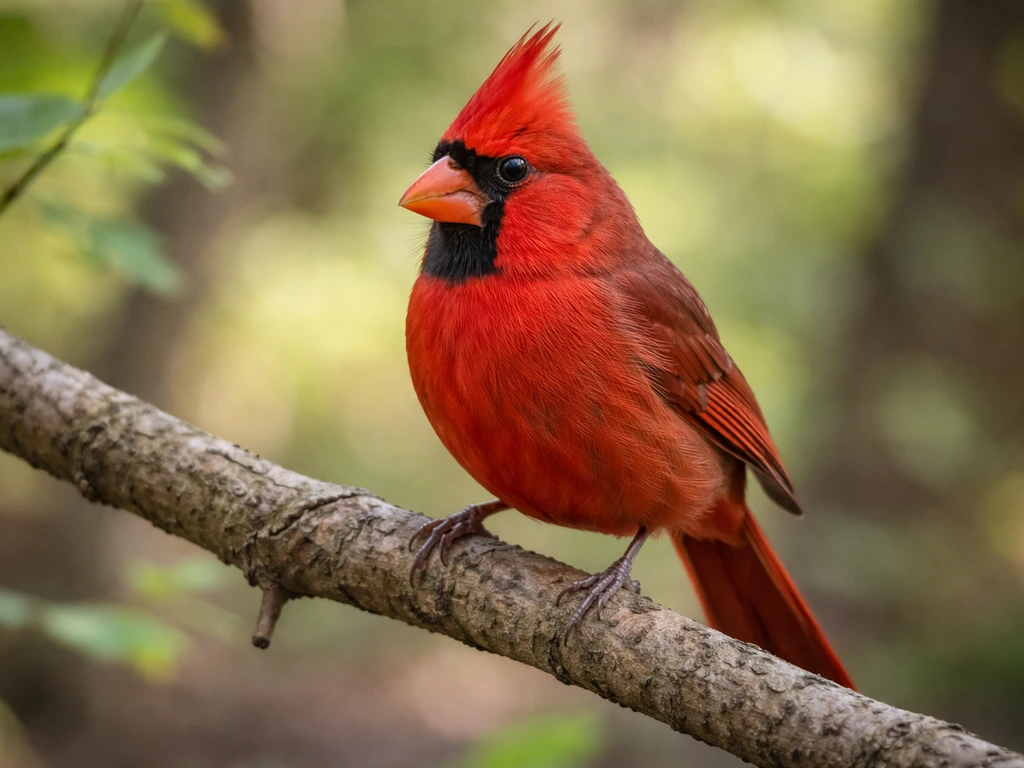
Both designations are codified in Virginia Code § 1-510 as official state emblems. The Northern Cardinal became official on January 25, 1950, making it one of the earlier cardinal adoptions among U.S. states.
How to Identify a Northern Cardinal
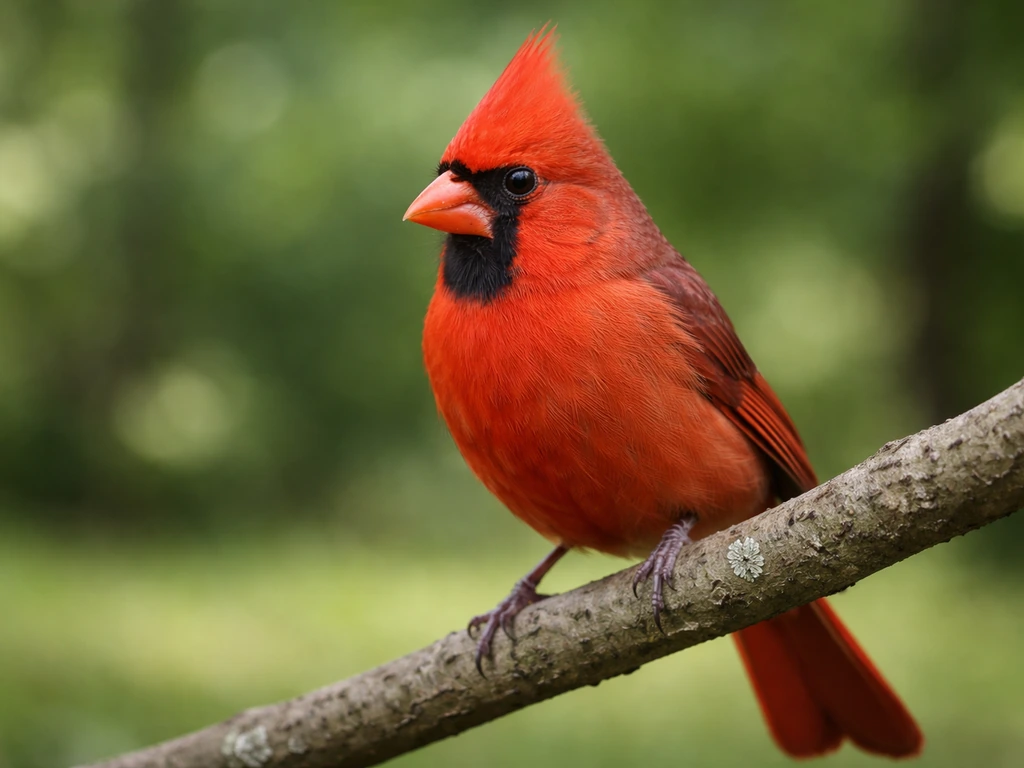
The Northern Cardinal is one of the easiest birds to identify in North America, especially the adult male. He is entirely brilliant red, sports a prominent crest on the top of his head, and has a short, thick, cone-shaped bill that is almost orange-red in color. The black mask around his face and bill is a reliable field mark at any distance. If you see a large, all-red songbird with a crest sitting at a feeder in Virginia, there is really nothing else it could be.
Female and juvenile cardinals are a warm grayish-tan with reddish accents on the crest, wings, and tail. They also carry that same distinctive crest and thick conical bill. The female's face mask is a softer pale gray to black compared to the male's stark black. That crest plus the big, heavy bill is the combination that clinches the ID even when you are looking at a less colorful bird.
- Size: fairly large songbird, roughly 8–9 inches long with a noticeably long tail
- Male: brilliant all-red plumage, prominent crest, black face mask around the bill
- Female: grayish-tan with red tinges on crest, wings, and tail; pale gray to black face mask
- Bill: short, very thick, and cone-shaped, ideal for cracking seeds
- Behavior: year-round resident, frequently visits backyard feeders, especially favors sunflower seeds
- Foraging: often feeds on or near the ground as well as at elevated feeders
One practical tip: cardinals are among the most reliable winter feeder visitors across Virginia. If you set out black-oil sunflower seeds, you are almost guaranteed to attract them from October through March when other species may be harder to find. They tend to arrive at feeders at dawn and again at dusk.
Why Virginia Chose the Northern Cardinal
Virginia officially named the Northern Cardinal its state bird on January 25, 1950. Emblems of the Commonwealth of Virginia documents Virginia's adoption of the Northern Cardinal as the state bird in 1950 blank" rel="noopener noreferrer">Northern Cardinal its state bird on January 25, 1950. The choice makes intuitive sense for anyone who has spent time outdoors in Virginia. The cardinal is a year-round resident across the entire state, from the Blue Ridge Mountains to the coastal Tidewater region. Unlike migratory species that disappear for half the year, the Northern Cardinal is present and visible in every season, making it genuinely representative of Virginia's wildlife rather than just a warm-weather visitor.
The male's brilliant red plumage also gives it strong visual symbolism. It stands out dramatically against winter snow and summer green, which makes it the kind of bird that even non-birders immediately recognize and remember. The species is also deeply woven into backyard culture across the state, showing up in gardens, suburban neighborhoods, and rural woodlands alike. It is, in short, a bird that Virginians actually see and know, which is exactly the kind of connection a state-symbol designation is meant to reflect.
Virginia's State Flower: The American Dogwood
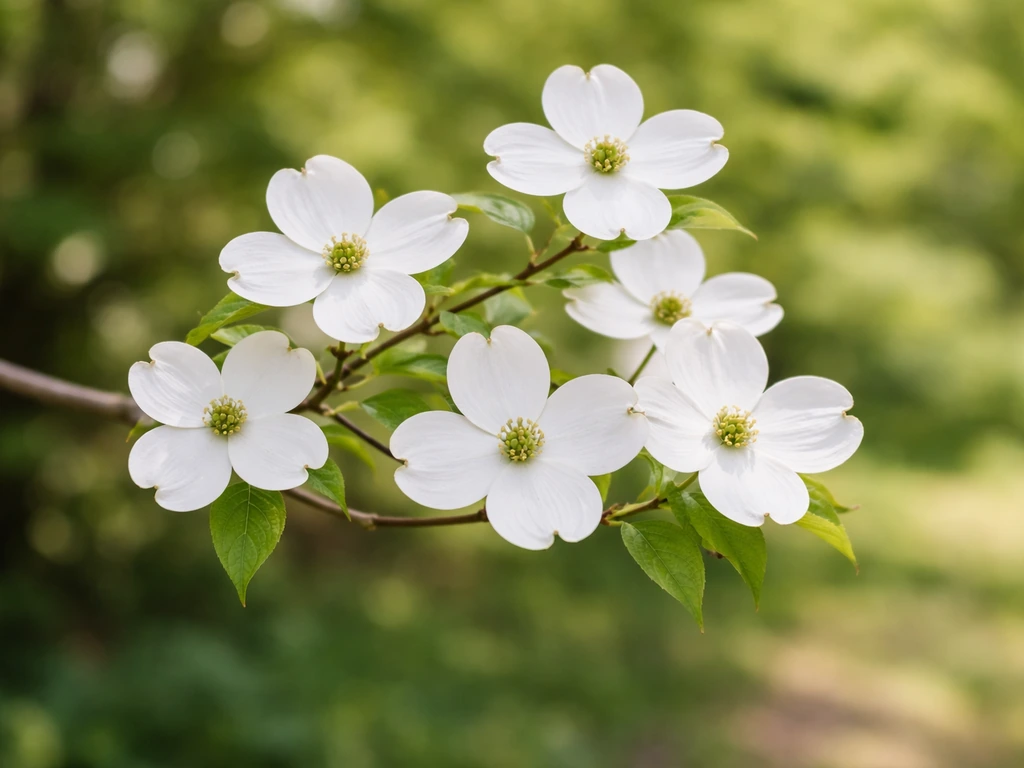
blank" rel="noopener noreferrer">Virginia's official state flower is the American Dogwood (Cornus florida), designated in 1918 and also codified in Virginia Code § 1-510. The flowering dogwood is a native tree that blooms across Virginia in early spring, typically March through April, producing showy white to pale-pink four-petal bracts that surround a cluster of small yellow flowers. It grows throughout Virginia's forests, roadsides, and gardens, and like the Northern Cardinal, it is something most Virginians encounter regularly rather than a symbol that exists only on paper.
The pairing of the Northern Cardinal and the American Dogwood is a natural fit for Virginia's identity: both are native, both are visually striking, and both are genuinely common across the state in their respective seasons. The cardinal shows up year-round; the dogwood marks the arrival of spring.
Seven States Share the Cardinal
Virginia is not alone in choosing the Northern Cardinal. It is actually one of seven U.S. states that share the same state bird, which makes it the most frequently chosen state bird in the country. The seven states are:
- Virginia
- West Virginia
- North Carolina
- Kentucky
- Ohio
- Indiana
- Illinois
That regional clustering is not a coincidence. The Northern Cardinal's natural range covers the entire eastern half of the United States, and it is abundant and recognizable across all of those states. Each state made the decision independently, but they all arrived at the same answer for similar reasons: the cardinal is a native year-round resident that residents genuinely know and value. West Virginia designated its cardinal in 1949, one year before Virginia's adoption in 1950. West Virginia’s state bird is the Northern Cardinal state bird for West Virginia. If you are curious how neighboring states approach their state-bird designations, the pages for West Virginia's state bird and Maryland's state bird (the Baltimore Oriole) offer a useful contrast in how different regional birds can represent very different state identities. If you are wondering about a different purple finch, look up what state bird is the purple finch to find the exact match Maryland's state bird (the Baltimore Oriole). You can find the answer to what is maryland's state bird on the Maryland state-bird page, which highlights how Maryland chose a different regional symbol.
How This Cardinal Compares Across States

| State | State Bird | Year Designated |
|---|---|---|
| Virginia | Northern Cardinal | 1950 |
| West Virginia | Northern Cardinal | 1949 |
| North Carolina | Northern Cardinal | 1943 |
| Kentucky | Northern Cardinal | 1926 |
| Ohio | Northern Cardinal | 1933 |
| Indiana | Northern Cardinal | 1933 |
| Illinois | Northern Cardinal | 1929 |
Kentucky was the first to designate the Northern Cardinal as a state bird, doing so in 1926. Virginia came relatively late in that wave. Still, all seven designations happened between 1926 and 1950, reflecting a mid-century enthusiasm for formalizing state symbols that was common across the country during that era.
Where to Go Next on This Site
If Virginia brought you here and you want to keep exploring, this site covers the official state bird for every U. If you are curious about Washington, you can also check what is Washington's state bird. Washington state’s bird is different, so if you are specifically asking why the American Goldfinch is Washington’s state bird, check that page for the details why is the american goldfinch washington state bird. S. state. A few natural next stops based on what brings most readers to this page:
- West Virginia's state bird: also the Northern Cardinal, designated one year before Virginia in 1949, with its own history worth reading
- Maryland's state bird: the Baltimore Oriole, a sharp contrast to the cardinal and a great example of how neighboring states can go in completely different directions with their symbols
- Vermont's state bird: the Hermit Thrush, one of the more distinctive and less commonly shared picks among eastern states
- Washington's state bird: the Willow Goldfinch, which connects to the broader goldfinch story shared by states like New Jersey and Washington state
- The full 50-state directory if you want to browse or compare birds across the entire country
The Northern Cardinal is also the subject of its own broader state-bird comparison thread on this site, covering all seven states that share it and the reasons each one chose it. If you are a birder or a trivia enthusiast trying to track down which states chose the same bird, that page pulls the full picture together in one place.
FAQ
Is the Virginia state bird the Northern Cardinal even if I am seeing a different kind of cardinal?
Yes, Virginia’s official state bird is the Northern Cardinal. However, many people confuse it with similar songbirds. The fastest check is the male’s all-red body with a black face mask and a prominent crest, plus a thick, cone-shaped bill.
What does the Northern Cardinal look like in Virginia if I’m not seeing a red bird?
If you are seeing a less colorful bird, look for the same core features: a clear crest, the short thick conical bill, and a recognizable facial pattern. Females and juveniles are grayish-tan with reddish on the crest, wings, and tail, and their face mask is softer than the male’s stark black.
When is the best time to spot Virginia’s state bird?
Cardinals are year-round residents, but for viewing them without waiting all day, early morning and again near dusk are especially good. If you use feeders, they often show up most consistently from October through March.
Do cardinals always come to bird feeders in Virginia?
They are among the more reliable feeder visitors, but no bird is guaranteed. If you want the highest odds, black-oil sunflower seeds usually work well, and putting food near cover can help them feel safe enough to feed regularly.
Can the Northern Cardinal be confused with another common Virginia bird at a feeder?
Yes, occasionally. Some finches and other small songbirds may visit feeders, but the combination of a crest plus the thick cone-shaped bill and (for males) the black mask and bright red color is a strong, practical way to rule out look-alikes at a distance.
Is Virginia’s state bird different from neighboring states?
No, at least for the cardinal. West Virginia also uses the Northern Cardinal as its state bird, and several other eastern states chose the same species. The key is that Virginia’s official designation is still the Northern Cardinal, even when you are comparing across borders.
What is Virginia’s state flower, and does it relate to the same season as the bird?
Virginia’s state flower is the American Dogwood. It typically blooms in early spring (often March through April), while the Northern Cardinal is visible year-round, so the flower is more of a seasonal “spring marker” compared with the bird.
Are the state bird and state flower officially codified in Virginia law?
Yes. Virginia’s state bird and state flower are both codified in Virginia Code § 1-510. If you need verification for an assignment or documentation, that specific statute is the official reference point.