California's official state bird is the California valley quail (Lophortyx californica), its state flower is the golden poppy (Eschscholzia californica), and its state tree is the California redwood (Sequoia sempervirens and Sequoia gigantea). For Redondo Beach specifically, the official bird is also tied to the state's designated emblem official bird of Redondo Beach, California. All three are codified in California Government Code sections 421, 422, and 423.
What Is the California State Bird and Flower? Plus Tree
Marcus Webb
20 May 2026
California's State Bird: The California Valley Quail
The California valley quail was officially designated as the state bird and avifaunal emblem under Assembly Bill 776, Chapter 777, in 1931. Its scientific name in the Government Code is listed as Lophortyx californica, though you'll also see it referenced as Callipepla californica in modern ornithological sources. Both names refer to the same bird.
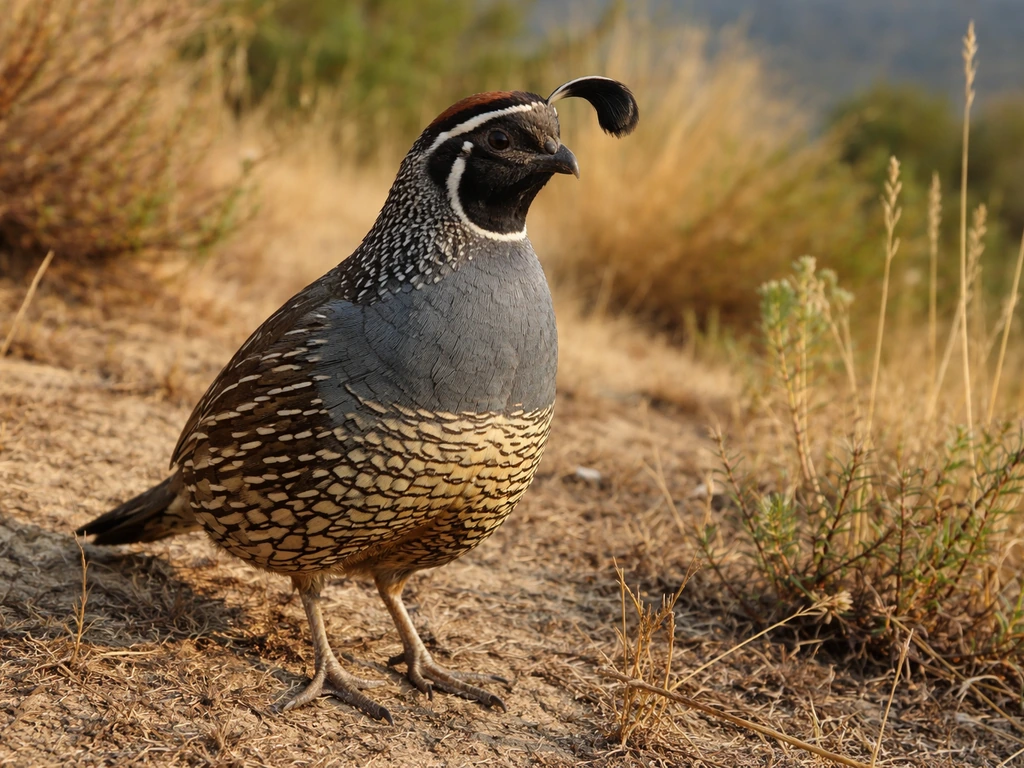
If you've spent any time in California's scrubby hillsides, suburban gardens, or open woodlands, you've almost certainly seen one. The California quail is a plump, round-bodied bird with short legs, scaled belly markings, and the feature that makes it instantly recognizable: blank" rel="noopener noreferrer">a forward-drooping, comma-shaped plume on top of its head. It almost looks like a tiny antenna. The bird tends to travel in groups called coveys, and you'll often spot them scurrying single-file across trails or garden paths rather than flying.
Its range covers most of California and much of the western United States, concentrated in brushy habitats, chaparral, and woodland edges where it forages for seeds and insects near cover. It's a genuinely common bird, not a rare symbol chosen for prestige alone.
There's a lot more to explore about this bird specifically, including what makes it unusual among state birds and the full reasoning behind its selection, which other pages on this site cover in depth. While this bird is strongly tied to California, its selection is also unusual compared with many other state birds, which is exactly what makes it stand out what makes it unusual among state birds.
California's State Flower: The Golden Poppy
The golden poppy became California's official state flower on March 2, 1903, making it one of the earlier state flower designations in the country. Its scientific name is Eschscholzia californica, and it's enshrined in California Government Code § 421.
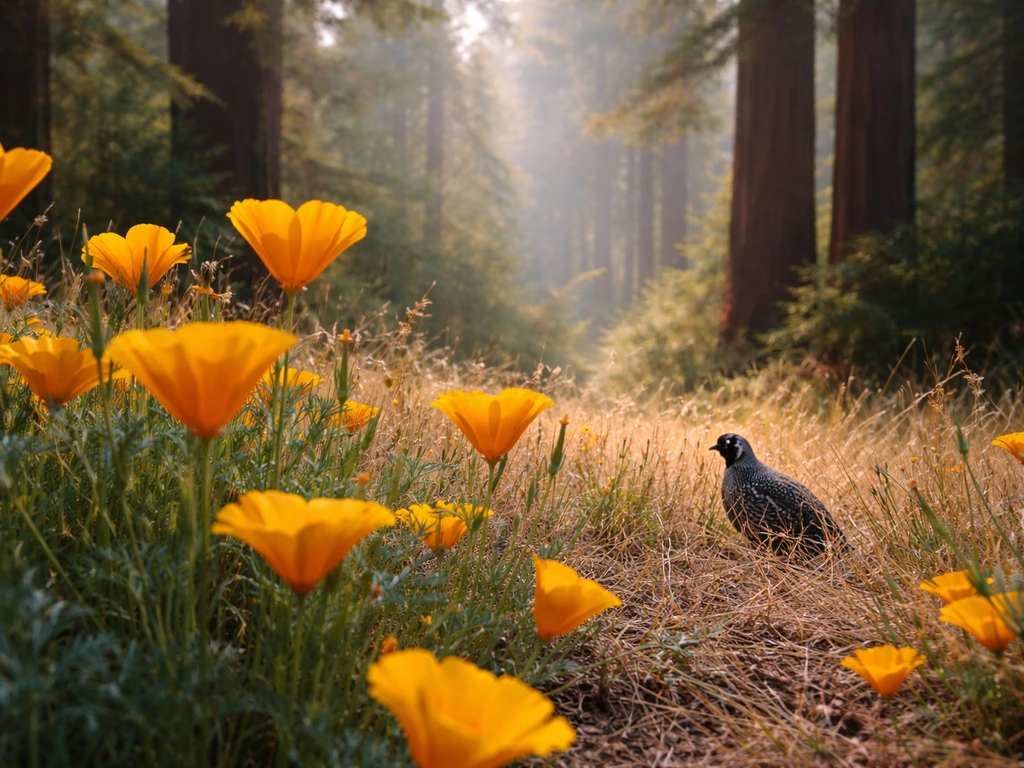
The flower itself is hard to miss: bowl-shaped, shiny golden-orange petals that open in sunlight and close at night or on overcast days. In peak bloom, usually from February through May, California hillsides and roadsides can be blanketed in orange. The Antelope Valley California Poppy Reserve near Lancaster is one of the most well-known spots to see mass blooms, but the poppy grows natively across the state from sea level into the foothills.
It's also worth noting that the California poppy is not the same as the opium poppy. It belongs to an entirely different genus and has no narcotic properties. It's a true California native that reseeds itself readily and grows well in dry, disturbed soils.
California's State Tree: The California Redwood
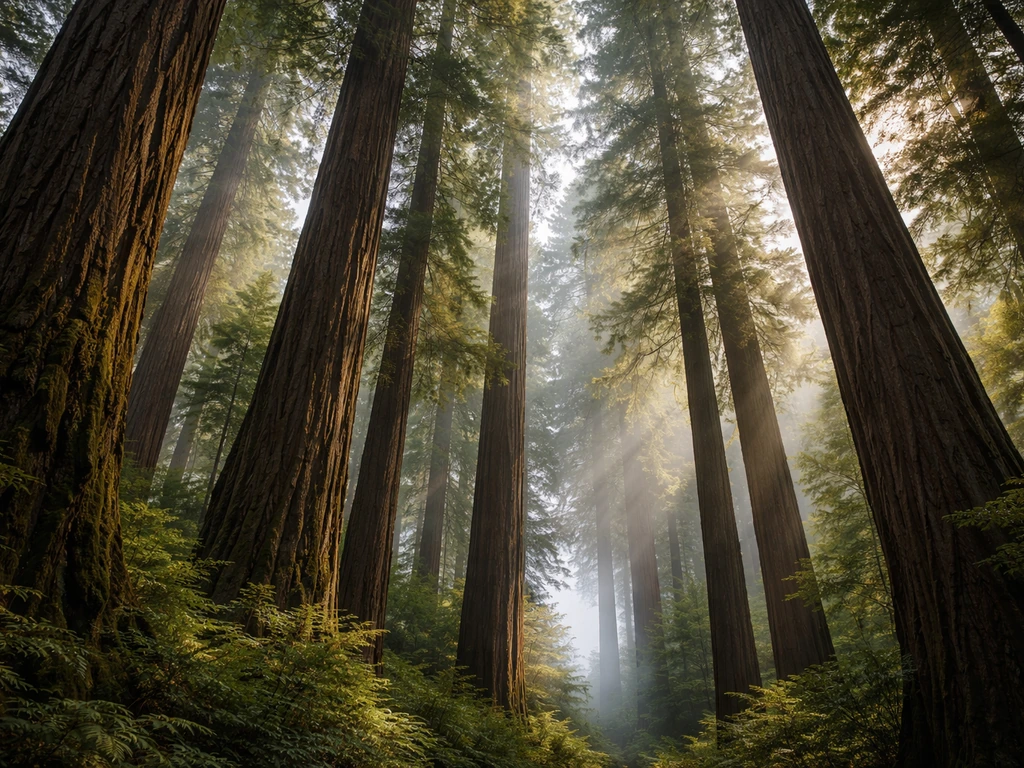
The California redwood holds the distinction of representing not one but two species under the same state tree designation, per Government Code § 422: Sequoia sempervirens (coast redwood) and Sequoia gigantea (giant sequoia). The coast redwood is the tallest tree species on Earth, while the giant sequoia holds the record for largest by volume. California is the only place in the world where both grow natively.
In the field, you can tell the two apart by location and foliage. Coast redwoods grow in a narrow fog-belt strip along the Pacific coast from central California up into southwest Oregon. They have flat, needlelike leaves arranged in two rows on lateral branches. Giant sequoias grow at higher elevations in the Sierra Nevada and have smaller, scale-like leaves that wrap around the branches. If you're standing in the fog near the coast looking up at an enormous tree, it's a coast redwood. If you're in Sequoia National Park or Yosemite Valley, it's a giant sequoia.
Why Each Symbol Was Chosen
Why the California valley quail?
The quail was chosen in 1931 in part because it's genuinely native and widespread across California, not borrowed from another state or region. It thrives in the same chaparral and oak woodland habitats that define much of the California landscape. It's also a bird with enough visual personality, that distinctive head plume and scaled chest pattern, to make a memorable emblem. At the time of designation, the quail was also a culturally familiar bird to Californians as a game species with deep roots in the state's outdoor traditions.
Why the golden poppy?
The golden poppy's selection in 1903 leaned heavily on its connection to California's identity as the Golden State. Preamble language around the designation ties the flower's bright orange blooms to a "cup of gold" and "fields of gold" imagery, drawing a direct line to the Gold Rush era that shaped modern California. The poppy was also championed by botanist and naturalist Sarah Plummer Lemmon, who campaigned for its official recognition in the 1890s. That push eventually succeeded a decade later. The flower was already deeply associated with California in the public imagination well before it became official.
Why the California redwood?
The redwoods were the obvious choice for state tree because nothing else in the world quite compares to them. They are California originals in the most literal sense, growing nowhere else on Earth natively. Including both the coast redwood and giant sequoia under a single designation acknowledges that California has two record-breaking tree species, and the state wasn't going to pick one over the other. The redwoods also carry significant conservation history: the Save the Redwoods League was founded in 1918, and public awareness of the trees as irreplaceable natural monuments made them a natural fit as an official state symbol.
All Three at a Glance
| Symbol | Official Name | Scientific Name | Year Designated |
|---|---|---|---|
| State Bird | California Valley Quail | Lophortyx californica (also Callipepla californica) | 1931 |
| State Flower | Golden Poppy | Eschscholzia californica | 1903 |
| State Tree | California Redwood | Sequoia sempervirens / Sequoia gigantea | Codified in Government Code § 422 |
How to Spot Each One in Real Life
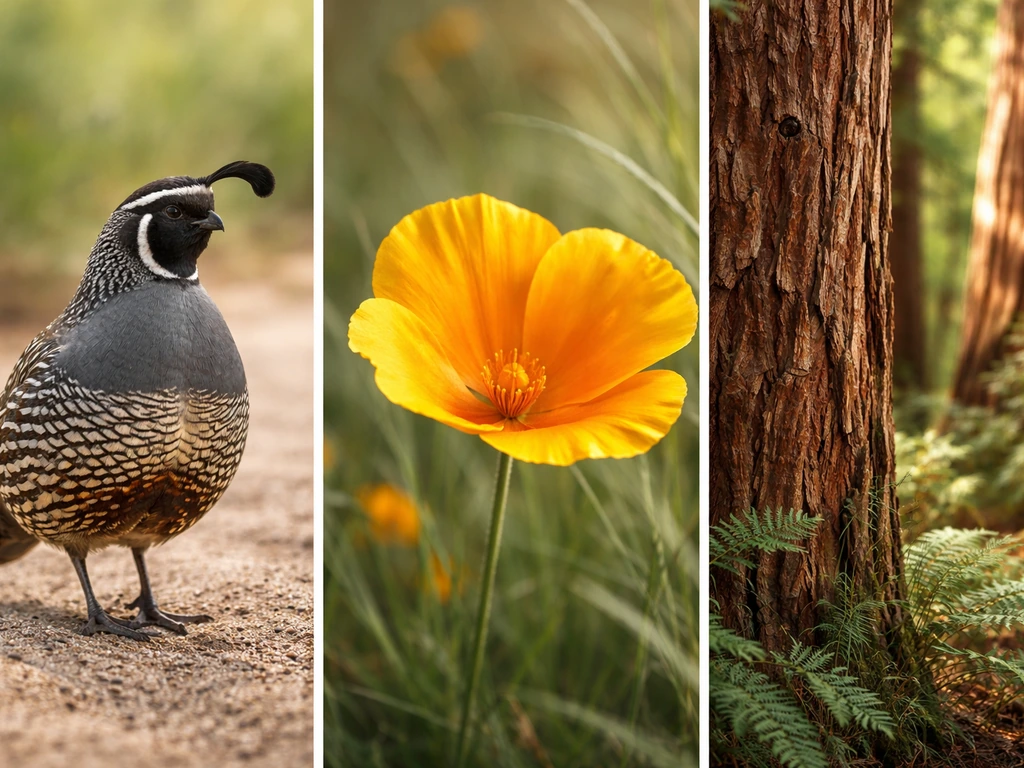
If you're in California and want to actually see these symbols in the wild, here's what to look for:
- California valley quail: Look for a plump, round bird about the size of a softball with a black comma-shaped plume on its forehead, a scaled (fish-scale patterned) belly, and a short bill. It tends to run rather than fly when startled. You'll often hear its sharp "Chicago" call before you see it. Common in suburban backyards, parks, and brushy hillsides statewide.
- Golden poppy: Bright golden-orange, bowl-shaped flowers with four petals and blue-green feathery foliage. Blooms February through May in most areas. Common along roadsides, dry open hillsides, and disturbed ground throughout the state. The flowers close up on cloudy days and at night.
- Coast redwood: Extremely tall (often over 200 feet), reddish-brown fibrous bark, and flat needles in two rows along the branch. Found in a narrow coastal strip from Big Sur north to the Oregon border. Muir Woods near San Francisco is one of the easiest places to walk among them.
- Giant sequoia: Massive trunk that tapers upward with cinnamon-red bark, scale-like leaves that wrap around small branches. Found only in discrete groves on the western Sierra Nevada slopes, primarily between 4,000 and 8,000 feet elevation. Sequoia and Kings Canyon National Parks and Calaveras Big Trees State Park are good destinations.
Does Any Other State Share California's State Bird?
No other U.S. state has claimed the California valley quail as its official state bird. It's exclusively California's. That's actually somewhat notable because a handful of birds, like the northern cardinal and the western meadowlark, show up as state birds in multiple states. The California quail being a sole designation reflects how strongly it's tied to the California landscape and identity. If you're curious about how other western states chose their birds or how the quail compares to related species, that's a natural next step worth exploring. If you enjoy bird trivia, you may also come across other puzzle clues such as its state bird is the California gull crossword.
FAQ
Are the California state bird and flower the same as the symbols for Redondo Beach?
The California valley quail is the state bird, and Redondo Beach also has its own official bird emblem. The quail is still the California statewide symbol, but you should check the city’s specific emblem to confirm it matches the state designation, since local symbols are separate.
What do I do if I see a different scientific name for the California quail?
Some references use Callipepla californica, but the California Government Code lists Lophortyx californica. Both names point to the same species, but the difference comes from taxonomy updates, not a different bird.
When is the best time to see the California state flower blooming?
California poppies typically peak from February through May, but exact timing shifts with rainfall and local weather. In drier years or cooler coastal areas, bloom can start later or be shorter, so it helps to check current local conditions before planning a visit.
How can I tell the California poppy from look-alikes like other orange poppies?
A key practical cue is the California poppy’s tendency to open in sunlight and close at night or under overcast conditions. Also, confirm you are in habitat where it is native, such as open, dry or disturbed soils, because many non-native orange poppies grow differently and may not show the same strong reseeding behavior.
Is the “golden poppy” an actual poppy species connected to opiates?
No. The California state flower is Eschscholzia californica, it is in a different genus than the opium poppy, and it has no narcotic properties. The confusion usually comes from the word “poppy,” not from shared chemistry.
Where can I see coast redwoods versus giant sequoias if I want the right one?
Coast redwoods are most associated with the fog-belt along the Pacific coast, so look toward the coastal belt. Giant sequoias are tied to higher elevations in the Sierra Nevada. If you are visiting a major park, the location within the park often determines which species you will see.
Do the California state tree designations mean only two trees total, or are there other “redwoods” in California?
The state tree designation covers two specific species under one label (coast redwood and giant sequoia). California also has other trees people loosely call redwoods, but those would not be the two species recognized by the official state tree code.
Why does the California state bird travel in groups called coveys, and does that affect spotting?
Coveys form for foraging and movement through brushy habitats, so you are more likely to see several quail together than a lone bird. When you spot one on a trail, scanning nearby ground movement can help you find the rest of the covey, since they often move in a coordinated single-file pattern.
Are these symbols unique to California, or can other states claim the same bird or flower?
The California valley quail is notably exclusive as a state bird, meaning no other U.S. state has claimed it as the official state bird. Other states may have related birds as state symbols, but the quail’s sole California designation is one of the unusual parts of the selection.