California chose the California quail as its state bird in 1931 because the species was already deeply woven into the state's natural landscape. It lives across California year-round, thrives in the oak woodlands, chaparral, and coastal scrub that define so much of the state's terrain, and it had been recognized as a distinctly Californian species for well over a century. The Audubon Society pushed for the designation, a public contest confirmed overwhelming popular support (the quail won with 61,559 votes), and on June 12, 1931, Governor James Rolph signed Assembly Bill 776, Chapter 777 into law.
Why Is the Quail the State Bird of California?

Marcus Webb
7 May 2026
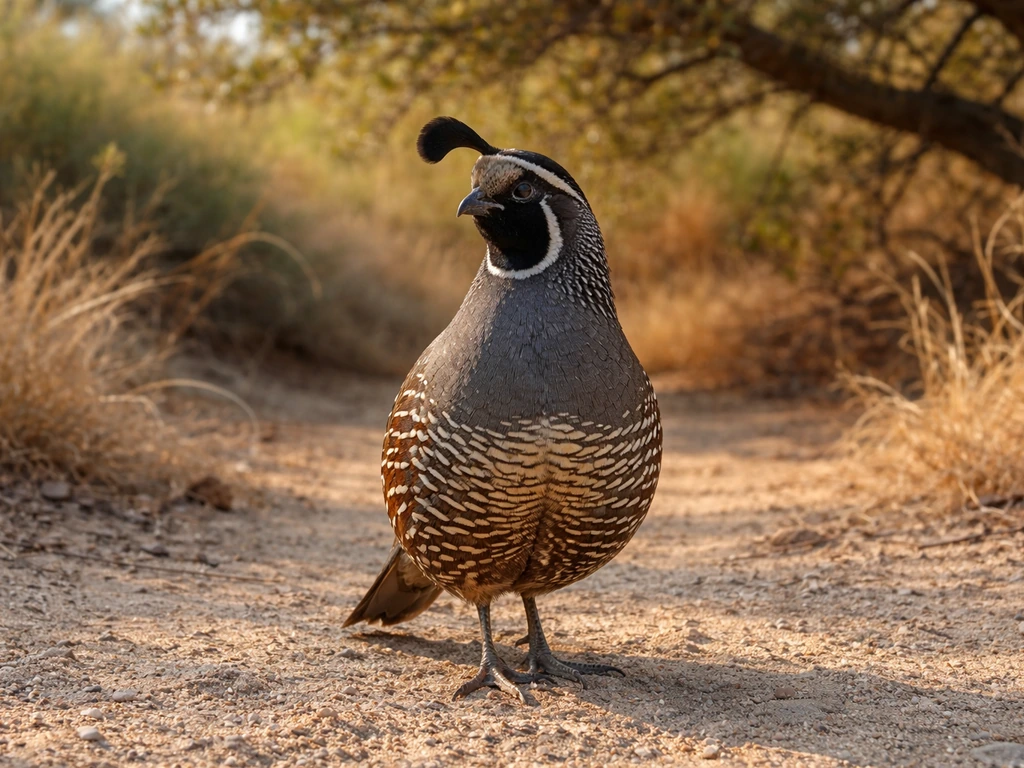
California quail or valley quail? Same bird, two names
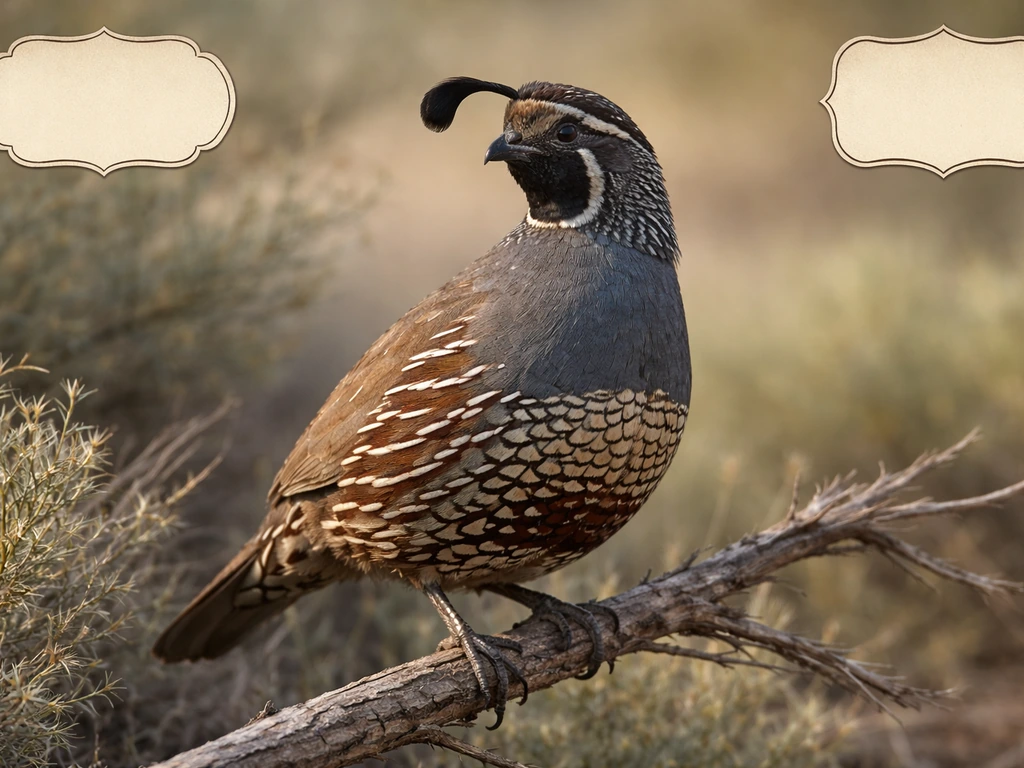
If you've seen this bird referred to as the "valley quail," you're not wrong. The official state law actually uses the name "California valley quail" and the older scientific name Lophortyx californica. Today's taxonomy uses blank" rel="noopener noreferrer">Callipepla californica, and most field guides, birding organizations, and the U.S. blank" rel="noopener noreferrer">Fish and Wildlife Service simply call it the California quail. Both names point to the exact same species. The "valley" label stuck around because the bird is especially common in California's central valleys and lowland areas, but it ranges well beyond those zones. For the purposes of this designation, California quail and valley quail are interchangeable.
When the designation happened
The California quail became the official state bird and avifaunal emblem of California in 1931. The specific legislation was Assembly Bill 776, passed during the 49th Legislative Session and signed into law on June 12, 1931. The opening line of the act is direct: "An act to adopt the California valley quail as the official state bird and avifaunal emblem of this state." Some sources cite April 29, 1931 as a key date in the legislative process, with the Governor's signature coming in June. The designation was championed by the Audubon Society and carried to the Legislature by sponsors including Eleanore Miller and Charles W. Fisher.
Why the quail fits California so well
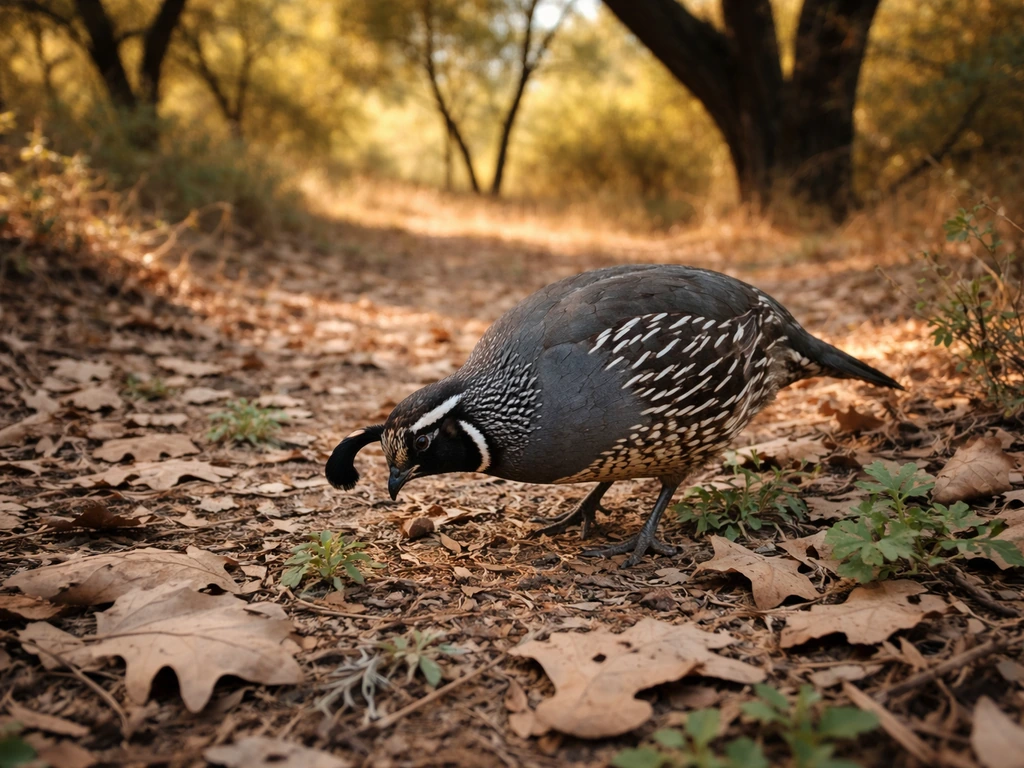
The California quail is non-migratory, which means it's a permanent, year-round resident throughout the state. That alone makes it more representative than a migratory species that only passes through seasonally. Its range stretches from the Pacific coast to Utah and from Canada down into Mexico, but California sits squarely at the heart of its territory.
Habitat-wise, this bird matches California's signature ecosystems. It favors open oak woodland, broken chaparral, coastal scrub, woodland edges, streamside growth, parks, and farms. Those are the exact landscapes that have defined California for centuries, long before suburbs and agriculture reshaped much of the state. The quail eats weeds, grain, seeds, insects, and fruit, and it builds its nest in a simple ground depression from April through August. It's practical, adaptable, and genuinely at home across a wide range of California environments.
The species is also social and highly visible. Outside the breeding season, California quail gather in coveys of roughly 30 to 300 birds. You're not likely to miss a large flock moving through brush or foraging along a trail edge. That visibility in public parks, hiking areas, and even suburban gardens has made this bird a familiar face to Californians for generations.
How to recognize the California quail fast
The single most distinctive feature is the topknot, that teardrop-shaped plume projecting forward from the top of the head. It looks like one feather but is actually a cluster of six overlapping black feathers. Once you know what to look for, no other common California bird has quite the same silhouette.
The bird itself is plump, about 10 inches long, with a small rounded head and short bill. Males have a black throat, fine black-and-white markings on the neck and face, gray-blue plumage on the chest, and a scaled black-and-white belly with a chestnut patch at the center. Females are much plainer, muted brown overall, with a smaller topknot and none of the bold facial patterning. That drabber female coloring serves a purpose: camouflage while sitting on a ground nest.
The call is one of the easiest ID shortcuts in California birding. It's a three-note phrase that sounds almost exactly like "Chi-ca-go" (some field guides write it as "ka-kah-ko"). If you're walking through oak woodland or coastal scrub and hear that rolling three-note call, there's a good chance a covey is nearby. The call is similar to Gambel's quail, a desert species found further east and south, but the California quail's version is lower-pitched.
| Feature | Male California Quail | Female California Quail |
|---|---|---|
| Size | ~10 inches | ~10 inches |
| Topknot | Prominent black forward plume (6 feathers) | Smaller, brownish plume |
| Face/throat | Black throat, bold black-and-white face markings | Plain brownish, no bold markings |
| Belly | Scaled black-and-white with chestnut patch | Plain, muted brown |
| Overall color | Gray-blue chest, brown back | Uniform muted brown |
| Call | "Chi-ca-go" three-note call | Similar but softer |
What state bird choices usually say about a state
Most state bird designations followed a loose pattern in the early 20th century: pick a species that's native, recognizable to residents, ecologically tied to the state's character, and ideally unique to (or strongly associated with) that specific region. California's choice checks every one of those boxes. In related state-symbol trivia, California's state bird puzzle clues sometimes point to the california gull as well. The California quail isn't shared with another state as a co-designation the way some birds are. For context, several other states chose the same species, like the northern cardinal appearing in seven states, or the western meadowlark in six. California's quail is notably specific to the state's identity.
The Audubon Society's involvement in California's 1931 designation reflects a broader trend of ornithological and conservation groups driving early state bird campaigns. Rather than a purely political selection, California's designation came with genuine scientific and popular backing. The public vote with over 61,000 ballots cast for the quail shows this wasn't a quiet legislative footnote. People knew the bird and wanted it to represent the state.
The California quail also carries a certain visual distinctiveness that serves a state symbol well. The topknot alone makes it instantly recognizable even to people with no birding background, which is rare for a state bird. It appears on California-themed artwork, nature centers, and public signage precisely because it reads as "California" at a glance. That combination of ecological fit, historical depth, non-migratory permanence, and visual identity is exactly what makes a state bird selection endure for nearly a century. It helps explain what makes the state bird of California unusual: its combination of non-migratory residency and standout visibility.
Where to spot California's state bird today
California quail are genuinely easy to find across the state. A 2026 Reddit discussion about a blank" rel="noopener noreferrer">California quail sighting in Lafayette also shows people confidently identifying the bird as California's state bird and sharing what they observed. Point Reyes National Seashore, the Presidio of San Francisco, the foothills of the Sierra Nevada, and much of the Central Valley all host healthy populations. Suburban neighborhoods with native plantings near open space frequently attract coveys, especially in the early morning. They're ground foragers, so look along the edges of trails, under shrubs, and in open patches near dense cover. Their habit of gathering in large coveys and their loud wing-burst when startled means you often hear them before you see them.
FAQ
Is it the “California quail” or “valley quail” that is actually the official state bird of California?
They are the same species. The law uses the name “California valley quail,” but in modern usage you will also see “California quail.” For identification and casual references, treat them as interchangeable.
Why was a bird chosen that is not unique to California, since it ranges into other states and countries?
California quail range widely, but the state selection focused on how strongly associated the species is with California habitats and how familiar it is to Californians. The bird’s year-round presence across key California ecosystems made it a better “state character” match than a more occasional visitor.
If the quail is non-migratory, does that mean I can find it anywhere in California at any time?
Not anywhere, but it is present year-round in places with suitable cover and food. Habitat quality matters, so areas with fewer shrubs, woodland edges, or open ground for foraging can have lower sightings even when the species exists nearby.
What habitats should I look for if I want to see a California quail close up?
Search for open woodland edges, chaparral breaks, coastal scrub, and ground cover along trail margins. Parks and suburbs can work well when native vegetation is intact, especially where dense cover is close to open foraging patches.
Do California quail live in the mountains, deserts, or only the central valleys?
They can be found beyond the central valleys, including foothill regions. They are generally tied to the availability of cover and foraging ground, so the distribution is patchy rather than limited to one geographic zone.
How can I tell California quail apart from Gambel’s quail or other similar quail?
The easiest field clue is the call, a rolling three-note sound. Gambel’s quail (farther east and south) has a similar “quail” vocal style but typically comes with a different pitch, and the overall silhouettes and local range can help confirm.
When is the best time of day to find California quail foraging?
Early morning is often productive because coveys move to feed then. That said, quail can still be heard or seen at other times, especially when conditions favor insect and seed availability.
Are California quail easy to identify in the field, especially for beginners?
Yes, mainly because of the topknot, which creates a distinctive silhouette even before you pick up fine markings. If you are unsure, rely on the combination of ground foraging behavior, covey size, and the characteristic three-note call.
Do California quail nest on the ground, and what does that mean for their vulnerability?
They nest in simple ground depressions, usually from spring into summer. Ground nests can be more vulnerable to trampling and predators, so sightings are often better in areas where vegetation and cover are undisturbed.
Is there any co-signation, like a bird shared by multiple states, for California’s state bird?
California’s state bird is not a unique one-of-a-kind species, because other states have selected different birds that may overlap. However, California quail is not the kind of co-designated symbol where multiple states share the exact same state bird under the same designation in the way some species do.
Next Article
What Is the Official Bird of Redondo Beach, California?
Find Redondo Beach’s official bird status and, if none, confirm the California state bird with ID details