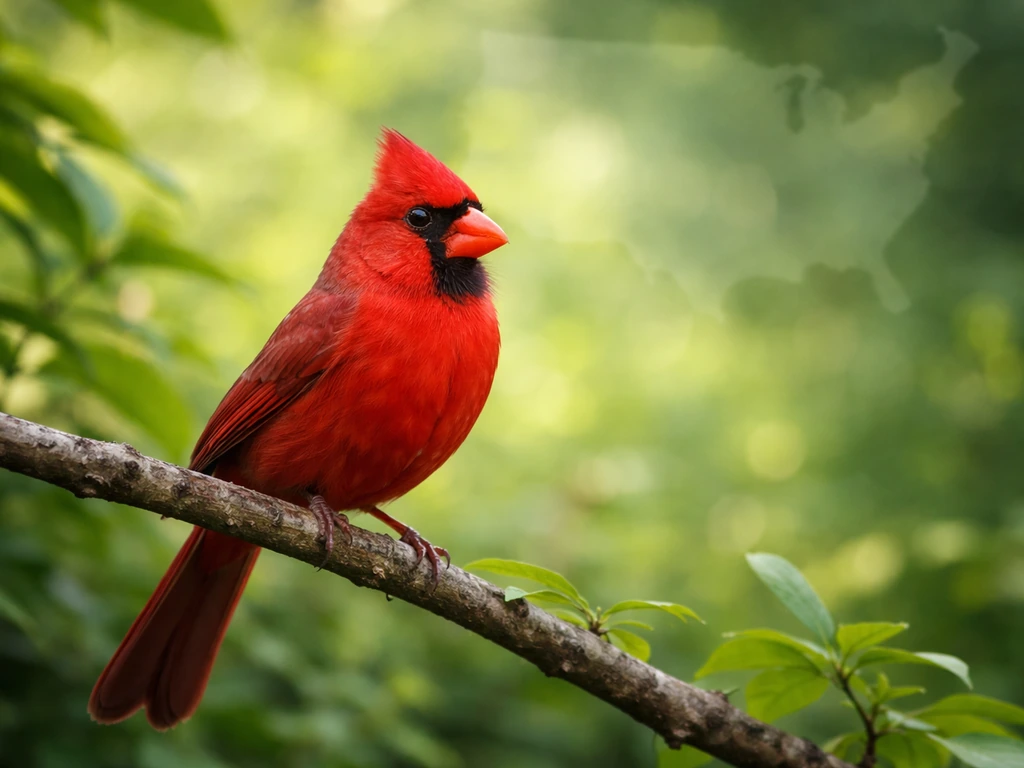
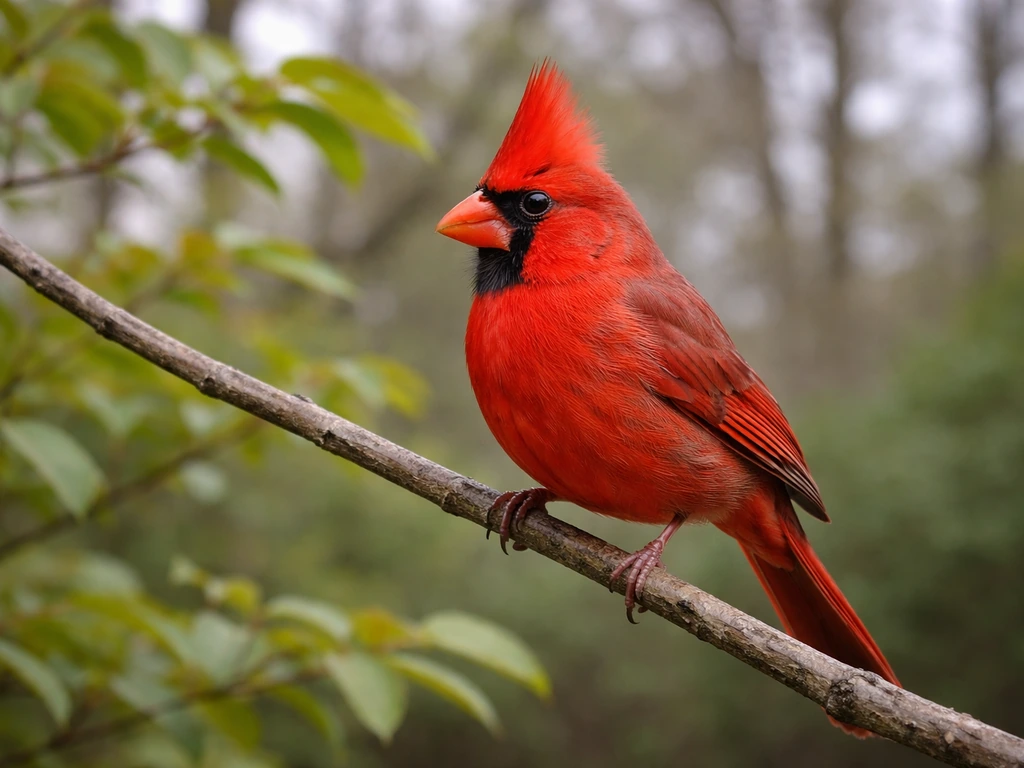
Yes, the cardinal is a state bird, seven times over
The Northern Cardinal (Cardinalis cardinalis) is the official state bird of exactly seven U.S. states. That makes it the most widely shared state bird designation in the country. If you searched "state bird is cardinal" or "which state has the cardinal as its state bird," the answer is not just one state, it's seven. Those states are Illinois, Indiana, Kentucky, North Carolina, Ohio, Virginia, and West Virginia.
When people say "red cardinal" or "cardinal bird" in the context of state symbols, they're referring to the same species: the Northern Cardinal. Some states name it simply as "the cardinal" in their statutes, while Virginia explicitly pairs the common name "Northern Cardinal" with the scientific name Cardinalis cardinalis. Either way, they're all talking about the same brilliant red bird.
The seven cardinal states, listed

Here's each state along with how their official designation reads and when it was adopted:
| State | Official Wording (abbreviated) | Year Adopted |
|---|
| Illinois | "The bird Cardinalis Cardinalis, commonly known as the 'Cardinal,' is designated the official State Bird of the State of Illinois." | 1929 |
| Indiana | Designated the Cardinal (also called Red Bird) as the official state bird under Indiana Code 1-2-8. | 1933 |
| Kentucky | "The native redbird, commonly known as the Kentucky cardinal (cardinalis), is the official state bird of Kentucky." | 1926 |
| North Carolina | "The cardinal is hereby declared to be the official State bird of North Carolina." | 1943 |
| Ohio | "The bird, cardinalis cardinalis, commonly known as the 'cardinal,' is the official bird of the state." | 1933 |
| Virginia | "Bird — Northern Cardinal (Cardinalis cardinalis)." | Listed in Virginia Code § 1-510 |
| West Virginia | Cardinal named official state bird via House Resolution 12. | 1949 |
Illinois holds the distinction of being the first of these seven states to make the choice, selecting the Northern Cardinal as its state bird in 1929. Kentucky was actually the earliest adopter on record, with a resolution approved February 17, 1926, making it the first state overall to officially designate the cardinal. West Virginia came last among the seven, with the legislature formally adopting the cardinal on March 7, 1949.
So how many states have the cardinal as their state bird?
Seven states. That's the definitive answer. No other bird comes close to that level of shared state-bird status in the U.S. The Northern Cardinal is the state bird of Illinois, Indiana, Kentucky, North Carolina, Ohio, Virginia, and West Virginia, seven distinct official designations across the eastern and midwestern United States. This is confirmed both by each state's individual statute language and by comprehensive ornithological sources like Britannica, which also cite the number as seven.
Why did so many states pick the cardinal?
The cardinal's popularity as a state symbol comes down to a few practical and cultural reasons that were very real considerations when these designations were made in the early-to-mid 20th century.
Year-round presence and visibility
The Northern Cardinal is a permanent, non-migratory resident across all seven states. Unlike many birds that pass through seasonally, cardinals are there in the snow, at the feeder in January, singing in the bare February trees. For state-symbol purposes, a bird that's present and recognizable all year long makes obvious sense. Residents across Illinois, Indiana, Ohio, Kentucky, and the rest don't need to know the exact season to spot one.
Unmistakable identity, no confusion with another species
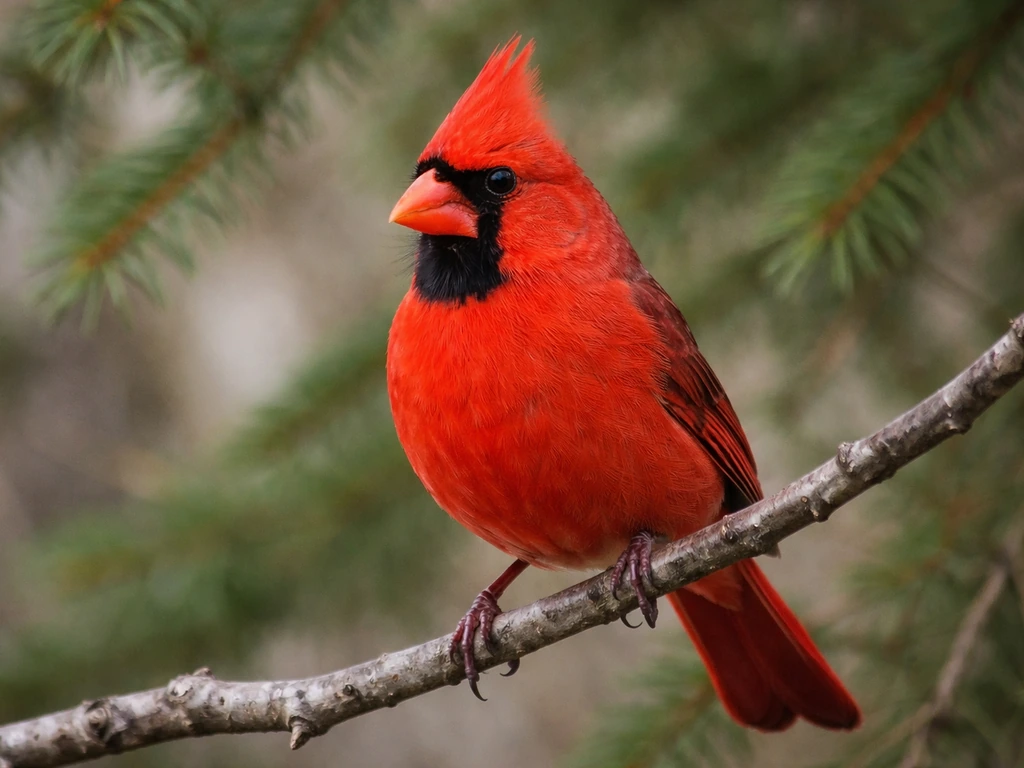
A male Northern Cardinal is essentially impossible to misidentify. No other bird in eastern North America combines that shade of red with a crest and a thick orange-red bill. Britannica notes the Northern cardinal is “the only red North American bird with a crest.”. When states were choosing symbols in the 1920s, 1930s, and 1940s, selecting a bird that even a child could recognize on sight made the designation feel genuinely representative. Indiana's official FAQ even calls it the "Red Bird," which tells you how culturally embedded this bird had already become in everyday language.
Regional and cultural resonance
Kentucky's designation references the bird as "the native redbird, commonly known as the Kentucky cardinal", a nod to the local name that had been in use long before the formal designation. If you're wondering what is the Kentucky state bird, the answer is the Northern Cardinal Kentucky's designation. West Virginia's adoption in 1949 notably involved school pupils being authorized to name the bird through House Resolution 12, connecting the state symbol directly to public participation and local identity. These weren't arbitrary bureaucratic choices; in most cases the cardinal already had strong popular recognition before the statute was written.
How to identify the Northern Cardinal in the field
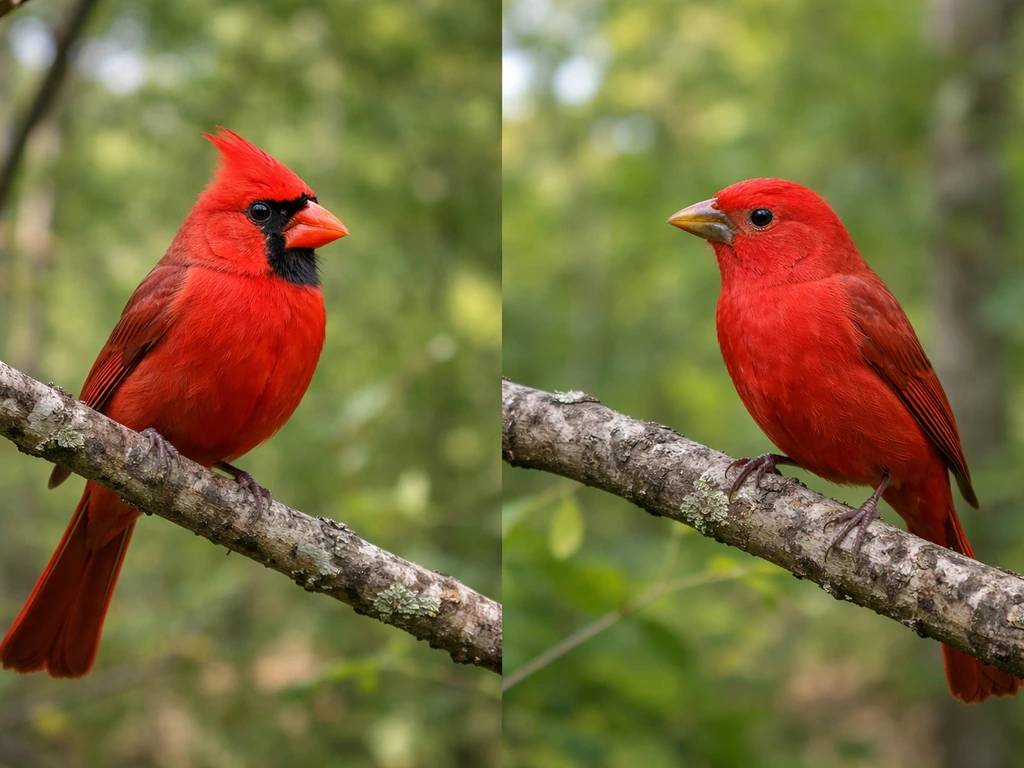
If you're trying to confirm you're looking at a Northern Cardinal (or explaining it to someone who isn't a birder), here are the field marks that matter:
- Male plumage: brilliant red all over, described by Cornell Lab as "brilliant red with a black mask around the bill." The mask covers the face and throat.
- Crest: both males and females have a prominent pointed crest on top of the head. Audubon describes the male Northern Cardinal as the "only red bird with a crest" — that single detail rules out almost every lookalike.
- Bill: short, very thick, and cone-shaped with an orange-red color. It's built for cracking seeds and is noticeably chunky compared to most songbirds.
- Female plumage: buffy-brown overall with reddish tinges on the crest, wings, and tail. Not red like the male, but the crest and thick bill still make her identifiable.
- Tail: relatively long for a songbird, which gives the bird an elongated silhouette in flight.
- Habitat: forest edges, dense shrubby areas, hedgerows, overgrown fields, marshy thickets, backyards, and ornamental landscaping. You're very likely to see one at a seed feeder, especially in winter.
- Song: a loud, clear whistle that varies but often sounds like a repeated "cheer-cheer-cheer" or "birdy-birdy-birdy." Males sing from exposed perches; females also sing, which is less common among North American songbirds.
The combination of the red crest, thick orange bill, and black mask on the male is diagnostic. Once you've seen one, you'll never misidentify it. The female takes a bit more practice, but the same structural features (crest, bill shape, body proportions) still apply.
State-by-state pages and what to look up next
If you landed here looking for a specific state, each of the seven cardinal states has its own dedicated page on this site with fuller detail on the designation history, the bird's presence in that state, and related symbols. If you're specifically wondering what is the state bird of ohio, Ohio's dedicated page explains the official designation and adoption details. The most-searched among them tend to be Ohio, Indiana, and Kentucky, likely because those three states are geographically clustered and people often look up all three when they're curious about the region. If you're also looking for what is the bird of kentucky, Kentucky's dedicated page can walk you through the official designation and adoption details.
Ohio and Indiana are frequently compared because both adopted the cardinal in 1933, the same year, and their statute language is similarly straightforward. Kentucky's designation is one of the oldest, dating to 1926, and uses the regional "redbird" name in the statute itself, making it a particularly interesting case for anyone curious about the cultural history behind state symbols. If you're researching why Ohio specifically chose the cardinal, that question has its own detailed treatment worth reading separately.
For anyone doing a broader comparison across all 50 states, this site has individual state-bird pages for every U.S. state, so you can look up any state directly or browse by bird species to see which other birds hold multiple-state designations (though none match the cardinal's count of seven). The cardinal's status as the most-shared state bird in the U.S. makes it a useful anchor point for understanding how state-bird designations work more generally, and why some birds resonate so strongly with regional identity.