Kentucky chose the Northern Cardinal as its state bird because the species is abundant, instantly recognizable, and deeply familiar to people across the state year-round. A resolution passed on February 17, 1926 made it official, and the law names the bird as the "native redbird, commonly known as the Kentucky cardinal (cardinalis)", a phrasing that ties the species directly to Kentucky's identity.
Why Is the Northern Cardinal Kentucky’s State Bird?

Marcus Webb
19 May 2026
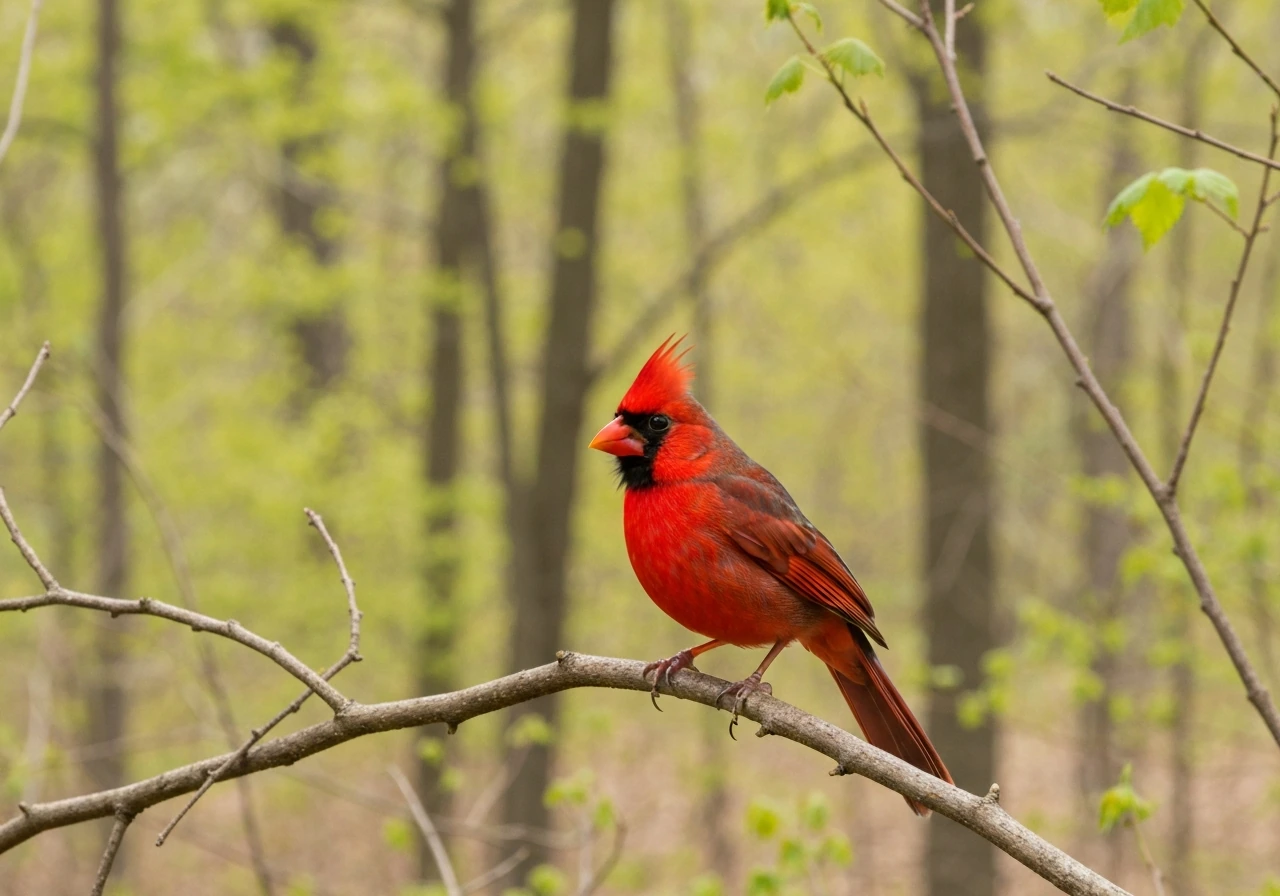
Kentucky's state bird: the Northern Cardinal
The official state bird of Kentucky is the Northern Cardinal (Cardinalis cardinalis). In Kentucky law (KRS 2.080), it is listed as the "native redbird, commonly known as the Kentucky cardinal (cardinalis)." That nickname, the Kentucky cardinal, is embedded in the statute itself, which tells you something about how closely people in the state identified with this bird when they made it official. It is a permanent, year-round resident across Kentucky, meaning it is not a seasonal visitor but a constant presence in backyards, forests, and farmland throughout the state.
Why Kentucky picked the cardinal
The short reason: the cardinal is hard to miss, easy to love, and genuinely widespread. A brilliant red bird with a sharp crest and loud, clear whistle is the kind of species that sticks in people's memories. It visits feeders in January just as readily as it does in July. It sings from treetops in neighborhoods, rural edges, and deep woodland alike. For a state symbol, you want a bird that people across the entire state actually see and recognize, and the cardinal fits that requirement perfectly.
The cardinal also carried strong cultural familiarity in the early 20th century South and Midwest. Its common name "redbird" was already widely used in Kentucky long before the 1926 resolution, which is exactly why the statute uses both names. Choosing a bird that people already called "the Kentucky cardinal" in everyday speech made the designation feel natural rather than arbitrary.
When it became official: the 1926 resolution
The Kentucky legislature passed a resolution on February 17, 1926 designating the cardinal as the official state bird. This resolution was later codified into Kentucky statute as KRS 2. 080, with an effective date of October 1, 1942, that recodification date reflects when the law was formally incorporated into the Kentucky Revised Statutes, not when the original decision was made. The actual designation decision is squarely 1926, placing Kentucky among the earlier states to formalize a state bird.
For comparison, Indiana adopted the cardinal in 1933 and Illinois claims to have been the first state to select it, doing so in 1929, though Kentucky beat Indiana to the designation by seven years. Indiana later adopted the Northern Cardinal as its state bird in 1933, making the bird Larry among the state's official symbols.
If you are wondering why, you can trace Indiana's choice to the same blend of visibility, familiarity, and year-round presence that made the Northern Cardinal appealing in Kentucky Indiana adopted the cardinal in 1933.
There is a minor discrepancy in secondary sources about the exact date: one source cites February 26, 1926, while the Kentucky Legislature's own historical record and the Kentucky Historical Society both use February 17, 1926. Netstate.com instead cites blank" rel="noopener noreferrer">February 26, 1926, as the date the resolution was approved with House concurrence. The official legislative history is the reliable reference here.
Visibility, familiarity, and what makes a good state symbol
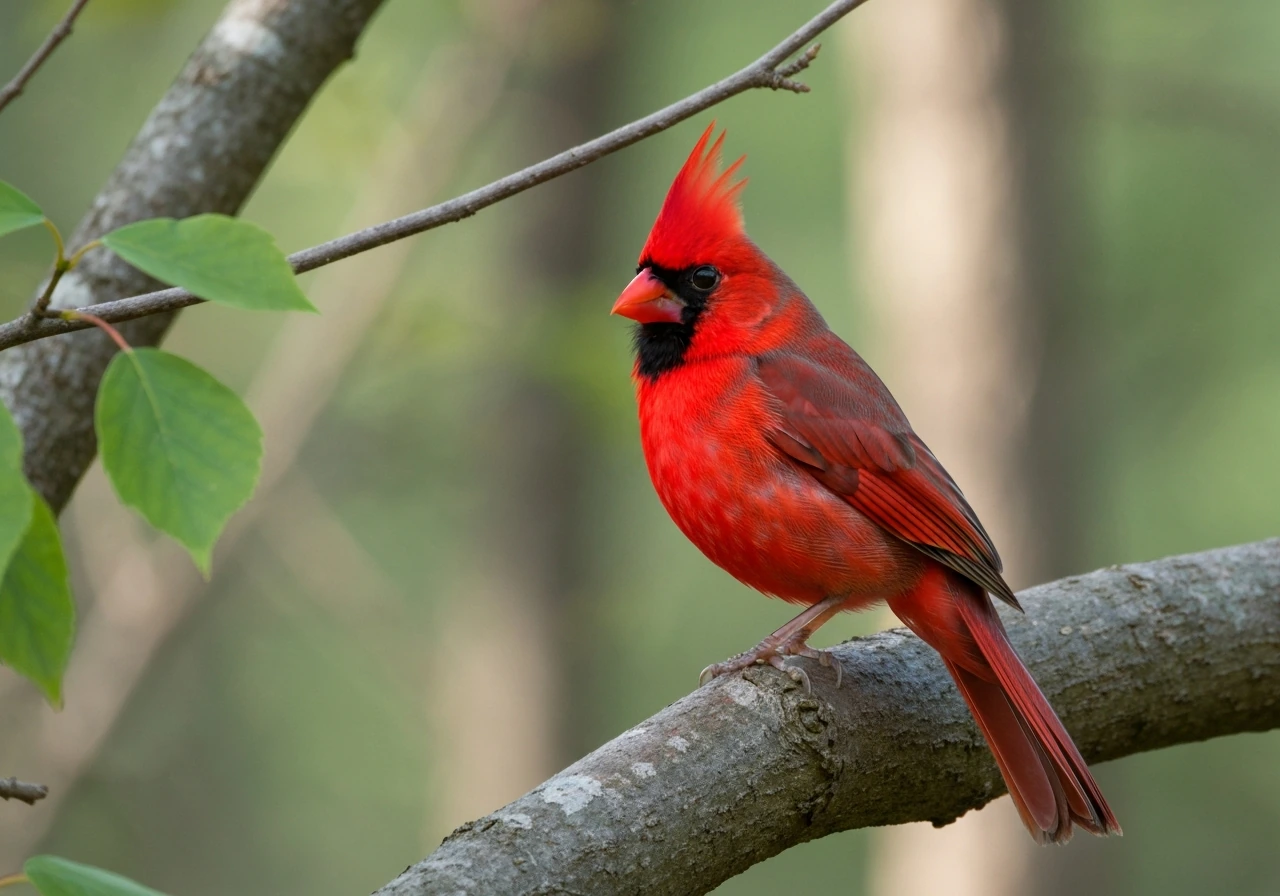
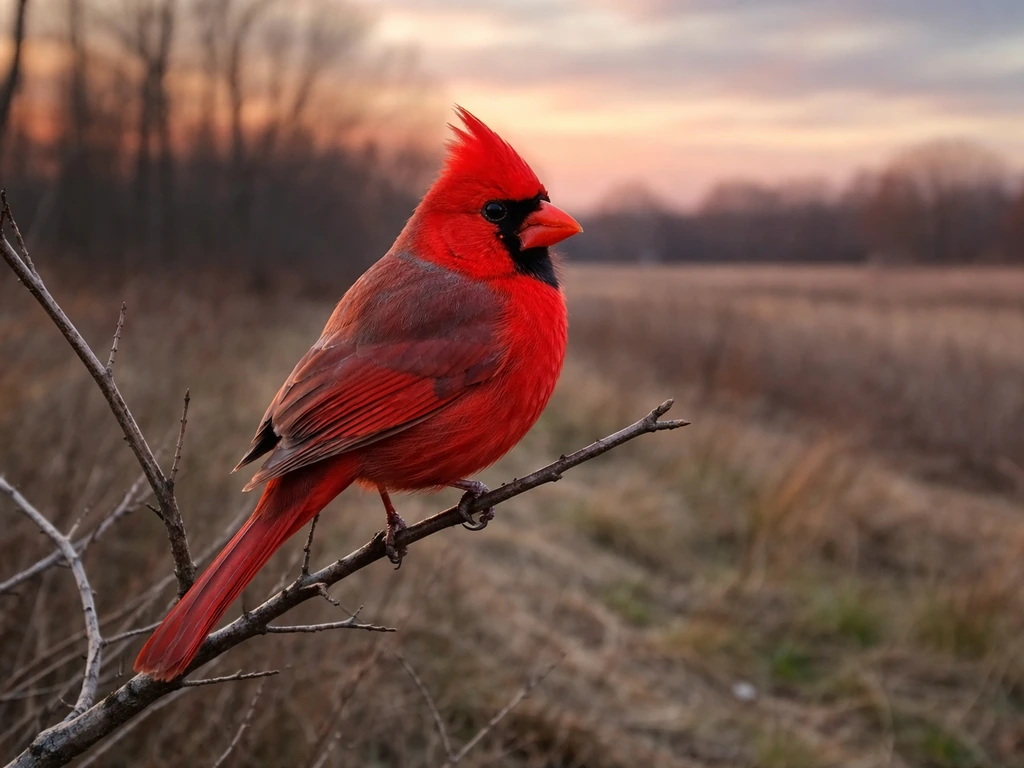
A state bird should represent the place, and the cardinal does that for Kentucky on several levels. First, it is visually distinctive. The adult male's all-red plumage and black face mask make it one of the most recognizable birds in North America. You do not need binoculars or a field guide to identify a male cardinal at a feeder.
Second, it is widespread and democratic, it lives in cities, suburbs, farms, and forests, so it belongs to everyone in Kentucky, not just people near wetlands or mountain ridges. Third, its song is memorable. The cardinal's loud, whistled calls (often described as "cheer, cheer, cheer" or "what-cheer, cheer, cheer") carry far and are familiar even to people who do not think of themselves as bird watchers. That combination of looks and sound made it a natural ambassador for the state.
How to recognize the Northern Cardinal in Kentucky
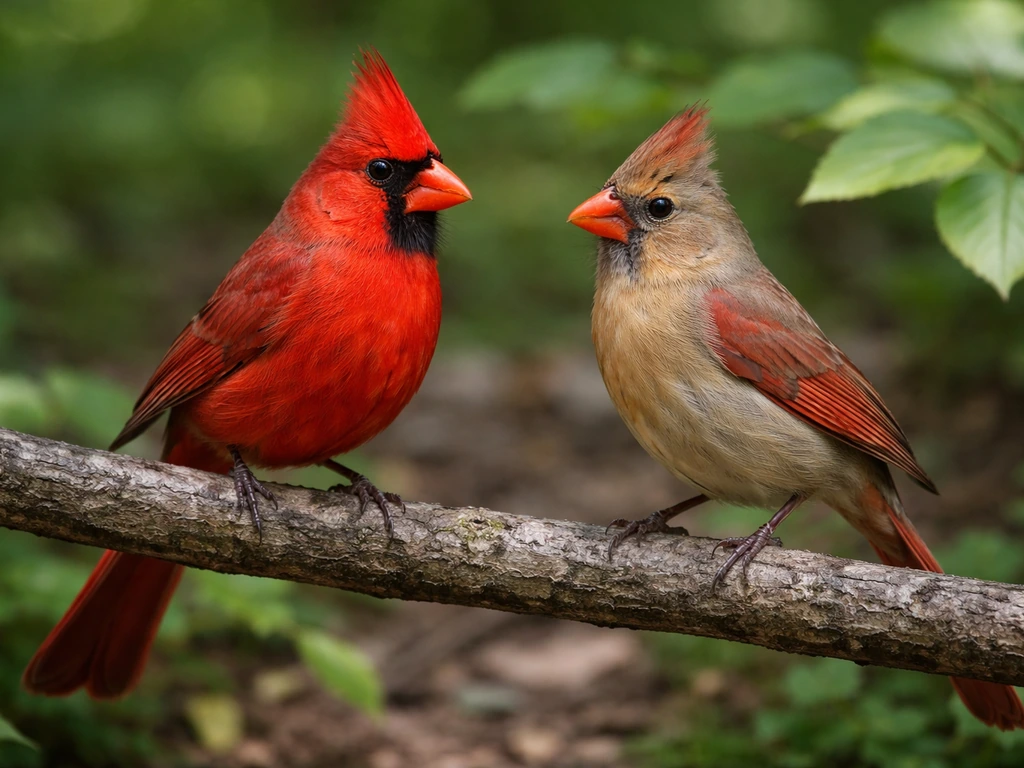
If you are trying to spot Kentucky's state bird, here is what to look for. Males and females look quite different from each other, which sometimes surprises people who only picture the brilliant red male.
- Adult male: entirely brilliant red plumage, prominent pointed crest, black mask covering the face and throat around the bill, and a short, very thick orange-red bill
- Adult female: mostly pale brown or olive-gray on the back and wings, with reddish tinges on the crest, wings, and tail; the same black mask is present but softer; underparts are soft pink-brown
- Crest: both sexes have the distinctive raised crest that sets the cardinal apart from most other backyard birds
- Bill: chunky and cone-shaped — built for cracking seeds, and noticeably thick compared to most songbirds
- Call: loud, clear whistles often transliterated as "cheer-cheer-cheer" or "what-cheer, cheer, cheer" — carries well and is heard year-round, not just in spring
- Size: roughly 8 to 9 inches long, similar to a robin but with a stockier build
Cardinals are most visible at feeders in winter when deciduous trees have lost their leaves, but they are present in Kentucky all twelve months. Sunflower seeds are a reliable way to attract them to a yard.
Which other states also chose the cardinal
Kentucky is far from alone in this choice. The Northern Cardinal is one of the most shared state birds in the country, which makes sense given how widespread and beloved the species is across the eastern half of the United States. Seven states have named it their official state bird, making it the most commonly shared state bird designation in the U.S.
| State | Year Adopted | Statutory Name Used |
|---|---|---|
| Kentucky | 1926 | Native redbird, commonly known as the Kentucky cardinal (cardinalis) |
| Illinois | 1929 | Northern cardinal (Cardinalis cardinalis) |
| Indiana | 1933 | Cardinal (Richmondena Cardinalis Cardinalis) |
| Ohio | 1933 | Cardinal (cardinalis cardinalis) |
| North Carolina | 1943 | Cardinal |
| West Virginia | 1949 | Cardinal |
| Virginia | 1950 | Cardinal |
The fact that seven states independently chose the same bird is itself a statement about the cardinal's popularity. Virginia, West Virginia, Indiana, Ohio, North Carolina, and Illinois all made the same call Kentucky did, and for the same basic reasons: the cardinal is conspicuous, familiar, non-migratory, and genuinely loved. West Virginia’s state bird adoption is also supported by the Northern cardinal entry, which states it became the state bird in 1949 [year-round resident](https://www. wvencyclopedia.
org/entries/926). If you are also curious about Ohio, its state bird and flower are designated separately and reflect the state's own natural heritage. If you are researching why Indiana or Virginia made the same choice, the core reasoning overlaps significantly with Kentucky's, though each state has its own legislative history and timing.
If you are researching why Indiana or Virginia made the same choice, the core reasoning overlaps significantly with Kentucky's, though each state has its own legislative history and timing, including why is the cardinal the state bird of virginia. Kentucky's 1926 designation predates most of the others in this group.
What this all adds up to
Kentucky picked the cardinal in 1926 because it was the obvious choice: a year-round resident, strikingly beautiful, immediately recognizable to anyone in the state, and already beloved enough that people were calling it the "Kentucky cardinal" in everyday conversation. The 1926 resolution formalized what was already a strong popular association. The bird's codified name in KRS 2.080, "native redbird, commonly known as the Kentucky cardinal", still reflects that pride today. Whether you are visiting Kentucky, doing school research, or just curious about state symbols, the cardinal is a state bird that genuinely earns its designation.
FAQ
Is Kentucky’s state bird the red male cardinal, or the species overall?
Kentucky law specifies the “native redbird,” scientifically tied to Cardinalis cardinalis, so the official designation is for the species, not only the red adult male. In practice, you will often see males as the stereotypical “redbird,” but the statute does not limit the symbol to males or to one sex.
Do cardinals actually stay in Kentucky all year, or are they only seasonal?
The law names it a year-round resident, which means it is not a seasonal visitor. In Kentucky, you can typically expect cardinals to be present in winter, spring, summer, and fall, even though their feeder activity is usually easiest to observe during colder months.
What if I do not see an all-red bird, how can I confirm it is a cardinal?
If you see a bird that is not obviously red, check for the pattern of features rather than color alone. Females and juveniles can look more brownish or muted, but they usually still show a crest and a relatively compact body, and they respond strongly to common seed offerings.
What is the best way to attract Kentucky cardinals to a backyard feeder?
Feeder success varies by what you offer. Sunflower seeds are especially reliable, and cardinals tend to visit when there is stable cover nearby. If you are in an area with heavy squirrel pressure, use feeder guards or station seed where squirrels cannot easily access it.
When should I look for Kentucky cardinals if I want the best chance to spot them?
A common mistake is looking only during peak feeder season. While winter is often the easiest time to spot them, cardinals still sing and show territorial behavior in warmer months, so listening for the whistle or checking for active nesting behavior can help during spring and summer.
Can other red birds be mistaken for Kentucky’s state bird, and would they count?
Yes, but Kentucky’s choice reflects a single species designation, not a group of birds. The Northern Cardinal is the one named in the state’s statute, so substitutions like similar songbirds in the same habitat would not be accurate for identifying the official state bird.
Why do some sources list different dates for Kentucky choosing the cardinal?
The article notes conflicting secondary dates, but the key decision is the legislative resolution date. For research, treat Kentucky’s official legislative history and codified statute language as the most reliable sources when you need the exact timeline.
If multiple states choose the same bird, how can I tell which state’s designation details matter for research?
There are many shared reasons for the cardinal’s appeal, but each state’s symbolism has its own legislative record. If you compare Kentucky to places like Indiana or Illinois, focus on what each state’s law says and when the resolution took effect, since the timing and wording can differ even when the logic is similar.
How can I be confident my backyard bird is the Northern Cardinal specifically?
If you are seeing cardinals at a feeder, you can be fairly confident you are observing the right species, but you may still want to verify with behavior and structure. Cardinals have a characteristic posture, crest, and bold, direct feeding approach, and their calls are often noticeably whistled.
Next Articles
Why Is the Cardinal Indiana and Illinois State Bird?
Learn why Indiana and Illinois chose the northern cardinal as state bird, plus quick ID tips to confirm it.
Which Is Karnataka State Bird? Identification and Facts
Discover Karnataka’s official state bird, key ID traits, where to spot it, and why it was chosen.
What Is the Telangana State Bird? Official Bird and How to Spot It
Discover Telangana’s official state bird, key traits to spot it, and why it was chosen, with quick context.