Oklahoma's official state bird is the scissor-tailed flycatcher (Tyrannus forficatus, also recorded in Oklahoma statutes under its older name Muscivora forficata). It has been the state's official bird since 1951, and honestly it's one of the most visually striking state bird choices in the entire country.
What Is the Bird of Oklahoma State Bird Guide

Marcus Webb
1 May 2026
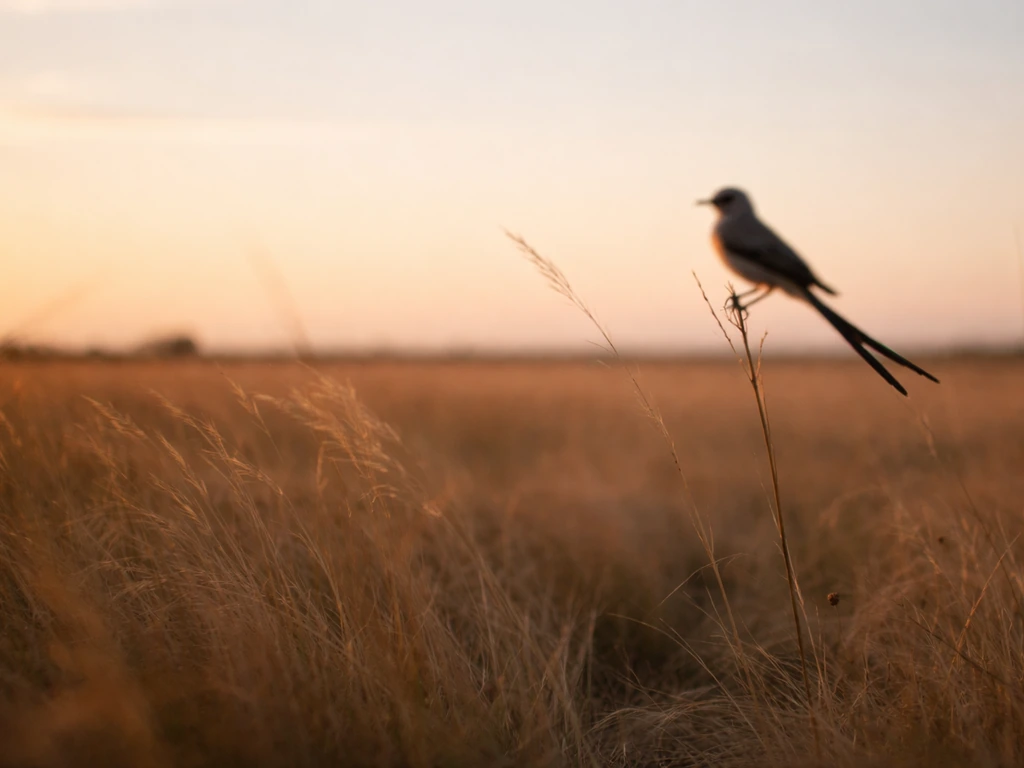
Oklahoma's Official State Bird
The scissor-tailed flycatcher was formally designated under Oklahoma House Joint Resolution No. 21, signed into law on May 26, 1951, and codified at 25 O.S. § 98. The statute reads plainly: "The scissor-tailed flycatcher, Muscivora Forficata, is hereby designated and adopted as the state bird of the State of Oklahoma." That older scientific name has since been updated to Tyrannus forficatus, but the bird is the same.
Why Oklahoma Chose This Bird
The choice wasn't random. Advocates pushed the scissor-tailed flycatcher for three solid reasons: it eats harmful insects, making it genuinely useful to farmers and ranchers; its nesting range is heavily centered on Oklahoma and the Southern Great Plains, so it feels like a native son rather than a bird that just passes through; and at the time of designation, no other state had claimed it. That last point mattered. Oklahoma got to call this distinctive, beautiful bird its own exclusively.
The push succeeded thanks to a coalition of the Oklahoma Audubon Society, garden clubs, and various wildlife supporters, with the final legislative backing coming from Lou Allard, chairman of the House Committee on Game and Fish. It wasn't a slam dunk on the first try either. There was an earlier failed attempt before the 1951 effort finally stuck.
How to Recognize a Scissor-Tailed Flycatcher
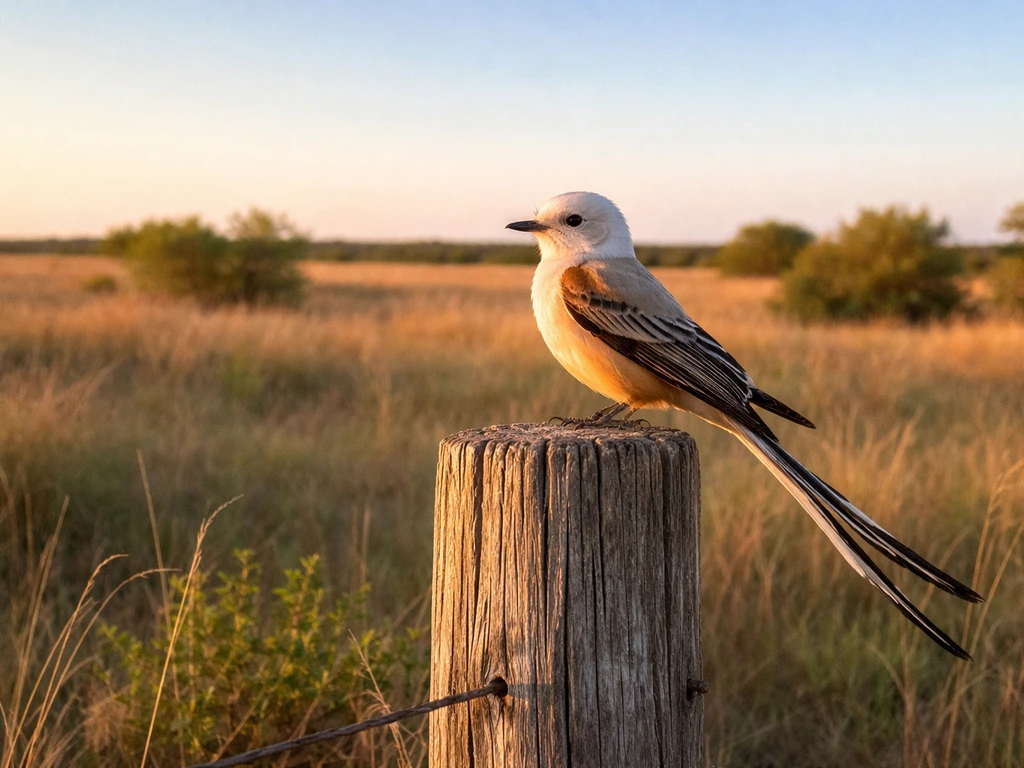
If you see one, you'll know it. The tail is the giveaway. The scissor-tailed flycatcher is 11 to 15 inches long, and more than half of that length is a deeply forked, black-and-white tail that can reach up to nine inches on its own. Missouri’s field guide lists the scissor-tailed flycatcher’s length as 13 inches, measured from the tip of the bill to the tip of the tail. No other bird in Oklahoma has a tail that proportionally long or dramatic. When the bird is in flight and fans that tail open, it looks exactly like a pair of scissors, which is where the name comes from.
The body is mostly pale gray, with salmon-pink to peachy wash on the sides and flanks, and a bright rosy-red patch under the wings that flashes when the bird moves. The head and back are light gray, the wings are darker, and the belly tends toward white or very pale tones. Immature birds look similar to a western kingbird but have a proportionally longer, narrower, and more white-heavy tail, so the tail shape still gives them away.
For sound, listen for sharp, staccato notes described as a "bik" or "pup" call. The calls have a quality that rises in pitch and speeds up toward the end. During the breeding season, males perform a dramatic sky dance: launching from about 100 feet up in a V-shaped flight pattern while producing a rolling, cackling call. If you see that display, you won't forget it.
Where to Find One in Oklahoma
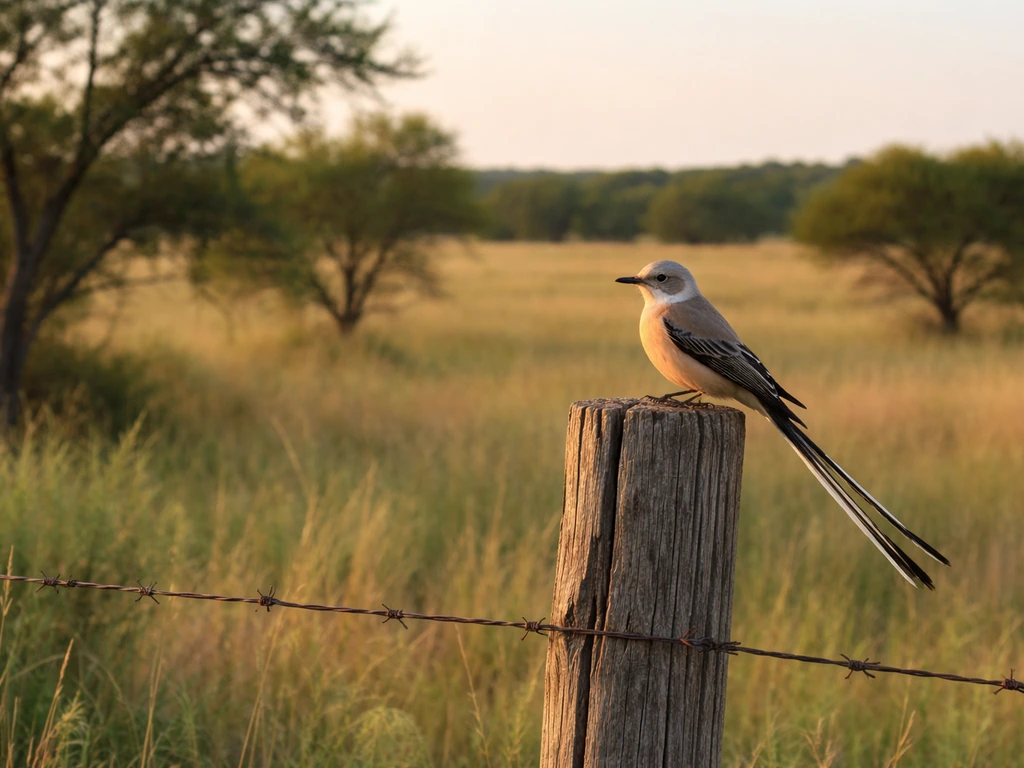
You don't need to venture deep into the wilderness. Scissor-tailed flycatchers love open prairie landscapes dotted with scattered trees, and they're completely at home along country roadsides. Drive any tree-lined rural road in central or western Oklahoma during spring and summer, slow down, and scan fence posts, power lines, and isolated tree branches. These birds perch for long stretches and are not particularly shy about being seen.
The core nesting range runs through the Southern Great Plains, stretching from eastern New Mexico and Nebraska southward through Oklahoma and Texas into western Louisiana and northern Mexico. Oklahoma sits squarely in the heart of that range, which is exactly why the state had such a strong claim on this bird.
Timing matters. Scissor-tailed flycatchers are migratory, spending breeding season in Oklahoma (roughly spring through early fall) and wintering in Central America. By late August, they start gathering in communal roost trees in the evenings, dispersing to feed during the day and returning just before dusk. That late-summer roosting behavior can put dozens of birds together in one spot, which is a spectacular sight. They migrate at night, so the peak roadside sightings happen during daylight hours in spring and early fall. During migration, individuals can wander widely, showing up across much of North America, but in Oklahoma you have the best odds during the breeding season.
A Bit of History Behind the Designation
By 1951, Oklahoma had already been a state for 44 years without an official state bird. The scissor-tailed flycatcher had been a popular candidate for years before the formal push succeeded. The Oklahoma Historical Society encyclopedia frames it well: the bird's ecological role (eating harmful insects), its regional identity (centered on Oklahoma's prairies), and its uniqueness as a state symbol (no competing claims from other states) made it the obvious choice once advocates organized effectively.
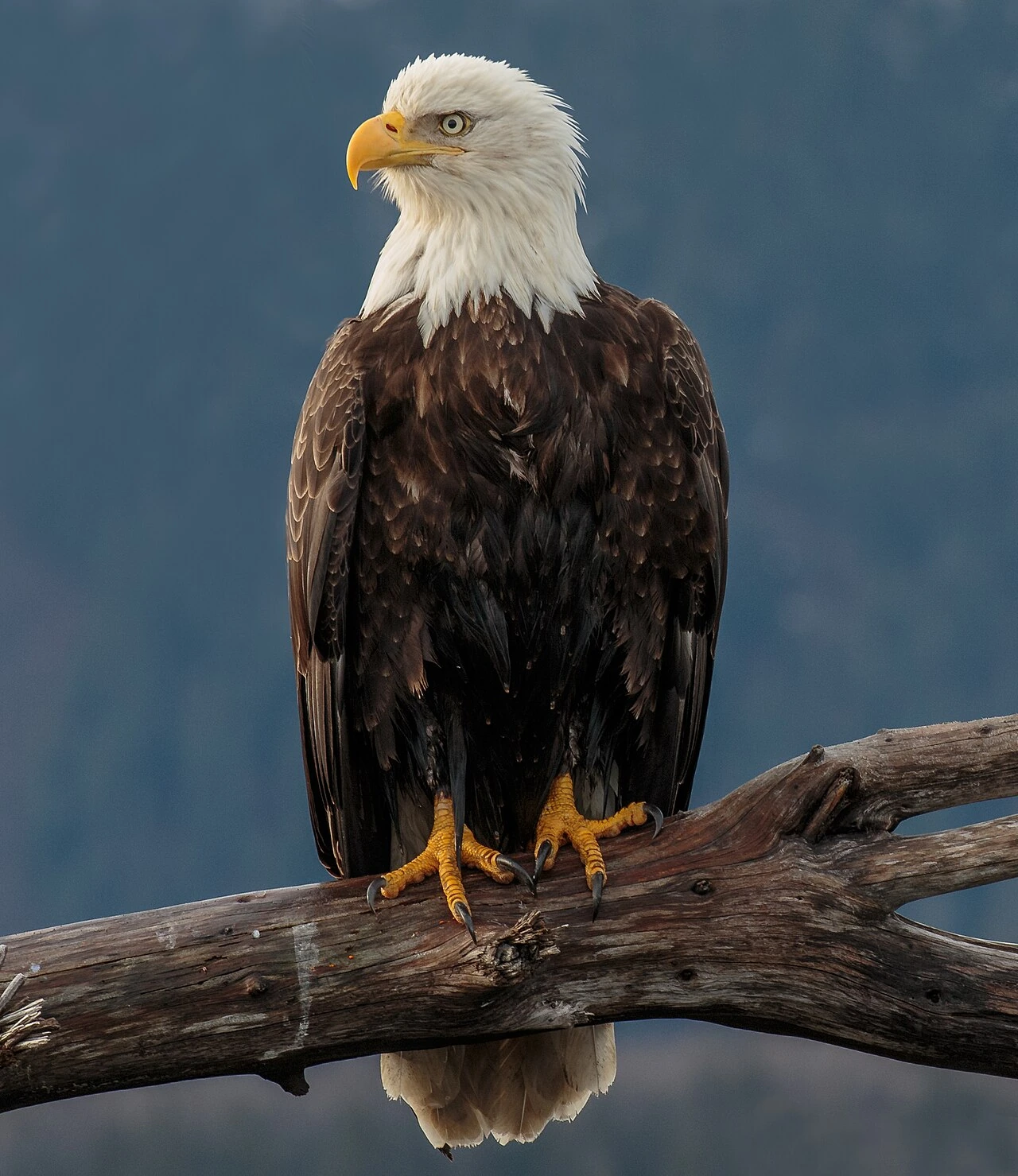
If you're wondering about a different famous bird on another kind of symbol, the bird on a U. S. dollar bill is the bald eagle what is the bird on the dollar bill. The Audubon Society and garden club network gave the campaign grassroots credibility, and Allard's committee support provided the legislative path.
The result was a state bird designation that has held up for over 70 years without any serious challenge.
Does Any Other State Share This Bird?
As of today, no other U. S. state has officially designated the scissor-tailed flycatcher as its state bird. That exclusivity was one of the original selling points back in 1951, and it remains true.
Oklahoma has this one all to itself, which is relatively rare in the world of state birds, where species like the northern cardinal are claimed by seven different states and the western meadowlark by six. If you're comparing across states, the scissor-tailed flycatcher stands out as a genuinely unique designation.
It's also worth noting that Oklahoma has its own quarter featuring a distinct bird symbol, separate from the state bird designation, which is another angle worth exploring if you're digging into Oklahoma's official symbols. If you're curious what bird is on the Oklahoma quarter, it's the same scissor-tailed flycatcher symbol used to represent the state bird.
The United States does not have a single official national bird, so state birds like Oklahoma's scissor-tailed flycatcher are where most official “bird of the United States” answers come from.
| Bird | States That Claim It | Oklahoma's Claim |
|---|---|---|
| Scissor-tailed flycatcher | Oklahoma only | Exclusive — no other state shares it |
| Northern cardinal | 7 states | Not Oklahoma's bird |
| Western meadowlark | 6 states | Not Oklahoma's bird |
| American robin | 3 states | Not Oklahoma's bird |
That table puts it in perspective. Most popular state birds get claimed by multiple states. Oklahoma's choice of the scissor-tailed flycatcher is one of the clearest examples of a state picking a bird that genuinely belongs to its own landscape, and keeping it to itself. If you're wondering what bird is on the Idaho quarter, it's different from Oklahoma's state bird Oklahoma's choice of the scissor-tailed flycatcher.
FAQ
What is the bird of Oklahoma, if I see different names in places like older books or statutes?
It is the scissor-tailed flycatcher. You may also see the older scientific name Muscivora forficata, which appears in older legal text, but it refers to the same bird (Tyrannus forficatus).
Is the scissor-tailed flycatcher the only official state bird symbol Oklahoma has?
Oklahoma also uses its own quarter design featuring a scissor-tailed flycatcher symbol, which is a separate “official symbol” use from the state bird designation, so you will sometimes see the bird referenced in multiple ways.
How can I tell a scissor-tailed flycatcher from similar birds I might spot in Oklahoma?
Focus on the tail proportions. Immature birds can resemble a western kingbird, but the scissor-tailed flycatcher’s tail is typically longer and more forked, and it looks especially dramatic during flight when the tail fans open.
When is the best time to spot the scissor-tailed flycatcher in Oklahoma?
Spring through early fall (breeding season) gives you the best odds for regular sightings. Late August is also notable because birds gather in communal roosts in the evenings, so look for clusters around dusk.
Where should I look if I want an easy sighting without deep wilderness hiking?
Try open prairie-like areas with scattered trees, and rural roadsides with fence posts or power lines. They often perch for long periods and are not particularly shy about being seen from a slow drive.
What should I listen for if I hear birds but cannot see them well?
Listen for short, sharp calls such as “bik” or “pup.” During breeding season, males also produce a distinctive sky-dance call pattern, and the call tends to rise in pitch and speed up toward the end.
Do scissor-tailed flycatchers ever show up in Oklahoma outside the breeding season?
Yes, some birds can wander during migration since they travel widely at night. However, daytime roadside odds are generally strongest in spring and early fall compared with midwinter.
Has any other U.S. state officially claimed the scissor-tailed flycatcher as its state bird?
No. Oklahoma is the only state that has officially designated the scissor-tailed flycatcher as its state bird, which is part of why the designation has remained a distinct Oklahoma symbol since 1951.
Next Articles
What Is the Bird of the United States? National and State Birds
Find the US national bird and official state birds by state, including shared birds and how to identify them.

What Is Oklahoma’s State Bird? Scissor-Tailed Flycatcher
Oklahoma state bird is the scissor-tailed flycatcher, how to spot it, plus best places and times to see it.
Which Is Karnataka State Bird? Identification and Facts
Discover Karnataka’s official state bird, key ID traits, where to spot it, and why it was chosen.