Utah's official state bird is the California gull (Larus californicus), commonly called the sea gull in everyday speech and listed simply as 'the sea gull' in Utah Code § 63G-1-601. Utah.gov's official State Symbols page names it the 'California Seagull,' which is the same species. No matter which version of the name you encounter, they all point to one bird: Larus californicus.
What Is the Utah State Bird? Bird ID, Meaning, History

Marcus Webb
22 Apr 2026
Why Utah chose the California gull
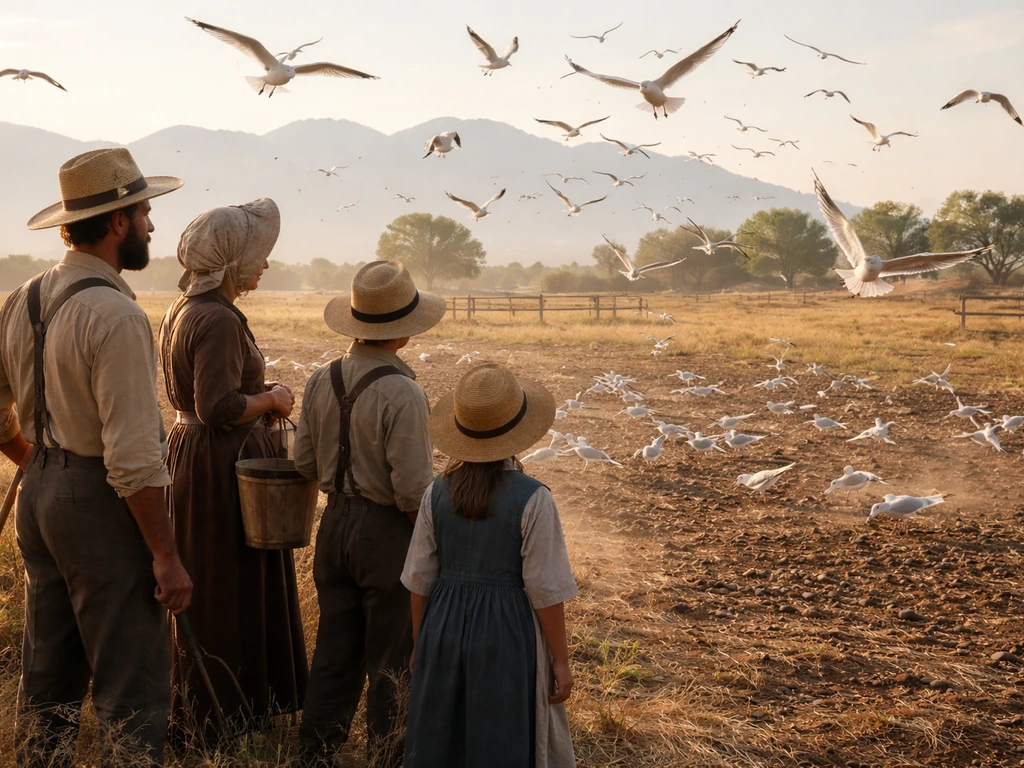
The short answer is history. In 1848, flocks of gulls descended on the fields of early Mormon settlers near the Great Salt Lake and devoured swarms of Mormon crickets that were threatening to wipe out the colony's crops. The event became known as the 'Miracle of the Gulls,' and it left a lasting mark on Utah culture. The Seagull Monument on Temple Square in Salt Lake City was built specifically to commemorate it.
That cultural reverence made the gull a natural candidate when Utah decided to formalize a state bird. The California gull already nested in large numbers around Utah's inland waters, including the Great Salt Lake, so it was also a genuinely local species rather than a symbolic import. Lawmakers did debate the naming: some objected to calling the state bird a 'sea gull' when the specific species nesting in Utah is scientifically known as the California gull. In the end, the legislature kept the familiar common name 'sea gull' in the statute while the official state symbol pages clarify the species as the California gull.
When it became official: the legislative history
Utah designated the California gull as its state bird on February 14, 1955, when Governor J. Bracken Lee signed House Bill 51 into law. On 14 February 1955, the Utah History Encyclopedia reports that Governor J. Bracken Lee signed House Bill 51, making the California gull the official State Bird of Utah. The bill was introduced by members of the Utah House of Representatives, and the signing made the designation formal after years of the gull being culturally recognized as the state's symbolic bird. The current statutory language appears in Utah Code § 63G-1-601, which states plainly that Utah's state bird is the sea gull.
How to identify a California gull in the field
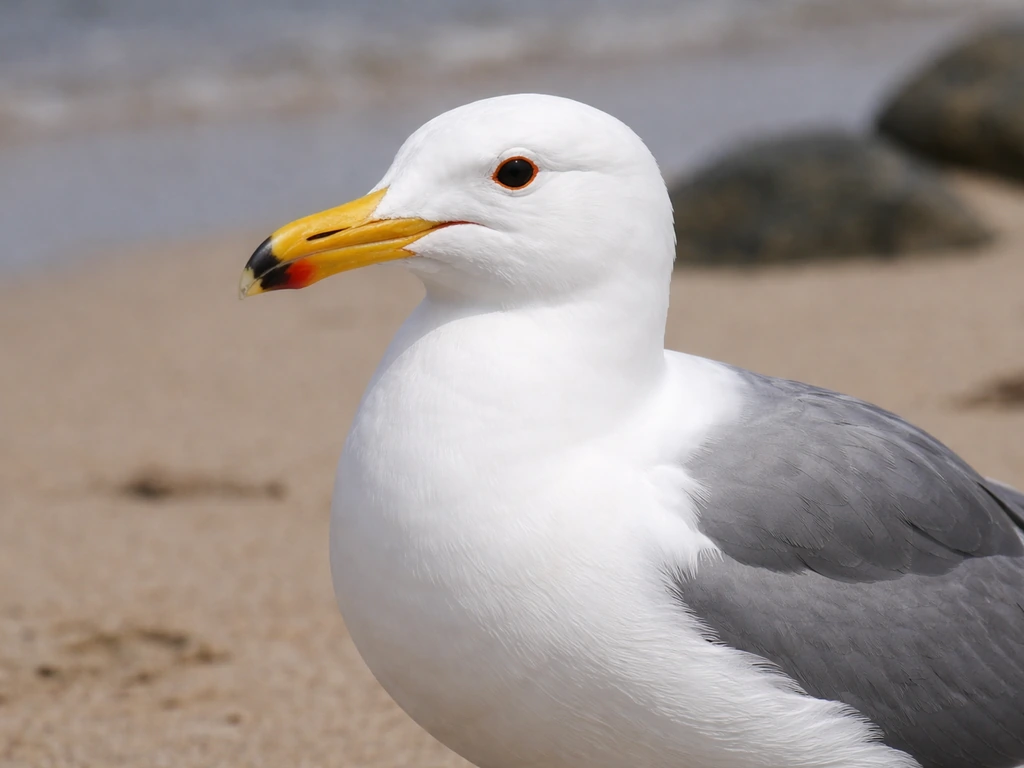
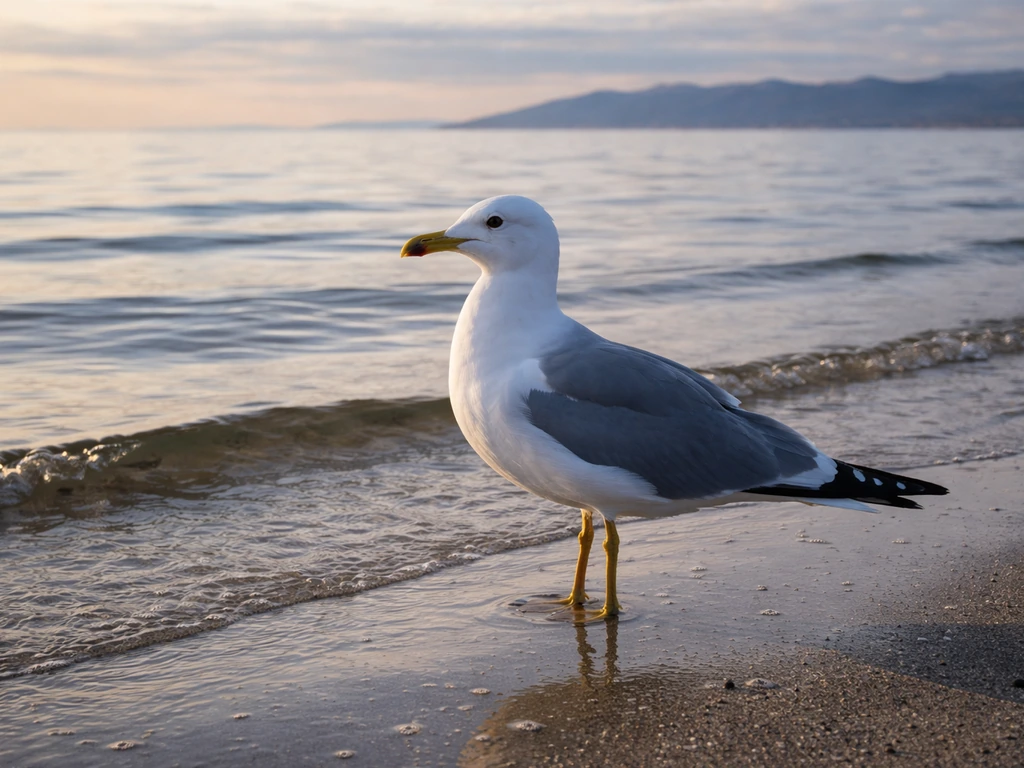
The California gull is a medium-to-large gull with clean white and gray plumage in adult breeding condition. If you're trying to confirm you're looking at one rather than a similar species, focus on these field marks: Audubon’s Birdist Rule #20 also notes that bill patterns, including red and black spots on the lower bill area, are helpful for identifying gulls bill patterns with red/black spots on the lower bill area.
- Bill: Yellow with a small black ring near the tip and a red spot on the lower mandible. The combination of both the ring and the red spot is the single most reliable marking to look for.
- Eye ring: Adults have a distinct red orbital ring around the eye, which stands out clearly in good light. This is a key feature for separating California gulls from similar species like the Ring-billed gull.
- Plumage: Back and wings are medium gray, underparts and head are white in breeding adults. Wing tips are black with white spots.
- Winter and immature birds: The red orbital ring may be absent or faint, and the bill pattern is less vivid. Younger birds go through several mottled brown plumage stages before reaching full adult coloring.
- Size: Larger than a Ring-billed gull, smaller than a Herring gull, roughly 18 to 22 inches in length.
What does the California gull sound like?
The California gull has several distinct call types documented by ornithologists, including a long call, a choking call, a warning call, and an alarm call. In practice, the most commonly heard is a sharp, repetitive 'kyow' or 'keeow' sound. If you're birding near the Great Salt Lake or Utah's reservoirs, the calls are frequent and useful for locating birds when they're distant or backlit.
Where California gulls live in Utah
California gulls breed across inland western North America, and Utah sits squarely within their core nesting range. Large breeding colonies exist on islands in the Great Salt Lake, making Utah one of the most important nesting sites for the species in North America. Outside of the breeding season, they spread across the state near lakes, rivers, reservoirs, and even agricultural fields and parking lots.
If you're visiting Utah and want to see the state bird, the Great Salt Lake area is your best bet year-round. If you are looking for the answer to why the California gull is Utah's state bird, it comes down to a historic event and its lasting impact on the state's culture see the state bird.
If you're curious about Idaho's choice instead, check why is the mountain bluebird idaho state bird for details on that neighboring state's pick.
How Utah's state bird compares to other states
No other U. S. state has designated the California gull as its official state bird, making Utah's choice genuinely unique among all 50 states. Iowa’s state bird is different from Utah’s, so you may want to look up what Iowa officially recognizes as its state bird. Most western states went with songbirds or game birds for their state symbols.
Idaho, Utah's northern neighbor, chose the Mountain Bluebird (Sialia currucoides) in 1931</a>, a species also found in Utah's mountain zones. Iowa's state bird is the American Goldfinch, designated in 1933. If you are wondering why Iowa State chose a bird mascot, you will want to look at Iowa's state bird and the school traditions built around it. The state bird of Iowa is the American Goldfinch <a data-article-id="2D9375FC-6407-4710-955C-E0C7A795C813">Iowa's state bird.
Rhode Island's official 'state bird' is actually the Rhode Island Red, a breed of chicken rather than a wild species. The state bird of Rhode Island is the Rhode Island Red <a data-article-id="0C65E4CC-EA84-420E-9C14-221987CFE96C">Rhode Island's official 'state bird'. Utah's gull stands apart from all of these as the only wild seabird on the list.
| State | State Bird | Year Designated | Scientific Name |
|---|---|---|---|
| Utah | California Gull (Sea Gull) | 1955 | Larus californicus |
| Idaho | Mountain Bluebird | 1931 | Sialia currucoides |
| Iowa | American Goldfinch | 1933 | Spinus tristis |
| Rhode Island | Rhode Island Red | 1954 | N/A (domestic breed) |
The California gull's unique status as a state bird is worth noting for anyone exploring state bird comparisons. While many states share birds (the Northern Cardinal is the state bird of seven states, for example), no state shares Utah's gull. If you're curious how neighboring states made their choices, the Mountain Bluebird story for Idaho and the reasoning behind Iowa's goldfinch selection each follow their own distinct historical paths. Idaho's state bird is the Mountain Bluebird, with its own history behind the designation state bird of Idaho.
Where to go from here
If you want to see the California gull in person, start at the Great Salt Lake. The Utah Division of Wildlife Resources provides bird identification resources specifically for Utah species, and the Cornell Lab of Ornithology's All About Birds has a full California gull profile with photos, range maps, and recordings of all four call types. eBird's California gull species page is also practical for checking recent sightings near any specific Utah location. For the official legal record, Utah Code § 63G-1-601 is publicly available and confirms the state bird designation in its exact statutory wording.
FAQ
Is Utah’s state bird definitely the California gull, or could it be a different gull species?
Utah’s law uses the common label “sea gull,” but the species identification on official state-symbol pages and the biology description correspond to Larus californicus. If you are verifying in the field, compare plumage and call, and note that other gulls can occur in Utah, especially near larger reservoirs and coasts, but the designation is specifically the California gull.
What does the Utah statute say exactly, and why do some sources show different names?
The statute’s wording is “sea gull,” which reflects the familiar common name used by lawmakers. Official state-symbol listings clarify the scientific species as the California gull, which is why you may see both names for the same bird.
When is the best time of year to see Utah’s state bird?
The Great Salt Lake area offers the most reliable sightings year-round. Breeding colonies are especially noticeable during the nesting period, while outside breeding season the birds disperse around lakes, rivers, reservoirs, and nearby human-adjacent areas like parking lots and agricultural fields.
How can I confirm I’m looking at a California gull and not a similar-looking gull?
Use a combination of field marks, not just size. Focus on adult breeding plumage (clean white and gray tones) and listen for common call types, including the frequent sharp repetitive “kyow” or “keeow” sounds that are often heard around the Great Salt Lake.
Do California gull calls sound different depending on behavior?
Yes. The species has multiple documented call types (for example, long, choking, warning, and alarm calls). If you are hearing different patterns, the context matters, for instance, closer birds calling at other birds or responding to disturbance often use sharper alarm-like notes.
Are there places in Utah besides the Great Salt Lake where I can still find California gulls?
Yes. Utah’s gulls also show up near major reservoirs, rivers, and lakes across the state, and they can use agricultural fields and other open areas. If the Great Salt Lake is not convenient, search those water-adjacent sites, especially during daylight hours when birds are actively feeding.
Is Utah the only state with this particular kind of state bird?
Utah is the only state that has designated the California gull. While other states may share common birds as state symbols, no other state uses Utah’s specific gull designation, and Utah’s choice is also notable because it is a wild seabird rather than a songbird or game bird.
Does the “Miracle of the Gulls” relate to modern gull behavior in Utah?
The event describes an agricultural pest control moment in 1848, with gulls feeding on Mormon crickets near early settlements. Modern gull presence still ties closely to food availability around inland waters, so you are more likely to see them when prey or foraging conditions are strong near the Great Salt Lake and other water bodies.
Where can I check the official legal wording if I want the definitive answer?
For the official record, look up Utah Code § 63G-1-601. It confirms the designation in statutory language and is the cleanest way to resolve name variations like “sea gull” versus “California gull.”
Next Article
Which Is Karnataka State Bird? Identification and Facts
Discover Karnataka’s official state bird, key ID traits, where to spot it, and why it was chosen.