Utah's state bird is the California gull (Larus californicus), not a generic seagull. When people search for why the seagull is Utah's state bird, they're using the common informal name for this specific species. The California gull was officially designated by H.B. 51, signed into law by Governor J. Bracken Lee on February 16, 1955. The reason Utah chose it comes down to one of the most dramatic wildlife stories in American pioneer history: the Miracle of the Gulls.
Why Is the Seagull Utah’s State Bird? The Real Species

Marcus Webb
5 May 2026
The "seagull" vs. California gull confusion
Here's the thing: there is no bird species actually called a seagull or sea gull. It's a catch-all term people use for any gull they see near water, and it causes real confusion when it comes to state symbols. Utah's own law doesn't help matters. Utah Code § 63G-1-601 officially lists the state bird as simply "the sea gull," using the generic term rather than a species name. Utah.gov's state symbols page calls it the "California Seagull," which is a bit of a hybrid label. Utah.gov also refers to the state bird as the “California Seagull.”. The most precise description comes from Utah's official digital library, which clarifies that the selected species is the California gull, Larus californicus.
This vague statutory wording actually caused debate during the original 1955 legislative session. Some lawmakers objected specifically because the bill didn't use the scientifically correct name "California gull." That tension was never fully resolved in the final statute text, which is why you'll still see "sea gull" in the official code today. The species identity, though, is not in doubt: every official Utah source that specifies a species points to the California gull. The confusion has even led some third-party websites to incorrectly list Utah's state bird as the Ring-billed Gull, which is a completely different species.
What Utah's state bird actually is
The official species is the California gull, Larus californicus. It was adopted in 1955 under H.B. 51, signed on February 16 of that year by Governor J. Bracken Lee. The Utah State Capitol Rotunda even has a ceiling mural depicting seagulls (the state bird), cementing its place in Utah's visual and cultural identity. So when you see "California Seagull" on Utah.gov, or "sea gull" in the Utah Code, or "California gull" on the Utah Historical Society's site, they're all referring to this one species.
Why Utah chose the California gull

The story goes back to 1848, when early Mormon settlers in the Salt Lake Valley faced a crisis. Swarms of Mormon crickets were destroying their crops, threatening the community's food supply. Then, California gulls arrived from the direction of the Great Salt Lake and ate the crickets, saving what remained of the harvest. This event became known as the Miracle of the Gulls, and it left a lasting mark on Utah's cultural memory. The blank" rel="noopener noreferrer">Miracle of the Gulls is widely credited as the story behind Utah's Seagull or California Gull state symbolism.
The species was scientifically identified as the California gull in 1854, and over a century later, in 1955, the Utah State Legislature made it official. The bird's strong regional ties reinforce the choice: California gulls breed around the Great Salt Lake and other inland western lakes, so they genuinely are a Utah bird, not just a borrowed coastal symbol. The connection between the bird, the lake, and the pioneer history made it a natural fit as a state symbol.
How to tell a California gull from other "seagulls"
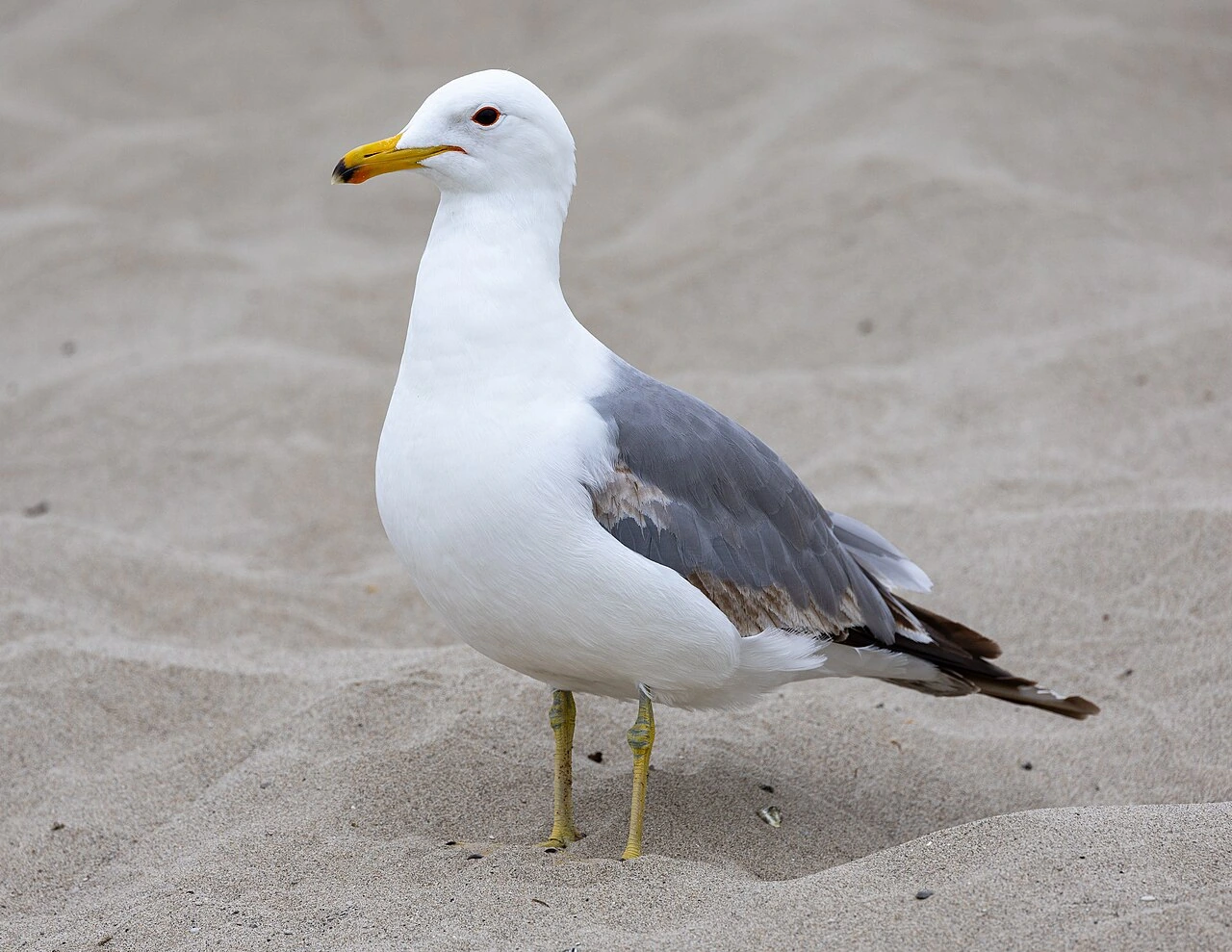
California gulls are medium-sized gulls that fall between the larger American Herring Gull and the smaller Ring-billed Gull in terms of body size. That size range puts them squarely in "typical gull" territory, which is exactly why casual observers lump them in with every other gull they see. Here are the key field marks for adults that help nail the ID:
- Legs: greenish yellow (not pink like Western Gull, not bright yellow like some other species)
- Bill: yellow with both a red gonys spot and a black subterminal band (two marks on the bill, not just one)
- Eye: dark (brown iris), which stands out compared to the pale eye of the Herring Gull
- Wingtips: extensive black on the primaries with large white spots visible in flight
- Head in nonbreeding plumage: heavily streaked brown, which is what most Utah observers see in winter
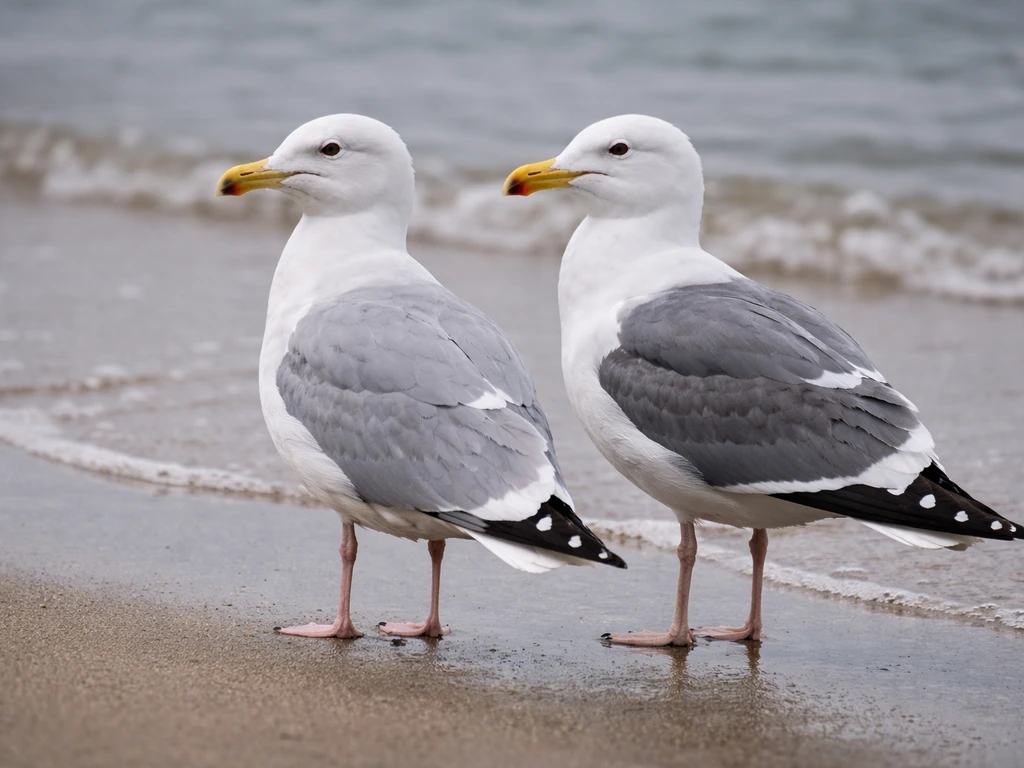
The two-toned bill marking is the quickest separator from the Ring-billed Gull, which only has a black ring near the tip and no red spot. The greenish yellow legs and dark eye together rule out the Western Gull, which has pink legs and an orange eye ring. If you're watching gulls at the Great Salt Lake or anywhere inland in Utah and you see a medium gull with greenish legs, a dark eye, and that distinctive two-mark bill, you're looking at a California gull.
| Feature | California Gull | Ring-billed Gull | Western Gull |
|---|---|---|---|
| Leg color | Greenish yellow | Yellow | Pink |
| Eye color | Dark (brown) | Pale yellow | Yellow with orange ring |
| Bill markings | Red spot + black band | Black ring only | Red spot, heavy bill |
| Size | Medium (between Herring and Ring-billed) | Small-medium | Large |
| Back color | Light gray | Light gray | Dark gray |
How to verify Utah's state bird today
If you want to confirm this yourself from official sources, you have a few reliable options. Utah Code § 63G-1-601 is the statutory authority and uses the term "sea gull." Utah.gov's state symbols page calls it the "California Seagull." The Utah Historical Society's page on the subject explicitly names it the California gull and ties it to the Miracle of the Gulls. Utah's Online Public Library provides the most complete legislative detail, including the specific bill number (H.B. 51), the signing date (February 16, 1955), and the species name (California gull, Larus californicus). Taken together, those sources settle any doubt about both the official designation and the specific species.
How Utah's state bird compares to other states
Utah is one of the very few states to designate a gull as its state bird at all, which makes it stand out on any list of state bird designations. Most states chose songbirds: the Northern Cardinal, Western Meadowlark, and American Robin account for a large chunk of state bird designations across the country. No other state has named the California gull specifically, so Utah has sole claim to this species among state symbols.
If you're comparing western states, Idaho's state bird is the Mountain Bluebird, which has a very different selection rationale focused on color and symbolism rather than historical events. Idaho’s state bird is commonly identified as the Mountain Bluebird Idaho's state bird. Iowa also comes up in comparisons since it shares the Eastern Goldfinch (American Goldfinch) as its state bird with several other states, showing how common it is for multiple states to pick the same bird.
If you're also wondering about Iowa State, see this guide on why Iowa State's mascot is a bird why Iowa State mascot is a bird. For the answer to what is the state bird of iowa, look for the Eastern Goldfinch, which is shared by several states Iowa also comes up in comparisons. Rhode Island's state bird, the Rhode Island Red, is actually a chicken breed rather than a wild species, making it another unusual case.
Rhode Island's state bird is the Rhode Island Red. Utah's gull designation is arguably the most historically grounded of any state bird choice in the country, rooted in a specific documented event rather than general aesthetics or regional abundance.
Where to go from here
If you landed here while trying to confirm Utah's state bird for a quick reference, the answer is the California gull, Larus californicus, designated in 1955. For a full breakdown of Utah's state bird with additional identification detail and facts about the species, check out the dedicated Utah state bird page on this site. If you want to compare how other western states chose their birds, the Idaho state bird page covers the Mountain Bluebird and its selection story, which makes for an interesting contrast with Utah's historically driven choice.
FAQ
Why do some sources say Utah’s state bird is “the sea gull” instead of the California gull?
Because the statute uses the generic phrase “sea gull,” not the species name. Utah law and digital listings are inconsistent in wording, so you may see “California Seagull” or “sea gull,” but all official materials that specify the species identify it as Larus californicus.
Is “seagull” even the right word for the bird Utah chose?
In everyday speech it works as a label for gulls, but technically it is a category term. Utah’s designation refers to a specific gull species, the California gull, so the most accurate way to answer “why is the seagull Utah’s state bird” is to say it is the California gull behind that common nickname.
How can I tell a California gull from a Ring-billed gull in Utah?
Look for the California gull’s two-part bill pattern (including a distinctive red spot) and compare the legs and eye. Ring-billed gulls tend to have a simpler black ring near the bill tip, and they lack the California gull’s red spot, so the bill markings are usually the fastest field check.
Where in Utah is it most likely to see the California gull?
You will most often find them around the Great Salt Lake and other inland western lakes. The “Miracle of the Gulls” story also points to inland arrival from the lake region, so your best chances are shorelines and areas where gulls forage.
What’s the practical difference between “California Seagull” and “California gull” labels?
They refer to the same species, Larus californicus. The “seagull” wording is a public-friendly label, while “California gull” is the precise common name, but the biological identity stays the same.
Did the 1955 law ever formally settle the debate over scientific names?
Not cleanly in the statutory text. The species identity is confirmed across official Utah references, but the original bill discussion and the final wording left “sea gull” in the code, which is why the terminology mismatch persists.
Is Utah the only state with a gull as a state bird?
Utah is among the very few states that name a gull at all, and it is the only one that specifically selects the California gull. Other states may have gull-like birds as unofficial references or different species entirely, so check species names rather than relying on “seagull” as a category.
Why do people confuse Utah’s state bird with other gull species like the Ring-billed gull?
Because “seagull” and “sea gull” are vague, and some third-party sites list another common gull sighted in the state. The confusion is avoidable if you verify the species name tied to the designation, which consistently points to Larus californicus.
If I’m answering “why is the seagull Utah’s state bird” for an assignment, what should I say in one sentence?
Say that Utah’s state bird is the California gull (Larus californicus), chosen in 1955 because of the “Miracle of the Gulls,” when California gulls arrived and ate Mormon crickets that were destroying crops in early Salt Lake Valley settlements.
Next Article
Why Iowa State’s Mascot Looks Like a Bird
Clarifies Iowa state bird vs ISU Cyclones mascot origins, explaining why it looks birdlike and how to verify.