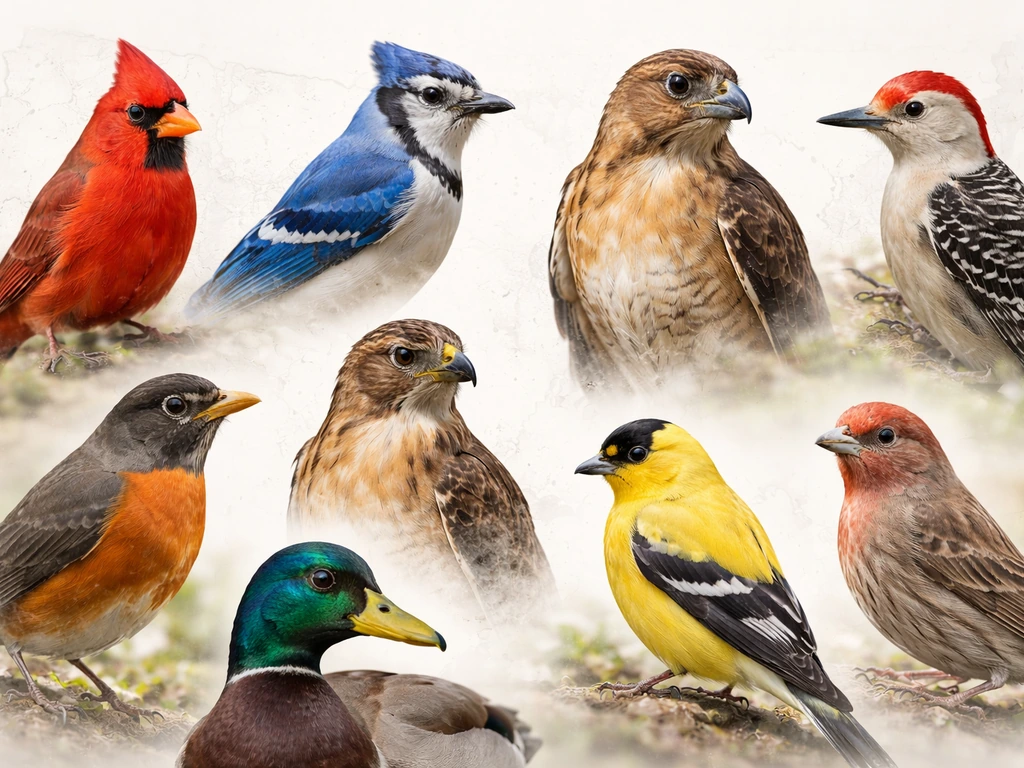
The northern cardinal (Cardinalis cardinalis) is the most common state bird in the United States. The bald eagle is what state bird in the United States? It holds the top spot as the official state bird of seven states, more than any other species. No other bird ties it for first place.
Most Common State Bird: The Top Official Species by State

Marcus Webb
29 Apr 2026
What 'most common state bird' actually means
When people ask which state bird is most common, they're really asking: which single bird species appears as the officially designated state bird for the greatest number of U.S. states? The counting method matters here. You look only at official state bird designations, meaning birds adopted by state legislatures through statute or formal resolution, across all 50 states. If two species were tied for the top count, both would share the title. In this case, though, there's no tie. The northern cardinal stands alone at seven designations.
It's worth noting that 'most common' here is about official symbolic designation, not about how many individual birds actually live in a state or how frequently you'd spot one on a walk. But a state bird is a designation about a species, not a living creature that can die or be alive. If you're wondering about the state bird meaning behind a “most common” claim, remember it refers to official symbolism rather than how frequently you see the bird. Some very common backyard birds appear on only one or two state lists. The cardinal happens to be both widely beloved and widely designated.
The winner: Northern Cardinal, official bird of 7 states
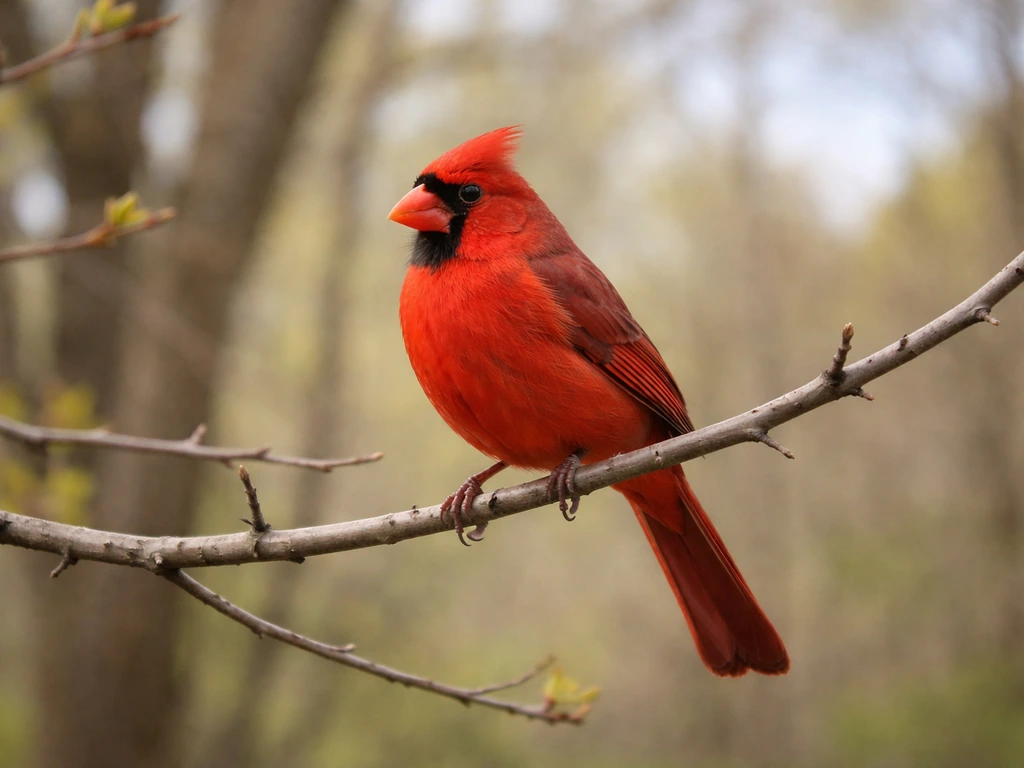
The northern cardinal is the official state bird of Illinois, Indiana, Kentucky, North Carolina, Ohio, Virginia, and West Virginia. That's seven states, all in the eastern half of the country, all with formal statutory backing for the designation. Audubon describes it as the state bird of 'no fewer than seven eastern states,' and Wikipedia's list of U.S. state birds confirms it as the top-count species with the same number. Every credible source agrees: no other species comes close.
All 7 states: the verified list
Here's the full list with a note on how each state officially codified its choice, so you can see this isn't just tradition but actual law.
| State | Official Name Used | Year Designated | Statutory/Legal Basis |
|---|---|---|---|
| Illinois | Northern Cardinal (Cardinalis cardinalis) | 1929 | Illinois state symbols (Illinois DNR; first state to select the cardinal) |
| Indiana | Northern Cardinal | 1933 | Indiana DNR official state bird designation |
| Kentucky | Kentucky Cardinal (native redbird, Cardinalis) | Longstanding | Kentucky Revised Statutes § 2.080 |
| North Carolina | Cardinal | Longstanding | North Carolina General Statutes § 145-2 |
| Ohio | Cardinal (Cardinalis cardinalis) | Longstanding | Ohio Revised Code § 5.03 |
| Virginia | Northern Cardinal | 1950 | Virginia state symbols official designation |
| West Virginia | Cardinal | 1949 | West Virginia Legislature, adopted March 7, 1949 |
You'll notice that some states call it the 'cardinal,' others say 'northern cardinal,' and Kentucky even calls it the 'native redbird' or 'Kentucky cardinal.' They're all the same species, Cardinalis cardinalis. The variation in naming is just a reflection of when and how each state legislature wrote its statute, often using the common regional name of the time.
Why so many states picked the cardinal
There are a few consistent themes running through why these seven states all landed on the same bird. First, the northern cardinal is a year-round resident across the entire eastern U.S. It doesn't migrate, which means it's visible in January snow just as much as in July heat. That kind of reliable, statewide presence makes it a natural choice as a symbol representing the state through all seasons.
Second, the male cardinal is one of the most visually striking birds a non-birder can identify. Bright red, crested, impossible to confuse with most other species. States choosing a symbol want something their residents can actually recognize and feel connected to. North Carolina's selection was driven partly by popular choice, reflecting genuine public affection for the bird. Indiana's DNR notes the cardinal was chosen in 1933 for its widespread visibility around hedgerows, wood margins, and roadsides across the state.
Third, the cardinal is common enough that almost everyone in these states has seen one in their yard, at a feeder, or in a park. It's not a rare specialty bird requiring a trip to a wildlife refuge. That accessibility, combined with the dramatic plumage and familiar song, made it a recurring favorite among state legislators and citizens alike across the mid-Atlantic and Midwest.
How to identify a northern cardinal in the field
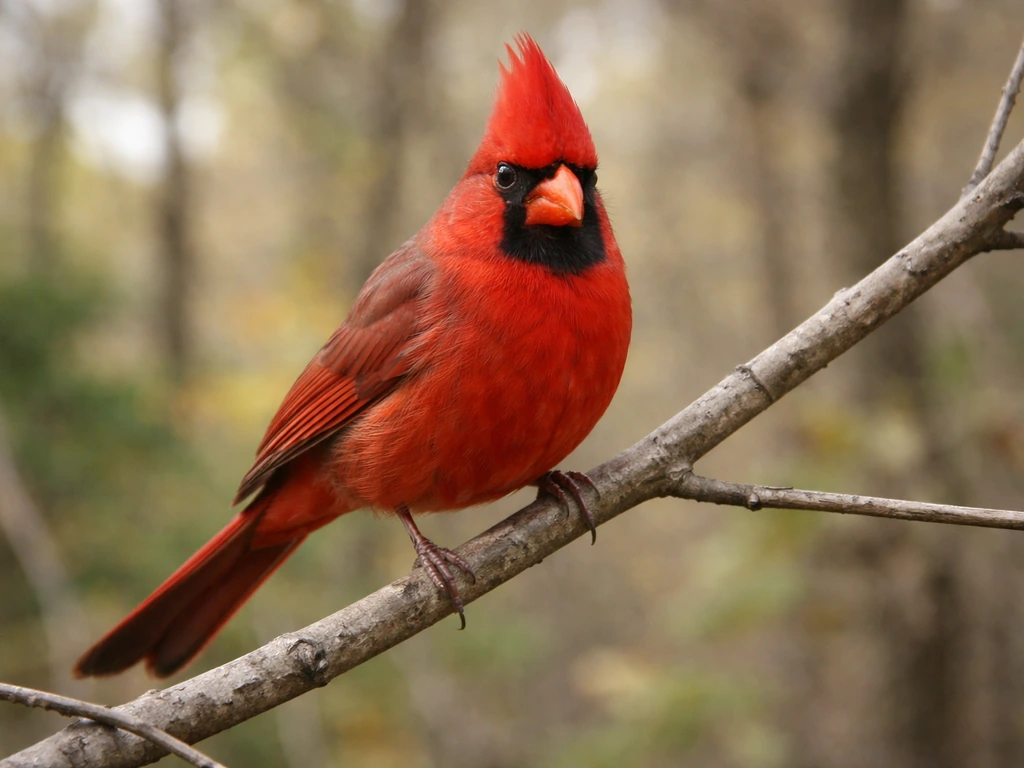
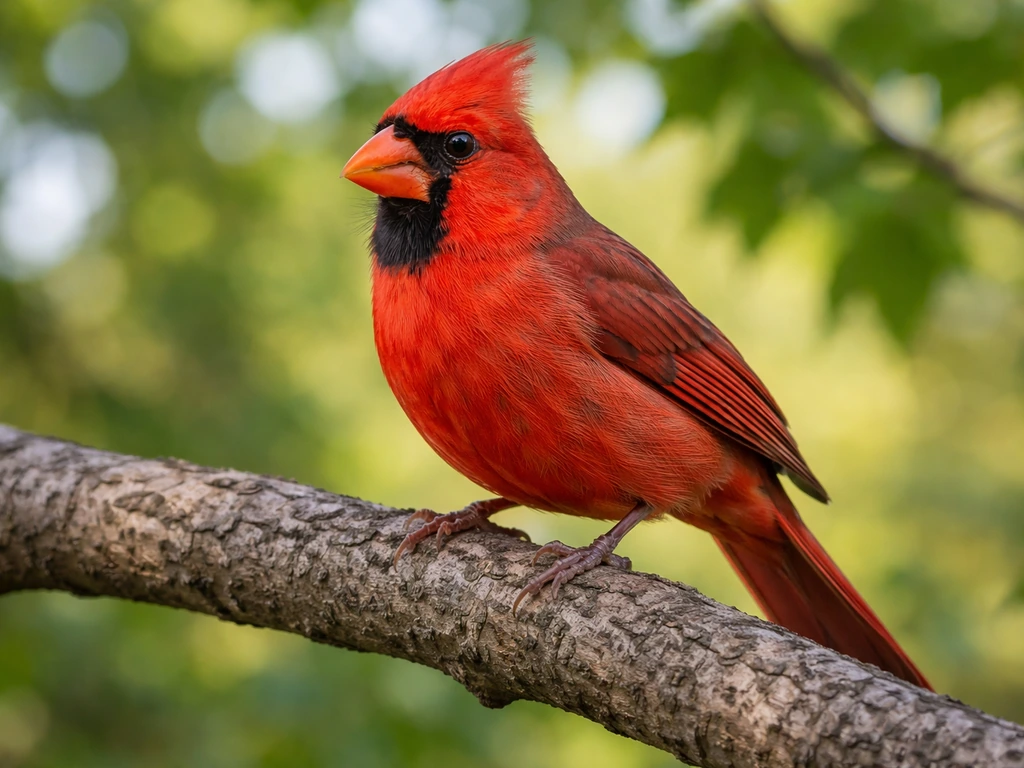
If you want to connect the 'most common state bird' answer to actual bird recognition, here are the key traits. The northern cardinal is the only red bird with a prominent crest found in the United States, which is a fast and reliable field mark on its own.
- Size: 8.3 to 9.1 inches (21 to 23 cm) long, roughly the size of a robin
- Male plumage: brilliant all-over red with a black mask around the bill and throat
- Crest: pointed, upright crest on the head, visible from a distance
- Female plumage: warm brown with reddish tinges on the crest, wings, and tail; same black mask and orange-red bill
- Bill: thick, cone-shaped, orange-red in color on both sexes
- Song: loud, clear whistles often described as 'cheer, cheer, cheer' or 'birdie, birdie, birdie,' repeated in a series
- Habitat: woodland edges, thickets, suburban gardens, backyards, and parks with dense shrubs
The crest plus the all-red body on the male makes the northern cardinal one of the easiest birds to identify for beginners. Females are subtler but share the same distinctive crest and heavy orange bill. Both sexes are year-round residents wherever they live, so you're not chasing a seasonal window to spot one.
What to do next: look up your state and explore the full picture
If you're curious whether your state also uses the cardinal, or what your state chose instead, the fastest reliable method is to check your state government's official symbols page (usually under the Secretary of State or state library site) and search for 'state bird. West Virginia, for example, lists that the West Virginia Legislature adopted the cardinal as the state bird on March 7, 1949 [check your state government's official symbols page](https://wvstatemuseumed. wv. gov/2025/state-symbols.
html). If you're still wondering what is the state bird, this same official-symbols page method will point you to the correct bird for your state. For Texas, you can use the same official symbols approach to find the state's designated bird official symbols page. ' You can also look directly at your state's enacted statutes, where the bird will typically be named in a short section on state symbols.
Connecticut's portal, for example, clearly states the American Robin was adopted in 1943 by the General Assembly. Most states use the same straightforward format.
Beyond the cardinal, there are several other birds that appear on multiple state lists, just not as many as seven. If you want to compare all 50 state birds side by side, a full state-by-state list sorted by species makes it easy to spot which birds show up more than once and which states share designations. If you want the definitive answer for all 50 states, you can compare each state's official designation on a state-by-state list of state birds compare all 50 state birds side by side. That kind of comparison reveals interesting regional patterns: how the eastern states clustered around the cardinal, how western states leaned toward meadowlarks, and which states went with genuinely unique choices that no other state mirrors.
If you've landed here from a search about a specific state's bird, each state has its own page on this site covering the species, the year it was designated, the reason behind the choice, and how to identify it. The individual state pages are the best place to dig into the history and symbolism behind each designation, including the six states outside the cardinal seven that have their own distinct stories worth knowing.
FAQ
Does “most common state bird” mean the bird you see most often in the wild?
No. It refers to how many states have officially designated a species as their state bird. A bird can be very common in nature but still appear on only one or two state lists if it was not officially chosen.
How do I verify whether my state bird designation is official, not just popular?
Look for the enacted state symbols designation in the state government’s official symbols page or the relevant statute or resolution. Informal websites or wildlife organizations can mention the bird, but official designation is tied to formal state action (statute or formal resolution).
What if a state lists a “cardinal” instead of “northern cardinal,” is that counted the same?
Yes, in counting by species. Different common names like “cardinal” or “native redbird” in state statutes can refer to the same species, Cardinalis cardinalis, so the count is based on the underlying species identification, not the label.
Do changes or updates to a state symbol get reflected automatically in totals?
They should, but it depends on when a reference list was last compiled. If your goal is current accuracy, cross-check your state’s present statute or official symbols page, since some states may update wording or codify prior designations.
Can multiple birds share the same top status in a state’s designation?
For a “state bird” designation, states typically choose a single official species, but in rare cases a state could designate multiple species for different categories (for example, state bird versus state songbird). The national “most common state bird” comparison here counts only official state bird designations.
Why do some states’ naming or adoption years differ even when they pick the same species?
States often adopt the same species at different times and may use the common regional name that fit the period. That’s why you might see “northern cardinal” in one statute and a different label like “cardinal” in another, even when the species is identical.
Is the bald eagle close to being the most common state bird?
It ranks high, with seven states designating it as their state bird in the U.S. overall comparison described in the article body. However, the northern cardinal has more designations than any other species in that specific top-count comparison.
I’m trying to identify the northern cardinal for backyard spotting, what quick field marks should I prioritize?
Focus on the male’s vivid red color and prominent crest. Also note the heavy orange bill and the overall “easy to spot” silhouette with the crest raised, which helps distinguish it from most other backyard birds.
Do cardinals migrate, and does that affect whether they’re good state symbols?
In the eastern U.S., northern cardinals are typically year-round residents rather than strict seasonal migrants. That year-round presence is one reason they’re practical as a statewide symbol across all seasons.
Next Article
What Is the State Bird? Official Birds for Every U.S. State
Official state birds for all 50 states, plus how to find your state bird and avoid confusing it with other symbols.