No U.S. state currently has the magpie as its official state bird. The Indian paradise flycatcher is sometimes mentioned in state-bird discussions, but official state symbols should be checked to confirm any claim the indian paradise flycatcher is the state bird of. The magpie came close in Montana, where a 1989 legislative bill (Senate Bill 383) proposed replacing the existing state bird with the Black-billed Magpie (Pica hudsonia), but that bill did not result in a final designation. Montana's official state bird remains the Western Meadowlark, the same bird shared by five other states.
Is the Magpie a State Bird? Which States Designate It

Marcus Webb
11 May 2026
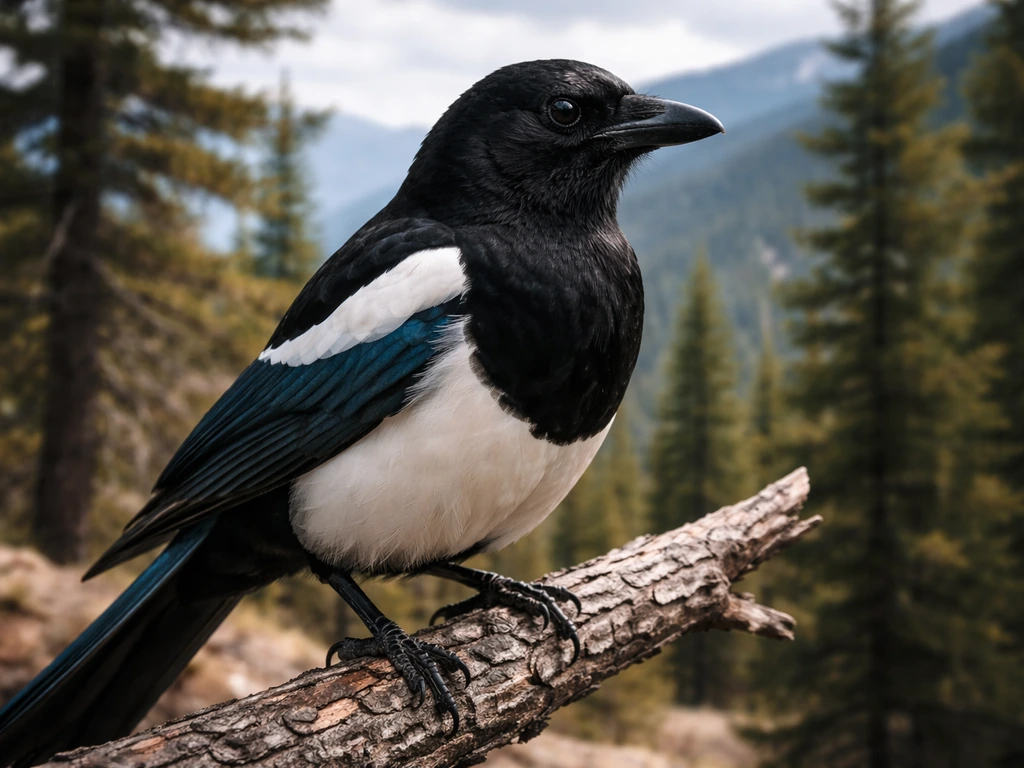
Which state considered the magpie as its state bird
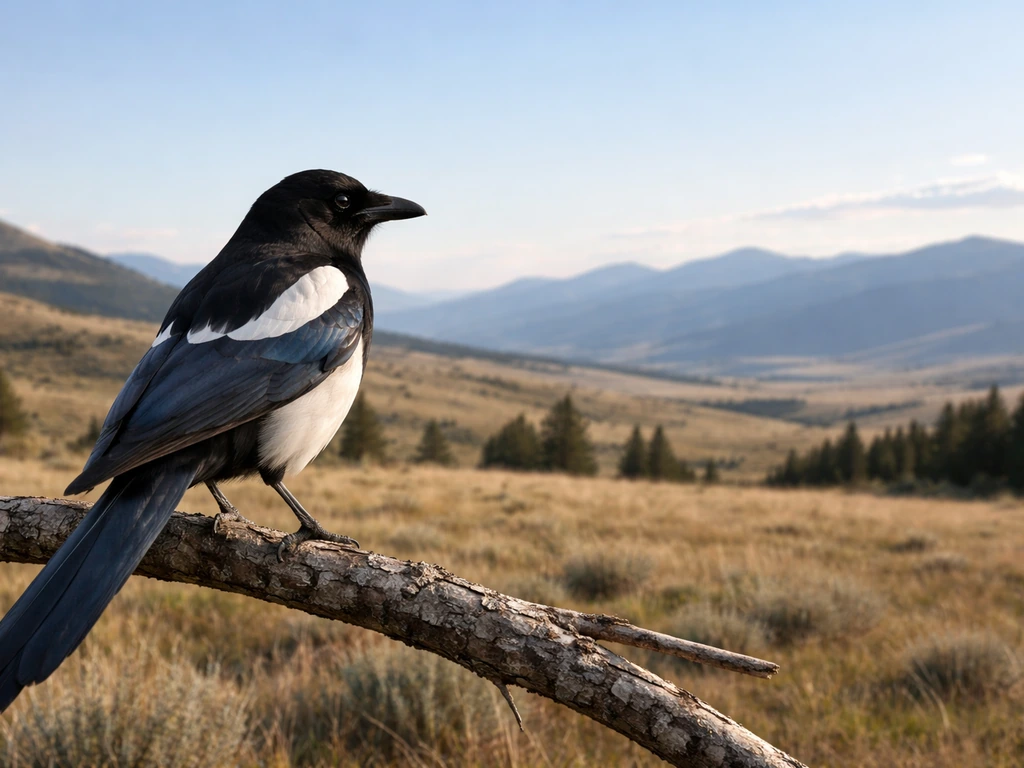
Montana is the state most closely associated with the magpie in state-symbol history. Senate Bill 383, introduced in 1989, specifically named the Black-billed Magpie (Pica hudsonia) as Montana's proposed official state bird. The bill made it into the legislative record and is sometimes cited in birding articles as evidence that Montana "has" or "nearly had" the magpie as its state symbol. It did not pass into law, so no change was ever made.
Outside of Montana, no other U.S. state has proposed or designated any magpie species as its official state bird. If you've seen a claim online that a particular state's bird is the magpie, it almost certainly traces back to this Montana proposal or to casual editorial opinions ("the magpie should be Montana's bird") rather than any official designation.
The exact wording and species: what matters here
When a state officially designates a bird, the exact species name in the legislation is what counts. Montana's SB 383 used the name "black-billed magpie" with the scientific name Pica hudsonia. That's important because "magpie" on its own is a loose common name covering several different birds. In North America there are two distinct species: the Black-billed Magpie (found across the western and central U.S.) and the Yellow-billed Magpie (a California-range bird). Globally, the Eurasian Magpie is a third, entirely separate species. So if you're verifying any state bird claim involving a "magpie," always check whether the source specifies Black-billed, Yellow-billed, or just uses the generic term.
Montana's official state symbols document, published by Montana Fish, Wildlife & Parks, lists the state bird plainly as the Western Meadowlark. There is no magpie in that list. That document is the authoritative source, not the failed 1989 bill.
Why Montana wanted the magpie in the first place
The argument for making the Black-billed Magpie Montana's state bird came down to uniqueness and regional identity. The Western Meadowlark is a great bird, but it's also the official state bird of Kansas, Nebraska, North Dakota, Oregon, and Wyoming. That's six states sharing the same bird. The Black-billed Magpie, by contrast, is strongly associated with the American West and is a highly visible, distinctive presence in Montana's open country and ranch lands. Proponents felt it better represented Montana's specific landscape and wildlife character compared to a bird that dozens of plains states also claim.
Magpies are also hard to miss in Montana. They're bold, loud, and quick to appear around farms, ranches, and roadsides. For residents, the magpie is often the bird they see every single day, which made the case for it being the state symbol feel intuitive even if the legislature ultimately didn't agree.
How to identify the Black-billed Magpie
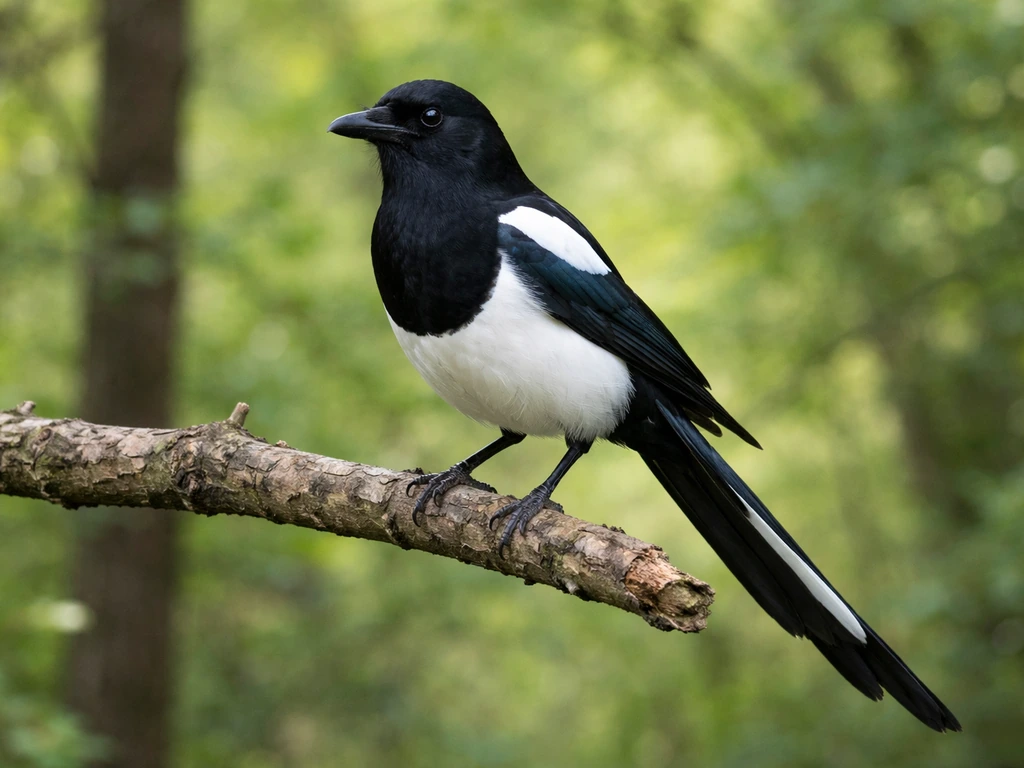
If you're trying to confirm what bird is being discussed in a state-bird context, the Black-billed Magpie (Pica hudsonia) is not a subtle bird. Here are the key identification cues:
- Bold black-and-white plumage: the head, breast, back, and wings are black; the belly and shoulder patches are bright white
- Very long tail, roughly as long as the body itself, with a strong iridescent green and blue sheen in good light
- Black bill (distinguishing it immediately from the Yellow-billed Magpie, which has a bright yellow bill)
- Size: noticeably larger than a robin, roughly 17 to 23 inches from bill tip to tail tip
- Loud, harsh, chattering calls, often in a series: a distinctive "mag-mag-mag" or rattling sound
- Range: found across the western U.S. and into Canada, common in open country, farmland, and scrubby areas with some tree cover
The Yellow-billed Magpie (Pica nuttalli) looks nearly identical in body shape and plumage but has a vivid yellow bill and bare yellow skin around the eye. It's restricted almost entirely to California's Central Valley and coastal ranges, so if you're in Montana or anywhere outside California, the magpie you're looking at is almost certainly a Black-billed.
Where magpie references in state-bird lists usually come from
Most "magpie as state bird" references fall into a few predictable categories. First, there are editorial and opinion pieces arguing that the magpie would make a better state bird for Montana than the Western Meadowlark. These are not official sources. Second, the 1989 Montana legislative bill sometimes gets cited as if it were a law. It was a proposal, not an enacted statute. Third, general birding websites occasionally repeat the claim without verifying whether the bill passed. When you trace any of these claims back to primary sources, the official answer is always the same: no state has designated a magpie.
It's worth noting that confusion around common names is common in state-bird lookups generally. Birds like the hummingbird (no single species is a U.S. state bird, though Ruby-throated and others are discussed), the flamingo, and the peacock generate similar questions because people hear a familiar name and assume there's an official tie. You may also be wondering, is the flamingo a state bird, and the same rule applies: check the official state symbols list for the state you mean. You might also be wondering, is the hummingbird a state bird. The safest approach is always to check the official state symbols list published by the state's government or a reliable reference that sources from those documents directly.
What to check next
If you landed here while looking up Montana's state bird specifically, go straight to the Montana state bird page, which covers the Western Meadowlark: its identification, why Montana (and five other states) chose it, and how it was officially designated. That page gives you the full official picture. Hornbills are not the official state bird of any state either, so that claim should also be verified against official state symbols hornbill is the national bird of which state.
If your question is broader and you're curious which states share their state bird with others, the Western Meadowlark situation is a good starting point. Six states claiming the same bird is the largest overlap of any state bird in the U.S., and it's exactly why the Montana magpie debate came up in the first place. You can also explore the state bird pages for Wyoming, Kansas, Nebraska, North Dakota, and Oregon to see how each state frames the same bird differently.
If you're working through a list of birds that people commonly wonder about in a state-bird context, similar lookup questions come up for birds like the hummingbird, the flamingo, and the peacock, none of which are official U. If you want the answer to that specific question, you can check the official state symbols for the peacock and see which state bird claims are actually verified. S. state birds either. Each of those topics follows the same pattern: strong public association with a region, occasional editorial claims, but no official designation in any state's statutes.
| Bird | Official U.S. State Bird? | Associated State(s) | Notes |
|---|---|---|---|
| Black-billed Magpie | No | Montana (proposed only) | 1989 Montana SB 383 proposed it but did not pass |
| Yellow-billed Magpie | No | None | California-range species; never proposed as a state bird |
| Western Meadowlark | Yes | Montana, Kansas, Nebraska, North Dakota, Oregon, Wyoming | Montana's actual official state bird |
| Eurasian Magpie | No | None | Not native to North America; no U.S. state connection |
FAQ
If no state bird is “the magpie,” can a state still have a magpie as another official symbol?
Yes, a state can honor a bird species through a different category, like a state bird at large, state insect, or state wildlife theme, without labeling it as the official state bird. If you see a “magpie” claim, verify it against the state’s official symbols page for categories beyond just “state bird,” since many sites blur these distinctions.
How can I tell whether a “magpie state bird” claim is based on a real law?
Look for enacted legislation language, not bill numbers alone. A true designation will appear in the state’s final statutes or an official state symbols document, while proposals often remain searchable only as bills with a final outcome of “failed,” “died in committee,” or similar.
Which magpie are people usually referring to when they say “magpie,” Black-billed or Yellow-billed?
In state-bird discussions about Montana and most non-California locations, the intended species is almost always the Black-billed Magpie (Pica hudsonia). If the claim comes from California or mentions the Central Valley or coastal ranges, then people might mean the Yellow-billed Magpie (Pica nuttalli), but that still would not make it a U.S. state bird unless officially designated.
Could the claim be about a different region’s magpie, like the Eurasian Magpie?
Usually not in U.S. state-bird claims, but the confusion can happen online because “magpie” also refers to the Eurasian Magpie (a different species). Any verification should start by confirming the scientific name, because using the generic common name can mix unrelated birds.
Why do some pages say Montana “has” the magpie if the bill failed?
They are typically repeating a secondary interpretation of a proposal, not an official status. A safer way to confirm is to compare the state’s current official state symbols list with the timeline of the bill proposal (introduced, voted, failed). If the symbols list does not include it, it was never an official state bird.
What should I check specifically on Montana’s official symbols documents?
Make sure the document is an official “state bird” list, not a historical overview. The authoritative Montana Fish, Wildlife & Parks state symbols listing should show the Western Meadowlark as the state bird, and it should not include any magpie entry under the state bird category.
Do any states have “magpie” as part of a longer official bird name?
Sometimes common names get condensed in casual writing, but official designations rely on exact wording and often on scientific names. If a state bird claim includes only “magpie” without specifying Black-billed, Yellow-billed, or another precise species label, treat it as unverified until you find the exact statute or official symbols entry.
Is the Western Meadowlark the only reason Montana’s debate came up?
The article’s discussion highlights overlap, because Western Meadowlark is already the official state bird of multiple states. That said, even if residents feel the magpie better matches regional identity, public preference alone is not enough, official symbols must be enacted or listed in official government materials.