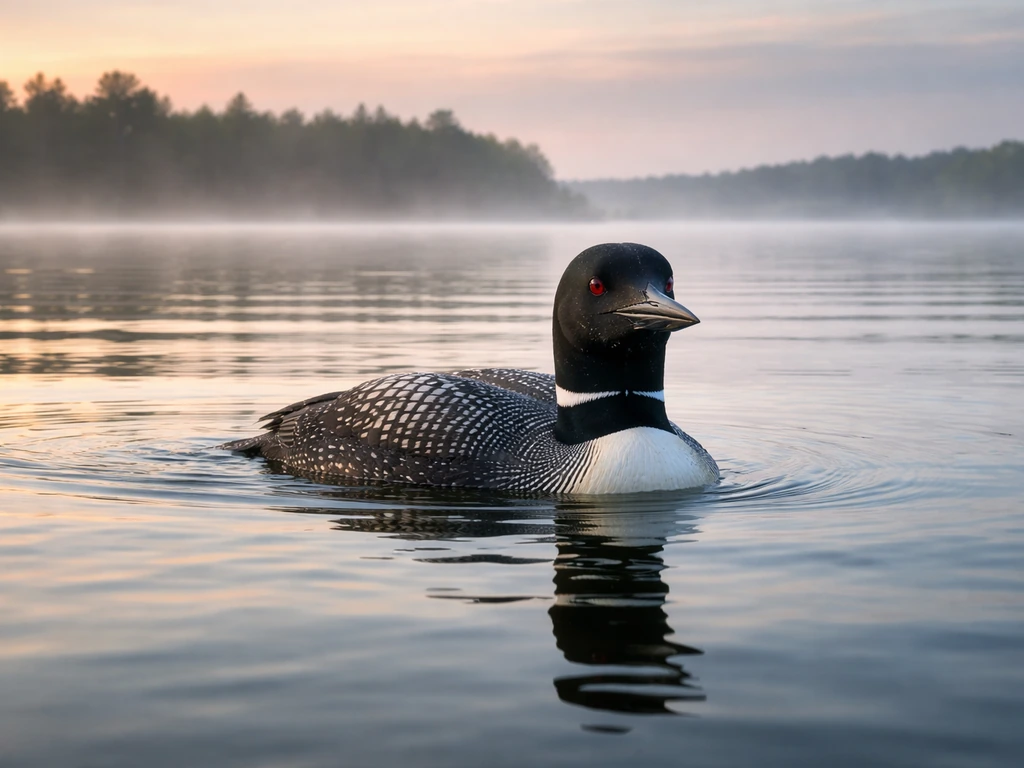
The Common Loon (Gavia immer) is the official state bird of Minnesota. The designation has been written into Minnesota law since 1961, when the Legislature passed Chapter 76 (H.F. No. 79), approved March 13, 1961. Minnesota Statutes Section 1.145 states plainly: "The loon, Gavia immer, is the official bird of the state of Minnesota." You can verify this directly on Minnesota's Secretary of State state-symbols page, which lists the loon alongside the state's other official symbols.
Common Loon State Bird: Why Minnesota Chose It

Marcus Webb
7 May 2026
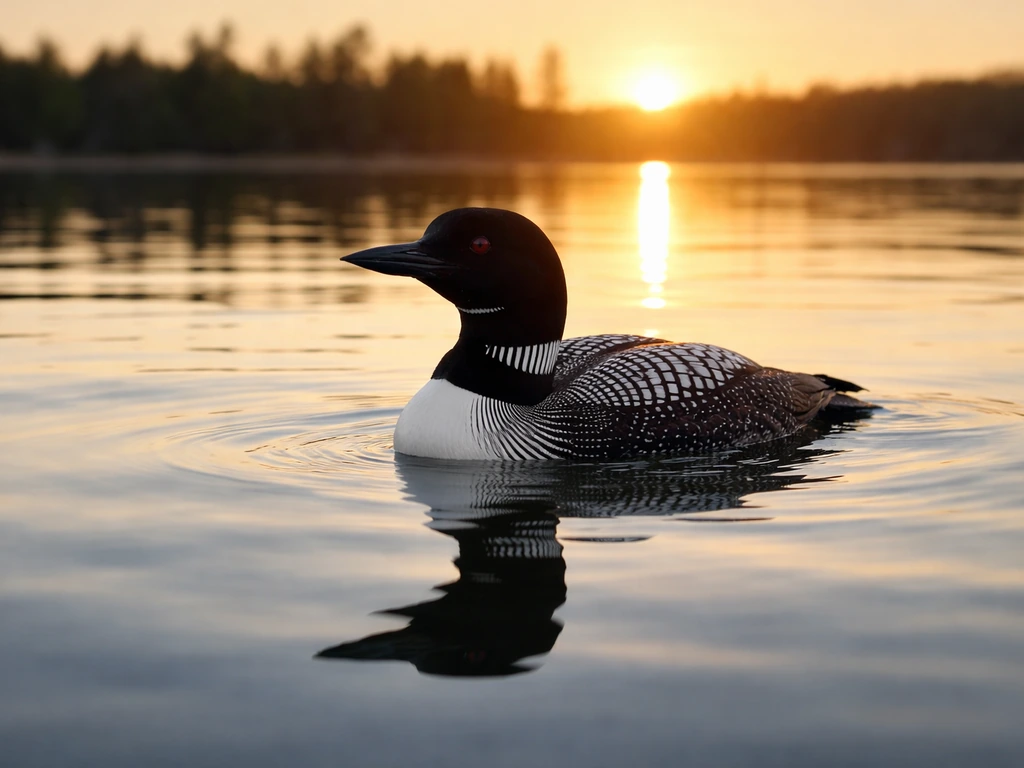
Minnesota State Bird: The Official Designation Details
Minnesota made it official in 1961, but the path there wasn't a slam dunk. Before the Legislature landed on the Common Loon, several other birds were in the running, including the Eastern goldfinch, mourning dove, pileated woodpecker, scarlet tanager, and wood duck. The loon won out, and it's been codified in Minnesota Statutes ever since. If you ever need to verify the designation for a school project, a trivia night, or just personal satisfaction, go straight to the Minnesota Revisor of Statutes (Section 1.145) or the Minnesota Secretary of State's state-symbols page. Those are the authoritative legal sources, not a Wikipedia list or a third-party compilation.
| Detail | Information |
|---|---|
| Official common name | Common Loon |
| Scientific name | Gavia immer |
| Designated state bird of | Minnesota |
| Year designated | 1961 |
| Legislation | Chapter 76, H.F. No. 79, approved March 13, 1961 |
| Statute reference | Minnesota Statutes Section 1.145 |
How to Recognize a Common Loon
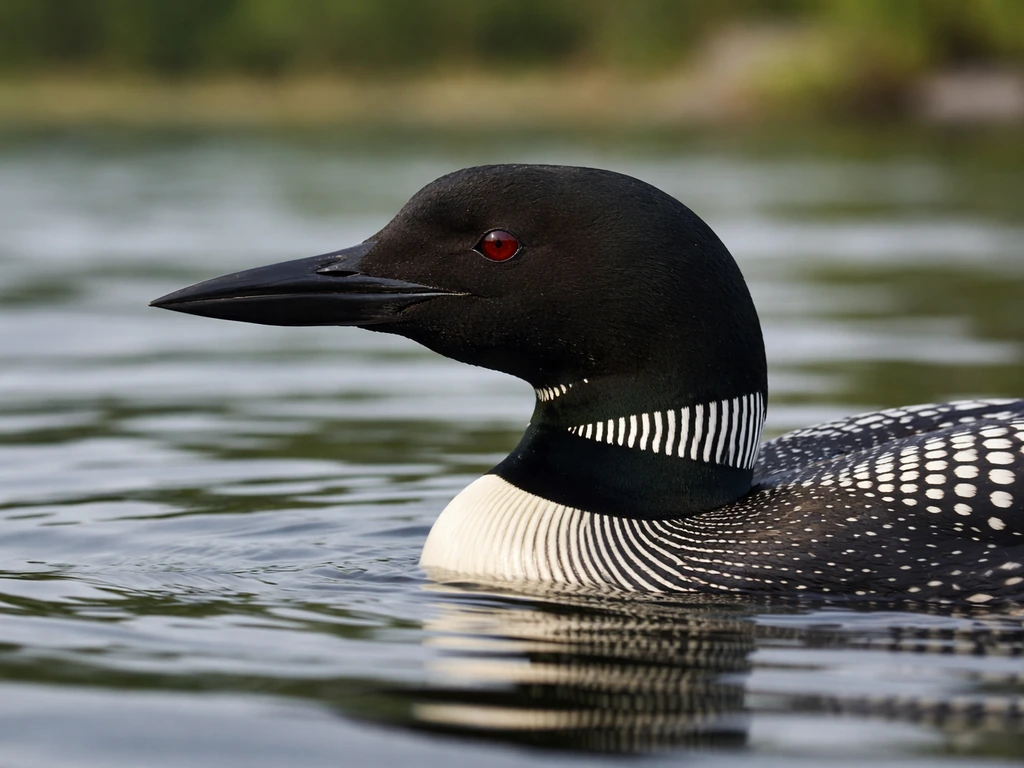
The Common Loon is a large, heavy-billed waterbird, and once you know what to look for, it's not hard to pick out. The most striking version is breeding plumage, which you'll see in spring and summer: a jet-black head and bill, a black-and-white checkered back, a white breast, and a distinctive white necklace pattern around the throat. The red eye is a reliable field mark year-round. In fall and winter, the look changes significantly. The bird takes on a plain gray back and head with a white throat, losing most of that bold contrast. Knowing both plumages matters if you're trying to identify one outside the summer season.
In flight, loons look stretched out, with a long, flat body, a long neck, and a long bill all extended at once. They don't look graceful in the air the way some waterbirds do, but that silhouette is a useful ID cue. On the water, they ride low and dive frequently to catch fish. Their calls are just as recognizable as their looks: the tremolo, wail, yodel, and hoot are all part of the loon's vocal repertoire, and if you're near a Minnesota lake on a calm morning, you'll likely hear one before you see it.
Quick Field Marks at a Glance
- Black bill, red eye (year-round)
- Breeding plumage: black head, checkered black-and-white back, white breast, white throat necklace
- Non-breeding plumage (Sept–March): plain gray back and head, white throat
- Large and heavy-bodied, rides low on the water
- Stretched-out silhouette in flight with long neck and bill
- Distinctive four-call vocabulary: tremolo, wail, yodel, hoot
Where You'll Actually Find Common Loons
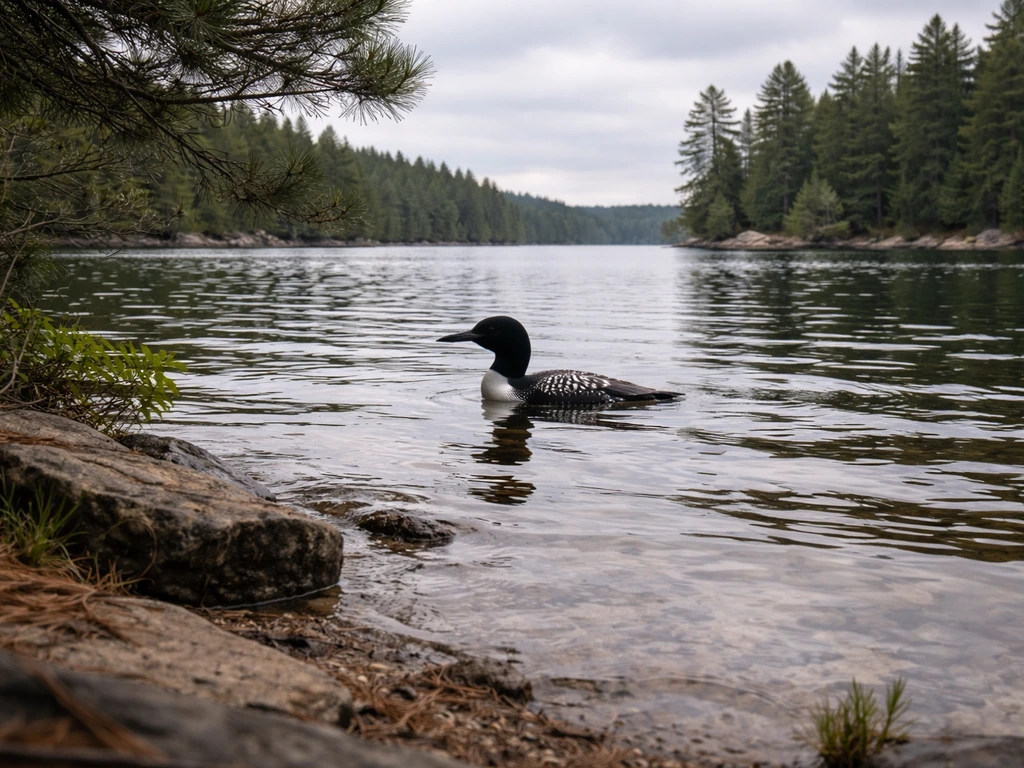
In Minnesota, loons are found on lakes throughout the central and northeastern parts of the state. Northeastern Minnesota, including the Boundary Waters and Voyageurs National Park region, is prime loon territory. Minnesota supports the largest Common Loon population in the lower 48 states, so you're in the right place if you're looking for them. During breeding season, they favor protected, weedy bays along lake edges. That's where they build their nests, which are mounds of dead plant material constructed over about a week in May or early June. Loons typically don't start breeding until they're three or four years old, and an average nesting season produces one to two chicks.
Outside Minnesota, Common Loons breed across the northern tier of North America and into Canada. During fall and winter, they move to coastal waters and large inland lakes further south. So if you're trying to spot one in breeding plumage, a Minnesota lake in June or July is about as reliable as it gets.
Why Minnesota Chose the Common Loon
It's not hard to see why Minnesota landed on the loon. The state is defined by its lakes, and the Common Loon is as connected to that landscape as any species could be. If you are wondering why the loon is the state bird of Minnesota, it largely comes down to how tightly the species is connected to the state's lake-rich identity and natural heritage. Minnesota's ten thousand lakes aren't just a tourism slogan; they represent a genuine ecological identity, and the loon has been part of that ecosystem long before statehood. By the time the Legislature designated the loon in 1961, it was already deeply embedded in Minnesota's cultural and natural image.
The fact that Minnesota hosts the largest loon population in the lower 48 states makes the choice feel less like symbolism and more like an accurate reflection of reality. The loon isn't just a pretty bird that looked good on a seal. It's genuinely abundant in Minnesota, it's tied to the freshwater habitat that defines the state, and it's loud and visible enough that anyone spending time on a Minnesota lake has almost certainly encountered one. The Minnesota DNR even runs a dedicated Minnesota Loon Monitoring Program (MLMP) to track the population and reproductive success of Common Loons across the state, which is a level of institutional commitment that reinforces how central the loon is to Minnesota's natural heritage. The Minnesota Loon Monitoring Program was initiated in 1994 to detect changes in Minnesota’s Common Loon populations Minnesota Loon Monitoring Program (MLMP).
Is the Common Loon the State Bird Anywhere Else?
No. Minnesota is the only U.S. state with the Common Loon as its official state bird. That makes it a unique designation among the 50 states. By contrast, some birds are shared by multiple states: the Northern Cardinal is the state bird of seven states, and the Western Meadowlark covers six. The Common Loon belongs exclusively to Minnesota in this context, which is part of what makes the symbol feel fitting rather than generic.
If you're curious about the broader question of which states share state birds and which have unique designations, that's a worthwhile comparison to explore. You'll find that Minnesota's loon stands out as one of the more distinctive choices in the country, particularly because the bird has such a strong ecological tie to the state's geography rather than just being regionally common.
Where to Learn More and How to Verify It Yourself
If you want to confirm the official designation, skip the summary sites and go directly to the primary sources. The Minnesota Secretary of State's state-symbols page lists the loon clearly, and Minnesota Statutes Section 1.145 is the actual law. Minnesota Statutes § 1.145 establishes that the loon (Gavia immer) is the official bird of Minnesota. The Minnesota Legislative Reference Library is another solid resource if you want to dig into the legislative history, including which other birds were considered before the loon won out.
For species identification and field guidance, Cornell Lab's All About Birds and the Minnesota DNR's Common Loon page are both well-maintained and accurate. If you want to see one in person, plan a visit to a lake in northeastern Minnesota between May and August. Voyageurs National Park is an excellent starting point. Go early in the morning, listen for that unmistakable wail, and look for a large, low-riding bird with a black head and red eye near a sheltered bay. Chances are very good you'll find one.
On this site, you can go deeper on related questions: why Minnesota specifically chose the loon over the other candidates considered in 1961, what the loon's presence as a state bird means in a broader ornithological context, and how the Minnesota state bird compares to neighboring states' selections. The Minnesota state bird page here covers all of that in one place.
Best Verification Resources
- Minnesota Secretary of State, State Symbols page (official government source)
- Minnesota Revisor of Statutes, Section 1.145 (the actual legal text)
- Minnesota Legislative Reference Library (legislative history and context)
- Minnesota DNR Common Loon page (habitat, identification, monitoring program)
- Cornell Lab All About Birds, Common Loon (field marks, range, behavior)
- NPS Voyageurs National Park (breeding habitat, population context)
FAQ
Are there any other Minnesota state symbols that could be confused with the common loon when doing a school assignment?
Yes. Some students mix up birds that are official symbols at the state level with other wildlife or separate categories like state mammals or state fish. For confirmation, rely on Minnesota Statutes Section 1.145 or the Secretary of State state-symbols listing, not general bird lists.
What is the most reliable way to confirm a loon’s identity if I’m not sure whether it’s a loon or another diving bird?
Use a combination of cues: the stretched, long-neck silhouette in flight, the low riding posture on water, and the checkered black-and-white look on the back during breeding season. Also listen for the tremolo, wail, or yodel style calls, which are harder for most other waterbirds to mimic.
How can I tell the difference between common loon breeding plumage and the duller look in fall or winter?
Breeding-season plumage is high contrast (black head and bill, checkered back, white throat and breast pattern with a necklace), while fall and winter birds look more uniformly gray on the head and back with a simpler white throat. If you only saw the bird once, season timing matters a lot for correct ID.
Do loons start nesting earlier in some parts of Minnesota, and when should I expect to see chicks?
Loons generally build nests over about a week in May or early June, but the exact timing can shift with local weather and ice-off dates. Chicks typically appear after incubation, so May nest building usually means chick sightings later in summer rather than immediately in spring.
What should I do if I hear loon calls but can’t spot the bird right away?
Loons often dive quickly after calling or when disturbed, so the bird may be underwater for a period. Scan the shoreline first, then look for a low-riding body returning to the surface near sheltered bays, and give more time if the water is calm and reflections make the bird harder to see.
Is Minnesota’s claim about the largest common loon population in the lower 48 states based on breeding numbers or total birds?
Population language in summaries can refer to breeding pairs, breeding success, or overall regional abundance depending on the program. If your project needs precision, check the Minnesota DNR’s Minnesota Loon Monitoring Program reporting definitions rather than relying on a general statement.
Can a non-native or vagrant loon appear in Minnesota, and would that affect what’s considered the “state bird”?
Rare vagrants can occur in many regions, but Minnesota’s state bird designation is legal and does not change based on individual sightings. For identification or reporting, document the location, date, and plumage stage, but the official symbol remains the Common Loon under Minnesota law.
What’s the best time of day to spot a common loon around Minnesota lakes?
Early mornings are a good bet because loons are vocal and visible when lake conditions are calm. Aim for dawn or just after sunrise, and listen first, then use the calls to guide your scan toward likely sheltered bays near the shoreline.
Next Article
What Is the Minnesota State Bird? Official Answer and Tips
Minnesota state bird is the common loon, with quick ID tips and the official rationale plus brief history.