[Maryland's official state bird is the Baltimore Oriole (Icterus galbula)](https://2020mdmanual. msa. maryland. gov/msa/mdmanual/01glance/html/symbols/bird.
What Is Maryland’s State Bird? Official Bird, ID Tips

Marcus Webb
22 Apr 2026
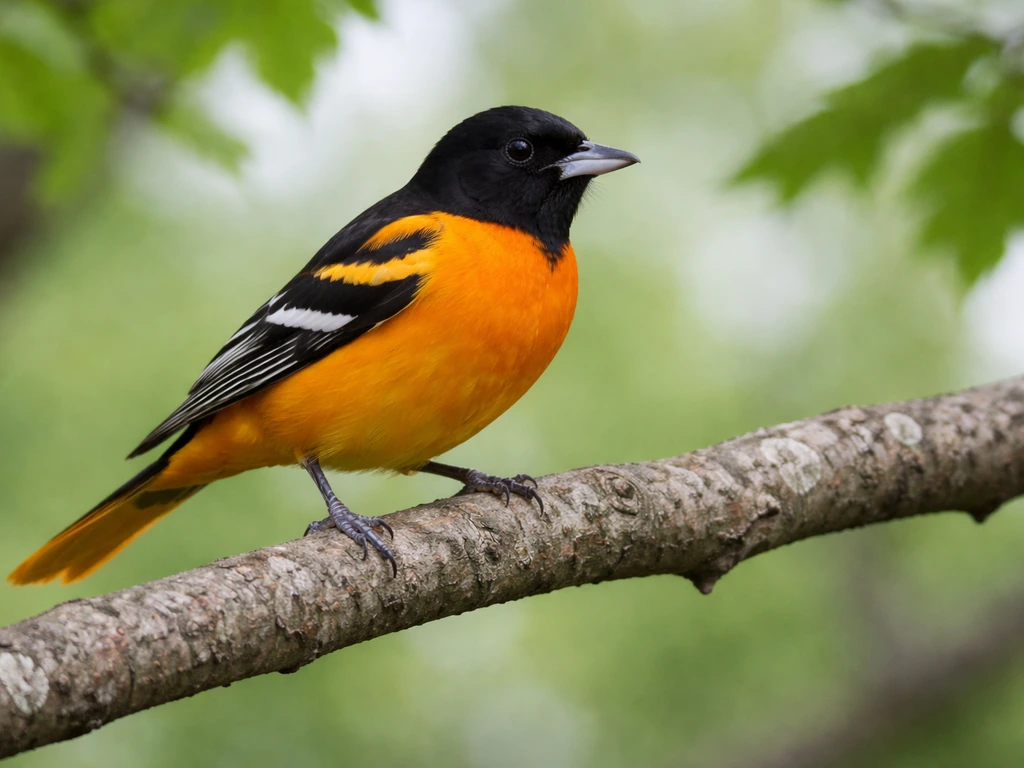
html). That's the specific species, not just a generic oriole. It was designated the state bird by Chapter 54 of the Acts of 1947, and Maryland Code § 7-301 still reads exactly: 'The Baltimore Oriole (Icterus galbula) is the State bird. ' So if you're looking for a quick, confirmed answer, that's it.
West Virginia's state bird is a different species, so it's worth checking the official designation for that state what is the state bird for west virginia. If you meant the purple finch, the state bird question is different and depends on which state you are asking about what state bird is the purple finch. If you mean Maryland's state bird, the answer is the Baltimore Oriole (Icterus galbula) what is the virginia state bird.
If you mean Vermont, the official state bird is the American Goldfinch.
Why Maryland picked the Baltimore Oriole
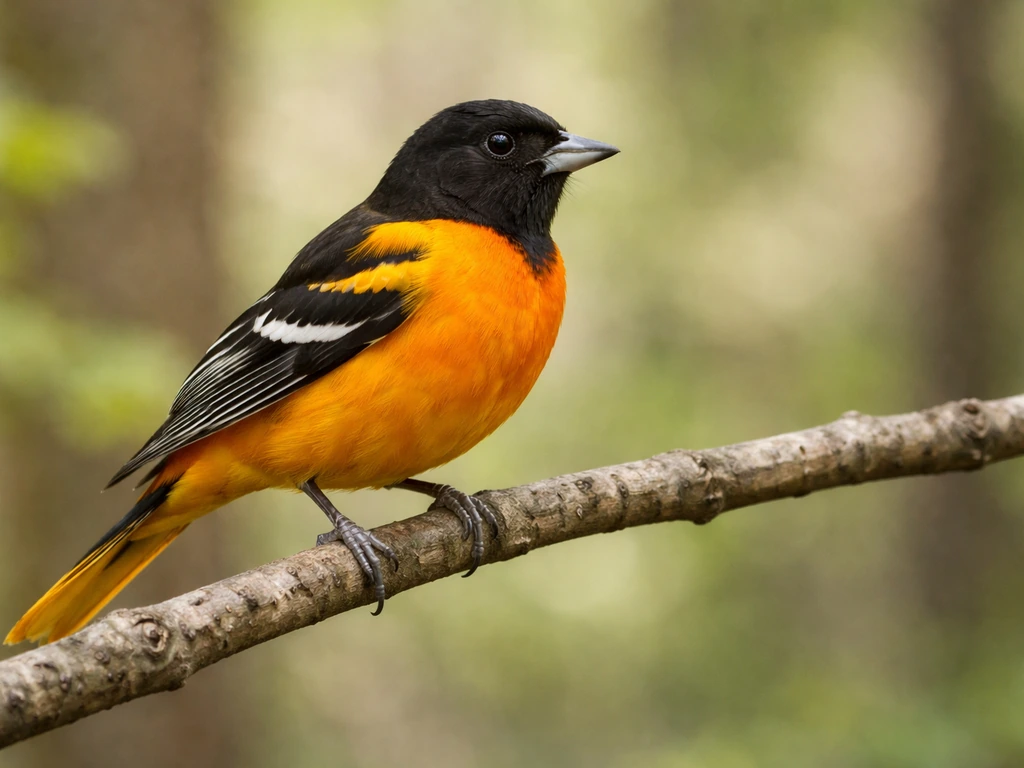
The choice made intuitive sense from the start. The Baltimore Oriole's male plumage is strikingly black and orange, and those colors map directly onto Maryland's heraldry. The Maryland Manual (from the State Archives) notes that the bird's coloring is 'not unlike the colors in the Calvert shield,' referring to the coat of arms of the Calvert family, the Lords Proprietors of colonial Maryland. In fact, the city of Baltimore itself was named after the Calvert family title, Baron Baltimore, so the connection runs deep: the bird, the city name, and the state's own heraldic colors are all part of the same historical thread.
The General Assembly made it official in 1947. By that point, the Baltimore Oriole was already well-known as a symbol tied to Maryland's identity, and the state simply formalized what many Marylanders already treated as a given. The Maryland DNR puts it plainly: 'With striking orange and black plumage, it is no wonder why the Baltimore Oriole was selected as Maryland's state bird.'
How to identify a Baltimore Oriole
The adult male is one of the most unmistakable birds in the eastern United States. He has an entirely black head and back with a vivid orange breast, orange rump, and orange outer tail feathers. The contrast between the jet black and the deep orange is unusually bold compared to other eastern songbirds. If you're looking at a bird and second-guessing whether it's a Baltimore Oriole, the male basically answers the question himself: nothing else in Maryland looks quite like that.
Females and immature birds are less dramatic: mostly yellowish-orange underneath with brownish-olive upperparts and two white wing bars. They can take a little more work to identify, but they still carry that warm orange-yellow tone that stands out among woodland birds.
One naming note worth flagging: older field guides sometimes list this bird as the 'Northern Oriole,' a grouping that combined the Baltimore Oriole with the Bullock's Oriole of the western U.S. The two were once treated as a single species due to overlapping ranges and hybridization, but the current standard name is Baltimore Oriole, which is what Maryland's designation has always used.
Where to find them in Maryland
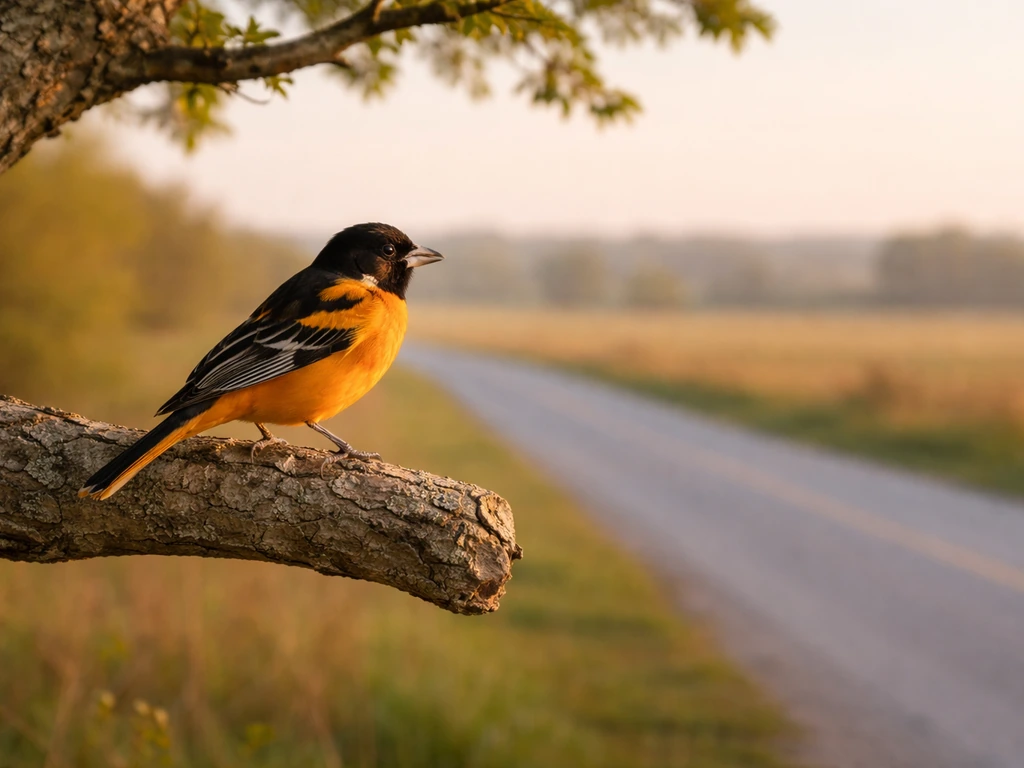
Baltimore Orioles breed throughout Maryland and prefer open areas rather than dense forest interior. Look for them in large trees along country roads, in towns, and at the edges of woods near streams. They're drawn to deciduous and mixed woodland with open edges, which means suburban neighborhoods with mature trees are actually good spots. They're primarily summer visitors; most leave Maryland for the winter, though a small number may linger and visit feeders in the colder months.
What the Baltimore Oriole means for Maryland's identity
State birds are often chosen for one of two reasons: either the bird is distinctive to the region, or it carries symbolic weight tied to the state's history and culture. You might also wonder why this bird was chosen in the first place, which comes down to its bold black-and-orange look and its deep ties to Maryland's identity. The Baltimore Oriole hits both marks.
It breeds across Maryland, it's visually linked to the state's black-and-orange heraldic colors, and it shares its common name with Maryland's largest city. That's a rare triple connection for a state symbol. The Baltimore Orioles baseball team, founded in 1901 and now one of the American League's oldest franchises, reinforced that association for generations of Marylanders even before the bird was formally designated in 1947.
Maryland's state bird and state flower together
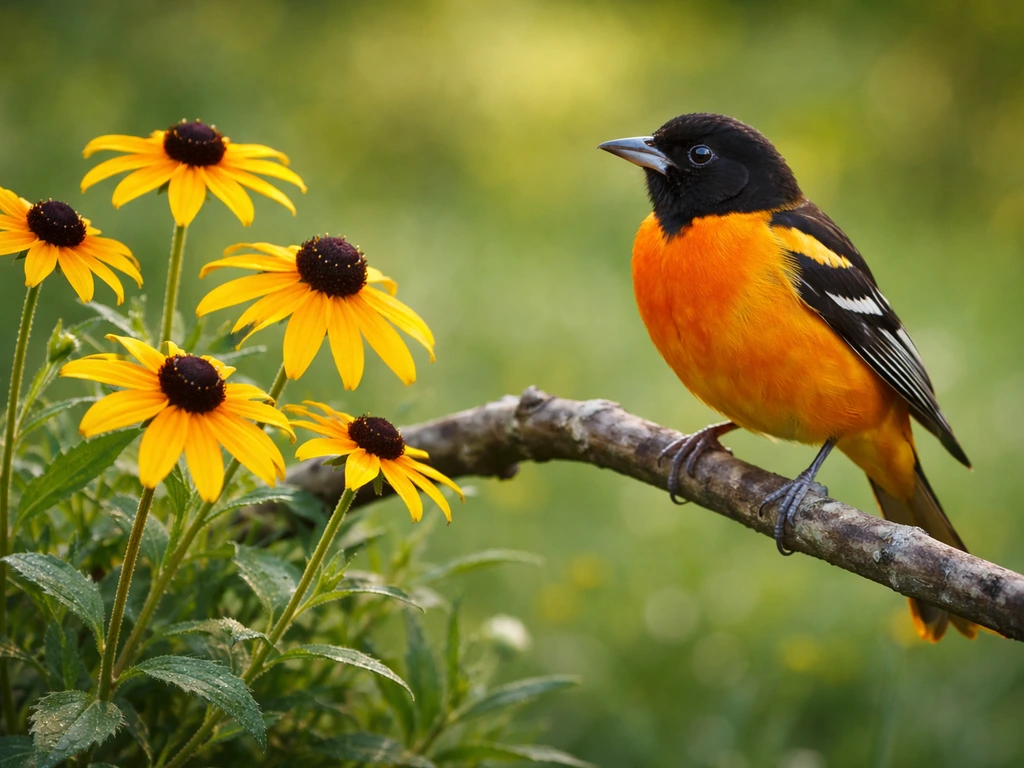
If you searched for Maryland's state bird and flower together, here are both official designations clearly labeled:
| Symbol | Name | Scientific Name | Year Designated |
|---|---|---|---|
| State Bird | Baltimore Oriole | Icterus galbula | 1947 |
| State Flower | Black-Eyed Susan | Rudbeckia hirta | 1918 |
Maryland's state flower is the Black-Eyed Susan (Rudbeckia hirta), officially designated the 'Floral Emblem' by the General Assembly via Chapter 458 of the Acts of 1918, making it one of the earlier state flower designations in U.S. history. The Black-Eyed Susan is a native wildflower with bright yellow petals surrounding a dark brown-black center. It's worth noting that the color combination, yellow and black, echoes Maryland's heraldic colors in the same way the oriole's orange and black do, which gives Maryland's state symbols an unusual visual coherence.
Does any other state share the Baltimore Oriole?
Yes, Louisiana also designates the Baltimore Oriole (Icterus galbula) as its state bird. That puts Maryland in a small group of states that share a state bird species with at least one other state. It's a common pattern across U. S.
state symbols: the Northern Cardinal, for example, is claimed by seven states. The Baltimore Oriole is far less shared, which adds to Maryland's particular connection to the bird. If you're exploring state bird overlap patterns, the situation with closely related orioles and related eastern songbirds like the <a data-article-id="88D147CF-10C6-4EF9-ADAF-CB89B9AB6E04">American Goldfinch (which is New Jersey's state bird</a> and also Washington's) shows just how often states in the same region gravitate toward similar species.
If you're wondering why is the American Goldfinch the Washington state bird, the short version is that Washington also chose a familiar regional finch as an official symbol. Washington's state bird is the American Goldfinch.
For Maryland specifically, the Baltimore Oriole stands as both an ecologically appropriate choice and a symbolically rich one, connecting the state's wildlife, its history, and its largest city under one striking black-and-orange bird.
FAQ
How can I confirm I’m looking at a Baltimore Oriole and not a different orange-and-black bird in Maryland?
If you see an all-black head and back with a vivid orange breast, rump, and outer tail, that strongly points to an adult male Baltimore Oriole. The “look-alikes” most people confuse are other regional orioles, but in Maryland the bold black-and-orange pattern is hard to miss, especially around wooded edges where Orioles forage.
Do female or young Baltimore Orioles look the same as the males?
No. Females and immature birds are usually yellowish-orange underneath with brownish-olive upperparts and two pale white wing bars. If you only recognize the male’s black-and-orange contrast, search for the wing bars and the overall warm, orange-yellow tones instead.
Are Baltimore Orioles in Maryland year-round?
They are primarily summer visitors, so they are most common during the breeding season. Many leave for winter, but a small number can linger and visit feeders in colder months, so timing matters if you’re trying to see one.
Where should I look in Maryland if I want the best chance of seeing one?
Focus on large trees along country roads, town areas, and edges of woods near streams. Orioles favor deciduous or mixed woodland with open edges, so suburban neighborhoods with mature trees can be productive, not just deep forest.
I heard Baltimore Orioles were once called “Northern Oriole.” Is that true?
Older field guides sometimes used “Northern Oriole” as a combined name that included multiple orioles. The modern, standard name is Baltimore Oriole, and Maryland’s state designation uses Icterus galbula, so that is the authoritative term to use.
What if I’m visiting from out of state and someone told me Maryland’s state bird is a different species, like a generic “oriole”?
Maryland’s official state bird is specifically the Baltimore Oriole (Icterus galbula), not “an oriole” in general. If your source does not name the species, it might be describing an informal nickname or a different state’s bird.
Do other states also have the Baltimore Oriole as their state bird?
Yes. Louisiana also designates the Baltimore Oriole (Icterus galbula) as its state bird, so the overlap is real, even though it is less common than shared picks like the Northern Cardinal among multiple states.
If Maryland and another state have the same state bird species, does that mean the birds live in the same places?
Not necessarily. A state symbol can be shared even when local breeding and migration patterns differ by state. To see Baltimore Orioles, use Maryland-specific habitat cues like wooded edges with open spaces and timing during the breeding season rather than assuming year-round presence.
Next Article
What Is Virginia’s State Bird and State Flower?
Virginia’s official state bird is the Northern Cardinal. Includes ID tips, history, and Virginia’s state flower too.