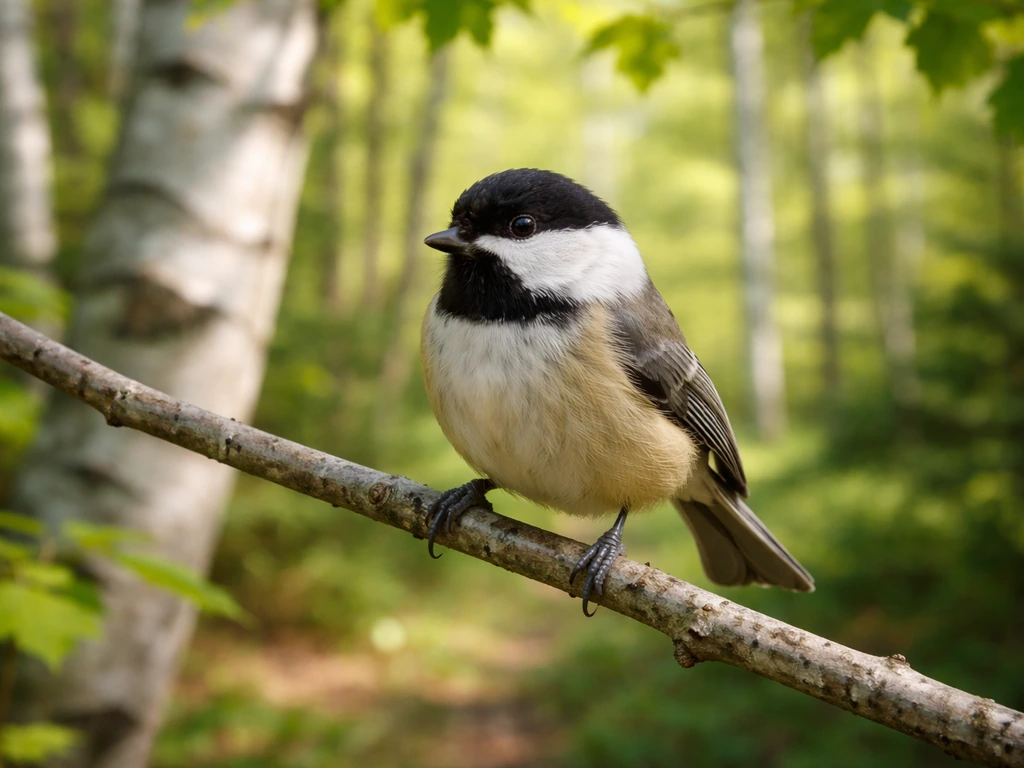
Maine's official state bird is the black-capped chickadee (Poecile atricapillus). The Maine Legislature adopted it in 1927, and the state statutes still read simply: "The state bird shall be the chickadee." If you're looking for a quick, definitive answer, that's it. But if you want to recognize one in the field, understand why Maine picked it, and know where to find it, read on.
What Is the Bird of Maine? Identify the State Bird

Marcus Webb
5 May 2026
Maine's official state bird at a glance
| Detail | Info |
|---|---|
| Common name | Black-capped chickadee |
| Scientific name | Poecile atricapillus |
| Year designated | 1927 |
| Statutory language | "The state bird shall be the chickadee" (Maine Revised Statutes Title 1, §209) |
| Year-round resident? | Yes |
How Maine chose its state bird
The year 1927 was a big one for state birds. Seven states designated official state birds that same year, and Maine was among them, landing on the chickadee. The Legislature's choice was straightforward in one sense: the black-capped chickadee is abundant, beloved, and visible to everyday Maine residents year-round, not just seasonal visitors. The statutes deliberately kept the wording simple, saying only "chickadee" rather than naming a specific species.
That loose wording became a minor point of debate much later. In 2019, the 129th Maine Legislature drafted LD 572 specifically to clarify whether the state bird should be the black-capped chickadee or the boreal chickadee, since both species occur in Maine. Maine Audubon notes that the 1927 law used the word "chickadee" without specifying the species, and that a later effort (LD 572) sought to clarify whether Maine should use the black-capped or boreal chickadee LD 572 clarification debate. The clarification effort never finalized a species change, leaving the original 1927 language intact. In practice, Maine Audubon and the Secretary of State's office treat the black-capped chickadee as the intended state bird, consistent with how Britannica and most official references list it.
How to identify a black-capped chickadee
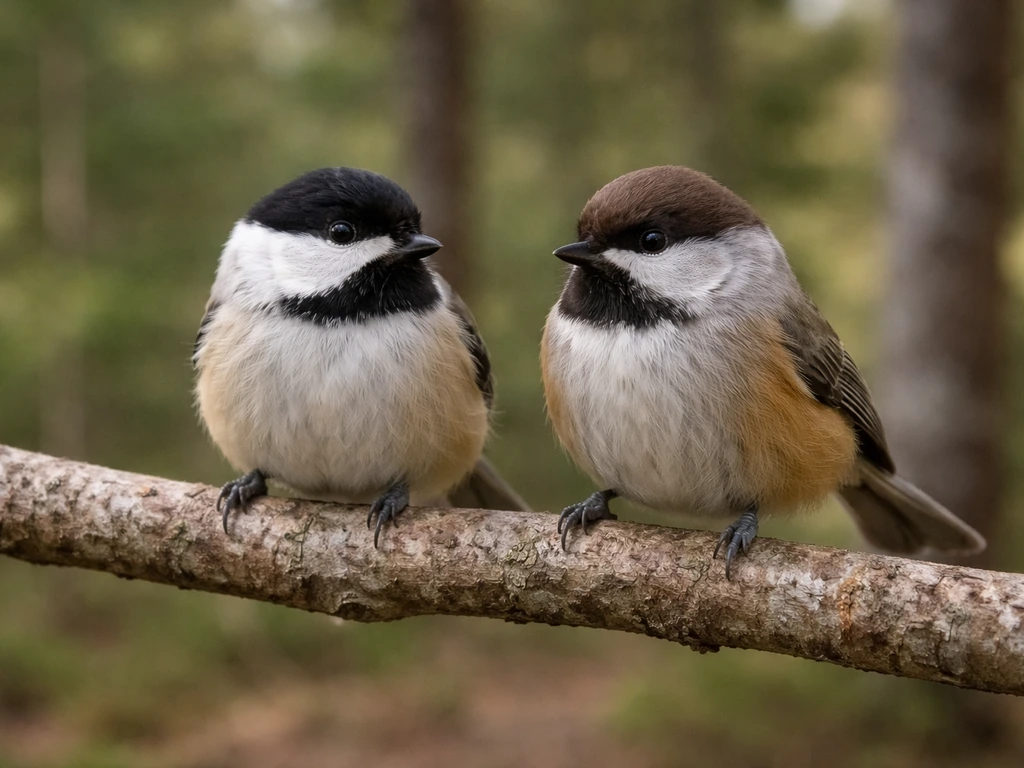
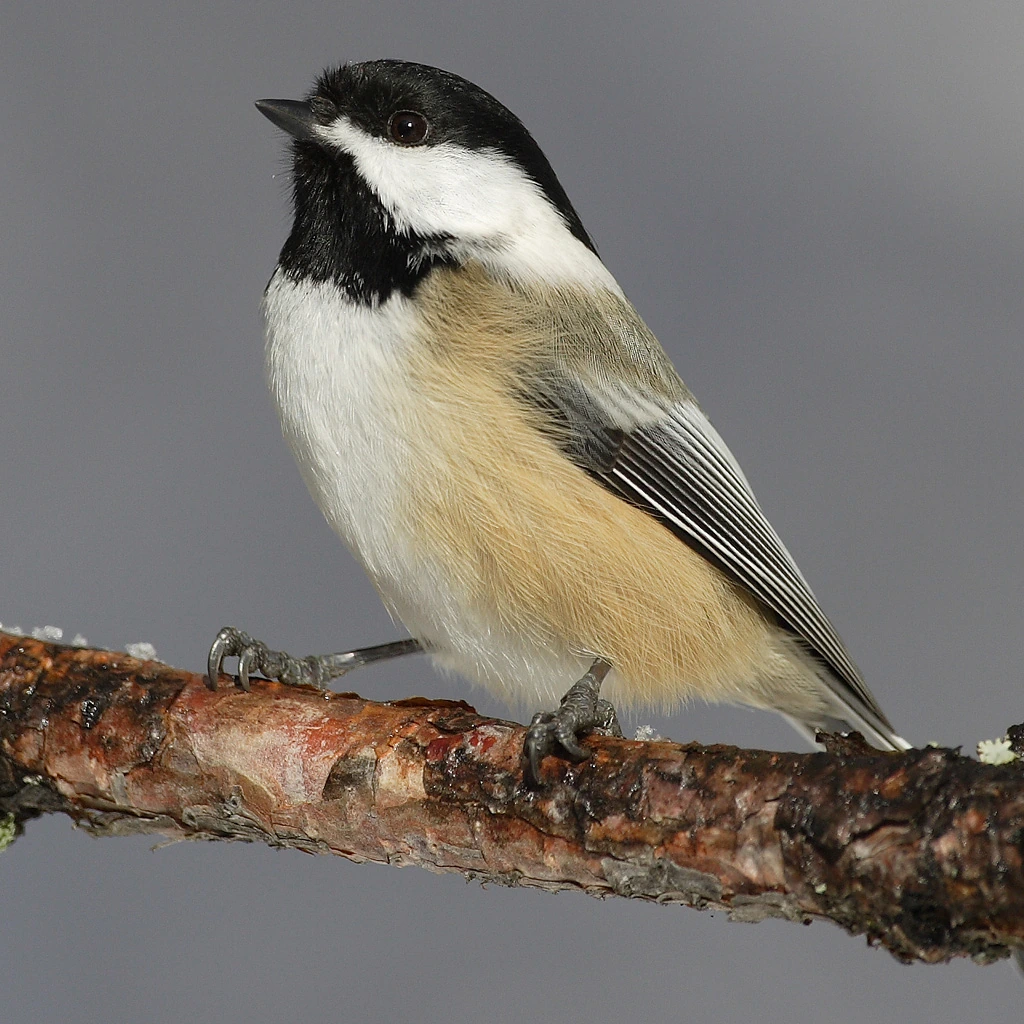
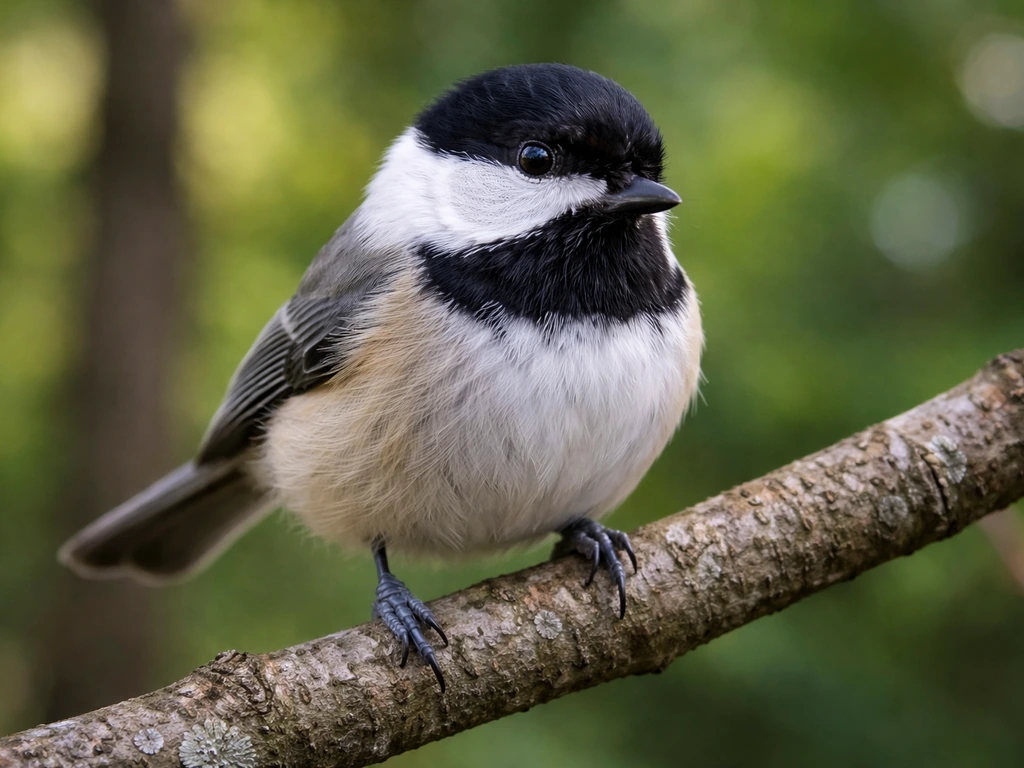
This is one of the easier birds to nail down. Black-capped chickadees are small and compact, running about 4 to 6 inches (10 to 15 centimeters) long, with a short, thin bill. The field marks are bold and simple: a black cap covering the top of the head and extending below the eyes, a matching black bib at the throat, bright white cheeks, a light gray back and tail, and a white belly. In winter, the sides pick up a noticeable deep brown wash, which is actually a useful seasonal clue if you're out in Maine from November through March.
The easiest lookalike to mix up in Maine is the boreal chickadee, which is found at higher elevations and in deeper boreal forest. The single most reliable distinction: the boreal chickadee has a brown cap, not a black one. If the cap is clearly black and crisp, you have a black-capped chickadee. Their call is also distinctive, the familiar "chick-a-dee-dee-dee" that most people already know from feeders and woodland walks.
Key identification traits at a glance
- Size: 4 to 6 inches long, small and compact
- Black cap extending below the eyes
- Black bib at the throat
- Bright white cheeks
- Light gray back and tail
- White belly; sides turn deep brown in winter
- Short, thin bill
- Distinctive "chick-a-dee-dee-dee" call
Where to find black-capped chickadees in Maine
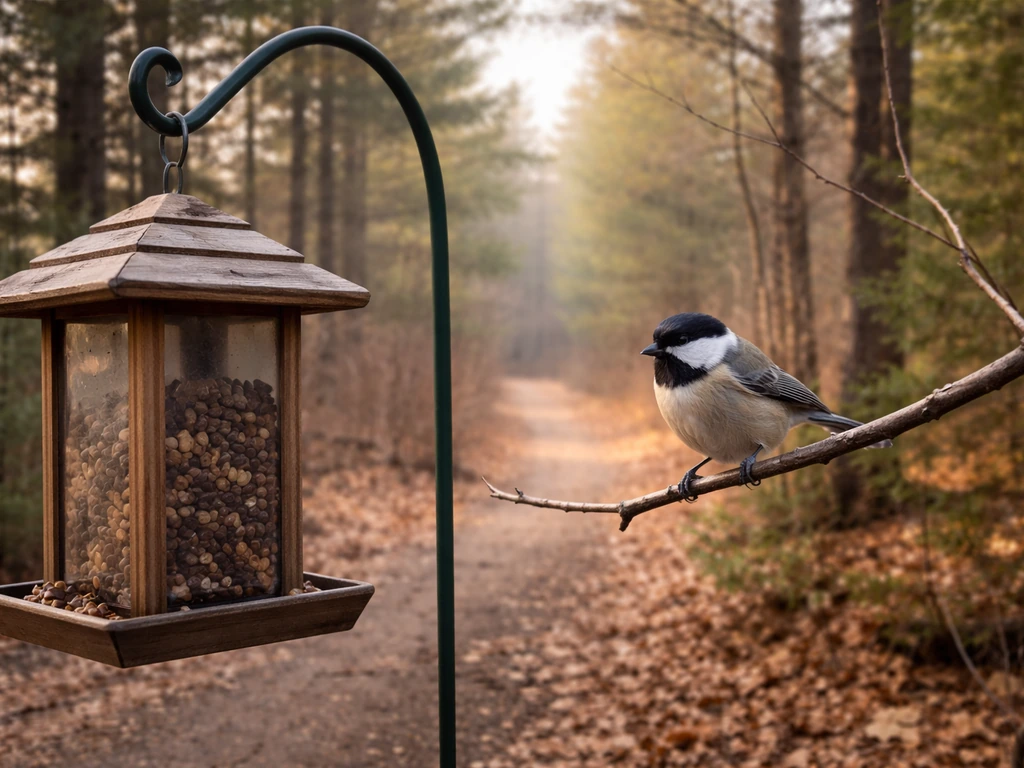
The honest answer is: almost anywhere in Maine with trees. Black-capped chickadees are year-round residents statewide, so you don't need to time a trip around migration. Their preferred habitat is mixed hardwood-coniferous forest, particularly where birches and alders are part of the mix. They're most common along forest edges and in open woodland rather than deep interior coniferous stands (that's more the boreal chickadee's territory). Beyond wild areas, they show up reliably in small woodlots, suburban backyards, and at feeders throughout the colder months.
If you want a specific destination, East Point Audubon Sanctuary in southern Maine is one of the best spots, and black-capped chickadees are among the birds known to nest there in summer. Baxter State Park is worth visiting if you want to compare and contrast the two chickadee species: the park's boreal forest zones hold boreal chickadees, making it one of the few places in Maine where you can reliably see both side by side. For boreal chickadees specifically, the roads near Nesowadnehunk Field Campground and high-elevation terrain above 2,500 feet are productive. Staying below that elevation almost always keeps you in black-capped territory.
In winter, your best bet is a backyard feeder with sunflower seeds or a mix. Chickadees are bold at feeders and will often be the first bird to arrive after you fill one up. The Maine Bird Atlas, a statewide mapping project run from 2018 to 2022 by the Maine Department of Inland Fisheries and Wildlife in partnership with Maine Audubon and the Maine Natural History Observatory, confirmed breeding and wintering distribution for black-capped chickadees across essentially the entire state. A winter 2020, 21 issue of the Black-capped Chronicle newsletter from Maine’s Bird Atlas program discusses black-capped materials and supports the atlas’s broader goal of documenting Maine’s breeding and wintering birds The Maine Bird Atlas.
Fun facts and why this bird matters to Maine
Black-capped chickadees have some genuinely impressive survival tricks. They cache seeds throughout fall, hiding individual seeds in different spots across their territory, and they can remember those cache locations for up to eight months. To survive Maine's brutal winters, they also use a form of controlled hypothermia at night, lowering their body temperature to conserve energy. These aren't just interesting trivia points; they explain why the bird thrives in a state with some of the harshest winters in the eastern U.S.
Culturally, the chickadee has been one of Maine's most visible symbols. For years, it appeared on Maine vehicle license plates, a design that was eventually replaced due to peeling and security issues rather than any lack of affection for the bird. If you're wondering about Oregon specifically, the state bird shown on the Oregon driver’s license is the meadowlark. If you’re wondering what bird is on the Maine license plate, it’s the black-capped chickadee Maine vehicle license plates. The chickadee's familiarity and year-round presence are exactly what made it a practical choice for a state symbol in 1927, and that logic still holds.
Which other states share the black-capped chickadee

Maine isn't alone in claiming the black-capped chickadee as its state bird. Massachusetts designated the same species as its state bird in 1941, making the two New England neighbors the only states to share this particular bird. If you're asking how to draw the Massachusetts state bird, the key is to start with the chickadee's small body and bold black cap and then add the white cheeks and gray wings. Massachusetts chose the black-capped chickadee in 1941, and you can read about the specific factors behind that decision next Massachusetts designated the same species as its state bird in 1941. Massachusetts designated it as its state bird in 1941 Massachusetts designated the same species as its state bird. Maine got there first by 14 years. If you're exploring related state-bird comparisons, Massachusetts has its own story around how and why the black-capped chickadee was chosen, and it's a slightly different legislative path than Maine's.
| State | State Bird | Year Designated |
|---|---|---|
| Maine | Black-capped chickadee (Poecile atricapillus) | 1927 |
| Massachusetts | Black-capped chickadee (Poecile atricapillus) | 1941 |
No other U.S. state uses the black-capped chickadee as its official state bird, which makes the Maine-Massachusetts pairing a notable regional overlap. It's the kind of detail that comes up frequently on state-bird comparison pages and in trivia about shared state symbols. If you're curious about how Massachusetts made its choice, or want to dig into similar regional overlaps for states like Oregon, those comparisons are worth exploring alongside this one. Oregon's state bird is the Western meadowlark, and you can see how its choice reflects the state's wildlife and landscape.
Your next steps for finding or learning more
- Head to any mixed woodland in Maine and listen for the "chick-a-dee-dee-dee" call. You'll likely hear one before you see it.
- Set up a sunflower seed feeder in winter. Black-capped chickadees are among the first regulars to show up.
- Visit East Point Audubon Sanctuary (Biddeford Pool) for a reliable southern Maine sighting, including during the breeding season.
- Go to Baxter State Park if you want to compare black-capped and boreal chickadees in the same trip. Focus lower elevations for black-capped, higher boreal forest zones for boreal.
- Use eBird to pull up the black-capped chickadee's year-round abundance map for Maine. It gives a fast visual of where the species is most concentrated by season.
- If you're interested in the state-bird designation story, look up Maine Audubon's article on the 2019 LD 572 debate. It's a good read on how a simple 1927 law created decades of interesting ambiguity.
FAQ
Does Maine’s state bird law say “chickadee” or “black-capped chickadee,” and which one is actually used?
In official wording, Maine’s statutes say “chickadee,” but the intended species is the black-capped chickadee. A later attempt in 2019 to clarify whether to switch to the boreal chickadee did not change the original 1927 language, so “black-capped” is what state agencies and most references treat as the practical match.
What is the fastest way to tell a black-capped chickadee from a boreal chickadee in Maine?
If you are trying to identify one quickly at close range, focus on the cap color and the throat. A black cap that looks crisp and bold, along with a black bib at the throat and white cheeks, points strongly to the black-capped chickadee, while a clearly brown cap is the most reliable giveaway for the boreal chickadee.
What should I put in a feeder to attract Maine black-capped chickadees?
For feeding, use sunflower seeds (whole or chips) or a mixed songbird blend that includes sunflower. Chickadees are more likely to come to feeders when they feel safe and conditions are calm, and they often arrive early in winter after you fill the feeder, rather than waiting for very mild weather.
Do I need to visit Maine in a specific season to see the state bird?
Yes, you can still see them outside of prime birding times because they are year-round residents. The bigger seasonal change is behavior and visibility, in winter they are bolder at feeders and their brown wash on the sides becomes more noticeable from roughly November through March.
If both chickadee species occur in Maine, where should I look to have the best chance of black-capped chickadees?
While both species can occur in Maine, they are not evenly distributed by habitat. Black-capped chickadees are generally more associated with mixed woodlands and forest edges, while boreal chickadees tend to show up more in boreal forest conditions and at higher elevations, so location matters as much as time of year.
How can I confirm my chickadee identification if the bird is moving a lot or the lighting is bad?
A single observation is enough for casual identification, but if you want to verify reliably, check for multiple traits: cap color, cheek color, and whether the overall pattern looks like a black-and-white face with a gray body. Also listen, the call pattern “chick-a-dee-dee-dee” is commonly associated with chickadees and can support your ID, especially when lighting is poor.
Which kinds of places in Maine give the highest odds for seeing the state bird, and where can I compare both chickadee types?
If you want a destination that increases your odds, pick places that combine trees with open woodland edges, since black-capped chickadees are common there. For a structured comparison of both species, Baxter State Park is particularly useful because it includes boreal forest zones where boreal chickadees can be found alongside black-capped chickadees.
What practical steps improve my chances of seeing chickadees, especially in winter?
There is no special “legal” or formal viewing rule, but for practical success, plan to look around established feeding sites in winter and note the bird’s behavior. Chickadees will often approach quickly and perch at accessible heights, and you may see frequent caching behavior when conditions allow, especially in late fall.
Next Article
What Is Maine's State Bird? Bird ID, History, Facts
Get the answer to what is Maine state bird, plus ID tips, habitat, and the history of its official designation.