West Virginia's official state bird is the Northern Cardinal (Cardinalis cardinalis), adopted in 1949 via House Concurrent Resolution No. 12. It's one of the most recognizable birds in the eastern United States, and it's been representing the Mountain State for over 75 years.
What Is the State Bird for West Virginia? Answer and ID

Marcus Webb
26 Apr 2026
West Virginia's Official State Bird
The Northern Cardinal became West Virginia's state bird on March 7, 1949, when the legislature passed House Concurrent Resolution No. 12. What made this designation unusual was how it happened: rather than a simple legislative vote, state officials opened the decision to public input from schoolchildren and civic organizations. The cardinal won the poll by more than 11,000 votes, beating out 10 other competing bird species. That kind of public participation gave the designation a grassroots legitimacy that many state symbols don't have.
How to Spot (and Hear) a Northern Cardinal
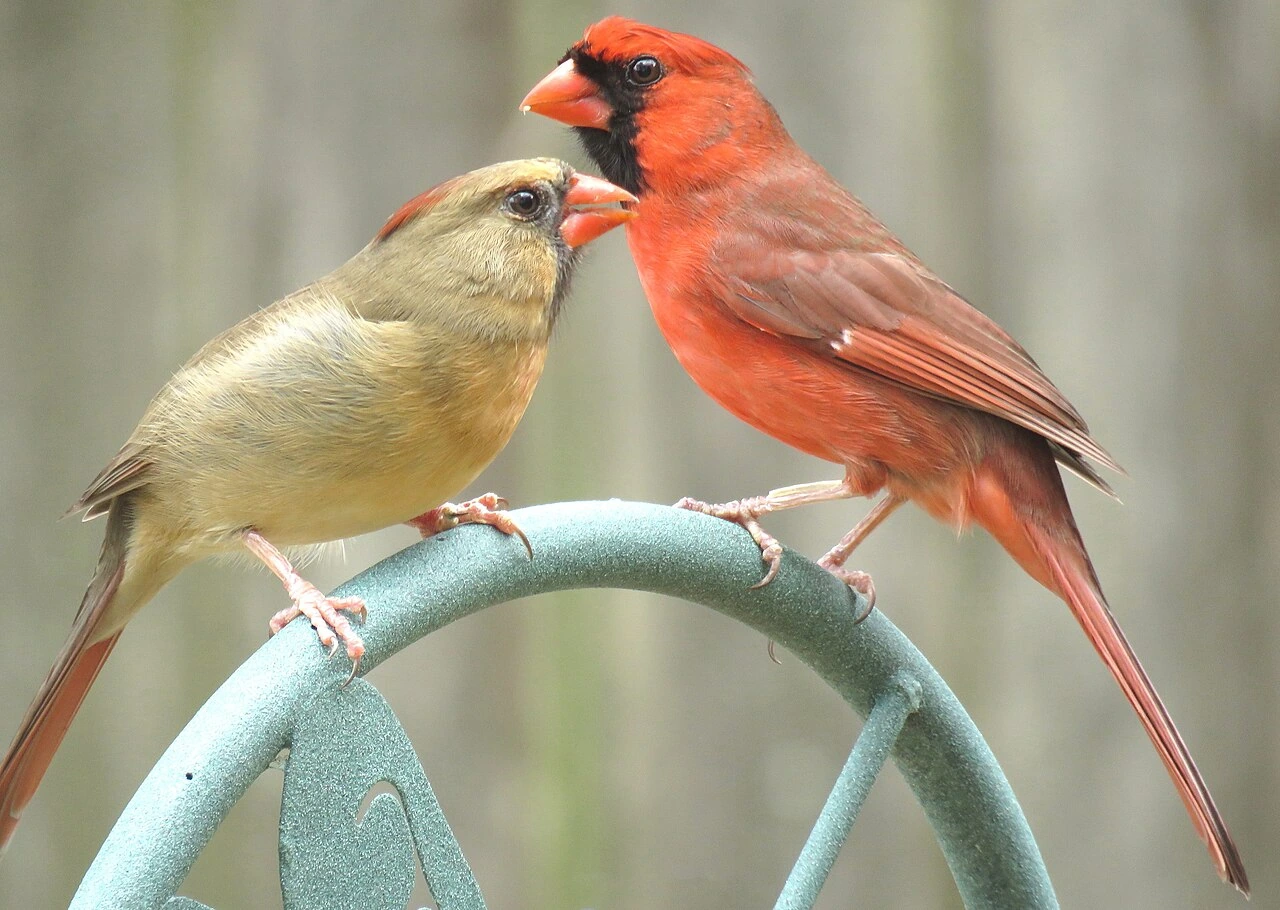
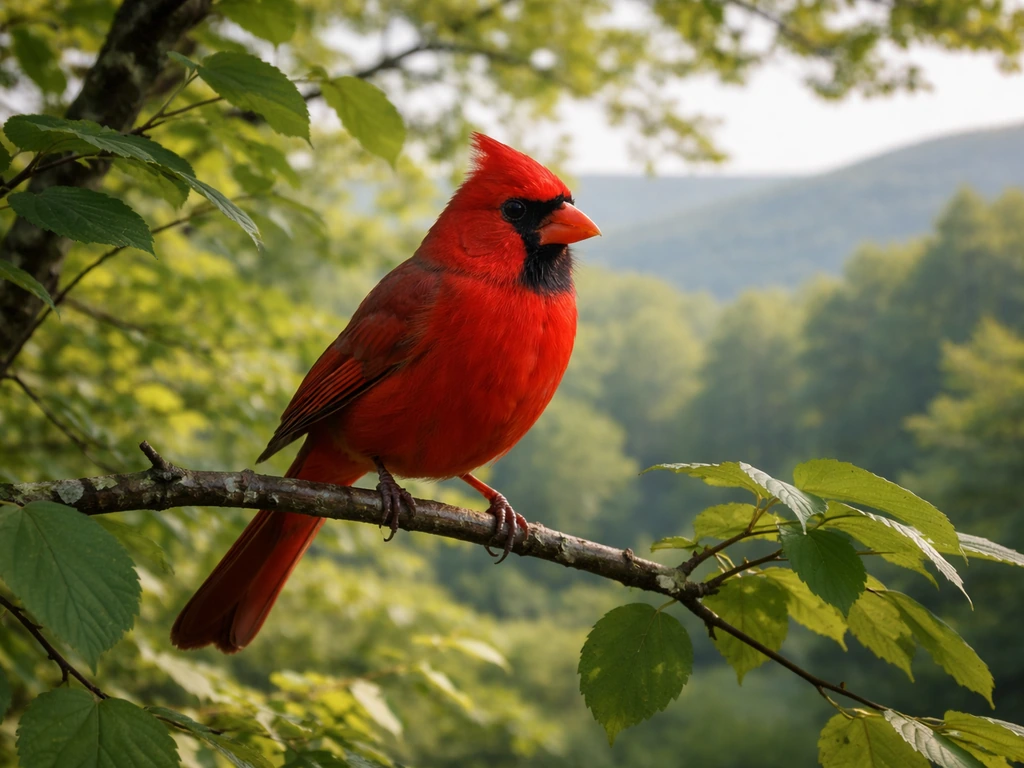
The male Northern Cardinal is hard to miss. He's a brilliant scarlet red from head to tail, with a distinctive black mask around his face and throat, a prominent pointed crest on top of his head, and a thick, cone-shaped orange-yellow bill built for cracking seeds. Females are a warm buff-brown with reddish tinges on the crest, wings, and tail, and the same bold crest and thick bill shape. Both sexes are fairly large for songbirds, with long tails and a habit of sitting slightly hunched while pointing the tail straight down.
You're most likely to find cardinals in dense shrubby areas: forest edges, overgrown fields, hedgerows, backyard feeders, and marshy thickets. They thrive almost anywhere in the eastern US where there are dense bushes for nesting, which makes them a common suburban and rural bird throughout West Virginia year-round. They don't migrate, so you can spot them in every season.
The song is loud and clear, often described as "cheer, cheer, cheer" or "birdy, birdy, birdy." They also give a sharp metallic "chip" call that's easy to learn. During courtship, males and females will actually sing together, swaying back and forth on a perch. The male also feeds the female early in the breeding season, which makes them fun to watch at feeders in spring.
Why West Virginia Chose the Cardinal
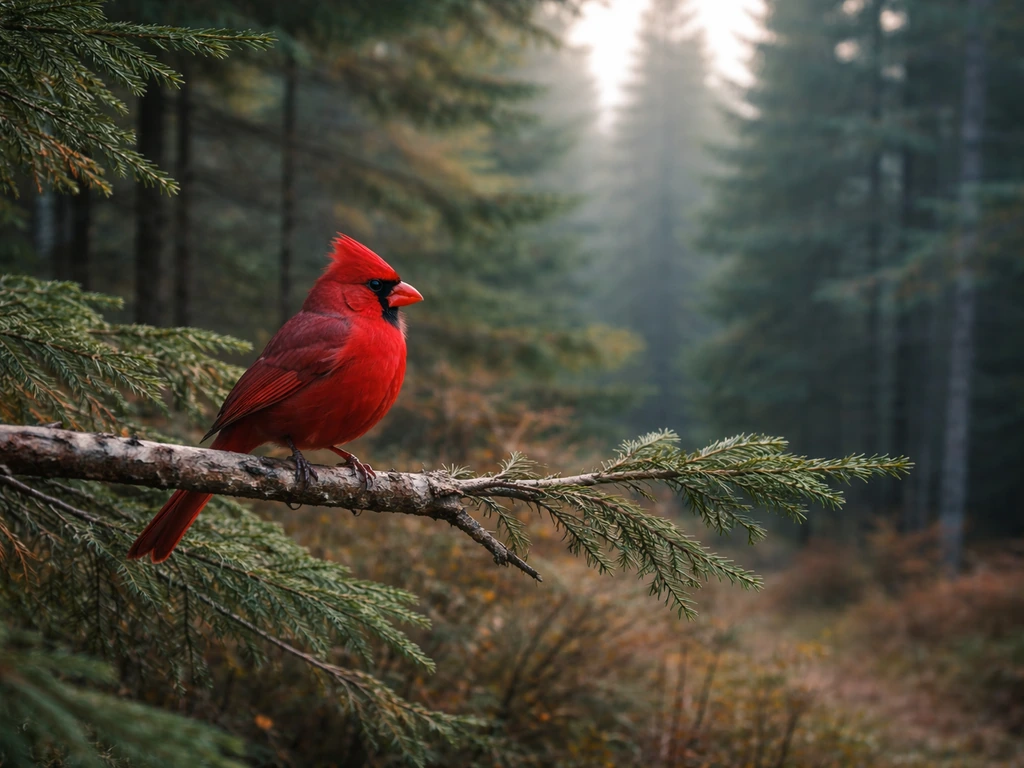
The cardinal's appeal comes down to a few things working together. It's a permanent resident, meaning West Virginians see it every single month of the year, not just during a seasonal visit. Its scarlet red color is unmistakable even in winter snow, making it a genuinely symbolic image. The bird's recognizability was specifically noted during the 1949 selection process, with the male's striking red coloring and black eye mask tied directly to why residents and organizations favored it as a symbol of the state.
The selection also came at a time of growing public interest in West Virginia's wildlife and natural heritage. By involving schools and civic groups in the vote, the state connected the bird symbol to community identity, not just government decree. The cardinal beat out a competitive field of 10 other birds, which tells you it wasn't a default choice but a genuinely popular one.
The History Behind the 1949 Designation
House Concurrent Resolution No. 12 was passed by the West Virginia Legislature on March 7, 1949. The West Virginia Legislature’s Kids Page explains that House Concurrent Resolution 12, passed on March 7, 1949, authorized public school pupils and civic organizations to name the state bird, which was the Northern Cardinal blank" rel="noopener noreferrer">House Concurrent Resolution No.. The resolution specifically authorized pupils from public schools and civic organizations to participate in naming the state bird, a process that reflected the era's broader interest in civic engagement around state symbols. The legislature formalized whichever bird emerged from that public polling process, and the Northern Cardinal came out on top by a convincing margin.
The official designation is documented by the West Virginia Legislature's resolution records, the West Virginia State Museum's state symbols page (which lists the species as Cardinalis cardinalis, adopted 1949), and the e-WV West Virginia Encyclopedia. If you want to verify it directly, the West Virginia Legislature's resolution history interface lets you look up House Concurrent Resolution No. 12 from 1949 and access the original enactment language.
The Cardinal Is a Popular Choice Across the Region
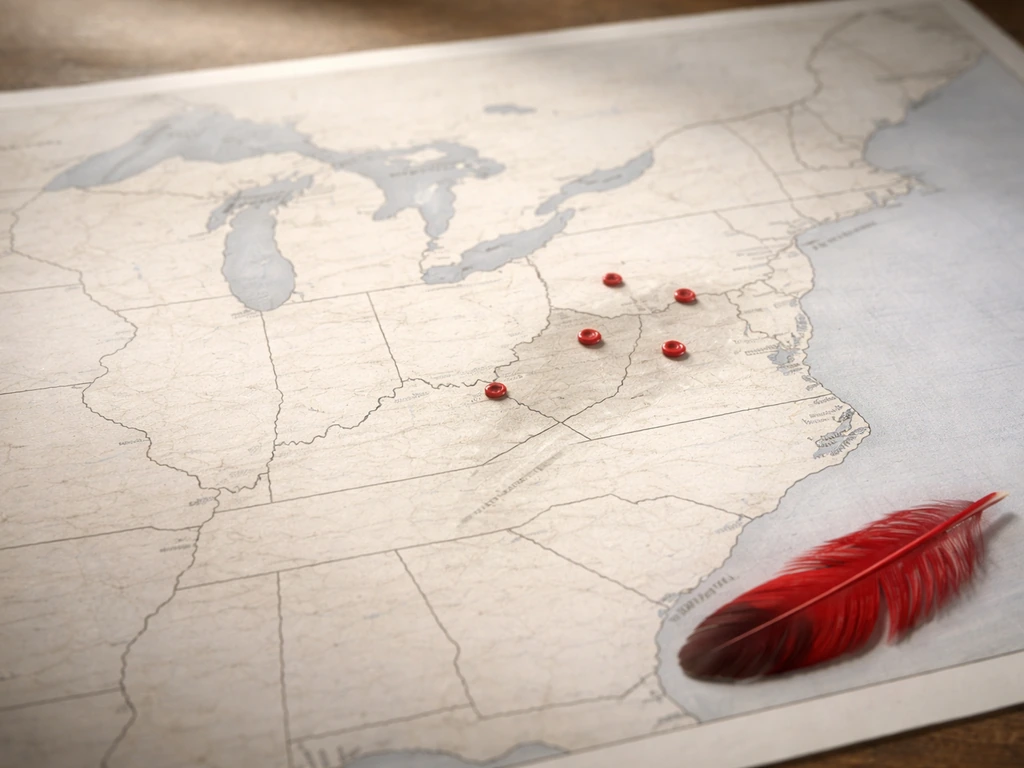
West Virginia isn't alone in honoring the Northern Cardinal. It's actually one of the most shared state birds in the country, claimed by seven states total. Illinois, Indiana, Kentucky, North Carolina, Ohio, and Virginia all share the same designation. Virginia's state bird is the Northern Cardinal as well, so it shares the same designation as neighboring West Virginia what is the virginia state bird. That's a notable concentration in the eastern and midwestern United States, which makes sense given the cardinal's natural range. Interestingly, Virginia, West Virginia's neighbor and the state from which it separated during the Civil War, shares the exact same state bird.
| State | State Bird | Year Adopted |
|---|---|---|
| West Virginia | Northern Cardinal | 1949 |
| Virginia | Northern Cardinal | 1950 |
| Kentucky | Northern Cardinal | 1926 |
| Ohio | Northern Cardinal | 1933 |
| Indiana | Northern Cardinal | 1933 |
| Illinois | Northern Cardinal | 1929 |
| North Carolina | Northern Cardinal | 1943 |
Kentucky was actually the first state to designate the cardinal as its state bird back in 1926, and several others followed over the following decades. West Virginia's 1949 adoption puts it toward the later end of that group. The overlap doesn't diminish the symbol for any individual state, but it's a useful reminder that state bird selection often reflected regional wildlife patterns and popular sentiment rather than uniqueness for its own sake. If you're exploring related state birds, Virginia's designation and Maryland's choice of the Baltimore Oriole make for an interesting regional comparison. Maryland's state bird is the Baltimore Oriole.
How to Confirm the Official Designation
If you need to verify this for a school project, trivia, or any official purpose, here's where to look:
- West Virginia Legislature Resolution History: Search for House Concurrent Resolution No. 12, year 1949, to find the original enactment record directly from the legislature's official records system.
- West Virginia State Museum: The state symbols page lists all official state designations including the bird, with the species name Cardinalis cardinalis and the 1949 adoption year.
- e-WV: The West Virginia Encyclopedia: A reliable secondary source that confirms the cardinal became the state bird in 1949.
- West Virginia Legislature Blog: The post titled 'Symbols of the Mountain State Resolved by Public Opinion' gives detailed background on how the 1949 resolution came together and why the cardinal won.
- This site's state bird reference pages: For quick comparisons with neighboring states like Virginia, Maryland, Kentucky, and Ohio, the individual state pages here provide standardized facts about each bird and its designation.
The Northern Cardinal is a well-documented, unambiguous choice for West Virginia, with a clear legislative record going back to 1949. Whether you're a student, a birder, or just settling a trivia dispute, the answer is solid: it's the cardinal, and it's been official for over 75 years.
In a West Virginia Reddit thread, people also discussed the Northern Cardinal as the state bird and shared local, first-hand reactions to the choice it 's the cardinal, and it's been official for over 75 years. .
Purple finches are not the state bird of West Virginia, but you can learn more about what state bird is the purple finch in this related guide. You might also be wondering why the American goldfinch was selected as New Jersey's state bird why is the American goldfinch New Jersey state bird. Vermont has its own official state bird, which is different from the Northern Cardinal what is the state bird for vermont.
For Washington State, the answer to what is washington's state bird is a different species altogether the cardinal.
FAQ
Is West Virginia’s state bird the Northern Cardinal, or can it be another red bird people confuse it with?
The Northern Cardinal is the state bird, and the key thing to remember is that it is a single species designation, not a color-based nickname. West Virginia’s official name uses the scientific species Cardinalis cardinalis, so you should reference the cardinal rather than a similar-looking songbird (for example, avoid confusing it with rose-breasted grosbeaks).
When exactly was the Northern Cardinal adopted as West Virginia’s state bird?
The public polling and adoption process happened in 1949, and the official effective date is tied to the March 7, 1949 adoption of House Concurrent Resolution No. 12. If a worksheet asks “when was it adopted,” use the 1949 year and the date as the tightest answer.
Can I see the state bird in West Virginia in winter, or is it only a seasonal visitor?
Cardinals are non-migratory in West Virginia, so you typically can see them year-round. For best odds during any season, look near dense shrubs or feeders with sunflower seeds, and focus around forest edges and hedgerows rather than open fields.
What field marks should I use to confirm I’m looking at a Northern Cardinal?
A male Northern Cardinal is the easiest to identify, with its bright red body and black face mask plus a pointed crest. If you are trying to confirm a sighting for a project, note the thick, cone-shaped orange-yellow bill and the long tail that often points downward when the bird perches.
How can I verify the state bird answer for a school project without relying on memory?
Yes, if you need to verify for an assignment, the most direct approach is to reference the specific 1949 legislation, House Concurrent Resolution No. 12, and confirm the species named in the enactment language. General websites can be helpful, but the resolution record is the primary authority.
Does it matter that other states also have the Northern Cardinal as their state bird?
The Northern Cardinal is a shared state bird, claimed by multiple states including neighboring Virginia. That means your answer is still correct for West Virginia, but it helps to mention that several states honor the same species, especially when a teacher asks about “uniqueness.”
If I can hear it but don’t see it well, is the sound enough to identify the Northern Cardinal?
The Northern Cardinal’s “cheer” song and metallic “chip” call are common, but don’t rely on sound alone if you need a definite identification. Combine vocal cues with visual field marks like the crest and bill shape, since other birds can mimic short calls.
What’s the safest way to write the answer on a form (common name, scientific name, or both)?
If you are entering the answer into a form, spellings like “cardinal” are often accepted, but the safest entry is “Northern Cardinal (Cardinalis cardinalis).” Also, avoid listing a category like “state bird: songbirds,” because the official designation is one specific species.
Next Articles
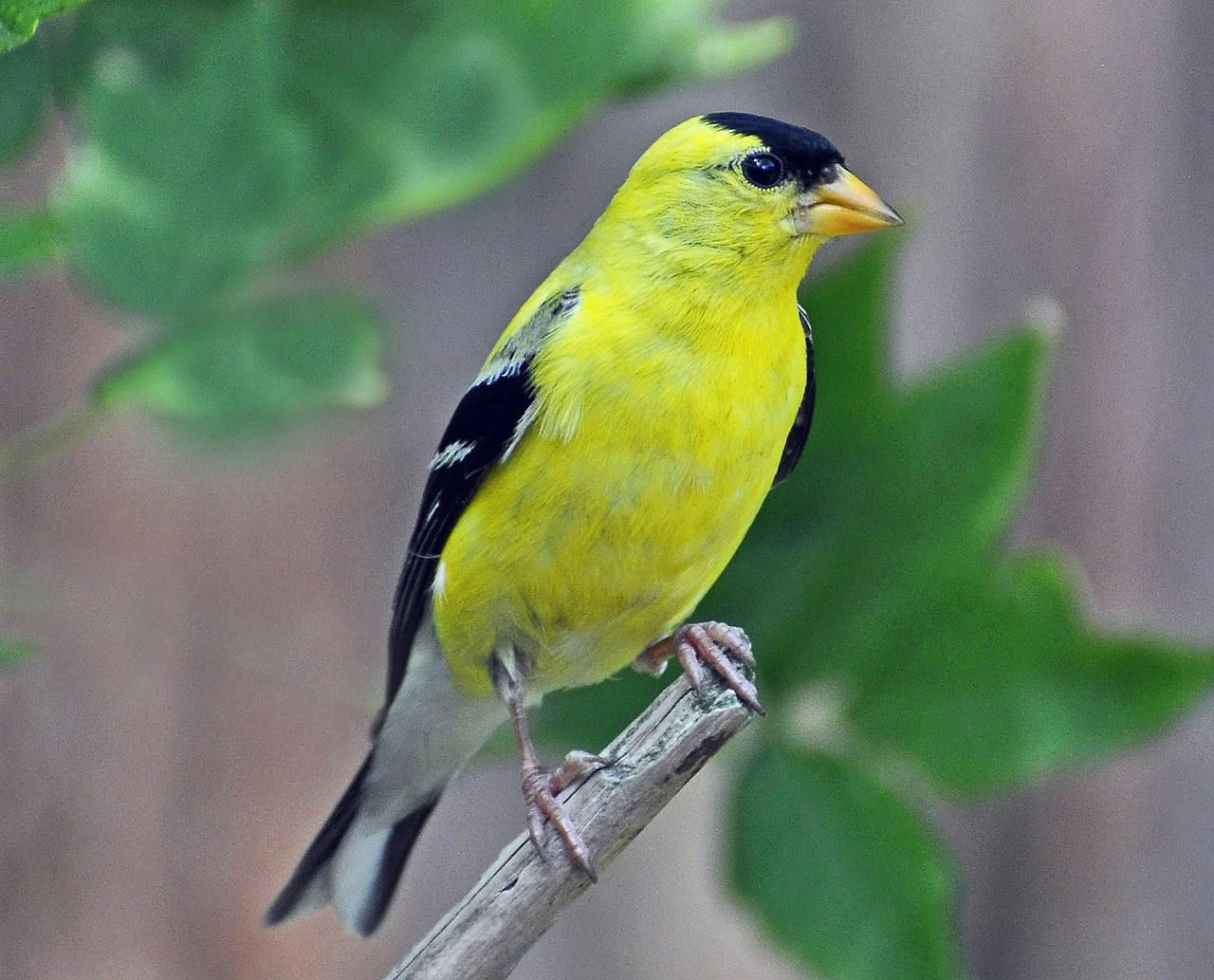
What Is Washington State’s State Bird? Compare With DC
Learn what Washington state’s bird is, spot it, and compare with Washington DC’s state bird plus the state flower.
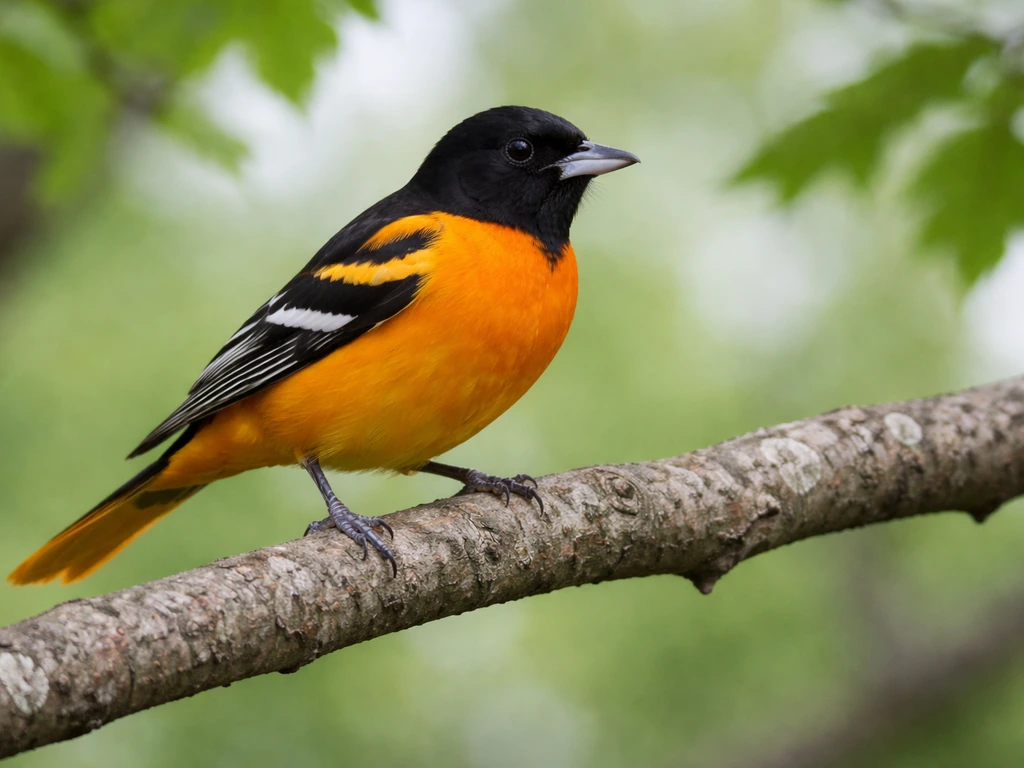
What Is Maryland’s State Bird? Official Bird, ID Tips
Maryland state bird is the Baltimore Oriole, with ID tips and history plus the official state flower facts.
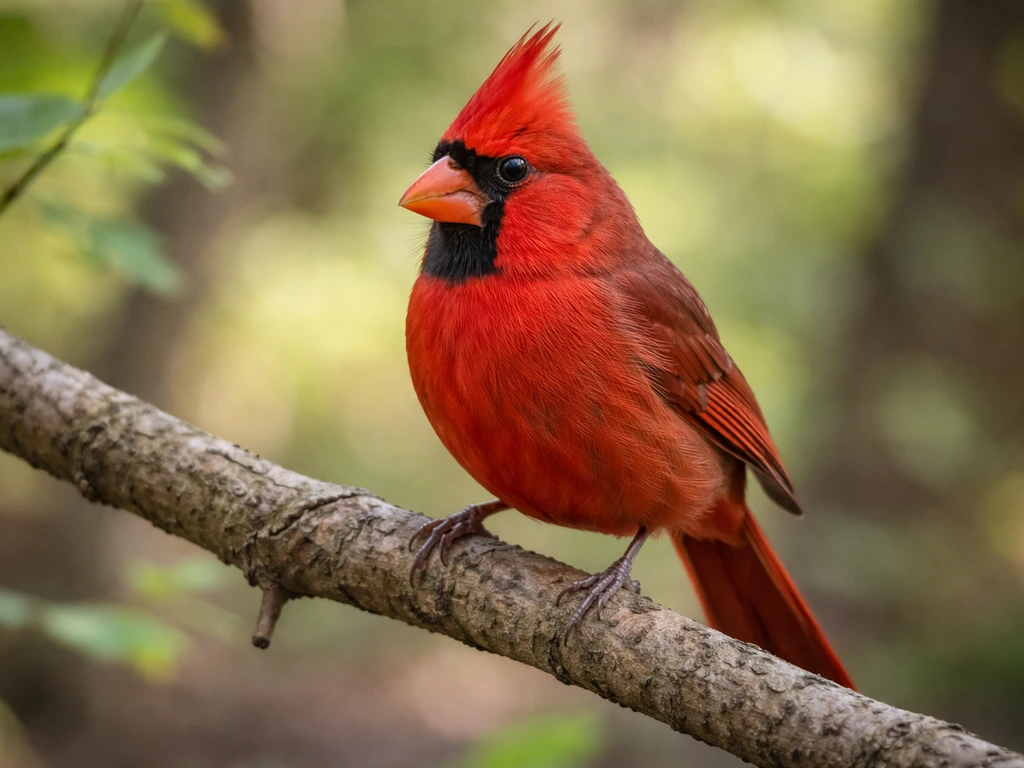
What Is Virginia’s State Bird and State Flower?
Virginia’s official state bird is the Northern Cardinal. Includes ID tips, history, and Virginia’s state flower too.