Minnesota chose the common loon (Gavia immer) as its state bird in 1961 because no other bird is more tightly woven into the identity of the state's lake country. This is why many people search for what is the Minnesota state bird and end up learning about the common loon. Minnesota supports the largest common loon population in the lower 48 states, and the loon's haunting call, striking plumage, and deep connection to freshwater lakes made it an obvious and fitting symbol for a state defined by more than 10,000 of them.
Why Is the Loon the State Bird of Minnesota? The Answer

Marcus Webb
9 Jun 2026
The official role the loon plays as Minnesota's state bird
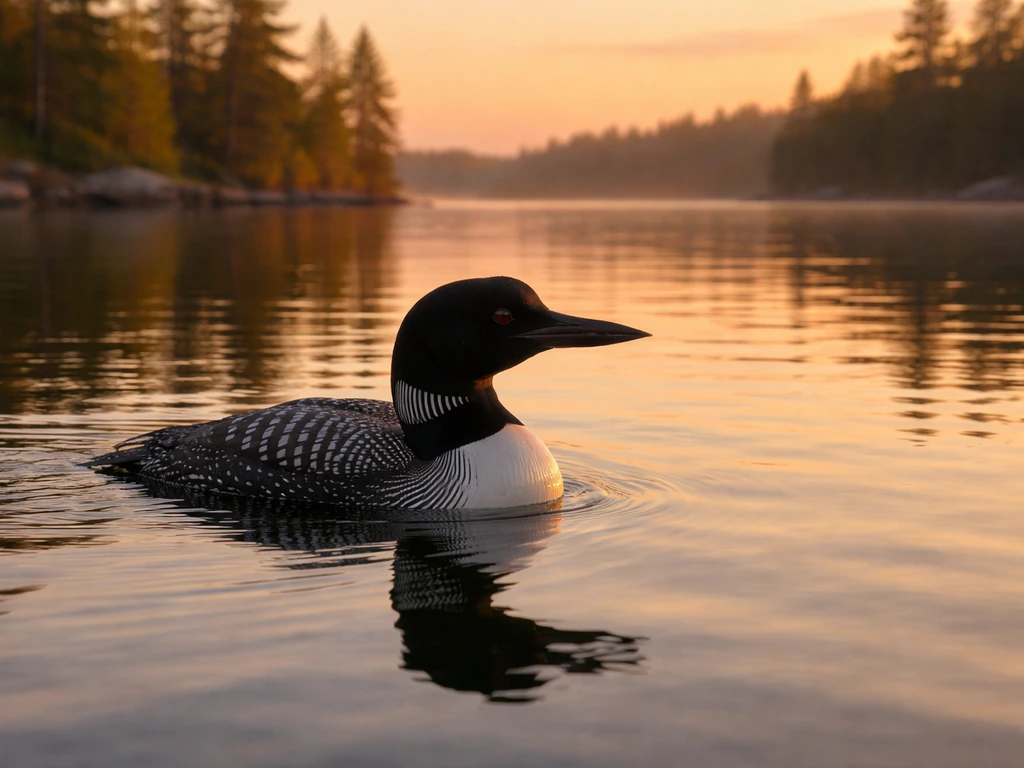
Under Minnesota Statutes Section 1.145, the law reads plainly: "The loon, Gavia immer, is the official bird of the state of Minnesota." That designation has been on the books since 1961 and has never been seriously challenged, which tells you something about how well the choice landed. The loon is not a generic pick or a compromise animal. It is genuinely the bird most associated with Minnesota's landscape, and residents strongly identify with it. You will find it on license plates, in resort logos, and as the default symbol of Minnesota's north woods lake experience. Minnesota's official bird status also answers the bigger question, is the loon a state bird?
When and why Minnesota made it official
The loon became Minnesota's state bird on March 13, 1961, when Governor Elmer L. Andersen signed House File No. 79 into law as Chapter 76 of that year's Session Laws. The act was titled simply: "An act designating the loon as the official state bird." Elizabeth M. Bachmann's article "Minnesota's New State Bird, the Loon" documented the decision and its context at the time, reflecting genuine public and legislative enthusiasm for the choice.
The reasoning behind selecting the loon was practical and symbolic at the same time. Minnesota is lake country, and loons are lake birds. They nest on freshwater lakes across the northern part of the state, their calls are the defining sound of a Minnesota summer night, and their presence is a reliable indicator of clean water. Picking the loon was a way of saying: this is what Minnesota looks and sounds like.
What the common loon actually looks like
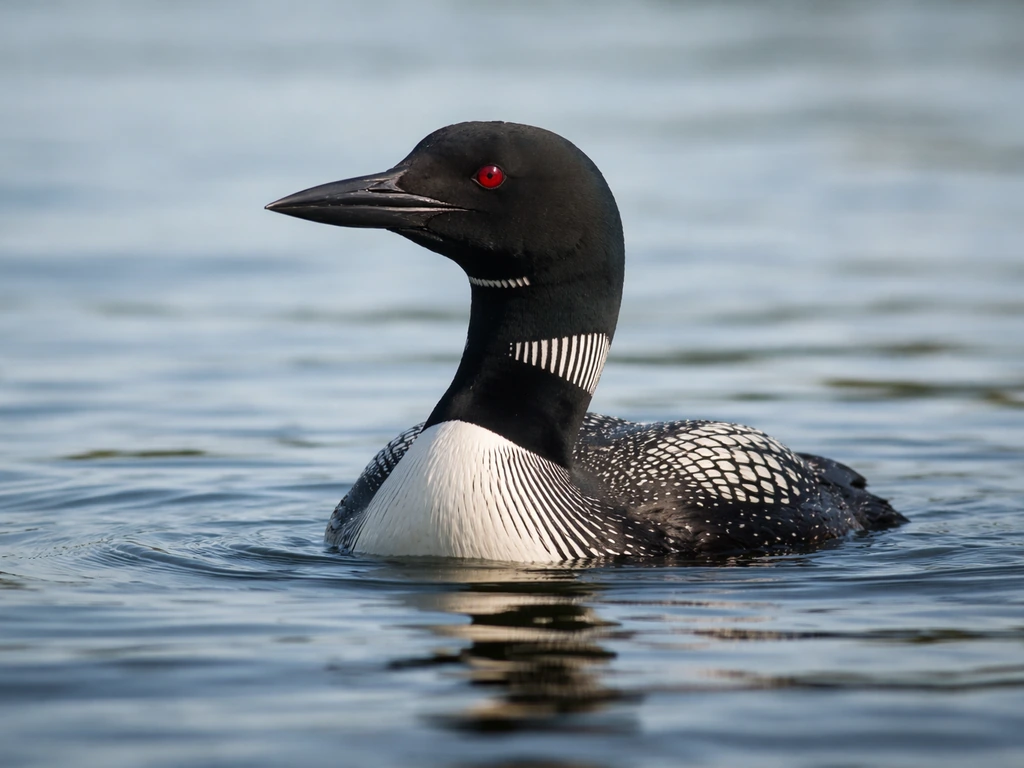
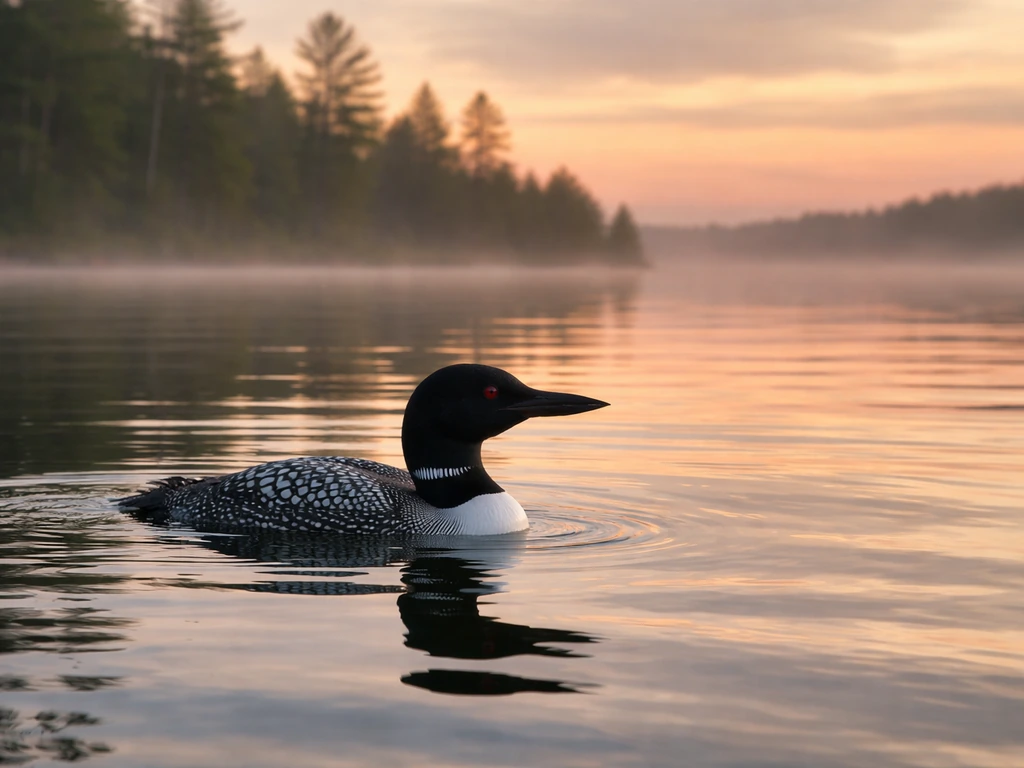
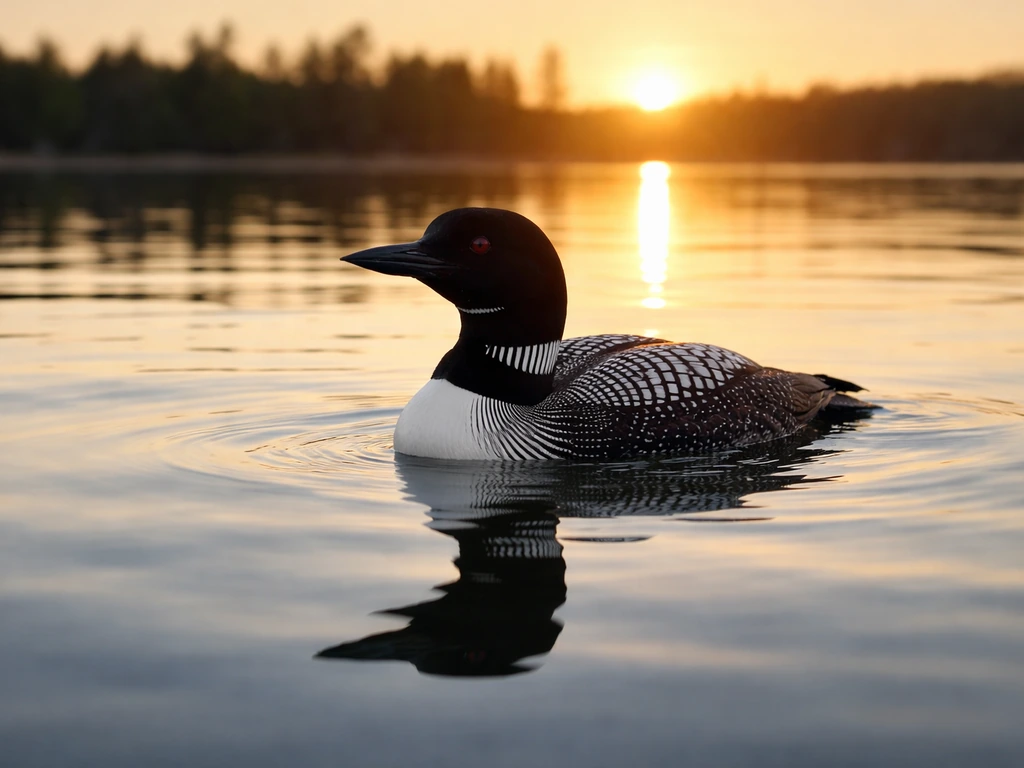
If you want to recognize a loon on a Minnesota lake, here is what you are looking for. In breeding plumage (spring and summer, which is when you will see them on Minnesota lakes), the common loon has a black head with an iridescent green sheen, a thick black bill, a distinctive red eye, a black-and-white spotted back, and a clean white breast. The pattern is bold and unmistakable once you have seen it.
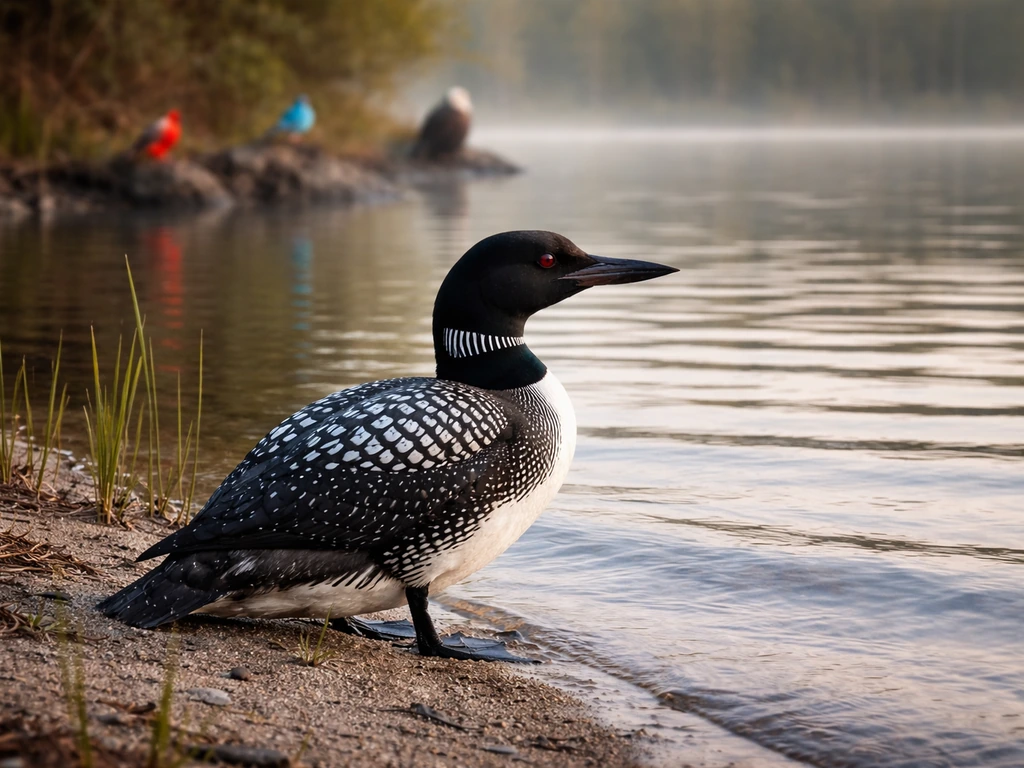
One of the most useful identification cues is the bird's posture on water. Loons ride low and sleek, not high and buoyant like a duck. Their legs are set far back on their body, which makes them extraordinarily efficient swimmers and divers but produces an awkward, almost helpless shuffle on land. In flight, they look stretched out, with a long neck and bill extended straight ahead. They need a long running start across the water to get airborne, which is another easy behavioral clue.
Cultural and historical ties to Minnesota
The loon's call, a wavering wail that carries across a quiet lake at dusk, is probably the single most evocative sound in Minnesota's cultural memory. Indigenous communities in Minnesota, particularly Ojibwe people, have long recognized the loon as a significant figure in stories and clan traditions. European settlers and later generations of Minnesotans built an entire "north woods" identity around the loon's presence on lake country, from the Boundary Waters Canoe Area Wilderness to the resort lakes of Aitkin, Cass, and Crow Wing counties.
Because loons require clean, clear water to hunt fish by sight, they have also become an important conservation symbol. The Minnesota DNR's Minnesota Loon Monitoring Program relies on volunteers to track populations statewide, and the data collected directly informs habitat and water quality policy. The loon's status as state bird gives that conservation work a cultural weight it would not otherwise have. When the DNR talks about protecting Minnesota's state bird, people listen.
Lead poisoning from fishing tackle is the most documented modern threat to loons in Minnesota. Loons swallow fish whole, and when they grab a fish that has swallowed a lead sinker or jig, they absorb that lead. blank" rel="noopener noreferrer">The Minnesota Pollution Control Agency's "Get the Lead Out" rebate program and the DNR's Loon Restoration Project both address this directly, and the state bird designation is part of what makes those programs politically and culturally viable. The Minnesota DNR's Minnesota Loon Restoration Project describes restoring common loons in Minnesota, including objectives to blank" rel="noopener noreferrer">reduce loon exposure to lead-based fishing tackle.
How the loon compares to other states' bird choices
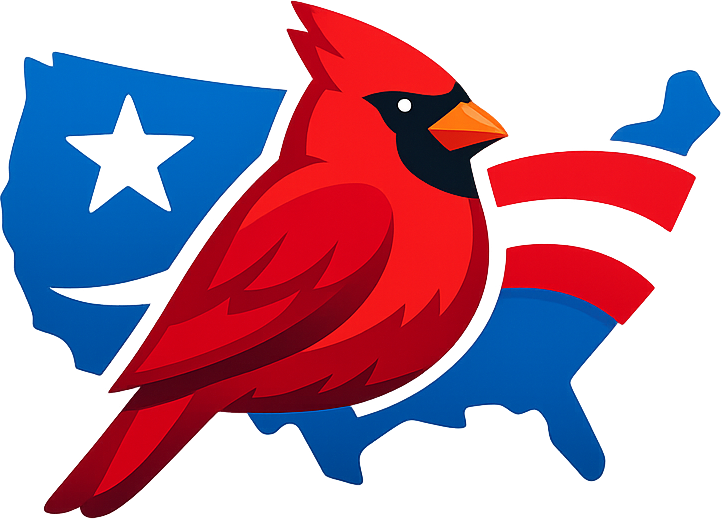
One thing that makes Minnesota's choice stand out is its uniqueness. No other U.S. state has designated the common loon as its state bird. If you are solving a common Minnesota state bird crossword clue, the answer is the common loon. Minnesota has this one all to itself. Compare that to the northern cardinal, which is the state bird of seven states (Illinois, Indiana, Kentucky, North Carolina, Ohio, Virginia, and West Virginia), or the western meadowlark, which is claimed by six states. Choosing a bird that only one state claims signals a genuine regional identity rather than a default selection.
| Bird | Number of states claiming it | Example states |
|---|---|---|
| Northern cardinal | 7 | Illinois, Indiana, Kentucky, Ohio, Virginia, West Virginia, North Carolina |
| Western meadowlark | 6 | Kansas, Montana, Nebraska, North Dakota, Oregon, Wyoming |
| Northern mockingbird | 5 | Arkansas, Florida, Mississippi, Tennessee, Texas |
| Common loon | 1 | Minnesota (exclusive) |
The common loon is also a more ecologically specialized choice than most state birds. It is a diving waterbird in the family Gaviidae, built specifically for underwater pursuit of fish on clear freshwater lakes. That specificity is exactly what makes it such an accurate symbol for Minnesota. The bird does not just happen to live there. Minnesota is genuinely one of the best places on the planet for this species to thrive.
How to spot a loon in Minnesota
If you want to see a common loon in the wild, Minnesota is one of the easiest places in the lower 48 to do it. The state's north-central and northeastern lake regions are the core breeding habitat. Lakes in Itasca, St. Louis, Cook, Lake, and Cass counties are reliable spots. The Boundary Waters Canoe Area Wilderness and Voyageurs National Park are particularly good because loons there are relatively accustomed to human presence from canoes and boats.
Timing matters. Loons arrive on Minnesota lakes in April or early May after wintering along ocean coasts, and they begin nesting by late May. Summer (June through August) is when you are most likely to see adults with chicks riding on their backs near shore. Fall migration begins in September and most loons have left by late October or November.
How you approach matters as much as where you go. The American Birding Association recommends staying at least 150 feet (about 45 meters) from a loon, especially near a nest. Loons nest right at the water's edge, and boat wakes can flood nests and destroy eggs. The Minnesota DNR's "Be Loon Aware" guidelines ask people to view loons from a distance and never approach a nest on foot or by boat. You will actually see more loon behavior if you stay back and watch quietly.
- Best regions: north-central and northeastern Minnesota, especially Itasca, St. Louis, Cook, and Cass counties
- Best time of year: May through August for breeding adults; June and July for adults with chicks
- Best locations: Boundary Waters Canoe Area Wilderness, Voyageurs National Park, larger clear-water lakes
- Viewing distance: stay at least 150 feet (45 m) away, especially near shoreline nesting areas
- What to listen for: the wail, tremolo, and yodel calls, most active at dawn and dusk
Facts worth knowing and myths worth clearing up
A common question is whether the loon is endangered or rare. In Minnesota, it is neither. The state hosts more common loons than any other state except Alaska, and populations have been stable or recovering in recent decades thanks to monitoring and habitat protection programs. The loon is, however, sensitive to water quality, lead contamination, and shoreline disturbance, which is why it functions as a useful environmental indicator species.
People sometimes assume the loon was chosen purely for romantic or sentimental reasons. The designation in 1961 did carry genuine public affection, but the biological case was solid: Minnesota genuinely has more loons than almost anywhere else in the country, loon habitat and Minnesota lake habitat are essentially synonymous, and the bird was already deeply embedded in the state's cultural identity before the legislature voted. The symbolism followed the reality, not the other way around.
Another myth: loons are ducks. They are not. Loons belong to a completely separate order, Gaviiformes, and are more closely related to penguins and albatrosses in evolutionary terms than to ducks or geese. That distinction matters for identification. If you are trying to figure out whether common loon is Minnesota's state bird (and it absolutely is), the related question of which other states share the loon as their symbol has a clean answer: none. Minnesota stands alone on this one.
If you want to go deeper, the Minnesota DNR's Volunteer Loon Watcher Survey lets anyone participate in population monitoring by counting loons on a designated lake. It is one of the more accessible ways to connect with the state bird beyond just watching from a canoe. The program counts all loons on a given lake, including birds arriving and departing, and the data feeds directly into statewide conservation planning. It is a concrete next step if the loon's role as Minnesota's state symbol has moved from interesting fact to something you actually want to engage with.
FAQ
Is Minnesota’s state bird the same species of loon you might see in other regions?
The official state bird is the common loon (Gavia immer), but in Minnesota you might also hear about other loons. Minnesota’s designation is specifically for the common loon species, even if you spot different loon species outside the state’s typical breeding season.
How does Minnesota define the loon in the law, just by the name or also scientifically?
The state bird law identifies the loon by its scientific name as well as the common name. That matters because “loon” can be used generically, but the Minnesota statute points to Gavia immer as the official bird.
Is the loon state bird designation only about northern Minnesota lake areas?
Unlike some state symbols that are tied to a particular county or event, the loon designation is statewide. You do not need to live near a specific lake district to be eligible for related programs, and the monitoring and education efforts are designed to cover the whole state.
If loons are not endangered, why is Minnesota still focused on protecting them?
In the state, loons are not considered endangered, but they are still vulnerable to specific threats. The most direct at-home risk is lead from fishing tackle, and the second biggest issue is shoreline disturbance and water quality changes that reduce their ability to hunt by sight.
What should I do if a loon on a Minnesota lake looks “different” from what I expect?
If you see a loon with a different-looking pattern or behavior, don’t assume it is the wrong species immediately. Loon appearance shifts by season and age (for example, juvenile plumage looks different from the classic black-and-white breeding look). The best approach is to compare timing, plumage stage, and overall shape and diving behavior.
What’s the safest way to watch a loon from a boat or on shore?
Do not approach a loon to get a closer look, especially near shore edges where nests are likely. Keeping distance helps adults stay on task and reduces stress, and it also lowers the chance of nest flooding from waves or boat wakes.
When are the best weeks to see loon chicks on Minnesota lakes?
Loons arrive in spring and begin nesting later in May, so the best sightings are usually early summer. If you go too early in April you may only catch passing birds, and if you go late fall you might see migration or none at all depending on conditions.
How can I tell from conditions on the water whether loons will actually do well there?
The loon's presence is tied to how well it can hunt fish by sight in clear freshwater. If you notice widespread algae blooms or very murky water, that can signal conditions loons struggle with, which is one reason conservation efforts often emphasize water quality.
What are practical ways to support loon conservation if I am not a researcher?
If you want to help beyond watching, you can get involved with local monitoring and education options. Even if you do not join a long-term program, many efforts rely on volunteer counts and reporting, which supports statewide decisions.
Next Articles
Is the Loon a State Bird? States With Loon Symbols
Yes or no: which US states list a loon as official state bird, plus exact species names and how to verify your state.

Common Minnesota State Bird Crossword Clue Answer
Answer for common Minnesota state bird crossword clue, plus word-count and spelling checks to confirm fit fast.
Common Loon State Bird: Why Minnesota Chose It
Find why Common Loon is Minnesota state bird, how to spot it, and how to verify the official designation.