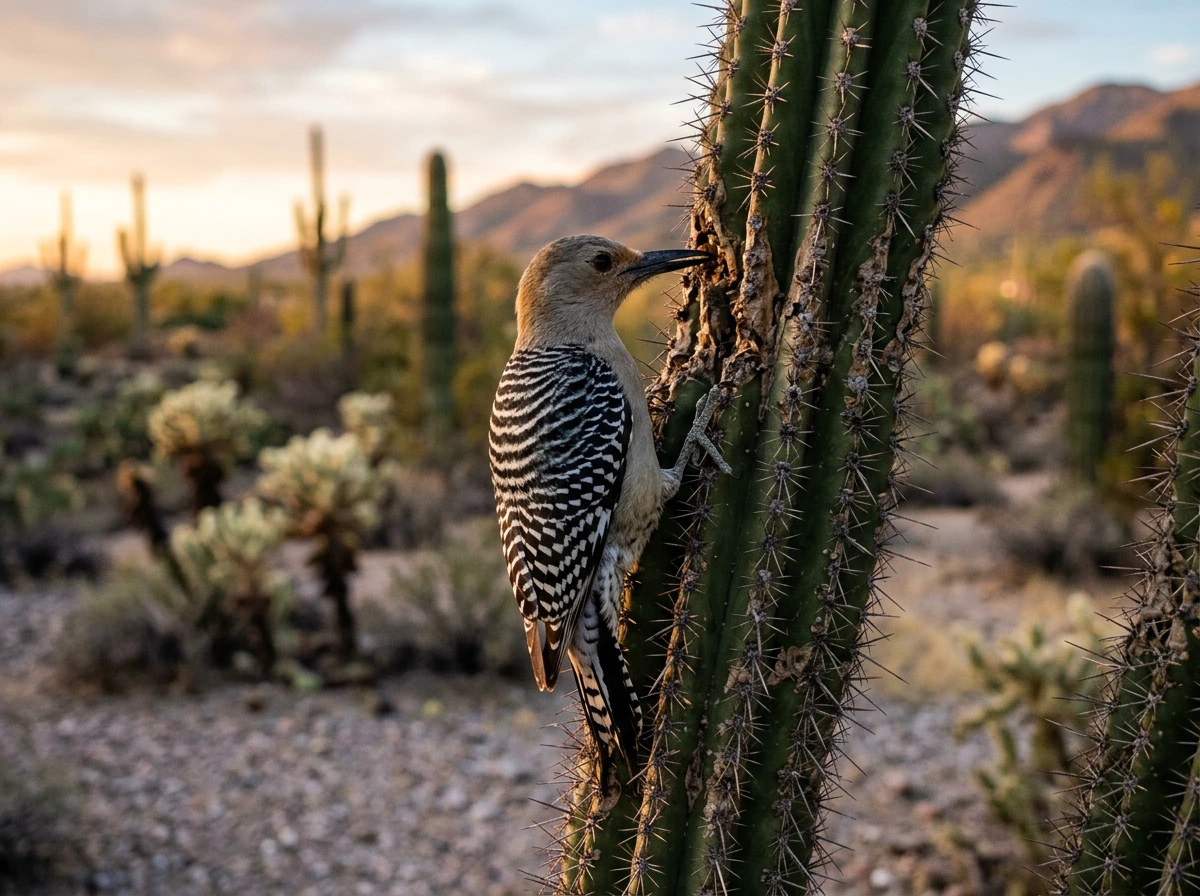
Arizona's official state bird is the cactus wren (Campylorhynchus brunneicapillus), specifically the Coues' subspecies. It's been the state bird since March 16, 1931, making it one of the earlier official state bird designations in the country. If you're doing a quick lookup or trying to confirm a sighting in the Arizona desert, this is your bird.
What Is the Bird of Arizona? Identify the State Bird

Marcus Webb
29 Apr 2026
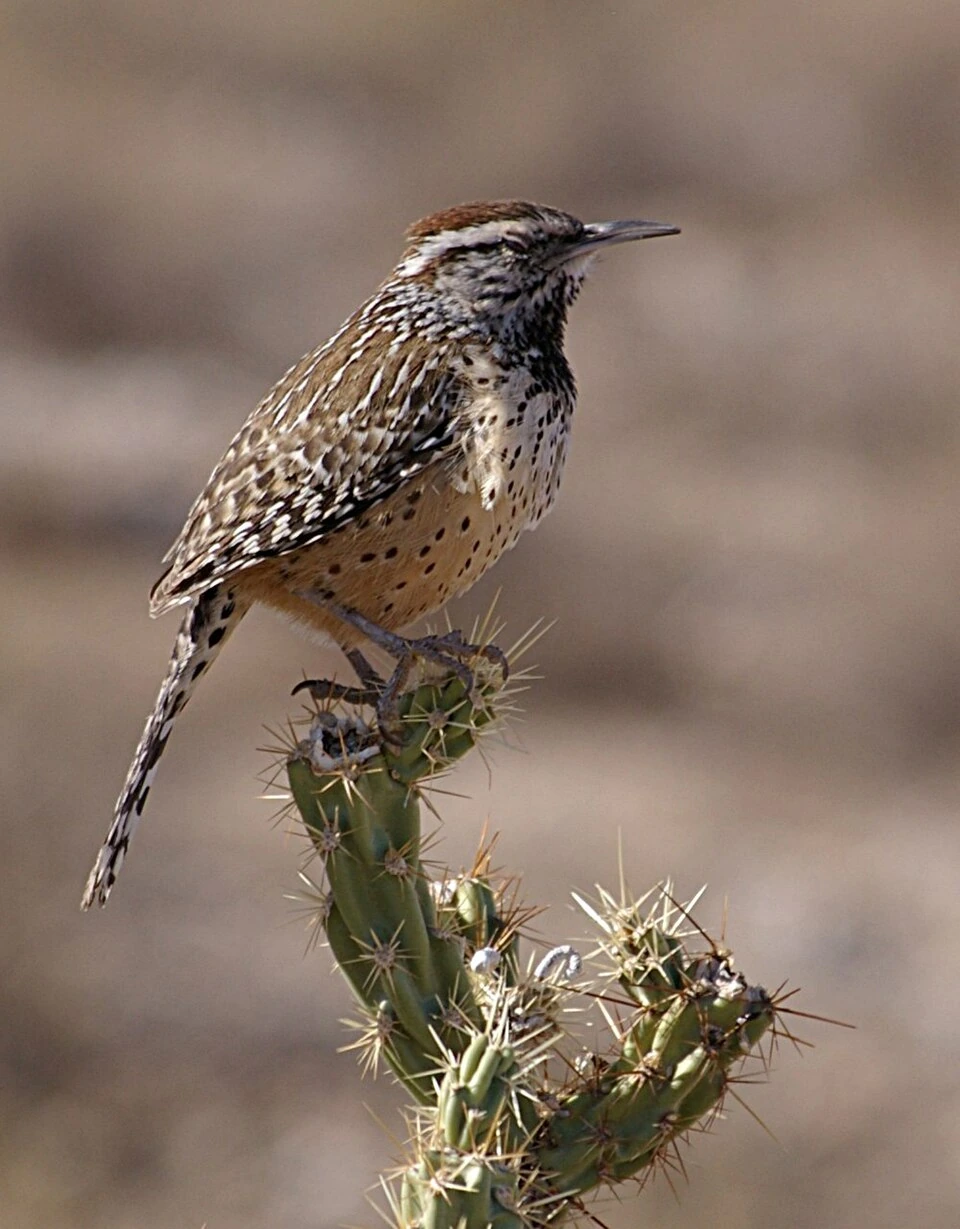
Arizona's Official State Bird
The cactus wren is codified in Arizona Revised Statutes § 41-854, which reads: 'The cactus wren, otherwise known as Coues' cactus wren or Heleodytes brunneicapillus couesi (Sharpe) shall be the state bird.' The Arizona Game & Fish Department also identifies it simply as 'Arizona's state bird,' and the Arizona State Parks system describes it as a symbol of the rugged beauty and resilience of the desert environment. In short, this bird is deeply tied to Arizona's identity as a desert state.
What It Looks Like: Field ID for the Cactus Wren
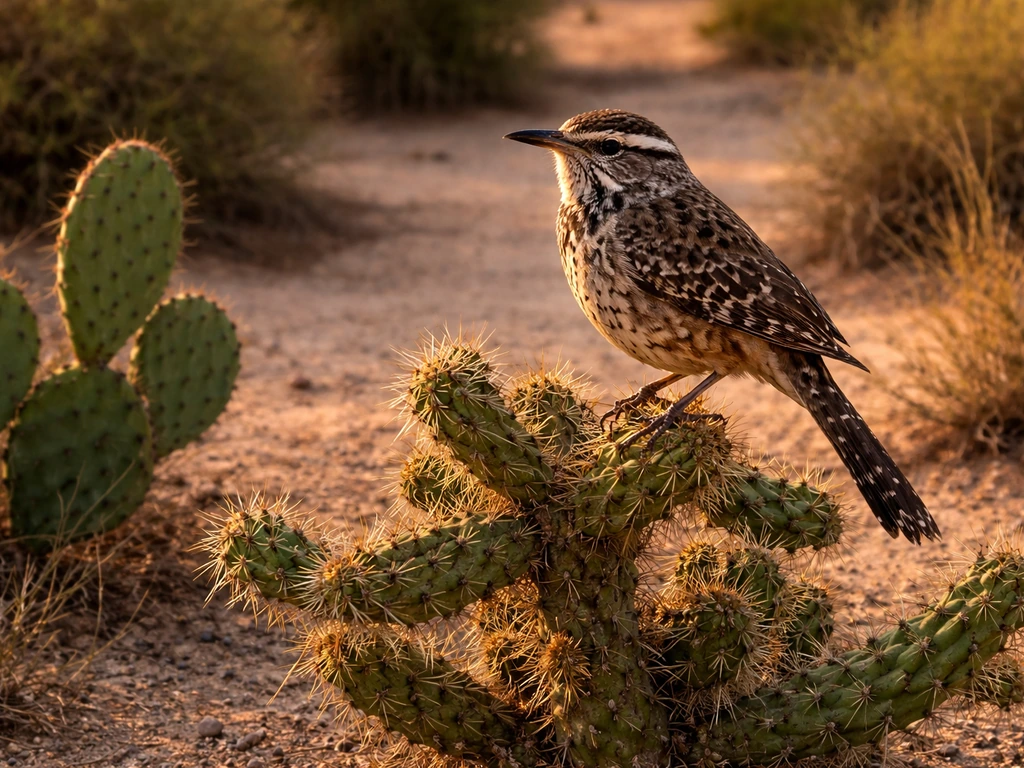
The cactus wren is hard to miss once you know what you're looking at. It's the largest wren in North America, noticeably bigger than the house wrens or Bewick's wrens you might be used to seeing. Its most reliable field marks are a brown back, a heavily speckled chest, a bold white eyebrow stripe, and a long tail it often cocks upward. The chest spotting is dense and distinctive, not the subtle streaking you'd see on smaller wrens.
Behaviorally, cactus wrens are conspicuous birds. They strut on the ground, hop through brush, and frequently posture with spread wings and tails while calling loudly. You'll often see them in pairs or small family groups rather than alone. Their song has been described as a quintessential sound of the desert, a low, raspy, repetitive churring that carries well across open scrub. If you're in Arizona's desert and hear a persistent, mechanical-sounding call coming from a cholla patch, there's a very good chance a cactus wren is the source.
One of the most useful identification clues is their nesting habit. Cactus wrens build bulky, football-shaped nests that are conspicuous in cholla cactus and desert trees. After breeding season, they continue sleeping in these nests at night. If you spot a large woven nest tucked into a cholla in the Arizona desert, you're almost certainly in cactus wren territory.
Where to Find Them in Arizona
The cactus wren is found commonly in most Arizona deserts, particularly in desert scrub habitats with plenty of cactus and open ground. It rarely strays from this habitat type, which makes it easy to narrow down. The Sonoran Desert around Phoenix and Tucson is prime territory. If you're hiking in saguaro or cholla country, you're in the right place to find one.
Why Arizona Chose the Cactus Wren
The cactus wren is a genuinely apt symbol for Arizona. Arizona Game & Fish describes the species as active, inquisitive, and adaptable, three traits that map well onto how Arizona has historically framed its own character. The bird is a hardy desert dweller with a distinctive personality and a loud, unmistakable presence. It doesn't just survive the desert environment; it thrives in it, nesting in spiny cholla cactus that most other animals avoid.
Arizona State Parks frames it explicitly: the cactus wren symbolizes the rugged beauty and resilience of the desert environment. For a state whose identity is bound up with the Sonoran Desert and its dramatic landscape, choosing a bird that is uniquely and visibly at home in that environment makes a lot of sense. The cactus wren isn't found in forests or wetlands. It belongs to the desert, and so does Arizona.
When and How It Became Official

The cactus wren became Arizona's state bird on March 16, 1931, when Governor George W.P. Hunt signed House Bill 128. The Arizona Memory Project's session laws record confirms the act as 'DESIGNATING A STATE BIRD,' approved that date during the Tenth Legislature's First Regular Session. At the time, the bill used the subspecies name Coues' cactus wren, which remains in the current statute.
The 1931 designation puts Arizona among a wave of states that formalized their state birds during the early 1930s, a period when civic and cultural symbol-making was popular across the country. Arizona was only 19 years old as a state at the time, having been admitted to the Union in 1912, so the cactus wren designation was part of an early effort to establish a distinct Arizona identity through official symbols.
How Arizona's Choice Compares to Other States
The cactus wren is unique to Arizona as a state bird. No other U.S. state has designated it, which makes Arizona's choice stand out in the full set of 50 state birds. Several other states share popular choices, like the northern cardinal (used by seven states) or the western meadowlark (used by six), but Arizona went its own way with a bird that is tightly tied to its specific desert ecosystem.
That regional specificity is actually notable. A handful of states chose birds that are genuinely emblematic of their particular landscape rather than just widespread, familiar species. Alaska's willow ptarmigan, for example, is similarly tied to that state's tundra environment. For Alaska, the state bird is the willow ptarmigan Alaska's willow ptarmigan. Arizona's cactus wren follows the same logic: pick the bird that best represents where you live.
| State | State Bird | Unique to That State? |
|---|---|---|
| Arizona | Cactus Wren | Yes |
| Alabama | Northern Flicker (Yellowhammer) | No (shared by others) |
| Alaska | Willow Ptarmigan | Yes |
| 7 states (incl. Ohio, Indiana, etc.) | Northern Cardinal | No (shared by 7 states) |
| 6 states (incl. Montana, Kansas, etc.) | Western Meadowlark | No (shared by 6 states) |
If you're comparing Arizona's designation to nearby states, it's worth noting that the Southwest has generally produced more regionally distinctive choices. Arizona's cactus wren is a good example of a state bird that actually tells you something specific about the place, rather than a generic pick you'd see repeated across the country.
Where to Go From Here
If you want to go deeper on Arizona's state bird specifically, the companion page on why the cactus wren was chosen as Arizona's state bird covers the designation reasoning and symbolism in much more detail. There's also a dedicated page on Arizona's state bird with fuller species facts and identification notes.
For broader comparison, this site has individual pages for every U.S. state bird, so you can quickly look up neighboring states or compare how different regions approached their choices. Alabama's state bird (the northern flicker, also called the yellowhammer) and Alaska's state bird (the willow ptarmigan) are good contrasts to Arizona if you want to see the full range of how states have approached this kind of designation. Alabama's state bird is commonly identified as the northern flicker, also called the yellowhammer. If you’re curious what is Alabama state bird, it’s the northern flicker, also called the yellowhammer Alabama's state bird.
- Arizona's state bird: the cactus wren (Campylorhynchus brunneicapillus), Coues' subspecies
- Designated: March 16, 1931, via House Bill 128
- Codified in Arizona Revised Statutes § 41-854
- Key field marks: speckled chest, bold white eyebrow stripe, large size for a wren, cocked tail
- Habitat: desert scrub with cactus, found commonly throughout most Arizona deserts
- Unique among state birds: no other state uses the cactus wren
- Symbolism: resilience, adaptability, and rugged desert identity
FAQ
Is the cactus wren the bird of Arizona even if I am not in the desert right now?
It is always Arizona’s state bird, but where you can reliably see it depends on habitat. Cactus wrens are closely tied to desert scrub with cholla and cactus, so you are much more likely to spot one in places like the Sonoran Desert than in parks or areas that lack spiny cactus cover.
How can I confirm I am seeing the cactus wren and not another desert wren?
Use a combination of marks rather than just one. Look for the long tail often held upright, a bold white eyebrow stripe, and a heavily speckled chest (denser than the subtle streaking typical of smaller wrens). Their loud, repetitive churring also helps when paired with the right body shape for a larger wren.
Do cactus wrens migrate out of Arizona, so I might miss them in some seasons?
They are generally residents in the habitats they occupy, but local activity can vary by season and temperature. Instead of assuming they are gone, focus on finding cholla and desert trees where you can check for both foraging birds and the distinctive, bulky football-shaped nests.
What should I do if I hear a churring call but cannot find the bird?
Try searching the nearest cholla patch or low desert brush first, since cactus wrens often call while perched close to nesting structures. Also listen for calls from multiple spots, because they are frequently seen in pairs or small family groups rather than a single bird.
Are cactus wren nests easy to spot year-round?
They are most noticeable around breeding season and when you are actively looking through cholla. After breeding season, they may continue using nests for sleeping at night, but nests can become harder to spot if vegetation grows back or if you are viewing from a distance, so approach slowly and check at multiple angles.
Why does the article mention a “Coues’” subspecies, does that matter for identification?
For an everyday field sighting, the practical takeaway is still that the bird is the cactus wren type with the characteristic markings and desert behavior. The “Coues’” wording is important for the official designation in statute, but it does not change the key field marks most birdwatchers use to confirm a cactus wren.
Are there any other birds people confuse with Arizona’s state bird?
Yes, especially other larger wrens or birds with brown-and-speckled patterns. The safest confirmation is pairing their size for a wren, the dense speckling on the chest, and the bold white eyebrow stripe, then confirming with the desert cholla setting and the distinctive mechanical-sounding churring.
Where exactly in Arizona are cactus wrens most likely?
They are common in most Arizona deserts, with the Sonoran Desert around Phoenix and Tucson being prime territory. If you want the highest odds, target desert scrub with abundant cholla and open ground rather than dense forested or wetland areas.
Is Arizona’s state bird ever listed under a different name in guides or checklists?
You might see alternate common wording such as “Coues’ cactus wren” because the state bird designation references that subspecies name in historical and statutory contexts. The official recognition is still the cactus wren, so when in doubt, match the species and then use the distinctive desert identification traits.
Can I use the state bird designation to learn where Arizona’s desert ecosystem is?
It is a strong clue, but not a perfect locator. The designation reflects habitat association, meaning cactus wrens point you toward desert scrub with cactus and cholla, yet you still need to check the local landscape because not every dry-looking area has the right cactus structure for regular sightings.
Next Article
What Is Arizona’s State Bird Called? The Gila Woodpecker
Arizona’s state bird is the Gila woodpecker, chosen for its iconic desert presence with easy ID tips and history.