
Arizona's official state bird is the cactus wren (Campylorhynchus brunneicapillus). The designation is spelled out in blank" rel="noopener noreferrer">Arizona Revised Statutes § 41-854, which names it 'the cactus wren, otherwise known as Coues' cactus wren or heleodytes brunneicapillus couesi (Sharpe).' The older scientific name in the statute reflects the taxonomy used when the law was written. Today, ornithologists universally recognize it as Campylorhynchus brunneicapillus, and the common name is simply the cactus wren.
What Is Arizona’s State Bird Called? The Gila Woodpecker

Marcus Webb
23 Mar 2026
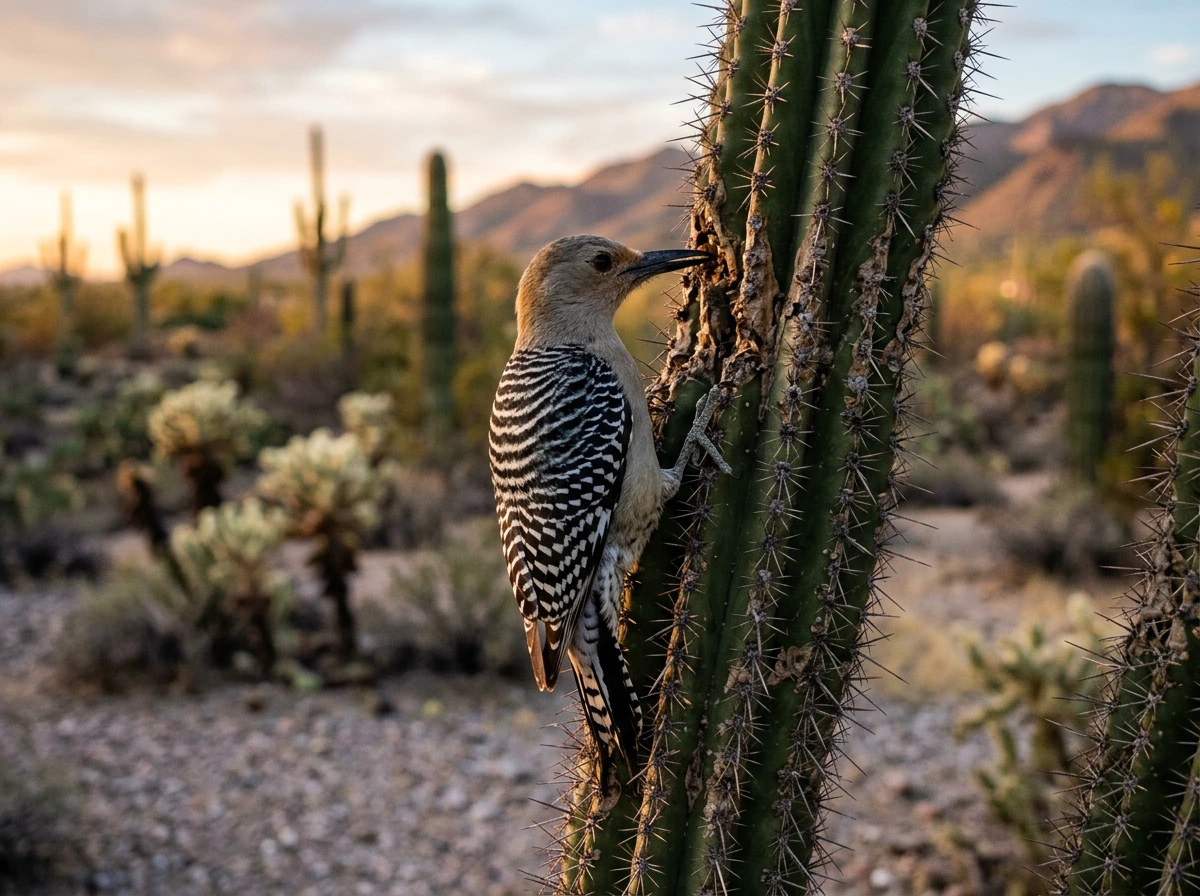
Why Arizona chose the cactus wren
The cactus wren is not a flashy songbird or a soaring raptor. It is a scrappy, loud, perpetually busy desert bird that lives in the same harsh landscape most animals avoid. That is exactly the point. Arizona Game and Fish describes it as 'a hardy desert dweller known for its bold nature and distinctive call,' and the agency calls it 'an appropriate choice for the state bird.
' The cactus wren is found commonly across most Arizona deserts year-round, it does not migrate, and it nests inside cholla and saguaro cacti. Arizona Game & Fish Department also describes the cactus wren as an appropriate choice for Arizona's state bird and notes it is found commonly across most Arizona deserts.
It is inseparable from the Sonoran Desert environment that defines so much of Arizona's identity.
The bird also has a call that anyone who has spent time in the Arizona desert immediately recognizes. All About Birds describes it as 'a harsh series of loud, raspy notes,' the kind of sound that carries across open desert scrub. The NPS notes that the cactus wren's call has long symbolized the desert landscape itself. For a state that leans hard into its desert identity, picking the cactus wren was a natural fit.
How to spot a cactus wren
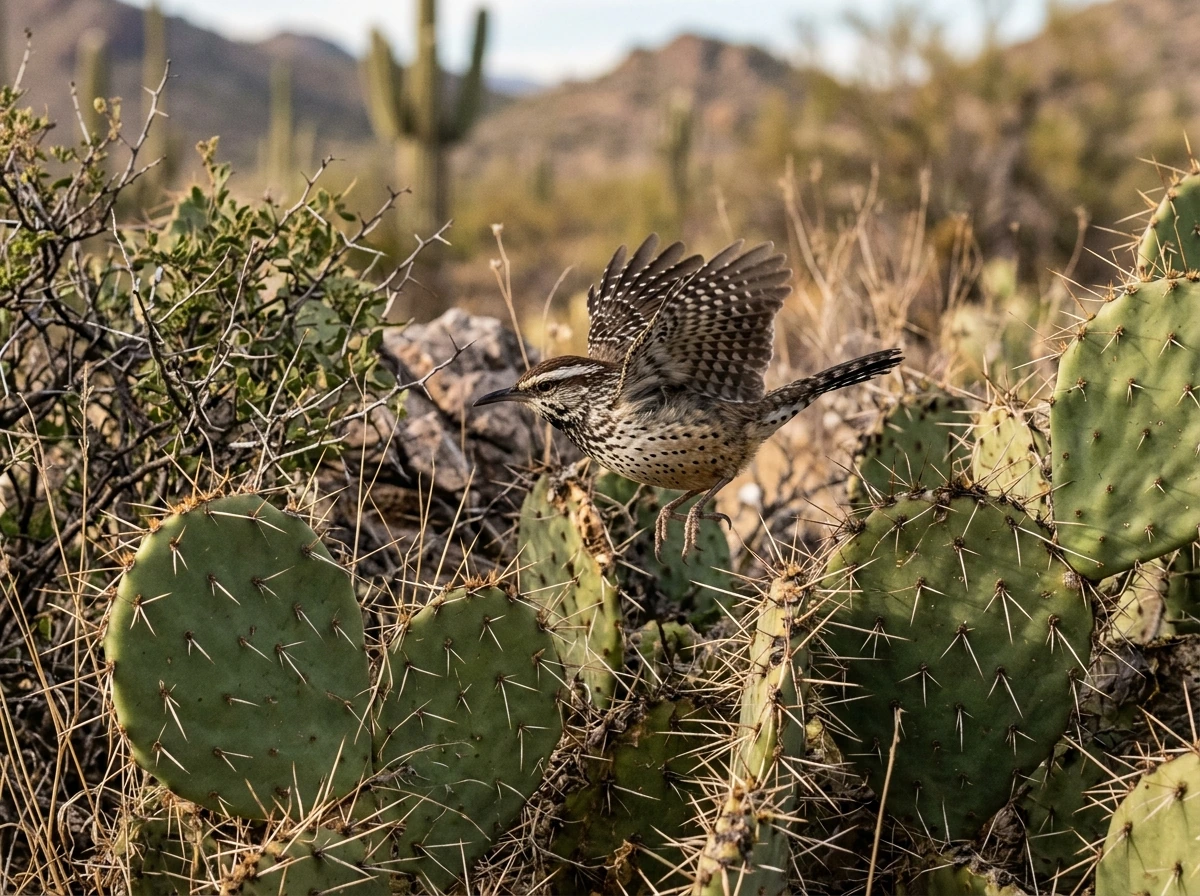
The cactus wren is the largest wren in North America, measuring 7.1 to 8.7 inches from bill to tail. Think robin-sized, which makes it noticeably bigger than the small wrens most people are used to seeing in gardens. That size alone helps narrow things down fast in the field.
The key identification features, in order of what you will notice first:
- Bold white eyebrow stripe running from the bill all the way to the sides of the neck. This is the single most reliable field mark.
- Black patch on the throat, visible at close range.
- Heavily spotted or speckled breast with rusty-brown tones.
- Long, barred black-and-white tail, especially obvious in flight.
- Thick, slightly down-curved bill, longer than most wrens.
- Streaked back and barred wings.
Where to look: the cactus wren rarely strays from desert scrub with plentiful cactus and areas of open ground. Saguaro National Park near Tucson is one of the best places to find them. USGS data identifies the cactus wren as the most abundant bird species within desert scrub habitat at that park. Organ Pipe Cactus National Monument is another reliable spot. Across Arizona more broadly, they are year-round residents in southern, western, and central Arizona. If you are in habitat with saguaro or cholla cactus and you hear a loud, raspy, repetitive call, there is a very good chance a cactus wren is responsible.
When Arizona made it official
Arizona designated the cactus wren as its state bird on March 16, 1931. The Arizona State Legislature passed House Bill 128 during the Tenth Legislature's first regular session, and the governor approved it that same date. Arizona had only been a state since 1912, so the cactus wren designation came about 19 years into statehood, during a period when many states were formalizing their official symbols. The 1931 session laws record, held in the Arizona Memory Project, preserves the original bill. The statute has been codified since then and remains on the books today as Arizona Revised Statutes § 41-854.
How the cactus wren compares to other state birds and similar species
Arizona is the only state that claims the cactus wren as its official bird. No other U.S. state shares this designation, which makes Arizona's choice genuinely distinctive on the national map of state birds. Compare that to a bird like the northern cardinal, which is the state bird for seven states, or the western meadowlark, which is claimed by six. The cactus wren stands alone.
The cactus wren's range does extend beyond Arizona into southern California, southern Nevada, southwest Utah, central New Mexico, and through parts of Texas into central Mexico. But none of those states have adopted it as their symbol. If you are exploring other southwestern state birds on this site, you will find that Alaska went a very different direction with the willow ptarmigan, and Alabama chose the yellowhammer (northern flicker). Alaska's state bird is the willow ptarmigan. Arizona's cactus wren is squarely a desert-Southwest bird with no close state-bird equivalent anywhere else in the country. Alabama chose the yellowhammer (northern flicker). Arizona's cactus wren is squarely a desert-Southwest bird with no close state-bird equivalent anywhere else in the country.
The one species worth knowing about to avoid confusion in the field is the spotted wren. It looks similar to the cactus wren, but the spotted wren lives in oak woodlands, not desert scrub. If you are in saguaro or cholla country and you see a large, boldly marked wren, it is almost certainly a cactus wren. The spotted wren simply does not share that habitat. Beyond that, the cactus wren's size, the white eyebrow stripe, and that loud raspy call make it one of the easier birds to confidently identify once you have seen and heard it once.
| Feature | Cactus Wren | Spotted Wren |
|---|---|---|
| Habitat | Desert scrub with cactus | Oak woodlands |
| Size | 7.1–8.7 inches (robin-sized) | Smaller |
| Eyebrow stripe | Bold white, extends to neck | Present but less prominent |
| Range overlap with AZ desert | Yes, core habitat | No |
| Arizona state bird | Yes | No |
What to do next
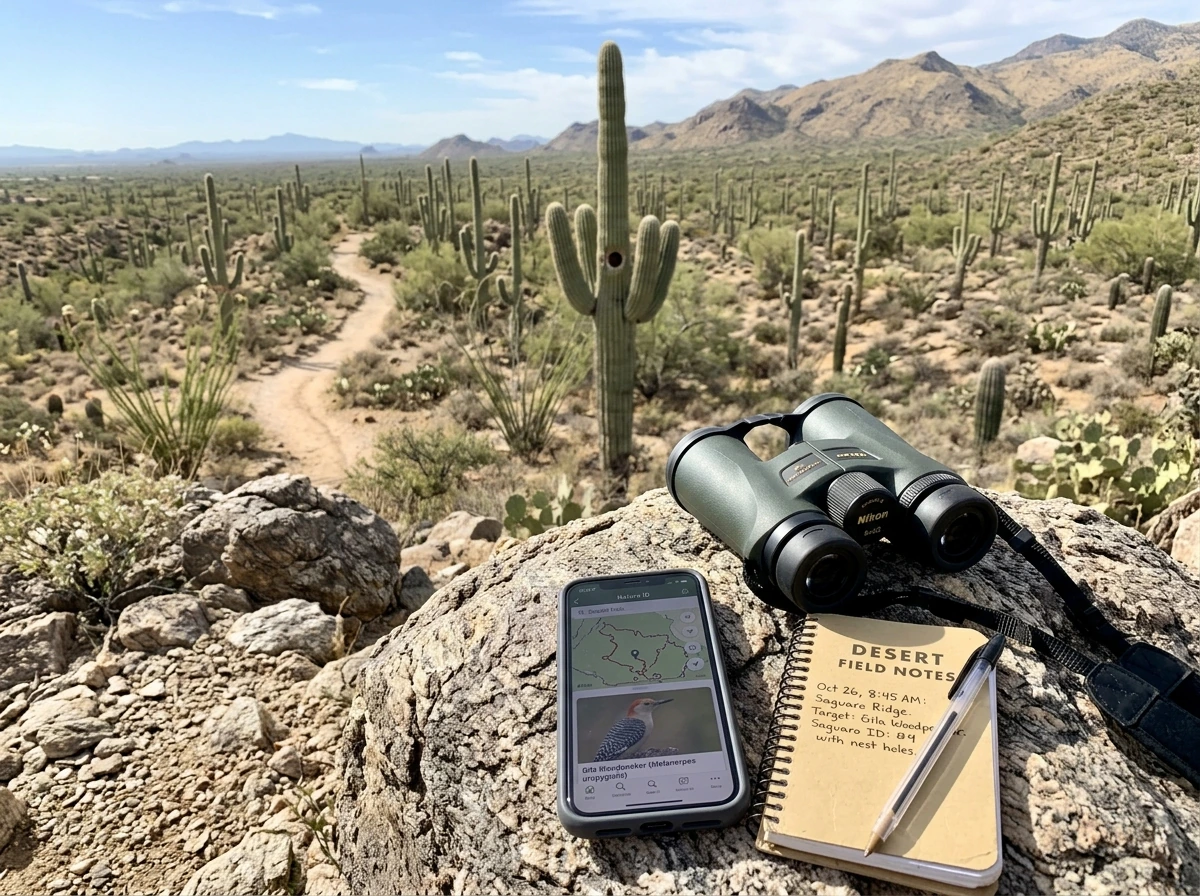
If you want to see a cactus wren in person, head to Saguaro National Park or Organ Pipe Cactus National Monument. Both are accessible, well-documented spots where the bird is commonly seen year-round. Take note of the white eyebrow stripe and listen for the call before you even raise your binoculars. If you are building out your knowledge of state birds more broadly, check out the dedicated page on blank" rel="noopener noreferrer">why the cactus wren was chosen as Arizona's state bird for more on the symbolism and historical reasoning, or explore how neighboring states approached their own designations. If you are also curious about Alabama's state bird, here is the answer to what is the bird of Alabama.
FAQ
Is Arizona’s state bird the cactus wren or something else? (I’ve seen different names online.)
No. Arizona’s state bird designation is the cactus wren (Campylorhynchus brunneicapillus). Even though the statute includes older scientific wording, modern ornithology treats it as the same species, not a different bird.
What bird could be mistaken for the cactus wren in Arizona?
Use habitat and call together. If you’re in desert scrub with saguaro or cholla and you hear a loud, raspy, repetitive call, it is likely a cactus wren. The spotted wren can look similar, but it does not occupy desert scrub, it favors oak woodland habitats.
When is the best time of year to see Arizona’s state bird?
The cactus wren is a year-round resident in Arizona, so you do not need to plan a specific season to find it. That said, early morning and late afternoon are often the best times to hear and spot vocal, active birds.
What’s the fastest way to find a cactus wren in the desert?
Listen before you look. Cactus wrens are known for harsh, raspy notes that carry across open scrub. If you only scan for movement without tracking the sound, you can miss them because they stay busy in cacti and nearby brush.
How can I confirm I’m seeing a cactus wren if the lighting or distance makes it hard to see details?
Yes, they can have a different look depending on lighting and distance, which is why the white eyebrow stripe and the overall size matter. If the bird seems robin-sized for a wren and has that light eyebrow mark, then confirm with the distinctive raspy call.
Do cactus wrens show up in every desert area in Arizona?
They typically stay close to cactus-dense desert scrub. If you are in a place that looks like desert but has little or no saguaro or cholla, your odds drop, even if you still hear other desert birds.
If the cactus wren is found outside Arizona, why is it not someone else’s state bird?
The cactus wren’s range includes parts of neighboring states, but only Arizona adopted it as the state bird. So you may see the same species elsewhere geographically, without it being a state symbol.
What are the top field marks to remember, not just the scientific name?
Look for a large wren with a white eyebrow stripe, plus their loud, harsh rasping calls. Those two cues usually outweigh color variations, and they can help you distinguish it quickly from smaller, garden-style wrens.
Where does the cactus wren nest, and how does that help me find it?
They nest inside cacti such as cholla and saguaro, so signs of active nesting are tied to those plants. Even when you do not see the nest, the bird’s repeated presence around those cacti is a strong indicator.
Next Article
What Is the State Bird of Alaska? Answer and ID Tips
Alaska’s state bird is the willow ptarmigan. Learn how to identify it plus Alaska’s state flower and tree.