South Carolina's official state bird is the Carolina Wren (Thryothorus ludovicianus), designated by Act Number 693 and signed into law in April 1948. It replaced an earlier designation and has remained the official state bird ever since, codified today in South Carolina Code Section 1-1-693. A birding discussion on Reddit about the blank" rel="noopener noreferrer">South Carolina wren states that the Carolina Wren is South Carolina's state bird.
What Is SC State Bird? Official Bird, Identification, History

Marcus Webb
29 Apr 2026
Meet the Carolina Wren
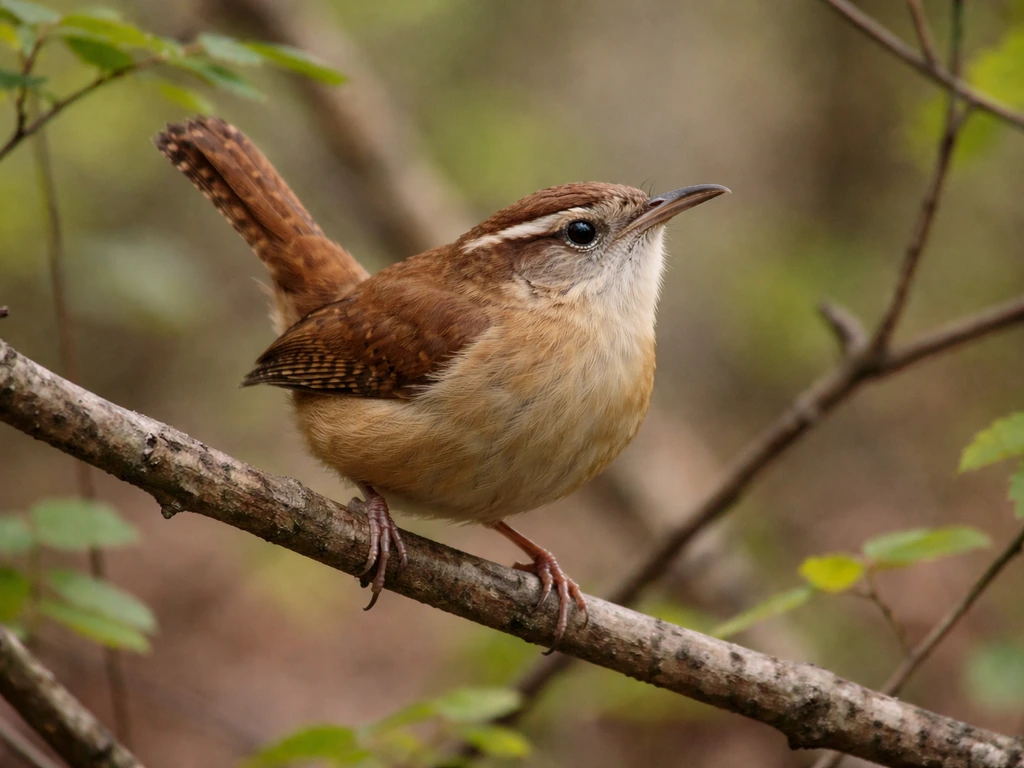
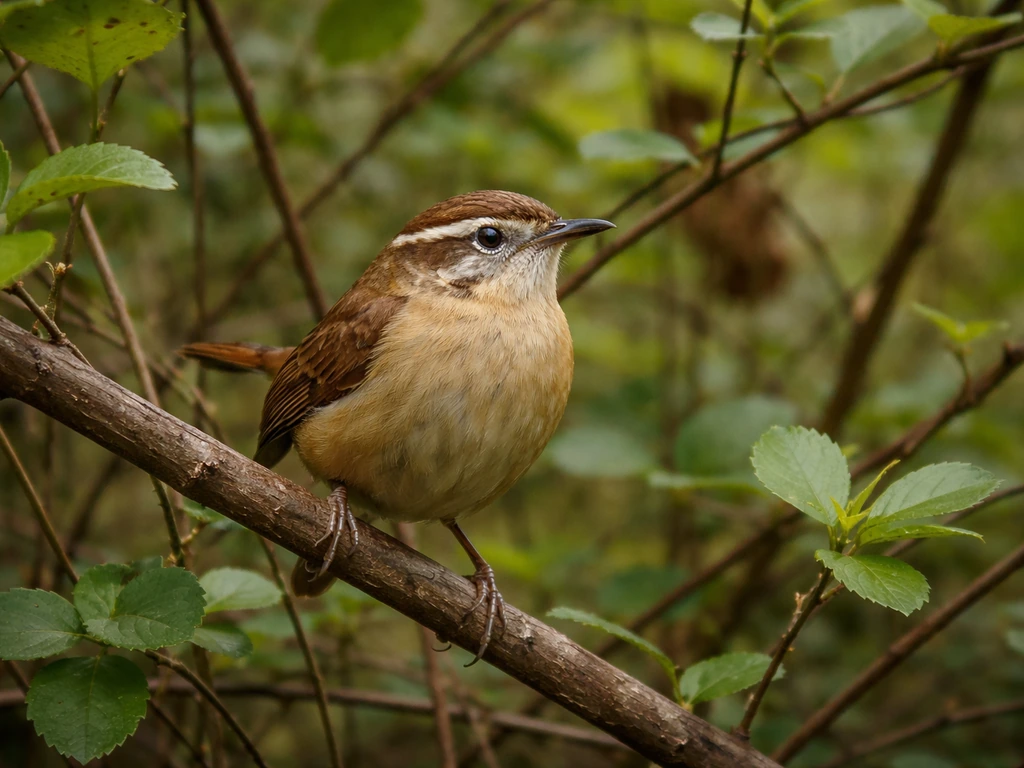
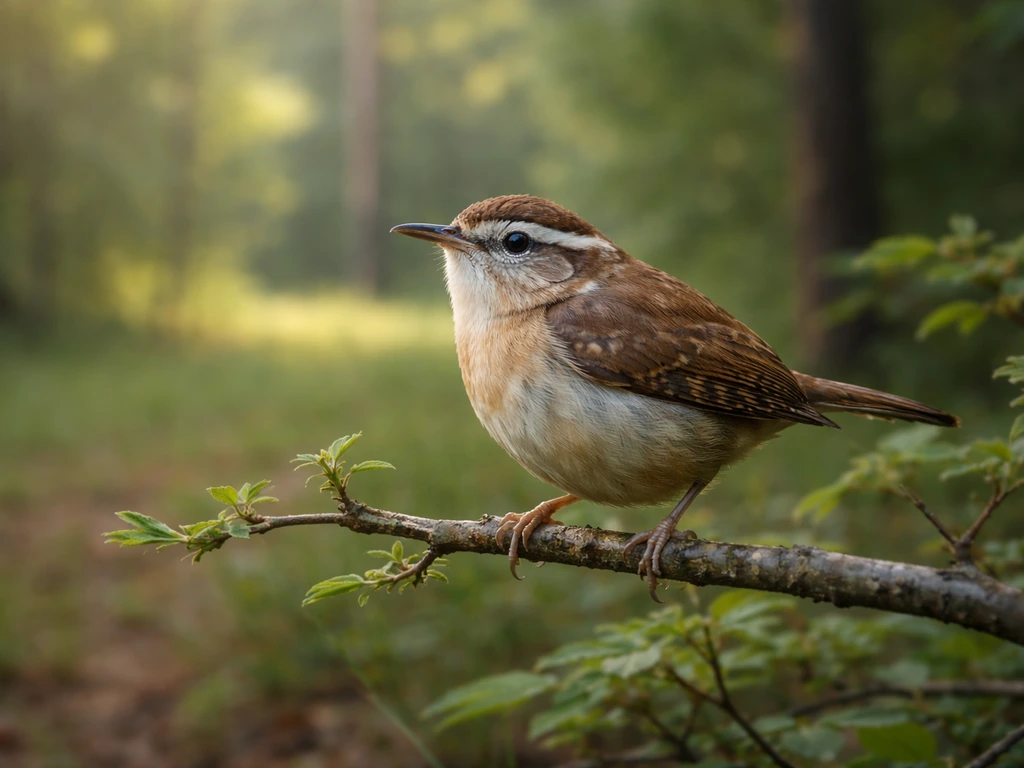
The Carolina Wren is a compact, energetic little bird with a big personality and an even bigger voice. Its scientific name is Thryothorus ludovicianus. In the field, adults measure roughly 5.5 to 6 inches in length with a wingspan of about 7.5 inches, making them slightly smaller than an English Sparrow. The back and tail are a rich reddish-brown (rufous), the underparts are a warm cinnamon-buff, and the wings show faint dark barring. The most immediately striking feature is a bold white eyebrow stripe (supercilium) that runs cleanly from the bill back past the eye. The bill itself is long and noticeably curved downward, and the tail is typically held cocked upward at a jaunty angle.
How to Identify a Carolina Wren
In practice, you will usually hear a Carolina Wren before you see one. The song is loud, cheerful, and persistent: a repeated three-part phrase often written as 'tea-kettle, tea-kettle, tea-kettle.' They call year-round, day and night, in all kinds of weather, which makes them one of the easiest state birds to confirm by ear alone.
When you do get a visual, look for these features in combination:
- Strong white eyebrow stripe running the full length of the head
- Rich cinnamon or rusty-red coloration overall, brighter on the back
- Long, downward-curved bill
- Tail held upright or cocked at an angle
- Tail finely barred with black
- Small size, roughly sparrow-scale
The white eyebrow stripe is the single most reliable visual separator from similar species. House Wrens, which share overlapping habitat, have no eyebrow stripe at all, giving them a much plainer face. Marsh Wrens do have an eyebrow stripe but are found almost exclusively in wetland reeds. If you see a small reddish-brown wren with a bright white 'brow,' cocked tail, and curved bill, you are almost certainly looking at a Carolina Wren.
Where and When to Find It in South Carolina
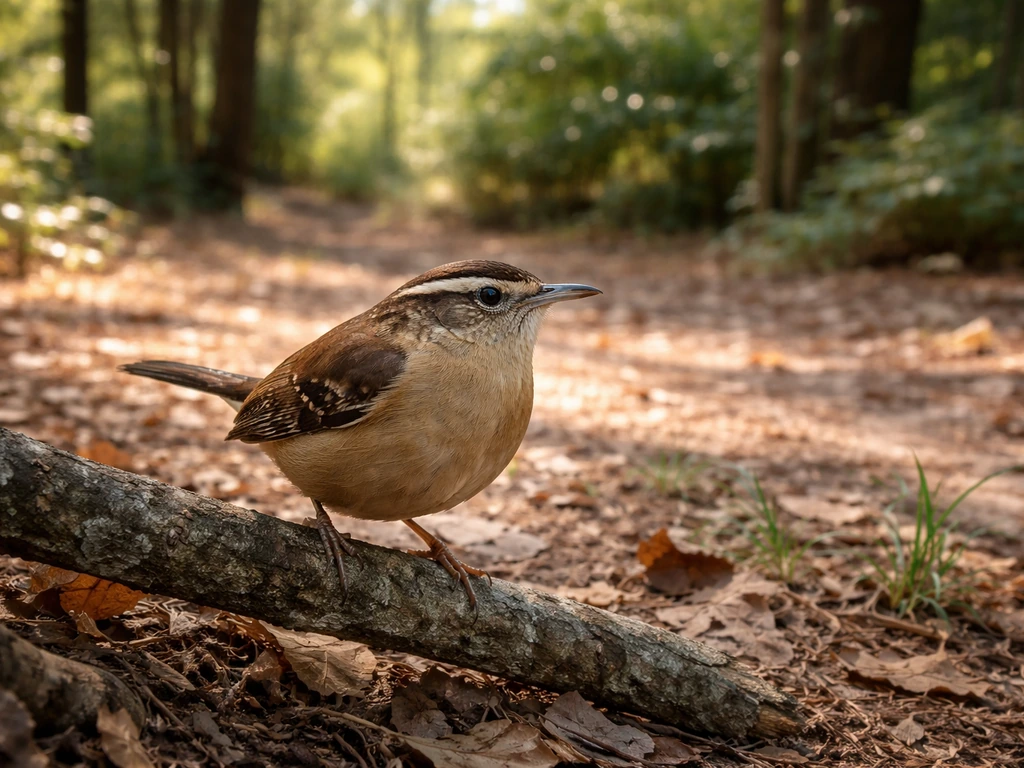
Carolina Wrens are found throughout all areas of South Carolina year-round. They are permanent residents, meaning they do not migrate, so any season is a good season to look. Preferred habitat is dense, tangled understory cover: forest ravines, brushy thickets, overgrown fence lines, and the weedy edges of wooded neighborhoods. Brush piles in backyard settings are particularly attractive to them. They move low through vegetation, rarely venturing far off the ground, so scanning at knee to shoulder height rather than the treetops is the right approach.
Why South Carolina Chose the Carolina Wren
The case for the Carolina Wren was straightforward once people started making it: the bird literally has 'Carolina' in its name, it lives across the entire state all year, and it sings constantly regardless of season or weather. Those three factors made it a much more fitting symbol than a bird that is merely passing through or concentrated in one region.
The practical argument centered on year-round presence and the bird's strong ties to the state's name and landscape. A state bird that you can hear on a January morning or a rainy November afternoon in any county of South Carolina carries more symbolic weight than one you might only spot during migration.
The History Behind the Designation

South Carolina's state bird history has a twist. The Carolina Wren had been informally associated with the state for much of the early twentieth century, but in 1939 the General Assembly officially designated the Northern Mockingbird as the state bird.
That designation held for less than a decade. [On April 2 or 3, 1948 (records cite both dates), Governor Strom Thurmond signed Act Number 693, which repealed the 1939 mockingbird act and officially installed the Carolina Wren in its place. ](https://www. scstatehouse.
gov/man24/A14-A27. pdf) The current South Carolina Code, Section 1-1-693, reflects that 1948 designation and remains in effect today. You can also explore why the Carolina Wren was chosen as South Carolina's state bird and what qualities made it a fit symbol why is the Carolina Wren the state bird.
The switch from mockingbird to Carolina Wren was partly a correction. The mockingbird was already being used as a state bird by other Southern states (it was eventually adopted by five states total), while the Carolina Wren was uniquely tied to the Carolinas by name, range, and reputation. Advocates felt South Carolina deserved a bird that was distinctly its own.
How SC's State Bird Compares to Other States
The Carolina Wren is one of the more distinctive choices on the U.S. state bird list precisely because no other state has claimed it. South Carolina is the only state with the Carolina Wren as its official bird, which gives the designation a clean, unambiguous identity.
That stands in contrast to the mockingbird it replaced. The Northern Mockingbird is currently the official state bird of Arkansas, Florida, Mississippi, Tennessee, and Texas. Had South Carolina kept the 1939 designation, it would be one of six states sharing the same bird. Instead, the 1948 switch gave South Carolina something uniquely its own.
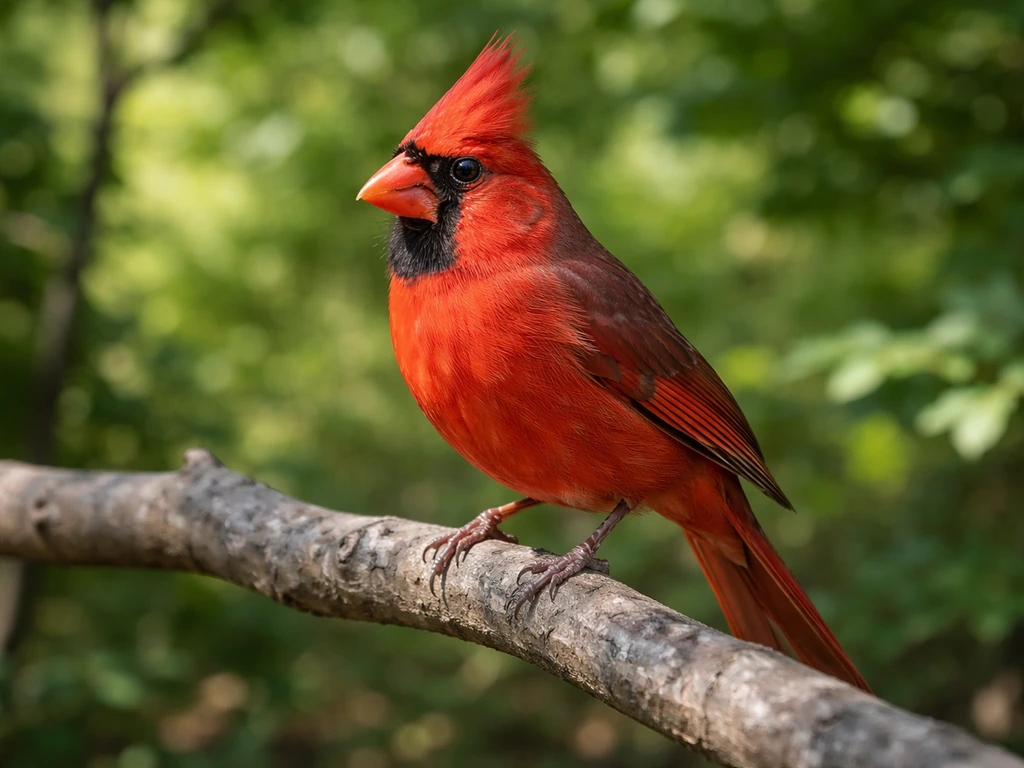
The neighboring state of North Carolina, interestingly, went a different direction entirely. North Carolina's state bird is the Cardinal (Northern Cardinal), which is also shared by six other states. The Cardinal is the state bird of North Carolina because of its strong presence and symbolism in the region Cardinal (Northern Cardinal). To learn more about North Carolina's state bird and what it looks like, check the details for the Northern Cardinal.
The two Carolinas, despite sharing a name, each have their own distinct official bird. The Carolina Wren's name references both states, but only South Carolina has given it official status. If you're curious about why North Carolina made its own choice, or why the name 'Carolina Wren' applies to a bird claimed by only one of the two Carolinas, those are threads worth following when comparing state bird designations across the region.
| State | Official State Bird | Shared With Other States? |
|---|---|---|
| South Carolina | Carolina Wren | No — unique to SC |
| North Carolina | Northern Cardinal | Yes — shared with 6 other states |
| Florida | Northern Mockingbird | Yes — shared with 4 other states |
| Tennessee | Northern Mockingbird | Yes — shared with 4 other states |
Confirming Your Identification
If you want to lock in a confident ID, use the combination of white eyebrow stripe, cinnamon underparts, cocked tail, and curved bill together rather than relying on any single feature. The 'tea-kettle' song is a powerful confirmation tool because it is loud enough to hear across a yard and distinctive enough that once you've heard it once, you'll recognize it immediately afterward. Carolina Wrens are permanent residents in South Carolina, so there is no wrong time of year to look. Backyards with brush piles or dense shrubs are honestly some of the best places to find them, making this state bird one of the most accessible to observe up close.
FAQ
Is South Carolina’s state bird the Carolina Wren or the Northern Mockingbird?
The state bird is the Carolina Wren, not the Northern Mockingbird. The mockingbird was designated in 1939, but that act was repealed when South Carolina installed the Carolina Wren in April 1948.
Do I need to visit South Carolina during a certain season to see or hear the state bird?
No season is required. Carolina Wrens are permanent residents in South Carolina, so you can look (or listen) in winter as well as summer.
How can I confirm the Carolina Wren without seeing it?
Yes, if you want to confirm quickly by sound, focus on the repeated three-part “tea-kettle” phrase. It is distinctive enough that many people can identify the bird after hearing it once, even without a clear sighting.
What single feature most reliably separates a Carolina Wren from similar wrens?
The most reliable visual clue is the bold white eyebrow stripe (supercilium) paired with the overall warm reddish-brown and cinnamon-buff coloring. House Wrens lack the eyebrow stripe, which helps you avoid the most common look-alike confusion.
What if I see a wren with an eyebrow stripe, how do I know whether it is a Marsh Wren versus a Carolina Wren?
Marsh Wrens can have a white eyebrow stripe, but they are tied to wetland reeds. If you are not in or near marsh-like habitat, a wren with a “brow” is more likely to be a Carolina Wren.
What are the best traits to check together when identifying a Carolina Wren?
A good field check is to combine several traits at once: white eyebrow stripe, cinnamon underparts, cocked tail, and the long curved bill. Relying on only one sign (like the reddish-brown color) can lead to misidentification.
Where should I look in a yard or park to find Carolina Wrens?
Look low. Carolina Wrens usually travel through dense understory and brush piles, rarely venturing high into treetops. Scanning around knee to shoulder height is typically more productive than searching canopies.
Are Carolina Wrens likely to show up in suburban or backyard settings, and what helps?
Backyards can be surprisingly effective if you have dense shrubs, tangled understory, or a brush pile. They are especially drawn to cover where they can move close to the ground.
Does North Carolina have the same state bird as South Carolina?
North Carolina and South Carolina share the “Carolina” name, but they do not share the same official state bird. North Carolina’s official bird is the Cardinal, while South Carolina’s is the Carolina Wren.
Next Articles
What Is the State Bird of South Carolina? Facts and History
South Carolina state bird is the Carolina wren, with key ID traits, habitat, and why it was chosen.
What Is North Carolina’s State Bird? Facts, History, ID
NC state bird is the Northern Cardinal; learn how to identify it, its history, and the official state flower link.
Which Is Karnataka State Bird? Identification and Facts
Discover Karnataka’s official state bird, key ID traits, where to spot it, and why it was chosen.