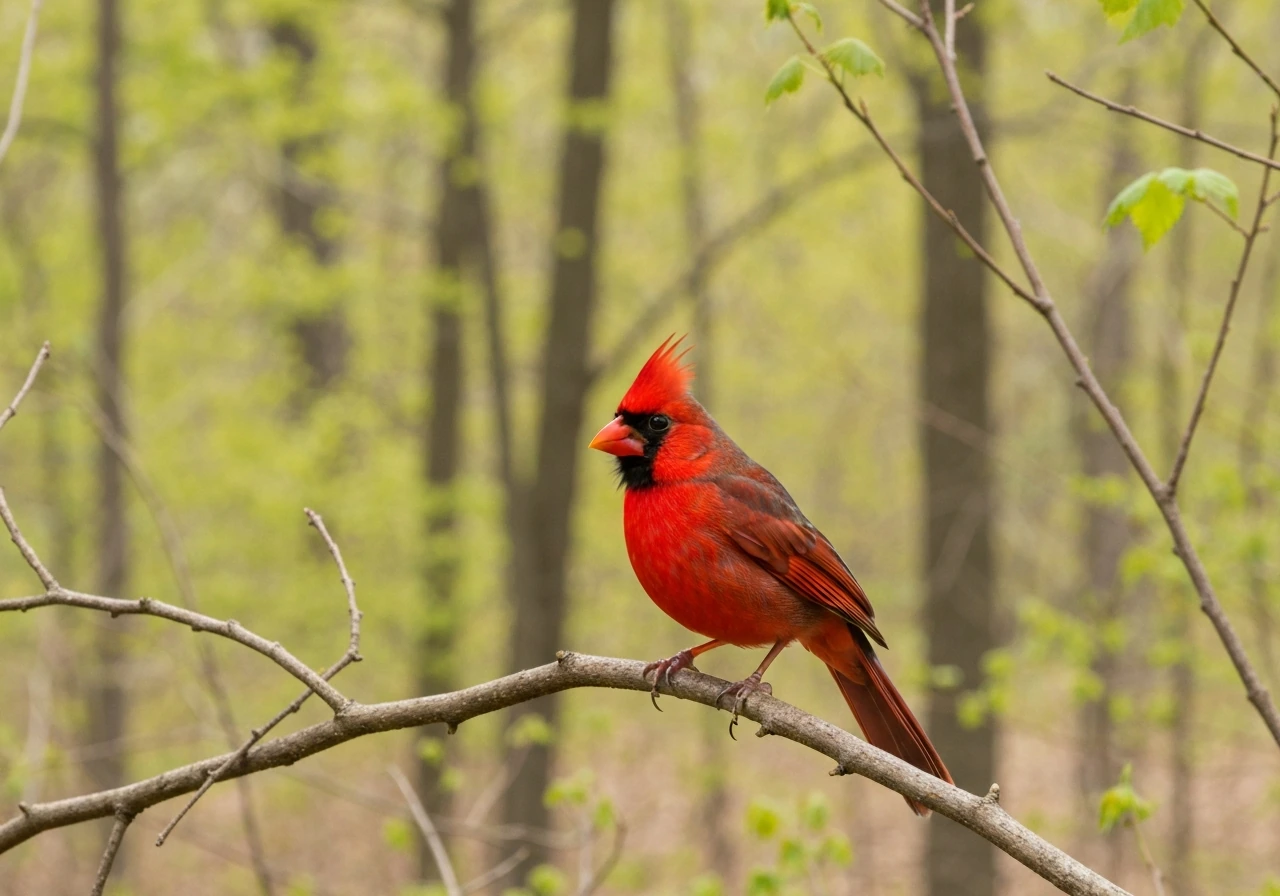
Virginia chose the Northern Cardinal as its official state bird on January 25, 1950, through House Resolution No. 9. The resolution cited two specific reasons: the cardinal's bright plumage and its cheerful song. That's it, no elaborate backstory. Lawmakers simply argued those two qualities made the bird "worthy of selection" as the Commonwealth's official symbol, and the designation has been codified ever since in the Code of Virginia at § 1-510.
Why the Cardinal Is Virginia’s State Bird and Why West Virginia Too

Marcus Webb
21 May 2026
How Virginia's state bird designation came about
The path to Virginia's cardinal designation is short and straightforward. Before January 25, 1950, Virginia simply had not chosen an official state bird. House Resolution No. 9 filled that gap, and the language in the resolution makes the reasoning explicit: Virginia had gone without an official bird, the cardinal stood out for its striking appearance and recognizable song, and those qualities were enough to put it over the top.
| Detail | Virginia | West Virginia |
|---|---|---|
| Bird chosen | Northern Cardinal | Northern Cardinal |
| Adoption date | January 25, 1950 | March 7, 1949 |
| Resolution | House Resolution No. 9 | House Concurrent Resolution No. 12 |
| Came first? | No | Yes, by about 10 months |
One detail worth noting: West Virginia actually got there first. West Virginia adopted the cardinal as its state bird on March 7, 1949, roughly ten months before Virginia did the same. Both states used similar legislative mechanisms (house resolutions), and both ended up with the same bird, but West Virginia's designation predates Virginia's by nearly a year.
What the Northern Cardinal actually is
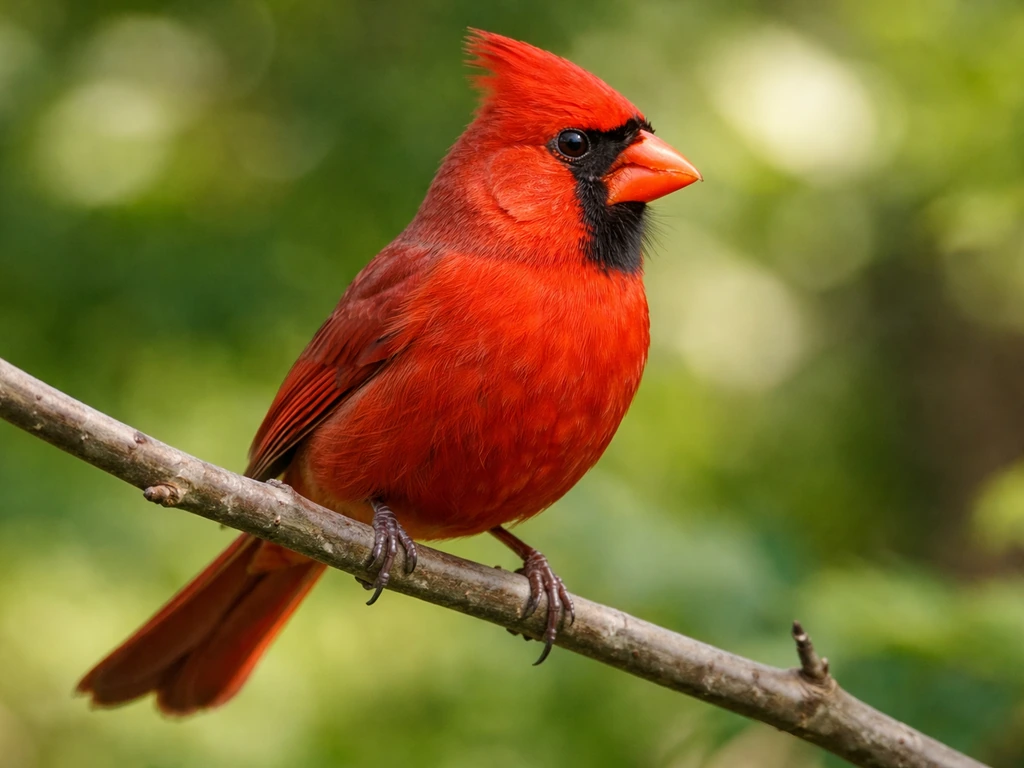
The Northern Cardinal (Cardinalis cardinalis) is a medium-sized songbird: body length runs 21 to 23 cm, wingspan 25 to 31 cm. The male is the one everyone pictures, an unmistakable all-red bird with a prominent crest and a thick, bright coral-colored beak. The female is a warm buff-brown with reddish tinges on the crest, wings, and tail. Both sexes carry that same heavy beak and upright crest, so even the female is recognizable once you know what to look for.
Crucially for its status as a state symbol, the cardinal blank" rel="noopener noreferrer">does not migrate. It stays in Virginia year-round, which means it's one of the most reliably visible birds in the state across every season. The Virginia Bird Atlas lists it as one of the most abundant breeding birds in the Commonwealth, especially common in forest edges, old fields, and backyards. That everyday presence is a big part of why it resonated as a symbol.
Why the cardinal made a strong symbol for Virginia
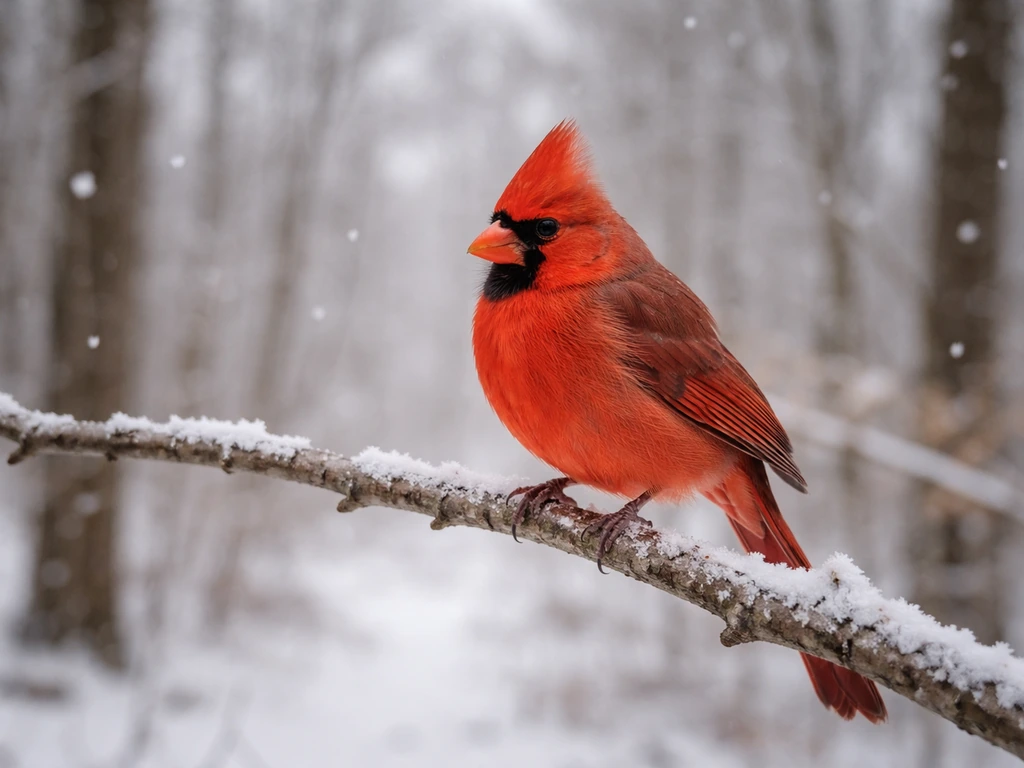
Virginia's resolution came right out and said it: bright plumage and cheerful song. But the practical reality behind those words is worth unpacking. A male cardinal in winter, sitting against bare branches or snow, is visually arresting in a way very few birds can match. The male is the only red bird with a crest found in the United States, so there's no real confusion about what you're looking at. That's a rare thing in the bird world.
The song piece matters too. Cardinals are loud, melodic, and persistent singers. They produce a series of slurred whistles often described as repeating syllable-like phrases, and they start singing early in the year, well before many other species. The male's call also includes a sharp "twit twit twit" chip note that's easy to learn and helps birders locate them even when they're tucked into dense cover.
- Year-round resident: visible in every season without needing migration timing
- Unmistakable appearance: the only crested red bird in North America
- Common in backyards: one of the most frequently seen birds at Virginia feeders
- Loud, recognizable song: starts singing early in the year, easy to learn
- Abundant statewide: breeds throughout Virginia from the coast to the mountains
Virginia vs. West Virginia: same bird, similar reasons
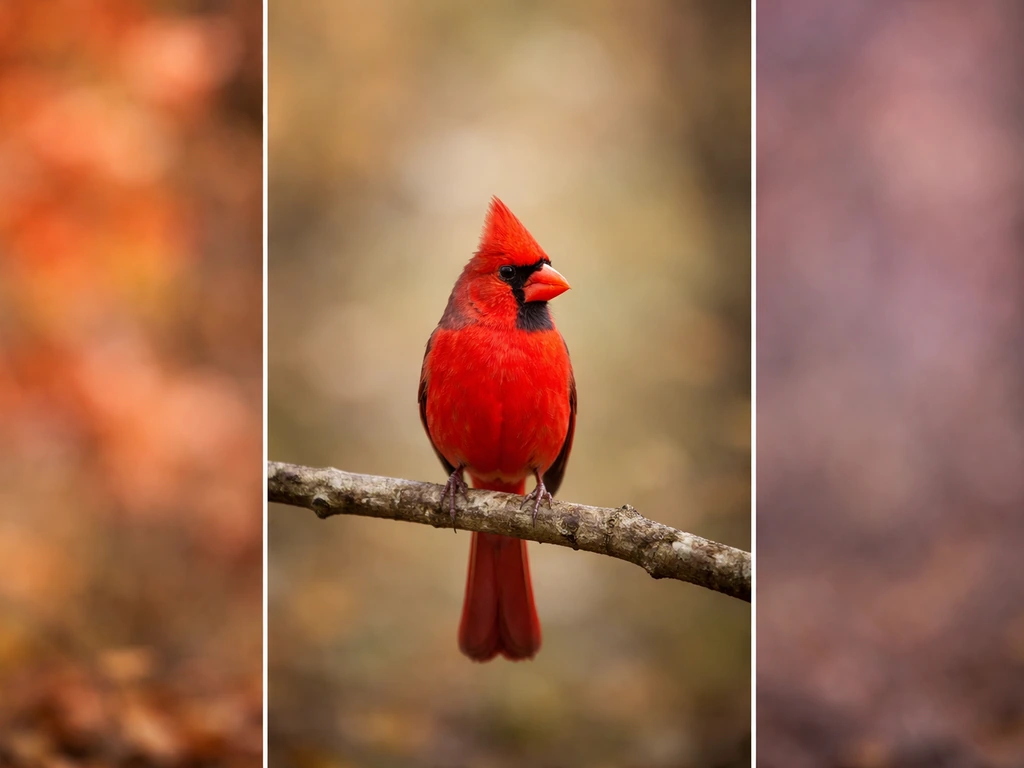
The most common confusion around Virginia's state bird is the overlap with West Virginia. Both states claim the Northern Cardinal, and it's a completely reasonable choice for both. Northern Cardinals are found in every county in West Virginia, where they're described as common both as breeding birds and as year-round winter residents. The situation in Virginia is essentially the same: widespread, abundant, year-round.
The difference between the two states' designations is mostly in the details of timing and process, not in the stated rationale. West Virginia adopted the cardinal about ten months earlier, in March 1949, through House Concurrent Resolution No. 12. Virginia followed in January 1950 with House Resolution No. 9. The Virginia resolution is notable for spelling out the reasoning explicitly, citing bright plumage and cheerful song directly in the resolution text. West Virginia's designation is documented through its official educational and legislative resources but doesn't carry quite the same quoted rationale in the public record.
Virginia and West Virginia are not alone. Indiana and Kentucky also claim the Northern Cardinal as their state bird, making it one of the most shared state birds in the country. You can also look up Indiana's state bird designation to see how the Northern Cardinal (Larry) is recognized there Indiana and Kentucky also claim the Northern Cardinal as their state bird.
For the state bird, both Virginia's and West Virginia's official symbol is the Northern Cardinal, and it is shared across several states. If you're curious about what drove Indiana's or Kentucky's choice specifically, those designations have their own histories worth exploring. For Kentucky, the Northern Cardinal is also the state bird, though its history and legal designation are different from Virginia's Indiana and Kentucky.
You can find a similar explanation for Indiana's choice of the Northern Cardinal as its state bird, too. Indiana adopted the Northern Cardinal as its state bird for similar reasons related to its appearance and song Indiana's choice of the Northern Cardinal as its state bird.
How to identify a Northern Cardinal in Virginia
If you're in Virginia and want to spot the state bird, you're working with good odds. Cardinals are common in backyards, parks, forest edges, and anywhere with dense shrubs or thickets near tree cover. They tend to stay low, foraging near the ground or in shrubs, and they travel in pairs or small groups rather than large flocks.
- Look for the crest first: both male and female cardinals have a pointed crest that stands upright, which no other common backyard bird has.
- Male coloring: all-red body with a black mask around the face and throat, and a thick coral-orange beak. In good light, the red is vivid and hard to miss.
- Female coloring: warm buff-brown overall with reddish tinges on the crest, wings, and tail. The same thick beak and black mask (though softer) are present.
- Listen for the call: a sharp, repeating "twit twit twit" chip note is their most common alarm/contact call. The song is a series of loud, slurred whistles.
- Habitat: check dense shrubs, thickets at forest edges, and backyard feeders with sunflower seeds. Cardinals favor low, tangled cover.
- Juveniles: young birds look similar to females but have a darker, blackish beak rather than the adult's bright coral-orange beak.
The cardinal's non-migratory lifestyle means there's no bad season to look for it in Virginia. Winter is actually one of the best times: the male's red plumage stands out sharply against bare branches, and cardinals will reliably visit feeders when natural food is scarce. If you set up a feeder with black oil sunflower seeds, you have a very good chance of attracting them.
Verifying Virginia's state bird designation yourself
If you want to go straight to the source, the Northern Cardinal is listed in the Code of Virginia under § 1-510, which covers the Commonwealth's official emblems and designations. That statute lists it as "Bird: Northern Cardinal (Cardinalis cardinalis)." For West Virginia, the official West Virginia Legislature educational and state-symbol pages document the March 7, 1949 adoption via House Concurrent Resolution No. 12. Both are publicly accessible and give you the primary-source confirmation if you need it for a school project, a quiz, or just personal verification.
FAQ
Is the Northern Cardinal still Virginia’s state bird, or has it been changed since 1950?
It has remained in place since the 1950 designation. Virginia’s choice is codified in the Code of Virginia under the section that lists the Commonwealth’s official emblems, so it is not treated as a temporary or periodic symbol.
Why did the legislature pick the cardinal specifically, instead of another non-migratory bird?
The resolution language points to two selection criteria, bright plumage and a cheerful song. In practice, the “non-migratory” factor also matters because it makes the bird consistently visible year-round, but that visibility is not the only stated reason in the resolution text.
Do people ever confuse the cardinal with another red bird in Virginia?
Occasionally, especially because many birds can look reddish in certain lighting, but the male Northern Cardinal is distinctive due to the combination of a strong crest and thick, coral-like beak. Knowing that silhouette detail helps you avoid mistaking it for similar songbirds.
Are female cardinals harder to spot, and how can I identify them?
Yes, females are less “red” and more warm buff-brown with reddish tones, so they blend more easily with twigs and shrubs. They still keep the crest and the same chunky beak shape, which are the quickest visual identifiers.
When do cardinals start singing in Virginia, and what should I listen for?
Males sing early in the year, often before many other species sound most active. A common, easy-to-learn call is the short “chip” note pattern, and the longer song is a series of slurred whistles that can repeat.
Are cardinals present in every region and county of Virginia?
They are widely distributed across the Commonwealth rather than limited to a single habitat type. You are most likely to see them where dense shrubs, forest edges, and old-field or backyard cover provide both perches and concealment.
What is the best time and setup to attract cardinals to a feeder in Virginia?
Winter is one of the best times because natural food can drop, and males stand out against bare branches. Use black oil sunflower seeds, place the feeder near cover, and plan for pairs, since cardinals often feed in small groupings rather than as single visitors.
If West Virginia adopted the cardinal first, does that affect how people should credit the bird?
No, each state’s “state bird” status is determined by that state’s own adoption. Virginia’s designation is its own legal act in 1950, even though West Virginia’s earlier adoption in 1949 means the bird is not unique to one timeline.
Do Virginia and West Virginia also share the same exact bird species for their symbols?
They do. Both states designate the Northern Cardinal, the species name is Cardinalis cardinalis. The overlap is why travelers from one state to the other typically do not need to relearn the bird identity.
Is it safe to assume you can spot the cardinal year-round in Virginia?
Yes, because it does not migrate away from the region and remains a winter resident. That said, availability at any specific moment depends on weather and local food sources, so feeder use can improve your odds when conditions are harsher.
Next Article
Why Is the Northern Cardinal Kentucky’s State Bird?
Why Kentucky chose the Northern Cardinal as state bird: history, distinctive traits, statewide presence, and common card