The Carolina Wren is not North Carolina's state bird. This is a very common mix-up, probably because the bird's name includes 'Carolina.' North Carolina's official state bird is the Northern Cardinal, designated by the General Assembly in 1943. If someone told you the Carolina Wren holds that title, or you found it somewhere online, that information is incorrect. The cardinal is the one written into North Carolina law.
Why Is the Carolina Wren North Carolina State Bird?

Marcus Webb
3 Jun 2026
What "state bird" actually means
A state bird is an official symbol chosen by a state's legislature and written into law. It's not a popularity poll or a nickname, it's a formal designation that appears in the state's general statutes. In North Carolina, that law is G.S. 145-2, which names the Northern Cardinal as the state bird. This matches the official wording in North Carolina General Statutes § 145-2, which names the Northern Cardinal as the state bird. Once it's in the statutes, that's the official answer, full stop. No informal tradition or regional nickname changes it.
Most states adopted their state birds between the 1920s and 1940s, often after campaigns organized by birding clubs, wildlife organizations, or schools. The process typically involved a public vote or petition, followed by a bill passed through the state legislature. North Carolina followed exactly that path.
How North Carolina chose the Northern Cardinal in 1943
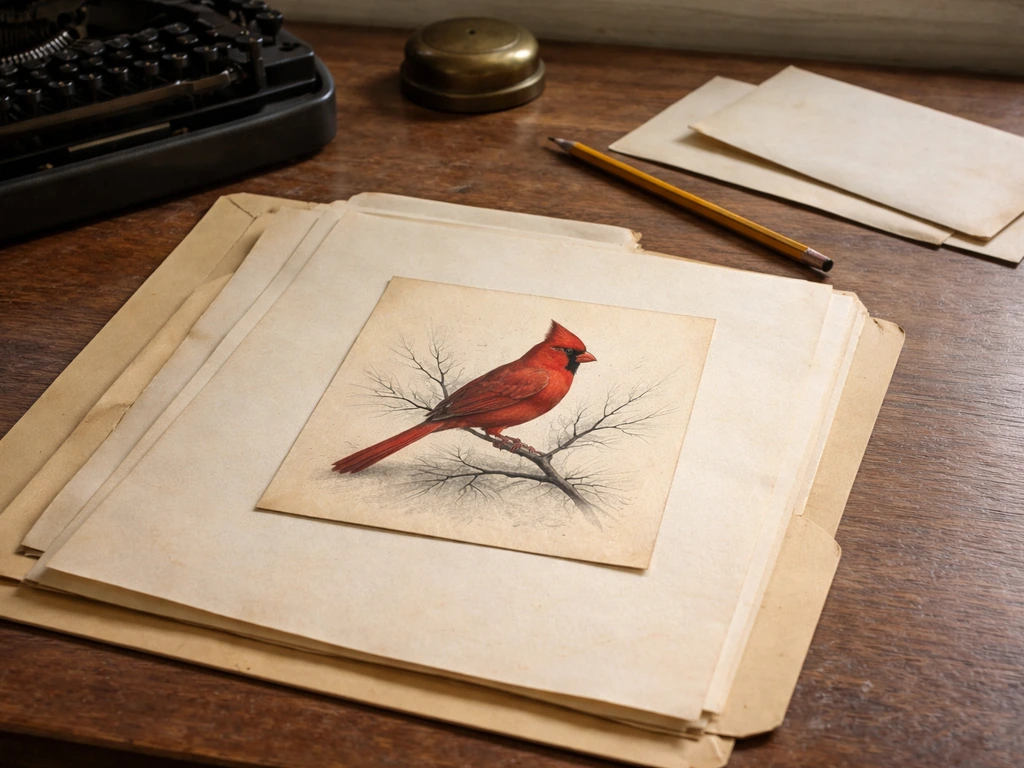
The push for a North Carolina state bird started with the North Carolina Bird Club, which organized a statewide campaign to get residents engaged in the selection. NCpedia explains that the North Carolina Bird Club initiated the statewide campaign for choosing the state bird and publicized it through newspapers, local birding and wildlife clubs, and schools before the General Assembly named the cardinal in 1943 The push for a North Carolina state bird started with the North Carolina Bird Club. They spread the word through newspapers, local birding and wildlife clubs, and schools across the state. The campaign built enough momentum and public support that the General Assembly took it up formally. In 1943, legislators passed the designation making the Northern Cardinal the official state bird of North Carolina, and it has held that title ever since.
The cardinal was a natural fit. It's a year-round resident throughout North Carolina, easy to spot at feeders and in woodlands, and recognizable even to people who don't consider themselves birders. The bright red male is one of the most iconic birds in the eastern United States, which made it a strong symbolic choice.
Why the cardinal, not the Carolina Wren
The Carolina Wren is a wonderful bird, and it does have 'Carolina' in the name, which is almost certainly why people assume it's the state bird. But having a state's name doesn't automatically mean a bird holds an official designation. The Carolina Wren got its name because early naturalists observed it prominently in the Carolinas region, not because any state legislature chose it as a symbol.
The Northern Cardinal, on the other hand, offered the combination of visibility, beauty, and widespread familiarity that made it a compelling official symbol. It was a bird that North Carolinians across all regions, mountains, piedmont, and coast, could recognize and associate with home.
How to identify the Northern Cardinal (the actual state bird)
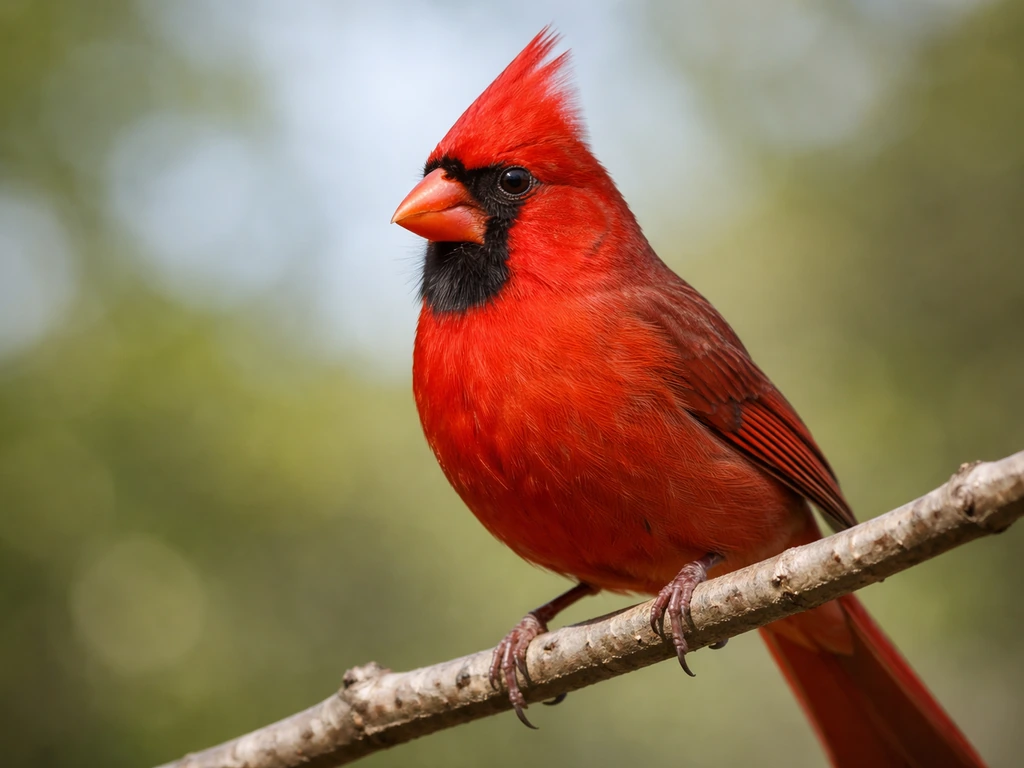
If you're trying to confirm you're looking at the right bird, here's what to look for. The male Northern Cardinal is unmistakable: entirely bright red with a pointed crest on its head, a black mask around the face and throat, and an orange-red bill. Females are buff-brown with reddish tinges on the crest, wings, and tail, still distinctive, with the same crest shape and bill color. Cardinals are medium-sized songbirds, about 8 to 9 inches long, and they tend to perch openly at feeders or in shrubby areas rather than hiding in dense vegetation.
Their call is a loud, clear whistle that many people describe as sounding like 'cheer-cheer-cheer' or 'birdy-birdy-birdy.' Once you know that song, you'll hear cardinals constantly in North Carolina neighborhoods, parks, and forests.
How to tell the Carolina Wren apart
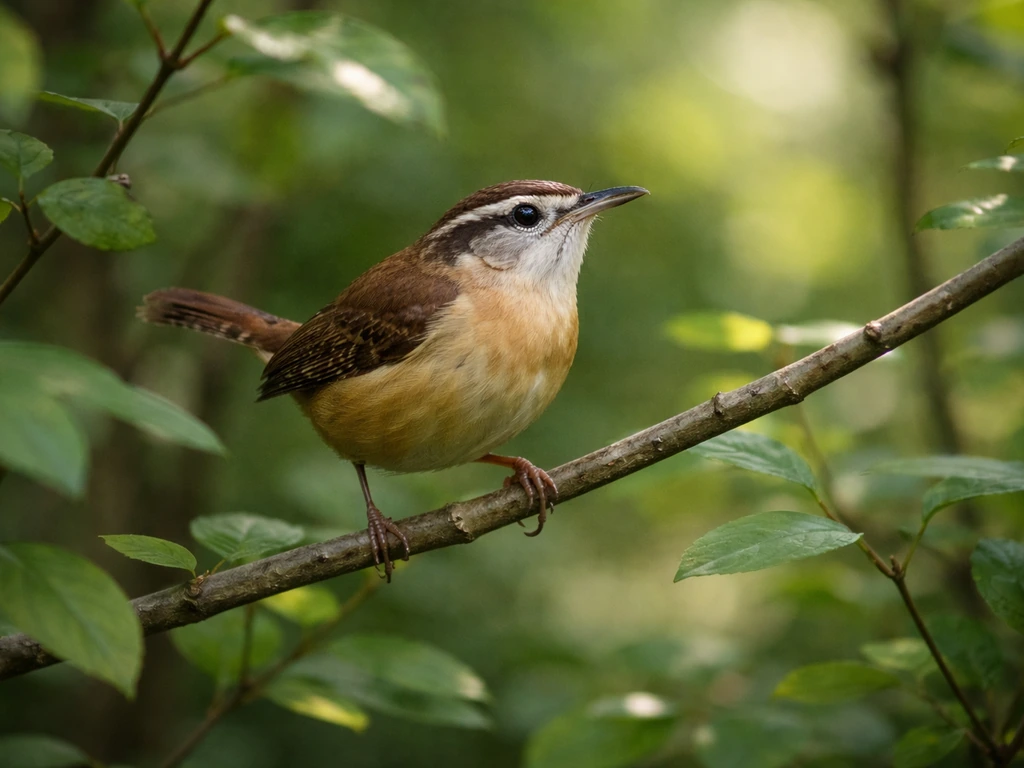
For comparison, the Carolina Wren is much smaller, about 5 inches long, with rich rusty-brown upperparts, a buffy-orange belly, a bold white eyebrow stripe, and a cocked tail it often holds upright. It's a loud singer for its size, but it looks nothing like a cardinal. If you're seeing a red bird with a crest, you've got a cardinal. If you're seeing a small, chunky brown bird with a striped face rummaging through leaf litter or dense brush, that's a Carolina Wren.
The cardinal across state lines
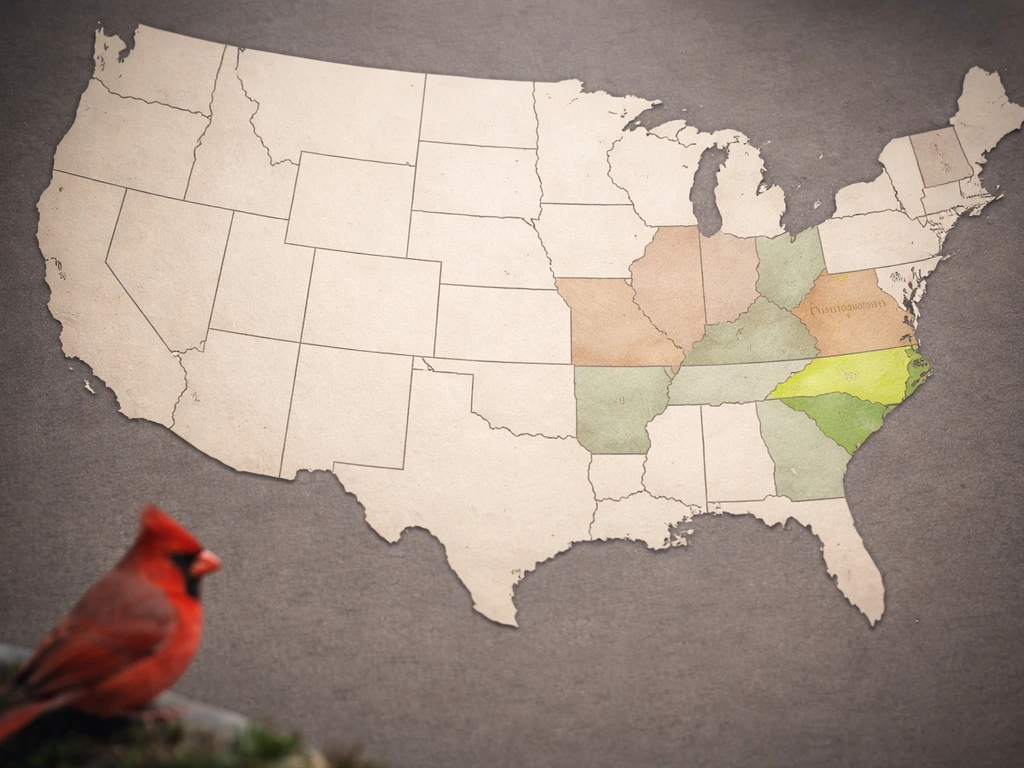
North Carolina is not alone in choosing the Northern Cardinal. It's actually the most popular state bird in the country, shared by seven states: Illinois, Indiana, Kentucky, North Carolina, Ohio, Virginia, and West Virginia. That widespread selection reflects just how common and beloved the cardinal is across the eastern half of the United States.
| State | Official State Bird | Year Designated |
|---|---|---|
| North Carolina | Northern Cardinal | 1943 |
| Virginia | Northern Cardinal | 1950 |
| Kentucky | Northern Cardinal | 1926 |
| Indiana | Northern Cardinal | 1933 |
| Ohio | Northern Cardinal | 1933 |
| Illinois | Northern Cardinal | 1929 |
| West Virginia | Northern Cardinal | 1949 |
North Carolina, South Carolina, and their birds
It's worth knowing that South Carolina's state bird is different: South Carolina chose the Carolina Wren as its official state bird. So the confusion between the two states and their birds is understandable. The Carolina Wren is South Carolina's symbol, while North Carolina went with the Northern Cardinal. If you're researching South Carolina specifically, you'll find the Carolina Wren is indeed official there, just not in North Carolina.
This split between the two Carolinas is a good reminder to always check which state you're looking up. For South Carolina, the official state bird is the Carolina Wren South Carolina's state bird. The sibling topics on this site covering North Carolina's state bird and South Carolina's state bird go deeper into each state's specific history and reasoning if you want the full picture on either side.
Where to go from here
If you came here wanting to understand why North Carolina picked the bird it did, the short version is: the Northern Cardinal was a grassroots choice championed by birding clubs, popularized through schools and newspapers, and formally adopted in 1943 because it was a familiar, beautiful, year-round resident that resonated with people across the whole state. The Carolina Wren, despite its name, is South Carolina's symbol, not North Carolina's.
- Look up North Carolina's state bird page on this site for the full legislative and cultural history of the cardinal designation
- Check the South Carolina state bird page if you're specifically researching the Carolina Wren's official status
- Review the comparison of which states share the Northern Cardinal to understand how common this choice was across the eastern US
- Use the cardinal identification details above to confirm you're spotting the right bird in the field
FAQ
How can I verify which bird is actually the official state bird for North Carolina?
Search for the designation in the state’s general statutes, not in social posts or “fact lists.” In North Carolina, the official title is defined in law as the Northern Cardinal, so anything claiming the Carolina Wren is the state bird is a misinformation error, even if it is widely repeated.
If a lot of people think it is, does that make it the state bird anyway?
No. A state bird is not chosen by popularity, social media voting, or local tradition. Once the legislature writes it into the statutes, it stays the official symbol until changed by a new law.
I saw a “Carolina” bird that looked brown, was it still the Northern Cardinal?
The Carolina Wren and the Northern Cardinal are different species with distinct sizes, colors, and behaviors. If you see a small brown bird with a bold white eyebrow stripe and a cocked, upright tail rummaging in leaf litter or dense brush, that is much more consistent with a Carolina Wren than with a red cardinal.
What are the quickest visual cues to tell a Northern Cardinal from a Carolina Wren?
It is possible to spot a red bird and mistake it for a cardinal, but the key is the combination of traits. Cardinals have a full bright red body in males plus a black facial mask and a pointed crest. The Carolina Wren is rusty-brown with white eyebrowing and no black face mask.
Why is the Carolina Wren commonly linked to North Carolina, even though it is not?
Because “Carolina” appears in both common names, people often assume North Carolina and South Carolina share the same state bird. They do not: North Carolina’s official bird is the Northern Cardinal, while South Carolina’s official bird is the Carolina Wren.
What should I do if I find an online source claiming the Carolina Wren is North Carolina’s state bird?
No official bird designation should depend on where you saw it. If an article or website says the Carolina Wren is North Carolina’s state bird, but you cannot find the claim reflected in North Carolina’s legal statute, treat it as incorrect.
When researching, how do I avoid mixing up North Carolina and South Carolina state-bird information?
If you are comparing across both Carolinas, make sure you are reading the correct state-specific page or statute. One simple way is to confirm whether the wording matches North Carolina law for the Northern Cardinal, versus South Carolina’s law for the Carolina Wren.
Does where the bird shows up in my area affect whether I’m seeing the correct state-bird candidate?
Look for the region and habitat where the bird is being reported. Cardinals are well known at feeders and are often visible openly, while Carolina Wrens are smaller and more likely to stay in leaf litter, dense shrubs, or near ground-level cover.
Why does the Carolina Wren’s name cause so much confusion about state-bird status?
The bird’s name can mislead, but the official status comes from legislative adoption. The Carolina Wren is named for where it was observed historically, not because it was legislated as North Carolina’s state symbol.
Is being common or protected in North Carolina enough to make a bird the state bird?
The state bird question is separate from conservation or “state wildlife” programs. Even if a bird is common or loved, it still needs a formal legislative designation to be a state bird under North Carolina law.