Louisiana's official state bird is the brown pelican, sometimes listed on state documents as the Eastern brown pelican. The designation became law on July 27, 1966, and the bird has appeared on Louisiana's official seal, flag, and quarter ever since. Louisiana law states that after July 27, 1966, the blank" rel="noopener noreferrer">official bird of Louisiana is the Brown Pelican, as it appears on the Louisiana state seal, and authorizes its use on the seal, other insignia, and all official documents. If you’re wondering why the brown pelican was chosen, the answer includes Louisiana’s long connection to the bird and the impact of pesticides on its population why is the brown pelican louisiana state bird. If you're wondering what bird is on the Louisiana flag, it is the brown pelican state documents. No other U.S. state shares it.
What Is the State Bird of Louisiana? Facts and ID Tips

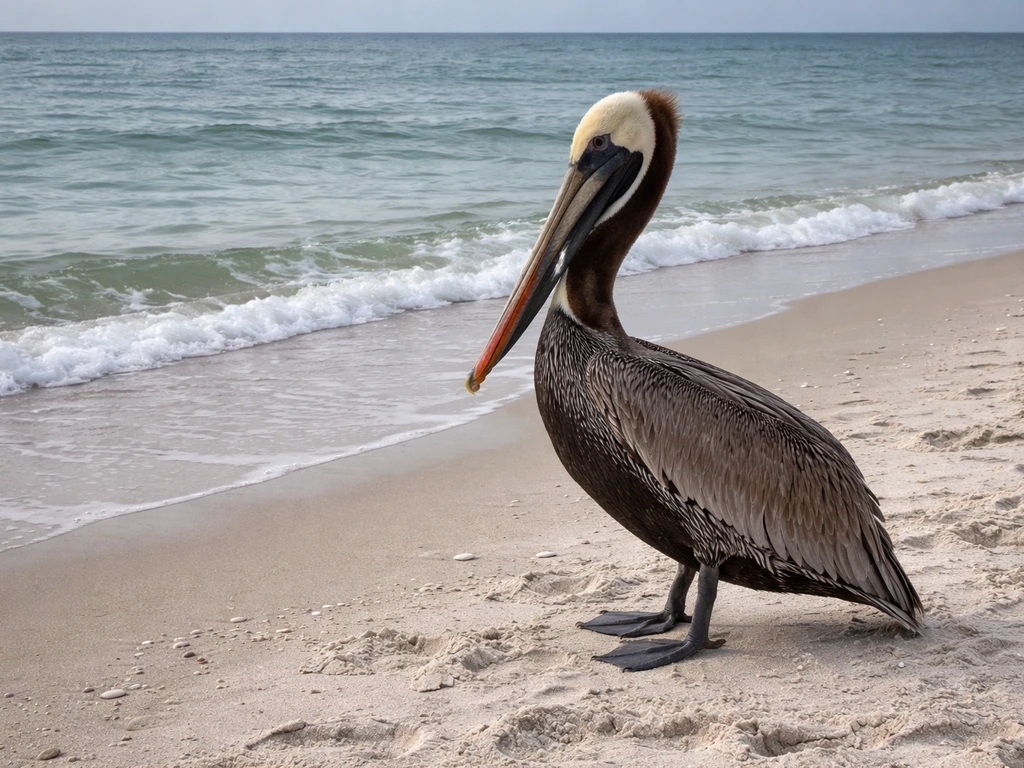
Louisiana's State Bird: The Brown Pelican
The U.S. Fish and Wildlife Service, Louisiana.gov, and the Louisiana House of Representatives all confirm it: the brown pelican is Louisiana's state bird. The statute uses the name "Brown Pelican," while some official state symbol pages say "Eastern Brown Pelican" to distinguish it from the California brown pelican subspecies. Both names refer to the same bird you see diving off Louisiana's Gulf Coast today.
Why Louisiana Picked the Brown Pelican (and the Painful Irony Behind It)
The brown pelican has been tied to Louisiana's identity for centuries. It appears on the state seal and state flag in a scene of a mother pelican feeding her chicks, a symbol known as the "pelican in her piety" that dates back to early Louisiana statehood. So by 1966, making it the official state bird felt like a natural formality.
Here's the twist: by the time Louisiana officially designated the brown pelican its state bird in 1966, there were no breeding pelicans left in the state. USGS records show the disappearance of brown pelicans from Louisiana was complete by 1963, driven largely by pesticide contamination (especially DDT) that thinned eggshells and devastated reproduction. Louisiana essentially honored a bird it had just lost.
The state moved quickly to fix that. From 1968 through 1976, the Louisiana Department of Wildlife and Fisheries partnered with other agencies to relocate brown pelican chicks to coastal Louisiana, including Queen Bess Island, a key nesting site. From 1968 through 1976, LDWF says 767 brown pelican chicks were captured from Florida's Atlantic Coast and relocated to coastal Louisiana, including Queen Bess Island. The recovery effort worked. Brown pelicans are now a common sight along Louisiana's coast year-round, which makes the 1966 designation feel less like nostalgia and more like a promise that got kept.
How to Recognize a Brown Pelican
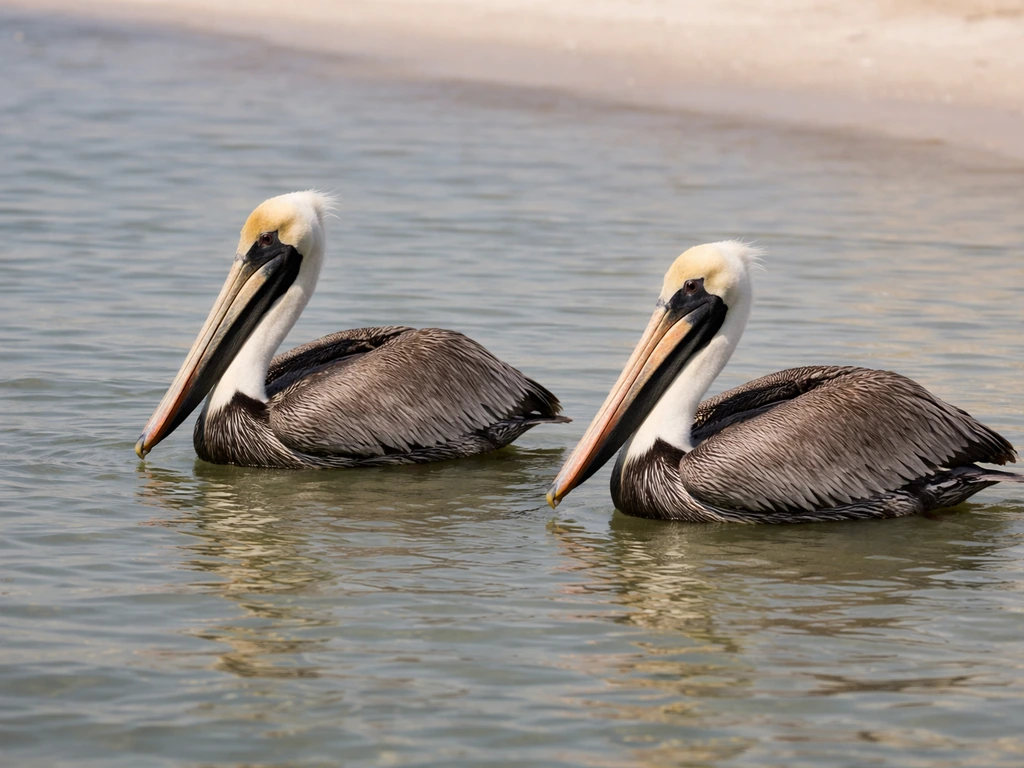
If you're heading to coastal Louisiana and want to spot one, you won't have much trouble. Brown pelicans are hard to miss, and their behavior is even more distinctive than their looks.
Size and Shape
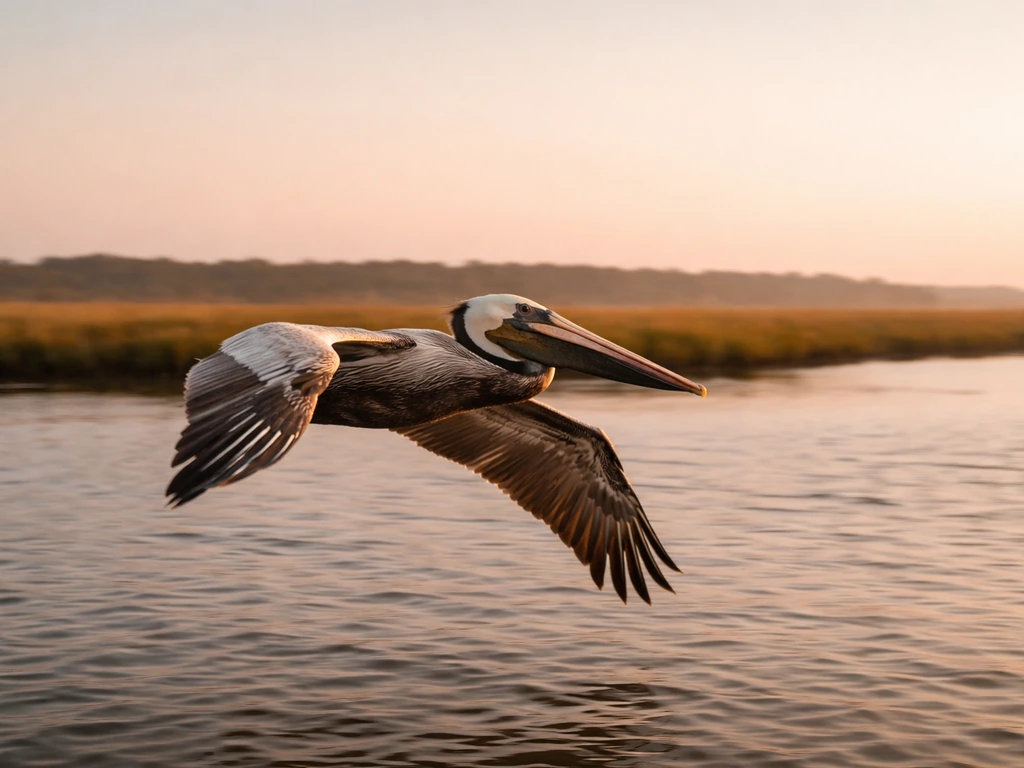
Brown pelicans are large, heavy birds, roughly 41 to 54 inches long with a wingspan that can reach 90 inches (about 7.5 feet). They have the classic pelican silhouette: a long, thick bill with a flexible, expandable throat pouch hanging beneath it. In flight, they often glide low over the water in single-file lines, which is one of the easiest ways to confirm what you're seeing.
Plumage and Coloring
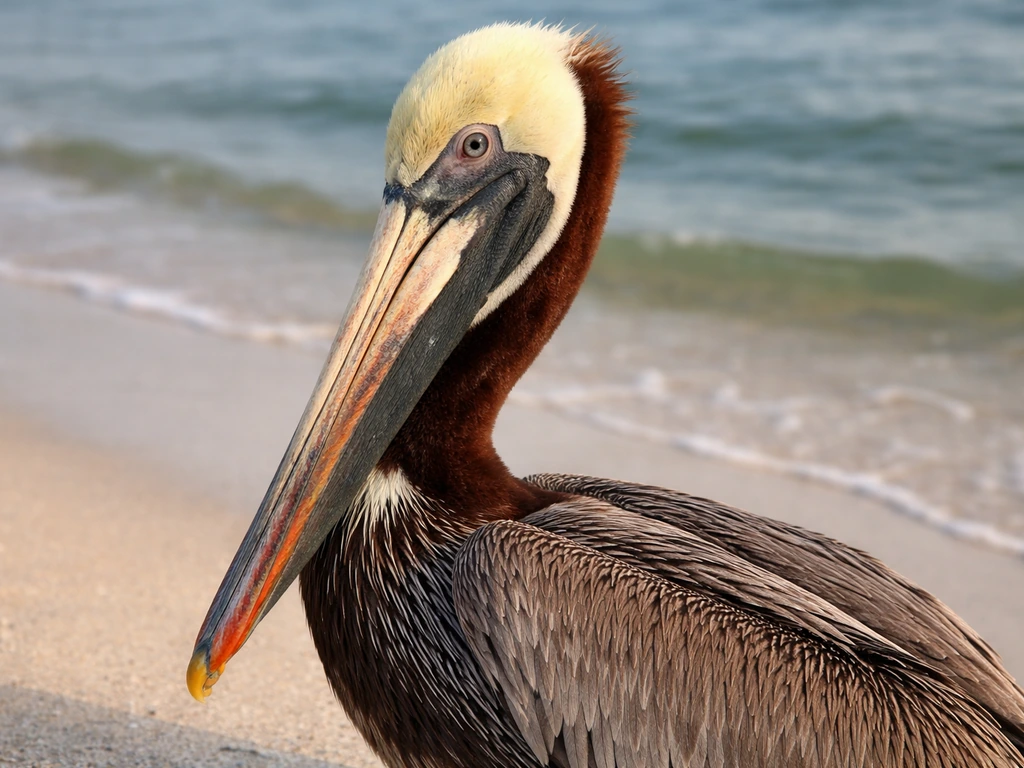
As the name suggests, brown pelicans are dark overall, with grayish-brown bodies, a white or yellowish head, and a chestnut-brown neck that deepens in color during breeding season. This is the easiest way to tell them apart from American white pelicans, which are dramatically white with black wingtips. If the bird you're looking at has bold white-and-black contrast, it's not a brown pelican.
Behavior and Habitat
Brown pelicans are almost entirely coastal birds. They live on shorelines, barrier islands, and small coastal colonies, rarely venturing far inland. Their hunting style is unmistakable: they spot fish from the air and plunge headfirst into the water, using that pouch like a net to scoop up a meal. When defending a nest, they snap their bill shut with a loud pop that resonates through the throat pouch. Along Louisiana's Gulf Coast, you can find them year-round.
What a State Bird Actually Is
A state bird is an officially designated animal symbol adopted by a state legislature to represent the state's natural heritage and regional identity. Most states chose their state birds in the early-to-mid 20th century, often based on popular votes, wildlife surveys, or cultural significance. The designations are enshrined in state law, which is why Louisiana's brown pelican has a specific effective date (July 27, 1966) written into the statute. The law also authorizes use of the bird's image on the state seal and other official insignia, which is why you see pelicans on Louisiana's flag, quarter, and government documents. State birds don't come with federal legal protections on their own, but many are independently protected under laws like the Migratory Bird Treaty Act.
Does Any Other State Share the Brown Pelican?
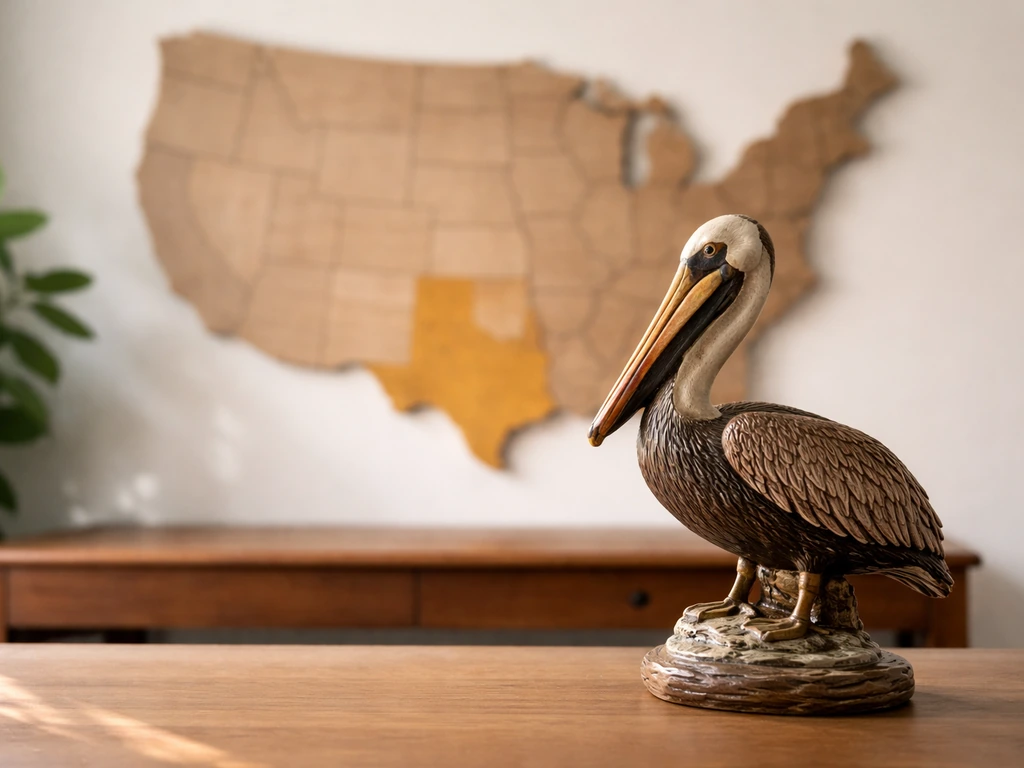
No. Louisiana is the only U.S. state with the brown pelican as its official state bird. This makes it one of the more distinctive state bird choices in the country, since many states share common picks. The northern cardinal, for example, is the state bird of seven states, including Mississippi and Missouri. In Missouri, you might see the northern cardinal often, so it is considered the most common bird in the state most common bird in Missouri. The northern cardinal is often confused with other red songbirds, but it is the state bird of Missouri. The eastern bluebird is shared by Missouri and New York. The eastern bluebird is Missouri's state bird, and its origin is explained in our guide on why it was chosen why is the eastern bluebird missouri state bird. The brown pelican stands alone, which fits Louisiana's unique coastal identity pretty well.
| State Bird | States That Share It | Louisiana's Status |
|---|---|---|
| Brown Pelican | Louisiana only | Unique — no other state shares it |
| Northern Cardinal | 7 states (including Mississippi) | Not Louisiana's bird |
| Eastern Bluebird | 2 states (including Missouri) | Not Louisiana's bird |
| Western Meadowlark | 6 states | Not Louisiana's bird |
Where to See One in Louisiana
Brown pelicans are present along Louisiana's Gulf Coast year-round, making them one of the easier state birds to actually observe in their home state. The barrier islands and coastal marshes around the Atchafalaya Basin, Grand Isle, and the Chandeleur Islands are reliable spots. Queen Bess Island, the very site of the 1968 reintroduction effort, remains an active nesting colony. If you want the full experience, visit during nesting season (late winter through spring) when the adults' necks turn a deep chestnut brown and the colonies are active and loud.
If you're curious how Louisiana's choice compares to neighboring states, Mississippi's state bird is the northern mockingbird, a completely different type of species found in very different habitat. And if you want to dig deeper into the pelican's role in Louisiana's identity beyond just the state bird designation, the bird also appears on the Louisiana state flag and the Louisiana state quarter, each with its own interesting backstory.
FAQ
Is the Louisiana state bird definitely the brown pelican, or is it ever listed differently?
It is officially the Brown Pelican in the 1966 statute, but you may also see the name Eastern Brown Pelican on some informational state symbol pages. Those labels refer to the same Louisiana bird, not a different species.
What is the official law date for when Louisiana adopted the state bird?
The designation became law on July 27, 1966. That specific effective date is part of the statute, which is why many state symbol references include it rather than just the year.
Why do people sometimes mix up brown pelicans with other pelicans like the American white pelican?
A quick field check is color contrast. American white pelicans are mostly white with black wingtips, while brown pelicans are dark overall and show a more subdued gray-brown body with a lighter head.
Where are the best places to spot Louisiana brown pelicans year-round?
Look along the Gulf Coast in coastal colonies and near barrier islands and marshy shorelines. Locations mentioned in local recovery work include areas around Queen Bess Island, and nesting colonies are especially active from late winter through spring.
Are brown pelicans the same as “sea birds” that you might see offshore far from land?
Brown pelicans in Louisiana are strongly tied to coastal habitat. They may range near the shoreline to feed, but they rarely push far inland, so sightings are usually near coasts, passes, or barrier islands rather than deep inland waters.
Can you still see brown pelicans in Louisiana because of the pesticide history mentioned in the article?
Yes. The article notes brown pelicans were missing as breeders by 1963, but Louisiana relocated chicks during 1968 to 1976. Since then, they have become common along the coast year-round.
Does being a state bird give the brown pelican legal protection?
Not automatically. State bird status is a symbolic designation, but wildlife protection usually comes from separate federal or state conservation rules, and the article notes that birds are often covered under broader protections like the Migratory Bird Treaty Act.
Which bird is the Louisiana state bird in case someone is checking for “multiple state birds”?
Louisiana has only one official state bird. It is the brown pelican, and the article emphasizes no other U.S. state shares that exact choice.

Missouri state bird is the Eastern Bluebird, official since 1927; plus quick ID tips and where to spot it.

Eastern bluebird became Missouri state bird in 1927 for its common presence and symbol of happiness.

Mississippi state bird is the northern mockingbird, plus quick ID tips and where to verify the official law.