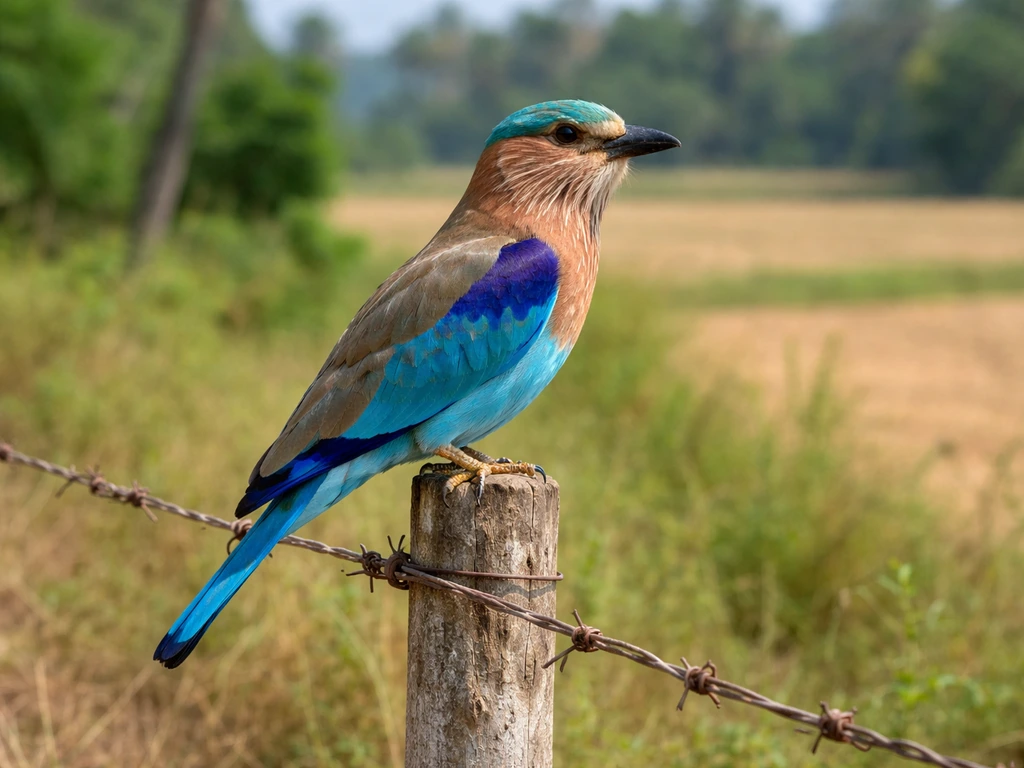
Missouri's official state bird is the Eastern Bluebird (Sialia sialis), and that has been true since 1927 when the Missouri General Assembly passed legislation making it official.
What Is the State Bird of Missouri? Eastern Bluebird Answer

Marcus Webb
27 Mar 2026

If you need to confirm this for a school project, a trivia night, or just personal curiosity, the fastest and most reliable source is the Missouri Secretary of State's state symbols page, which lists the Eastern Bluebird by name alongside the relevant statute. The law itself, codified as RSMo Section 10.010, reads: 'The native bluebird (Sialia Sialis) is selected for and shall be known as the official bird of the state of Missouri.' Hard to get more official than that.
Why Missouri picked the bluebird back in 1927
The Missouri Legislature passed Senate Bill 321 on March 30, 1927, designating the bluebird as the state's official bird. A Missouri Botanical Garden conservation document also says the Eastern Bluebird was blank" rel="noopener noreferrer">made Missouri’s state bird on March 30, 1927. The reasoning was pretty straightforward: the bird was common across Missouri, and it had long been considered a symbol of happiness. the Eastern Bluebird's red, white, and blue coloring The Missouri Department of Conservation also points out that the bird's red, white, and blue coloring gave it an extra layer of American symbolism that made it a natural fit for a state emblem.
The statute was later codified and given an effective date of August 28, 1957, but the original designation goes all the way back to 1927. So when someone asks what is Missouri's state bird and when that became official, the answer is the Eastern Bluebird, nearly a century ago.
What the Eastern Bluebird actually looks like

The Eastern Bluebird is a small thrush with a plump, rounded body and a short, straight bill. Once you know what to look for, it's genuinely easy to pick out of a crowd of birds. The male is the showier of the two: bright blue on top with a warm rust-colored throat, breast, and sides, and a clean white belly. Females are similar in shape but softer in color, with grayish-blue upperparts instead of the vivid blue the males carry.
The rust-plus-white-plus-blue combination is the fastest ID shortcut. If you see a small bird with those three colors arranged that way, you're almost certainly looking at an Eastern Bluebird. The only birds that sometimes cause confusion are the indigo bunting and the blue grosbeak, both of which are mostly solid blue without the rusty chest or white belly. The blue grosbeak is also noticeably chunkier with a large, triangular silvery bill, and the indigo bunting is smaller with a conical seed-cracker bill, so once you've seen all three side by side, the bluebird stands apart pretty clearly.
Listening for bluebirds
The song is a blurry, whistled series of notes, gentle and melodic rather than sharp or piercing. The call note is described as 'chuiree,' with a soft downward slide that rises slightly at the end. If you're out in a Missouri field in early spring and you hear something that sounds like a quiet, musical chatter coming from a fencepost, look up. That's often your first clue.
When and where to find them in Missouri
Eastern Bluebirds are present in Missouri year-round, though they're most reliably seen from mid-March through the end of November. In southern Missouri, they tend to stick around through winter. In the rest of the state, they're most active and visible in spring and summer, arriving at nesting sites as early as February. First eggs are typically laid in March, and the first broods of young birds fledge somewhere between April and May.
Habitat-wise, they love open areas. Grasslands with scattered trees, farmland edges, and rural backyards are classic bluebird territory. The Missouri Department of Conservation notes they seem to especially favor the rolling countryside of Missouri, where you can often spot them flitting from fencepost to fencepost on a bright spring morning. That's still one of the best images to hold in your head when you're looking for them: an open field, a wooden fencepost, a small bright-blue bird sitting upright on top of it.
How to attract Eastern Bluebirds to your yard

One thing that trips up a lot of people: bluebirds do not eat seeds. They won't show up at a standard bird feeder stocked with sunflower seeds or millet. If you've been wondering why you never see them at your feeders, that's almost certainly why. They're insect eaters, and they'll also take berries and fruit. Audubon’s Eastern Bluebird account describes the species’ diet as primarily insects and other invertebrates They're insect eaters.
To actually bring them in close, the two most effective strategies are nest boxes and the right food. For food, the Missouri Department of Conservation suggests things like cornmeal cakes made with bacon drippings, dried or frozen berries, and raisins. These mimic what bluebirds naturally forage for, and placing them on a platform feeder or tray rather than a tube feeder works much better.
For nest boxes, placement and design matter. Bluebirds are cavity nesters but they face stiff competition from house sparrows and other aggressive species. University of Missouri Extension research points to specific nest box designs that help deter competitors, including boxes with a long, narrow slit opening at the top instead of a standard round hole. That kind of opening tends to be less attractive to house sparrows while still welcoming bluebirds. Putting up a properly designed bluebird box in an open area with a clear flight path, away from dense shrubs, gives you a solid chance of hosting a nesting pair each spring.
Missouri's state bird and flower, in case you need both
If you're looking up Missouri's state symbols as a package, the state flower is the White Hawthorn Blossom (Crataegus), designated in 1923. So the pairing is the Eastern Bluebird and the White Hawthorn Blossom. Both were chosen in the early 20th century as plants and animals that genuinely represented everyday Missouri life, which makes them feel a little more grounded than some state symbols chosen for purely political reasons.
Quick facts at a glance
| Detail | Answer |
|---|---|
| Official state bird | Eastern Bluebird |
| Scientific name | Sialia sialis |
| Year designated | 1927 |
| Authorizing legislation | Missouri Senate Bill 321 (1927); codified as RSMo Section 10.010 |
| Reason for selection | Common in Missouri; symbol of happiness; red, white, and blue coloring |
| Male field marks | Bright blue above, rust-colored throat and breast, white belly |
| Female field marks | Grayish-blue above, softer rust tones, white belly |
| Best time to spot in Missouri | Mid-March through end of November; year-round in southern Missouri |
| Preferred habitat | Grasslands, farmland edges, rural backyards with scattered trees |
| Feeder tip | Does not eat seeds; use cornmeal cakes, berries, or raisins on a tray feeder |
If you want to go straight to the primary source, the Missouri Secretary of State's office maintains an official state symbols page that lists the Eastern Bluebird with the statute citation included. Mississippi’s state bird is the Northern Mockingbird what is the state bird of mississippi. Louisiana's state bird is also listed on its official state symbols resources, so you can verify it quickly for a project what is the state bird of mississippi. Louisiana’s designation is the brown pelican, and you can learn more about why it was chosen from the state’s official symbols information why is the brown pelican louisiana state bird. If you are wondering what bird is on the Louisiana flag, the answer is tied to Louisiana's state bird designation. The Louisiana quarter features the same Louisiana state bird, the brown pelican. That's the most authoritative confirmation available, and it takes about thirty seconds to find. For classroom use or educational purposes, the Missouri Department of Conservation's bluebird profile and field guide pages are the most detailed free resources out there, with range maps, audio recordings of the calls, and nesting information all in one place. If you are really trying to figure out what is the most common bird in missouri (not just the state bird), you may also want to compare it against local backyard and field observations.
FAQ
What if the question just says “bluebird,” is it still the Eastern Bluebird?
Yes. Missouri’s official state bird is the Eastern Bluebird, and there is a separate state bird for other states that are often confused with it. If your quiz question just says “bluebird,” go with Eastern Bluebird for Missouri.
How should I write the answer for a school or trivia question?
For Missouri projects, write it exactly as “Eastern Bluebird (Sialia sialis)” and include the year 1927 if you can. Many graders accept the name alone, but adding the scientific name and the designation year makes it harder for anyone to argue.
What are the fastest visual clues to be sure it’s an Eastern Bluebird?
The quick way to confirm is color layout. Look for a small bird with a bright blue back, a rusty or warm reddish throat and breast, and a white belly. If it is mostly solid blue with no rusty chest or white belly, it is probably not an Eastern Bluebird.
How do I avoid mixing up the Eastern Bluebird with similar blue birds in Missouri?
Even though Missouri has multiple “blue” species, the Eastern Bluebird is the state bird, not the indigo bunting or blue grosbeak. The indigo bunting is smaller and more uniformly blue, and the blue grosbeak is chunkier with a noticeably larger, triangular bill.
If Eastern Bluebirds are Missouri’s state bird, why don’t I see them at my seed feeder?
They can be a challenge at feeders because they typically do not feed on common seed mixes. If you want to try attracting them, plan on nest boxes plus food placed on a tray or platform (for example, fruit or meal-based foods), since tube feeders with seed are unlikely to bring them in.
What’s the biggest mistake people make when trying to attract Eastern Bluebirds with nest boxes?
If you are using a nest box, spacing and entry size matter because Eastern Bluebirds are cavity nesters that face competition. Use a box sized for small cavity nesters, and place it to reduce conflict with house sparrows (they can quickly take over poorly designed boxes).
When is the best time to spot or attract Eastern Bluebirds in Missouri?
They nest early. You can often see activity around February through spring, with eggs typically laid in March and young fledging around April to May. If you go looking in mid-winter in north Missouri, you might see fewer actively nesting birds.
Are Eastern Bluebirds in Missouri year-round, or only during nesting season?
Missouri’s state-bird status does not change by season, but your ability to see one does. They are present year-round in Missouri, with the easiest viewing from mid-March through the end of November, and winter sightings are more likely in southern Missouri.
Why do some sources mention an “effective date” later than 1927?
The official answer is Eastern Bluebird, and it is tied to Missouri law passed in 1927. Later codification details can show different effective dates in statute updates, but the designation year for the state bird remains 1927.