Oregon chose the Western Meadowlark as its state bird in 1927 because schoolchildren across the state voted for it in an election sponsored by the Oregon Audubon Society, and Governor I. Patterson officially proclaimed it the state bird that July. The bird won because it was already deeply familiar to Oregonians: its loud, flute-like song rang out across farmland, grasslands, and sagebrush country from the coast to the high desert, making it one of the most recognized wild birds in the state. It wasn't a political pick or an ornithologist's obscure choice. Kids knew it, farmers heard it every morning, and it looked and sounded like Oregon.
Why the Western Meadowlark Is Oregon’s State Bird

Marcus Webb
17 May 2026
Confirming Oregon's state bird (and making sure we're talking about the right species)
Oregon's official state bird is the Western Meadowlark, scientific name Sturnella neglecta. That's confirmed in Oregon's official Blue Book, published by the Oregon Secretary of State. There's a small wrinkle in the official naming worth knowing: the 2017 Oregon Legislature passed SCR 18, which formally designated the Western Meadowlark as Oregon's "State Songbird" and simultaneously named the Osprey as the state's official raptor. So in current statute, the meadowlark is officially the state songbird, though it's still widely listed and recognized as Oregon's state bird in general reference and education contexts. Either way, Sturnella neglecta is the bird.
How to recognize a Western Meadowlark in the field
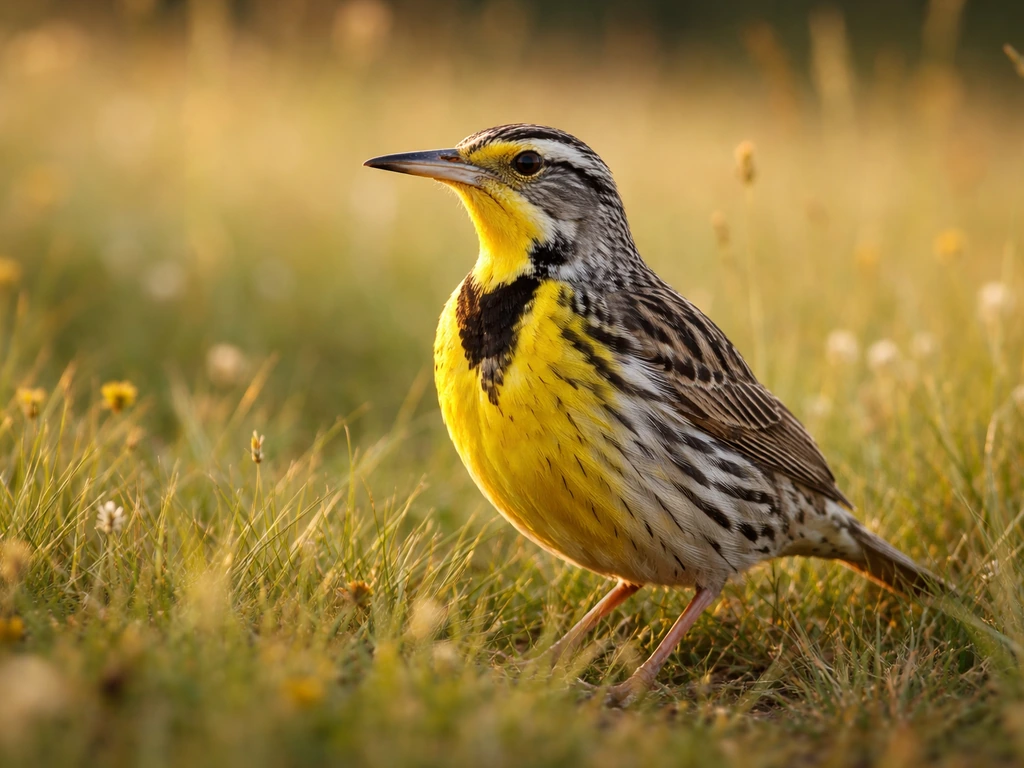
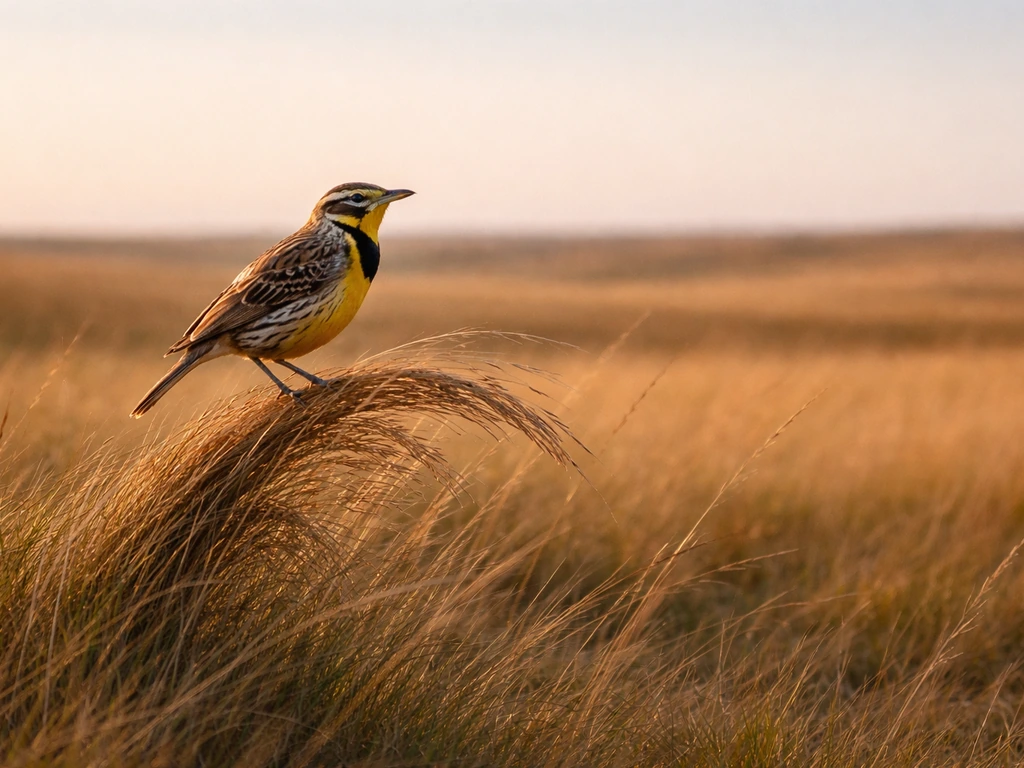
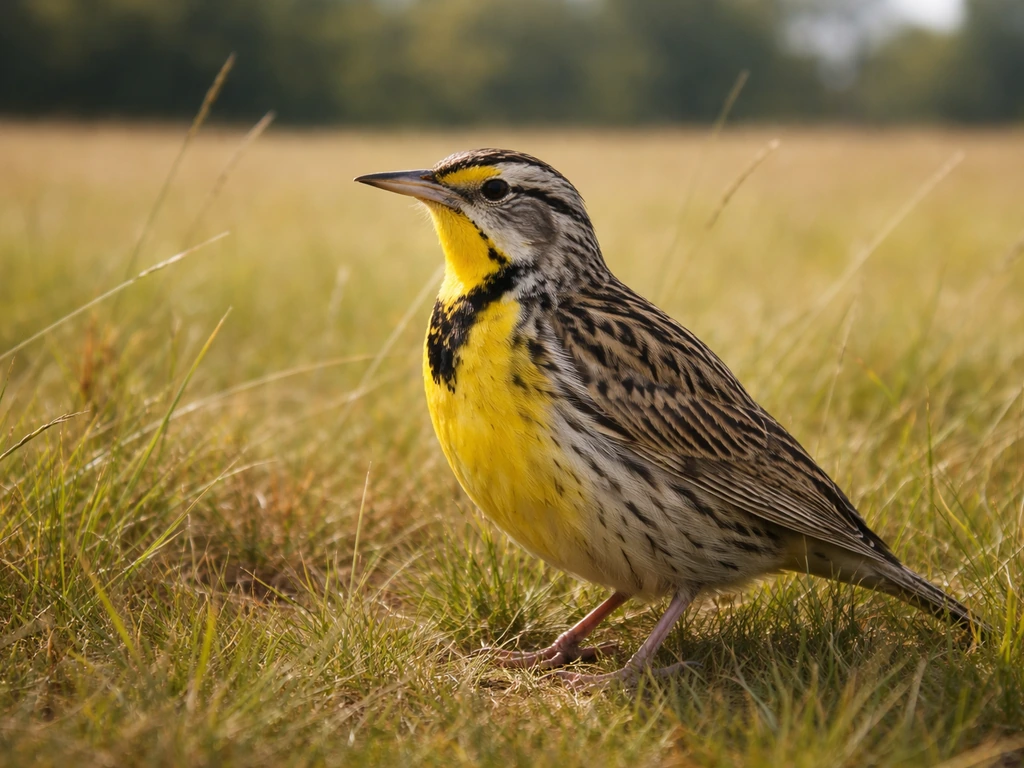
The Western Meadowlark is roughly the size of a robin, but noticeably chunkier and shorter-tailed, with a flat head and a long, slender bill. The field mark that makes identification nearly instant is the bright yellow breast crossed by a bold black "V" shape. The back and wings are brown with buff and black streaking, and when the bird flies, the outer tail feathers flash white. You're unlikely to confuse it with anything once you've seen that yellow-and-black chest.
The one species that trips people up is the Eastern Meadowlark, which looks almost identical. The two are so visually similar that birders rely primarily on song to tell them apart. The Western Meadowlark's song is a rich, bubbling, flute-like call with multiple complex notes. The Eastern Meadowlark's song is simpler, consisting of clear, descending whistles. In Oregon, you're almost certainly hearing and seeing a Western Meadowlark, since the Eastern Meadowlark's range doesn't extend here. But knowing the song difference is still worth it if you ever travel east.
The history of how it became Oregon's state bird
The story goes back to 1927. The Oregon Audubon Society organized a statewide election for schoolchildren to vote on a state bird. This was part of a broader civic education movement happening across the country at the time, where states were formalizing official symbols and engaging the public in the process. Oregon's children voted, and the Western Meadowlark won. Governor I. Patterson issued a proclamation in July 1927 making it official.
Importantly, no legislative action accompanied that 1927 proclamation. The designation rested on the Governor's proclamation alone for nearly 90 years. It wasn't until 2017 that the Oregon Legislature formally acted, passing SCR 18 to officially designate the Western Meadowlark as the State Songbird and the Osprey as the State Raptor. blank" rel="noopener noreferrer">Oregon Revised Statutes Chapter 186 codifies Oregon's state emblems, including the Western Meadowlark as the official songbird and the Osprey as the official raptor. That 2017 action gave the meadowlark a statutory home in Oregon law, under Oregon Revised Statutes Chapter 186, which covers state emblems.
Why the Western Meadowlark was the right choice for Oregon
There are a few reasons this bird resonated with Oregonians enough to win a statewide vote of schoolchildren, and they hold up even today.
The song is impossible to ignore
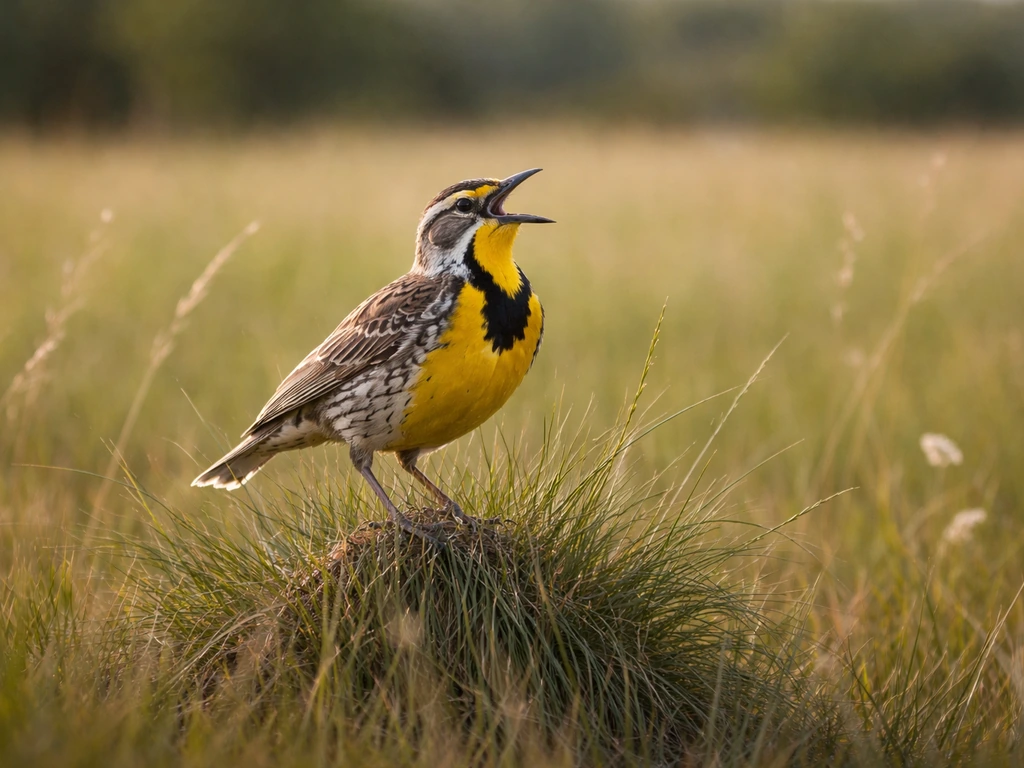
Oregon's Blue Book specifically calls out the Western Meadowlark as "distinctive for its flute-like song," and that's not just official language. The song is genuinely one of the most striking bird calls in North America. It's loud, melodic, and complex, the kind of sound that stops you mid-step. For generations of Oregonians growing up in agricultural and rural areas, that song was the soundtrack of spring mornings. The Oregon Encyclopedia notes that the "distinctive song heard throughout farm country" was central to why the bird was recognized and ultimately chosen.
It represents the full breadth of Oregon's landscape
Oregon has remarkable geographic diversity, from the wet Willamette Valley to the dry sagebrush steppe of eastern Oregon to the high desert. The Western Meadowlark covers a lot of that range. The Oregon Department of Fish and Wildlife describes the bird as present "in grass or sagebrush-dominated habitats throughout the state," and calls it "one of the most familiar and endearing avian images in Oregon." It's not a bird tied to one corner of the state. In eastern Oregon especially, it's a common species. That geographic breadth made it a unifying symbol.
It's easy to detect and genuinely beloved
Oregon's State Wildlife Action Plan notes the Western Meadowlark is "easily detected both visually and by its melodious call during the breeding season." That detectability matters for a state bird. A species that most Oregonians could actually see and hear in their lifetime, rather than just read about, gives the symbol real meaning. The bright yellow breast and memorable song mean people form an actual connection to this bird, not just an abstract civic relationship.
The Western Meadowlark in Oregon today
Today the Western Meadowlark is still a regular presence across Oregon's open habitats, though it's more abundant in the east than the west. Oregon's SWAP data shows some population decline from historical levels, a pattern seen across much of the species' range as grassland and agricultural habitat changes over time. That context makes the 1927 choice feel even more apt as a conservation touchstone: the bird was common enough to be iconic, and preserving what made it iconic matters.
Oregon isn't alone: other states that share the Western Meadowlark
Oregon is one of six states that have designated the Western Meadowlark as their official state bird. If you're wondering why Wyoming chose this bird in particular, the reasoning is similar in spirit to Oregon's: it was a familiar species tied to the state's open grasslands and prairies why Wyoming made the same call Oregon did back in 1927. The others are Kansas, Montana, Nebraska, North Dakota, and Wyoming. The Western Meadowlark was also selected as Kansas's state bird, reflecting how familiar and beloved the species is on the plains. That makes it one of the most shared state birds in the country, tied with a few other species for widespread adoption across multiple states.
| State | Year Designated | Notes |
|---|---|---|
| Oregon | 1927 | Chosen by schoolchildren's vote; proclaimed by Governor Patterson; formally designated State Songbird by legislature in 2017 |
| Kansas | 1937 | Also chosen through a public vote process |
| Montana | 1931 | Adopted by the state legislature |
| Nebraska | 1929 | Designated by state legislature |
| North Dakota | 1947 | Adopted by state legislature |
| Wyoming | 1927 | Adopted same year as Oregon |
The fact that six states landed on the same bird isn't a coincidence. All of them have significant stretches of open grassland, prairie, or sagebrush habitat where the Western Meadowlark is a dominant and highly visible species. The bird's range covers the entire western and central United States, and in each of these states, it was already a familiar presence before anyone made it official. Wyoming and Oregon both adopted it in 1927, which lines up with the civic movement around state symbols that was happening nationally at that time.
What makes Oregon's choice slightly different is the civic process behind it. The schoolchildren's election organized by the Audubon Society gave the designation a grassroots authenticity that pure legislative votes sometimes lack. It wasn't decided in a committee room. It was chosen by the people who would grow up surrounded by the bird's song.
Where to go from here
If you want to dig deeper into how Oregon's choice fits the broader pattern, it's worth comparing it to Wyoming's and Kansas's designations, both of which share the Western Meadowlark but have their own historical stories behind the choice. There's also a useful comparison to be made across all six meadowlark states if you're curious about which states share the same bird and why the species ended up so widely adopted. Start with the pages on what states have the Western Meadowlark as their state bird, or check out why Wyoming made the same call Oregon did back in 1927. Wyoming's state bird is the Western Meadowlark, too why Wyoming made the same call Oregon did back in 1927.
FAQ
Is the Western Meadowlark currently Oregon’s state bird in law, or is it officially the state songbird?
In Oregon statute, the bird was formally re-designated in 2017 as Oregon’s “State Songbird,” while it is still widely treated in education and reference materials as the state bird. So, the safest phrasing is that it is Oregon’s state songbird by statute, and commonly recognized as the state bird. For official confirmation, rely on the Oregon Revised Statutes emblems section referenced by Oregon’s administrative materials.
Why did Oregon rely on a governor proclamation in 1927 instead of passing a law at the time?
Because the 1927 selection process used Governor I. Patterson’s proclamation as the legal mechanism, it did not come with a statute that same year. That meant the designation functioned for decades without being anchored in the current set of emblem statutes until the 2017 legislative action. This “proclamation first, statute later” pattern can matter if you are comparing other state symbols with different legal histories.
Can the Western Meadowlark and Eastern Meadowlark both be found in Oregon?
The Eastern Meadowlark is not expected in Oregon under normal conditions because its range does not extend into Oregon. That is why most meadowlark sightings in the state will be Western Meadowlark, but if you ever travel east, the song becomes the key clue since the two species look extremely similar.
What is the quickest way to confirm you are seeing a Western Meadowlark rather than another similar bird?
Use the combination of a bright yellow breast crossed by a bold black “V,” then confirm with its rich, bubbling, flute-like song. The yellow-and-black “V” pattern is highly distinctive visually, and the layered call helps you verify even when the bird is partially obscured.
Does the Western Meadowlark’s song have a single “signature” I can listen for?
Yes, but it is more than one note. In general, Western Meadowlark song sounds like a complex, bubbling flute with multiple notes, not just a simple whistle pattern. If you hear a clearer descending-whistle structure instead, that is a stronger hint you may be hearing the Eastern Meadowlark outside Oregon.
Is the Western Meadowlark’s statewide popularity still relevant if its numbers have declined?
Yes, because the conservation context does not change why it was chosen, it adds urgency. Oregon has seen habitat shifts that have affected grassland and open-country birds, and the meadowlark’s historical familiarity means people often notice changes. That can make the bird a useful conservation “touchstone” symbol, even as abundance fluctuates.
Are there other meadowlark-related state symbols in Oregon, like a separate raptor designation?
Oregon’s 2017 legislative action also named the Osprey as Oregon’s official state raptor at the same time it designated the Western Meadowlark as the state songbird. So, the meadowlark and the raptor are linked in the statute update, even though they represent different types of wildlife symbols.
Why do only certain states share the Western Meadowlark as a state bird, instead of all states in its range?
State-symbol choices often follow public familiarity and cultural fit more than strict geography. The shared states typically have extensive grassland, prairie, or sagebrush habitats where the species is visible and recognizable to residents, which made it easy for schoolchildren and communities to select. In other places, even if the bird occurs, it may not be as consistently encountered.