Nebraska's state bird is the western meadowlark (Sturnella neglecta). A Capitol visitor document titled “BIRD WATCHING AT THE NEBRASKA STATE CAPITOL” also notes that bird watchers on the Capitol’s third floor area can find the Western Meadowlark identified there. It's been the official state bird since 1929, codified in Nebraska Revised Statute 90-107, and it remains one of the most recognizable grassland birds in the state.
What Is Nebraska’s State Bird? Facts, History, and IDs

Marcus Webb
27 Apr 2026
How to identify the western meadowlark
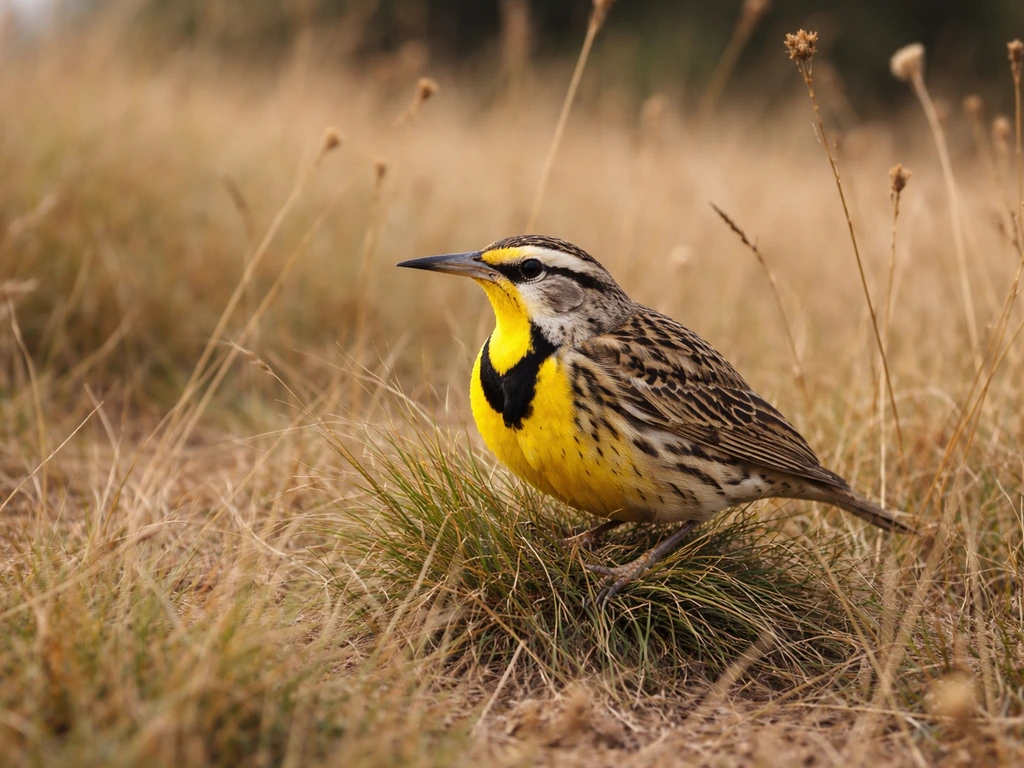
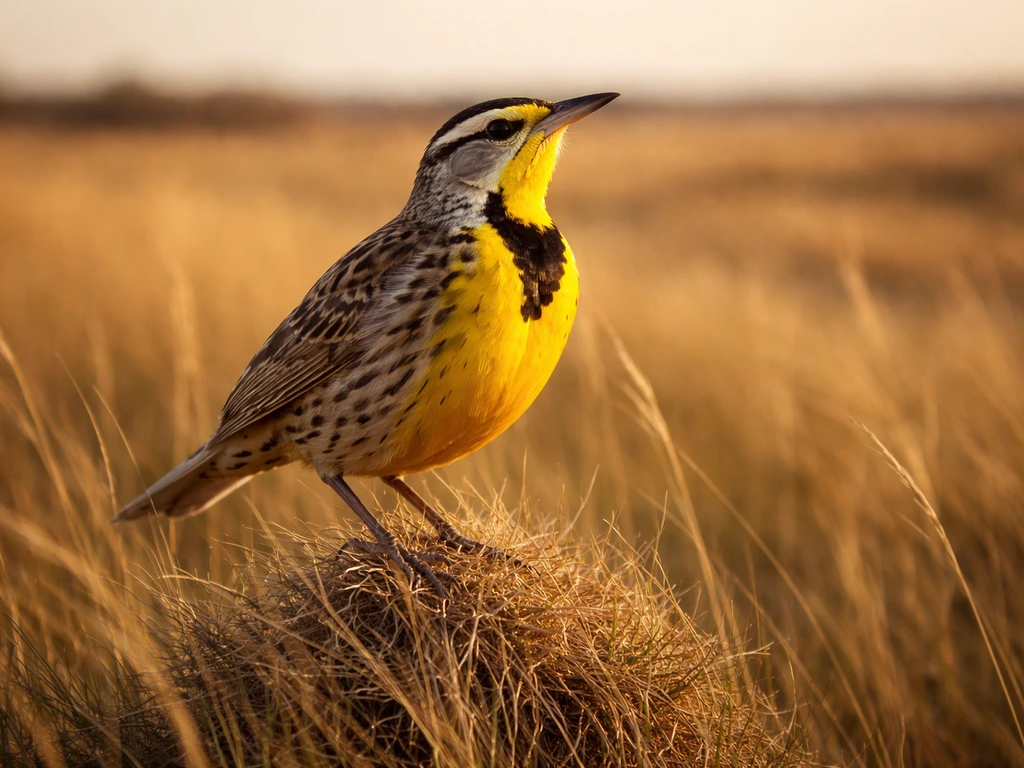
The western meadowlark is about the size of a robin but stockier, with a flat head, long slender bill, and a round-shouldered posture that makes it look almost hunched when it perches. The feature you'll lock onto first is the bright yellow breast with a bold black "V" running across the chest. Once you've seen it, you won't mistake it for anything else.
Keep in mind that the look changes slightly by season. Breeding birds (spring and summer) show the sharpest, most vivid version of that black V against a clean yellow breast. In fall and winter, the underparts are paler yellow and the V fades to a brownish or grayish tone, but it's still visible. The upperparts are a rich mix of brown, black, and buff streaks that blend surprisingly well into dry grass. If the bird is facing you and puffs its chest, the V stands out even more.
One thing worth knowing: the western meadowlark has a look-alike in the eastern meadowlark, and where their ranges overlap, the two can be genuinely tricky to separate by sight alone. A Reddit r/birding post about western meadowlark identification also highlights uncertainty and visual confusion, reflecting real-world challenges with look-alikes western meadowlark has a look-alike in the eastern meadowlark.
In Nebraska, the song is your best tool. The Cornell Lab’s All About Birds field guide notes that song is a key way to tell the western meadowlark from look-alikes like the eastern meadowlark the song is your best tool.
The western meadowlark's call is a rich, flute-like series of gurgling notes, distinctly different from the eastern's simpler, whistled phrases. Nebraska birding resources flag this identification challenge specifically, noting that careful documentation is important when you're uncertain which species you're dealing with.
Why Nebraska picked the western meadowlark
The reasoning is straightforward and practical. According to both the Nebraska Secretary of State and the Nebraska Blue Book (2024-25), the western meadowlark was chosen because it is abundant throughout the state and noted for its joyous song. That's not a throwaway phrase. Nebraska is predominantly agricultural and grassland country, and the meadowlark is genuinely everywhere across that landscape. It's the bird most Nebraskans would encounter regularly, singing from fence posts and prairie grasses across every corner of the state. Choosing it as a symbol made real geographic and cultural sense.
The history behind the designation
Nebraska officially designated the western meadowlark as its state bird in 1929 through a legislative act (Laws 1929, c. 139, § 1). That makes it one of the earlier state bird designations in the country. The 1920s saw a wave of states formalizing their state symbols, often driven by civic organizations and school programs encouraging state pride. Nebraska's choice has been uncontested since, and the statute (90-107) remains on the books today exactly as written.
Nebraska isn't alone: other states with the same bird
The western meadowlark is one of the most shared state birds in the country. blank" rel="noopener noreferrer">Six states have officially claimed it, which is a record tied only by the northern cardinal. Nebraska shares the designation with Kansas, Montana, North Dakota, Oregon, and Wyoming. North Dakota also has the western meadowlark as its state bird. That pattern reflects just how dominant the species is across the western half of the continent, stretching from open prairie to high desert.
| State | State Bird | Year Designated |
|---|---|---|
| Nebraska | Western Meadowlark | 1929 |
| Kansas | Western Meadowlark | 1937 |
| Montana | Western Meadowlark | 1931 |
| North Dakota | Western Meadowlark | 1947 |
| Oregon | Western Meadowlark | 1927 |
| Wyoming | Western Meadowlark | 1927 |
If you're exploring the western meadowlark's significance across different states, Montana and North Dakota are particularly interesting comparisons given their similar Great Plains habitats. Nevada, by contrast, went a different direction entirely with the mountain bluebird, reflecting its more arid, high-altitude landscape. In Nevada, the state bird is different from Nebraska’s western meadowlark.
Quick field checklist for confirming your ID
- Robin-sized, stocky body with a flat head and long, pointed bill
- Bright yellow breast with a bold black "V" across the chest (most vivid in spring and summer)
- Brown, black, and buff streaked upperparts
- Flute-like, gurgling song (not the simpler whistle of an eastern meadowlark)
- Found in open grasslands, pastures, roadsides, and agricultural fields throughout Nebraska
- In winter, look for the same shape and posture even if the V is less bold
Where to go from here
If you want to dig deeper, this site has individual state bird pages for every state, including Nebraska's neighbors. Comparing Nebraska's meadowlark with Montana's or North Dakota's designation is a good way to appreciate just how central this bird is to Great Plains identity. Montana's state bird is the western meadowlark. And if you're curious why Nevada or other western states went with different choices, those pages lay out the reasoning state by state. Start with any state in the sibling group if you're working your way across the region.
FAQ
How can I tell a western meadowlark from an eastern meadowlark in Nebraska?
Because the western and eastern meadowlarks can look similar, rely on what they are doing. In Nebraska, the call is the most reliable clue, the western’s song is a more complex, flute-like run of gurgling notes, while the eastern’s is simpler and more whistled. If you cannot confidently identify by sound, take clear photos of the underparts and note the location and habitat, then re-check later.
Will the western meadowlark’s yellow breast and black V look the same all year?
The western meadowlark’s “black V” on the yellow breast is present year-round, but it can look less bold in fall and winter because the underparts turn paler and the V can shift to a brownish or grayish tone. So in colder months, judge the pattern as a whole, not just the sharp contrast you might see in spring.
Where in Nebraska should I look to see the state bird (best habitats and places)?
The bird is most noticeable when it is perched up and calling from fence posts, prairie grasses, and field edges, especially in open grassland and agricultural country. If you are trying to spot one, focus your search where low vegetation meets open ground, those are typical song and foraging areas.
What physical features besides the black V should I use to confirm it’s the western meadowlark?
If you’re searching for a confirmation detail, start with structure and pattern. The western meadowlark tends to look robin-sized but stockier, with a flat head, a long slender bill, and a round-shouldered posture that can make it look slightly hunched when perched. Those traits, combined with the yellow breast and V, reduce confusion with other grassland birds.
If I only have a quick sighting or a blurry photo, how should I handle identification?
Yes. Seasonal plumage changes can affect how vivid the breast looks, but the identification challenge is mainly with other meadowlark species. When uncertain, treat the sighting as provisional and document it, location plus date plus photos or audio, then compare to calls.
Is Nebraska’s state bird still the western meadowlark, or has it changed since 1929?
The western meadowlark is still the official state bird, since Nebraska’s designation dates to 1929 and is codified in the state statute mentioned in the article. If you are planning an event or school project, you can cite the official bird rather than a seasonal variant, but you may still describe seasonal appearance differences.
What should I do if I see a possible meadowlark at the edge of habitat or range?
If you find the western meadowlark near the edge of its range in Nebraska, conditions can vary and mixed habitats can make the bird harder to judge by sight alone. Use multiple cues, especially the call, and note whether you are in open prairie, fields, or more brushy areas, since meadowlark activity patterns follow habitat.
Next Articles
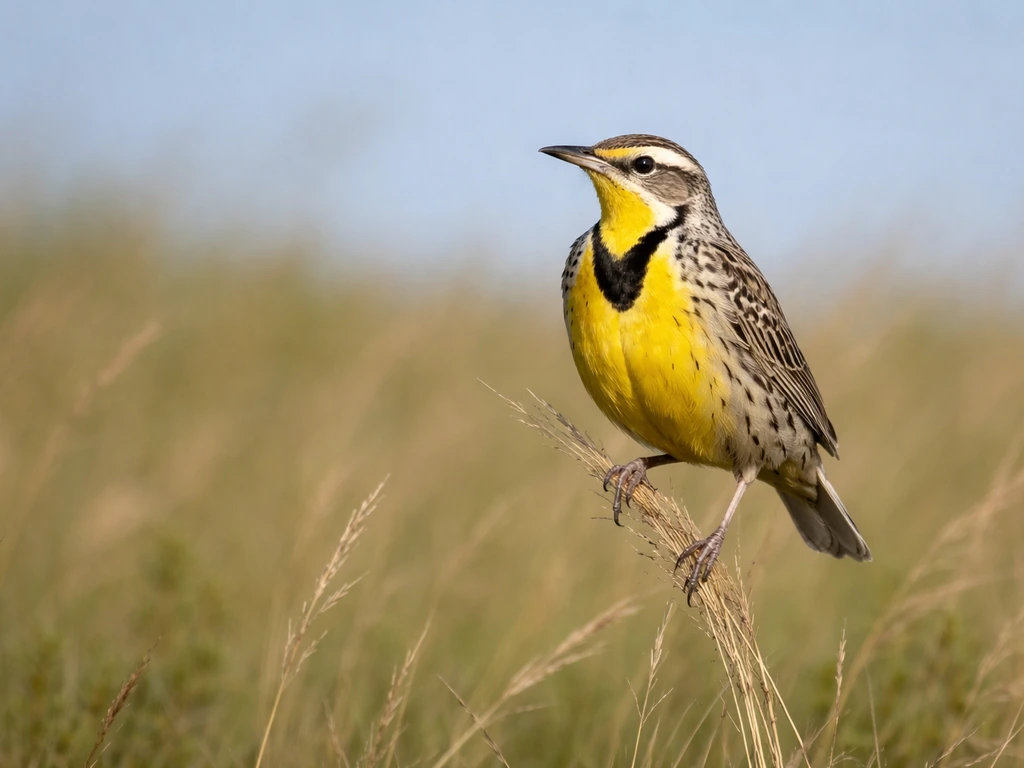
What Is North Dakota’s State Bird? (Quick Guide)
North Dakota state bird is the western meadowlark. Learn how to recognize it and why it was chosen, plus SD comparison.
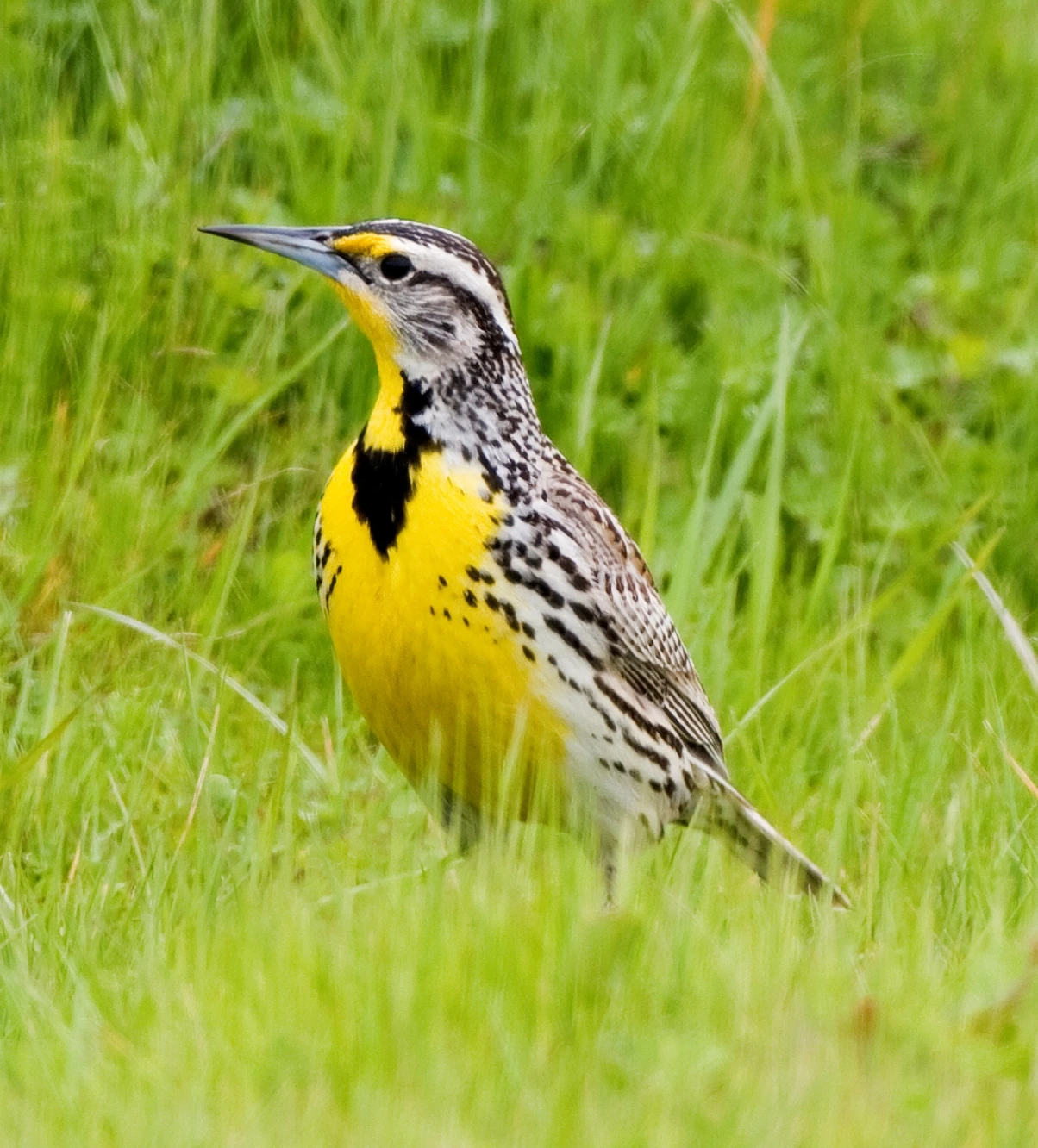
What Is Montana’s State Bird? Species ID and Facts
Montana’s state bird is the western meadowlark. Learn ID traits, facts, why it was chosen, and similar birds.
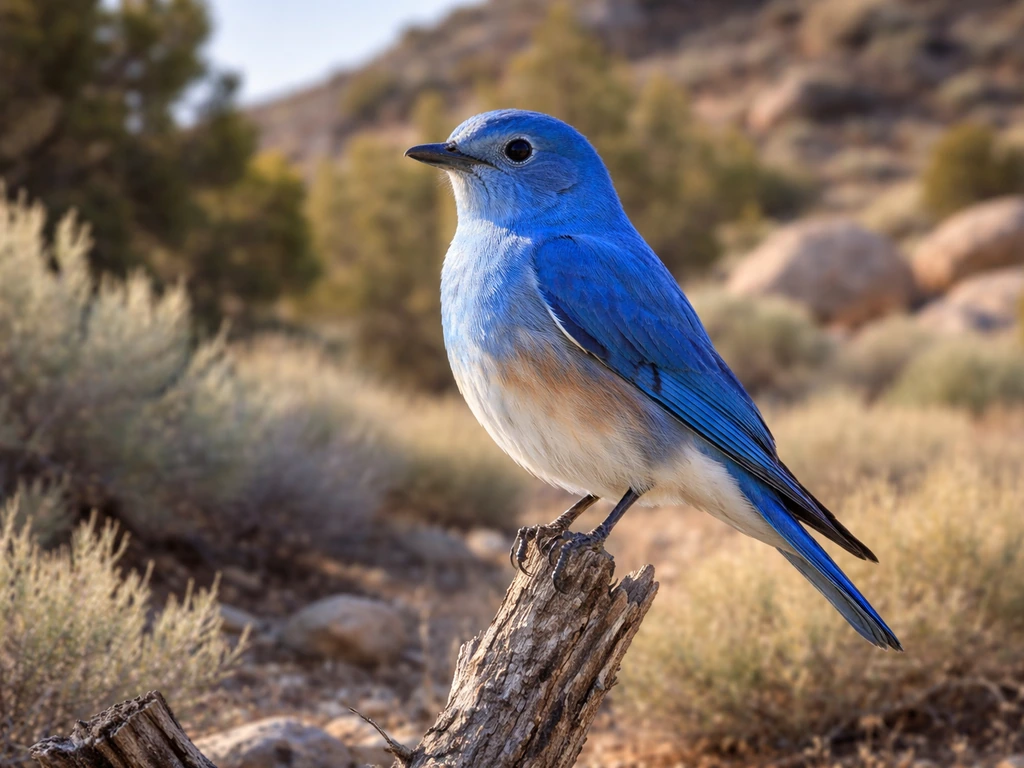
What Is the Nevada State Bird? Identification and Facts
Nevada state bird is the Mountain bluebird. Learn key ID traits, why it was chosen, and how it compares to other states.