North Dakota's state bird is the Western Meadowlark (Sturnella neglecta). It was officially designated by the Thirtieth Legislative Assembly on March 10, 1947, and is written directly into the North Dakota Century Code (Section 54-02-03). If you're thinking of South Dakota, that's a different bird entirely, the ring-necked pheasant. Easy mix-up, but they look nothing alike.
What Is North Dakota’s State Bird? (Quick Guide)

Marcus Webb
27 Apr 2026
How to recognize the Western Meadowlark
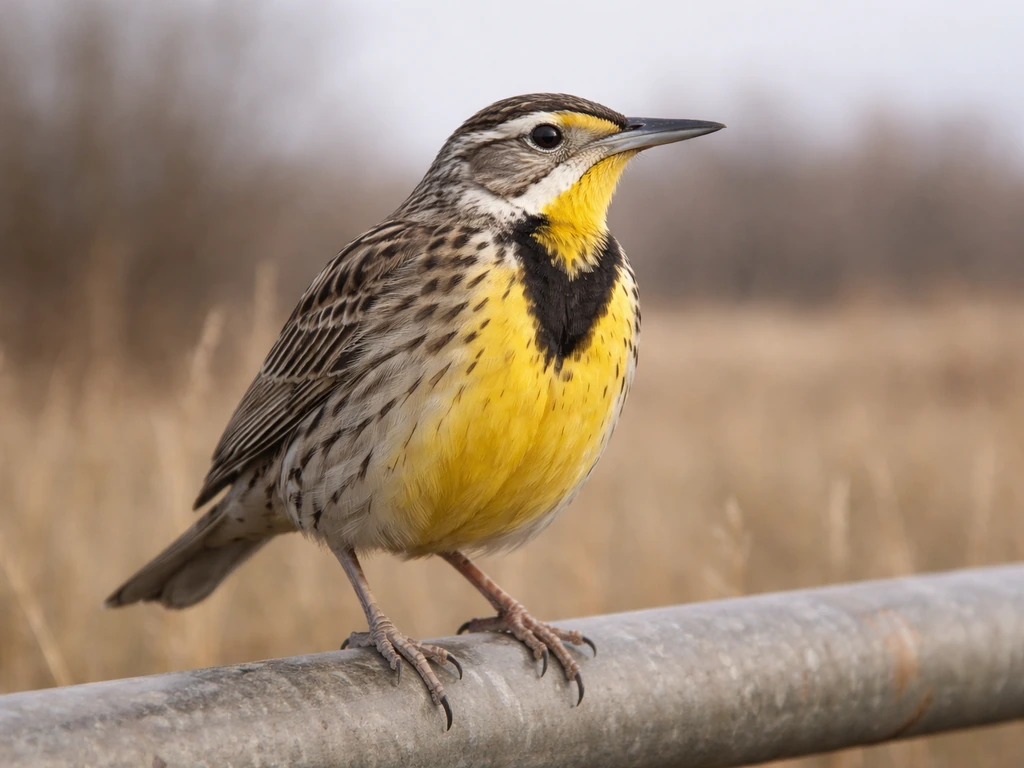
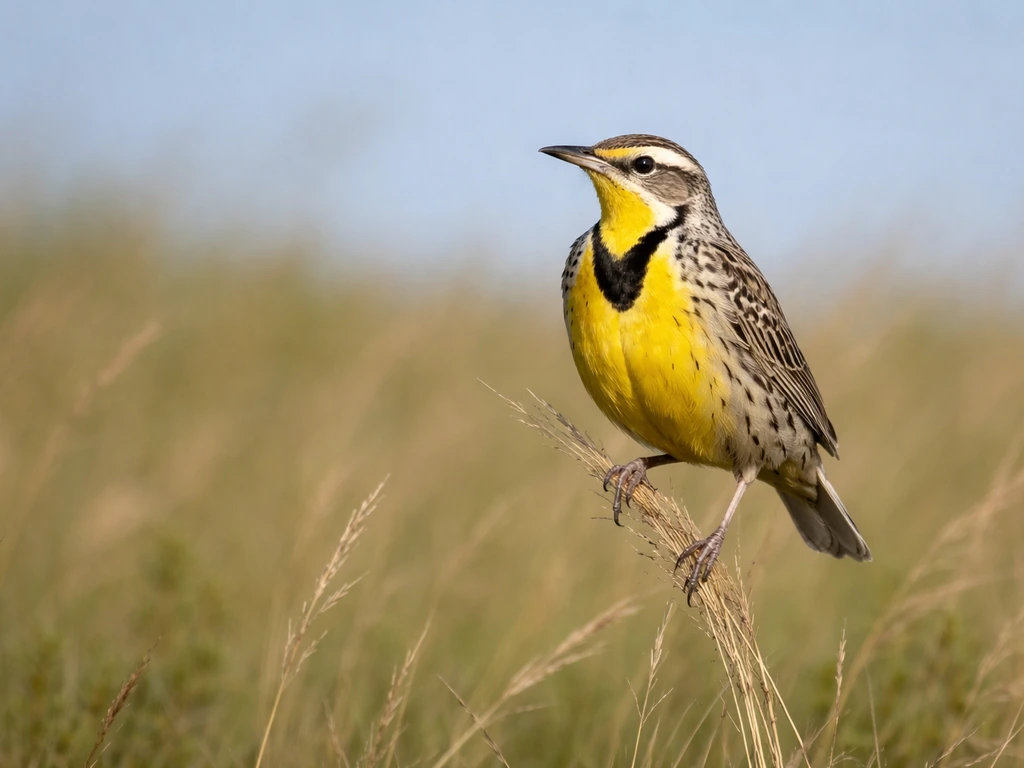
The Western Meadowlark is a medium-sized songbird, about 9.5 inches long with a wingspan of roughly 14.5 inches and weighing around 3.4 ounces. The field mark you want to lock onto is the bold black 'V' on a bright yellow breast. It's impossible to miss when the bird is facing you. The upperparts are streaked brown, black, and buff, which provides camouflage in grassland habitats, but that yellow belly gives it away the moment it turns around or lifts into flight.
In winter, the yellow can look a bit grayer and the black 'V' fades slightly, but the bird is still identifiable. Males will also display that chest marking prominently during courtship. Beyond looks, the meadowlark's song is one of the most distinctive in the Great Plains: a loud, flute-like series of whistles that carries across open fields. If you hear it before you see it, you'll know you're in the right territory.
In North Dakota, you'll find Western Meadowlarks primarily from March through early November. They favor open grasslands, planted or tame grasslands, haylands, CRP fields, and field edges. Drive through rural North Dakota in spring and you'll almost certainly spot one perched on a fence post, singing.
Scientific name and key facts at a glance
| Attribute | Detail |
|---|---|
| Common name | Western Meadowlark |
| Scientific name | Sturnella neglecta |
| Size | 9.5 inches long, 14.5-inch wingspan, 3.4 oz |
| Key field mark | Bright yellow underparts with bold black 'V' on breast |
| Habitat in North Dakota | Grasslands, hayfields, CRP fields, field edges |
| Seasonal presence | March to early November |
| State bird designation date | March 10, 1947 |
| Designating body | North Dakota Thirtieth Legislative Assembly |
| Legal citation | North Dakota Century Code, Section 54-02-03 |
Why North Dakota chose the Western Meadowlark
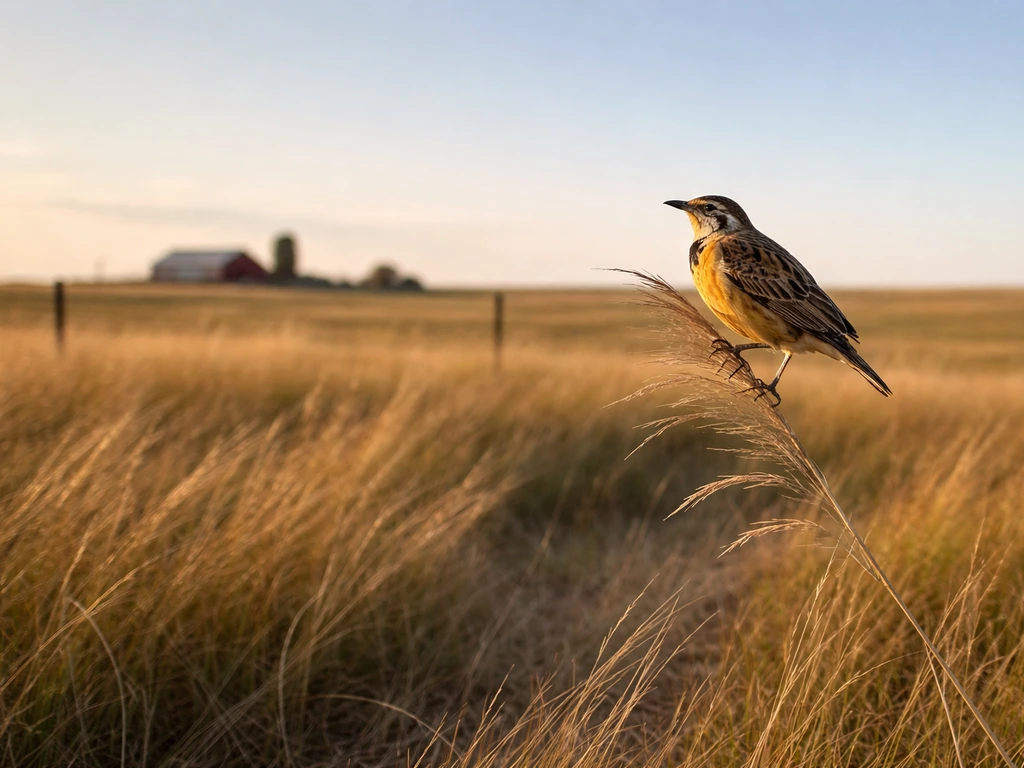
The Western Meadowlark became North Dakota's official state bird on March 10, 1947, when the Thirtieth Legislative Assembly formally adopted it. The choice made a lot of sense for the state. North Dakota is defined by its vast open prairies and agricultural landscapes, and the Western Meadowlark is one of the most visible and audible birds across those exact habitats. It was already a beloved, familiar sight to residents long before the designation was made official.
The meadowlark's connection to working farm and ranch land also resonated culturally. Farmers and rural families had grown up with its song marking the seasons. Designating it as the state bird was less a discovery and more a formal recognition of something people already associated with North Dakota's identity. The bird is also a species of conservation concern today, with North Dakota Game and Fish highlighting concerns about post-fledgling survival, breeding site fidelity, nest success, and adult survival tied to grassland habitat health.
North Dakota vs. South Dakota: clearing up the confusion
Because people often search for both state birds in the same sitting, it's worth being direct: North Dakota and South Dakota have completely different state birds. North Dakota's is the Western Meadowlark, a songbird. South Dakota's is the ring-necked pheasant (Phasianus colchicus), a large game bird. South Dakota adopted the ring-necked pheasant on February 13, 1943, making it actually an older designation than North Dakota's.
| North Dakota | South Dakota | |
|---|---|---|
| State bird | Western Meadowlark | Ring-Necked Pheasant |
| Scientific name | Sturnella neglecta | Phasianus colchicus |
| Bird type | Songbird | Game bird |
| Key field mark | Yellow breast with black 'V' | White neck ring (males) |
| Designation year | 1947 | 1943 |
Visually, there's no real risk of confusing them once you know what to look for. The ring-necked pheasant is a large, long-tailed bird. Males have a striking iridescent green head and a bright white collar (the 'ring' in the name), plus a long barred tail. It's a bird you'd recognize from a distance as a game species. The Western Meadowlark is much smaller, rounder, and built like a classic songbird. Two completely different silhouettes, two completely different habitats.
Six states share the Western Meadowlark
North Dakota is not the only state that chose the Western Meadowlark. It's actually one of the most shared state birds in the country. [Kansas, Montana, Nebraska, Oregon, and Wyoming all claim it too, making six states total. ](https://en.
wikipedia. org/wiki/Westernmeadowlark) If you're wondering which bird Nebraska selected, it's the same Western Meadowlark shared across several Great Plains states. That's a reflection of just how broadly the bird is distributed across the Great Plains and into the West, and how deeply it's embedded in regional identity across multiple states. If you're curious about neighboring states, both Montana and Nebraska share North Dakota's state bird, which makes the meadowlark a kind of unofficial symbol of the northern Great Plains.
For more on Montana specifically, see what Montana chose as its state bird what is montana's state bird.
Where to go from here
If you landed here while also wondering about South Dakota's state bird, the ring-necked pheasant has its own interesting backstory worth exploring. Montana and Nebraska are also natural next lookups since they share the Western Meadowlark with North Dakota, and it's interesting to compare why each state independently landed on the same bird.
Nevada also has the mountain bluebird as its state bird, which stands in sharp contrast to the meadowlark states and shows how differently western states approached their designations. Nevada chose the mountain bluebird as its state bird for reasons tied to the species' presence in the state Nevada also has the mountain bluebird. Nevada's state bird is the mountain bluebird, so it's worth understanding what makes that species distinct.
If you're specifically trying to confirm what Nevada chose, the bird of Nevada is the mountain bluebird what is the bird of nevada.
- South Dakota's state bird: the ring-necked pheasant (Phasianus colchicus), adopted 1943
- Montana's state bird: Western Meadowlark, same species as North Dakota
- Nebraska's state bird: Western Meadowlark, another shared designation
- Nevada's state bird: mountain bluebird, a contrasting Great Basin choice
- Total states with Western Meadowlark as state bird: six (Kansas, Montana, Nebraska, North Dakota, Oregon, Wyoming)
FAQ
What should I look for if I see a yellow-breasted bird but it does not have the black V?
It could be the wrong species or a different lighting angle. For the Western Meadowlark, confirm the bold black V on the bright yellow breast, not just a yellow wash. Also check size and shape, it should look rounder and more songbird-like than a pheasant.
Are Western Meadowlarks easy to confuse with other grassland birds?
Sometimes juveniles or birds in worn plumage can look less crisp. The strongest reliable field mark is the black V on the yellow breast, and the song is a big clue. If you can only hear it, look for a loud, flute-like whistle pattern common in open fields.
When is the best time to spot the Western Meadowlark in North Dakota?
March through early November is the main window. Spring is often the easiest season because singing activity peaks, and you will see them perched on fence posts more frequently in open grassland edges.
Why do winter meadowlarks look a little different?
In cold months the yellow can appear grayer and the black marking may seem less contrasty. Use the overall silhouette and the presence of the V pattern as your guide, and rely more on location (grasslands, haylands, field edges) if color looks muted.
Does the Western Meadowlark always stay in the same habitat type throughout the year?
It tends to follow grassland and agricultural grass cover most of the year, including CRP fields and planted or tame grasslands. In winter, it may still be present in open areas, but visibility can change because lighting and plumage contrast are different.
What is the most common mix-up with North Dakota’s state bird?
South Dakota. North Dakota’s is the Western Meadowlark, South Dakota’s is the ring-necked pheasant. If the bird is large with a long tail and an iridescent green head and white neck collar, it is not the meadowlark.
Does the state bird designation affect where I should look or how I can observe it?
Yes, because the Western Meadowlark is tied to grassland health and faces conservation concerns related to nest success and post-fledgling survival. Stay on trails or from a distance, avoid approaching nests, and focus on observing from fence lines or open viewpoints rather than pushing into nesting cover.
Is the Western Meadowlark only a North Dakota state bird or shared by other states too?
It is shared. Several states also use the Western Meadowlark as a state bird, so you may encounter it in state symbols beyond North Dakota. If you are checking another state, confirm its specific designation because the shared bird can still differ from nearby states’ choices.
Next Articles
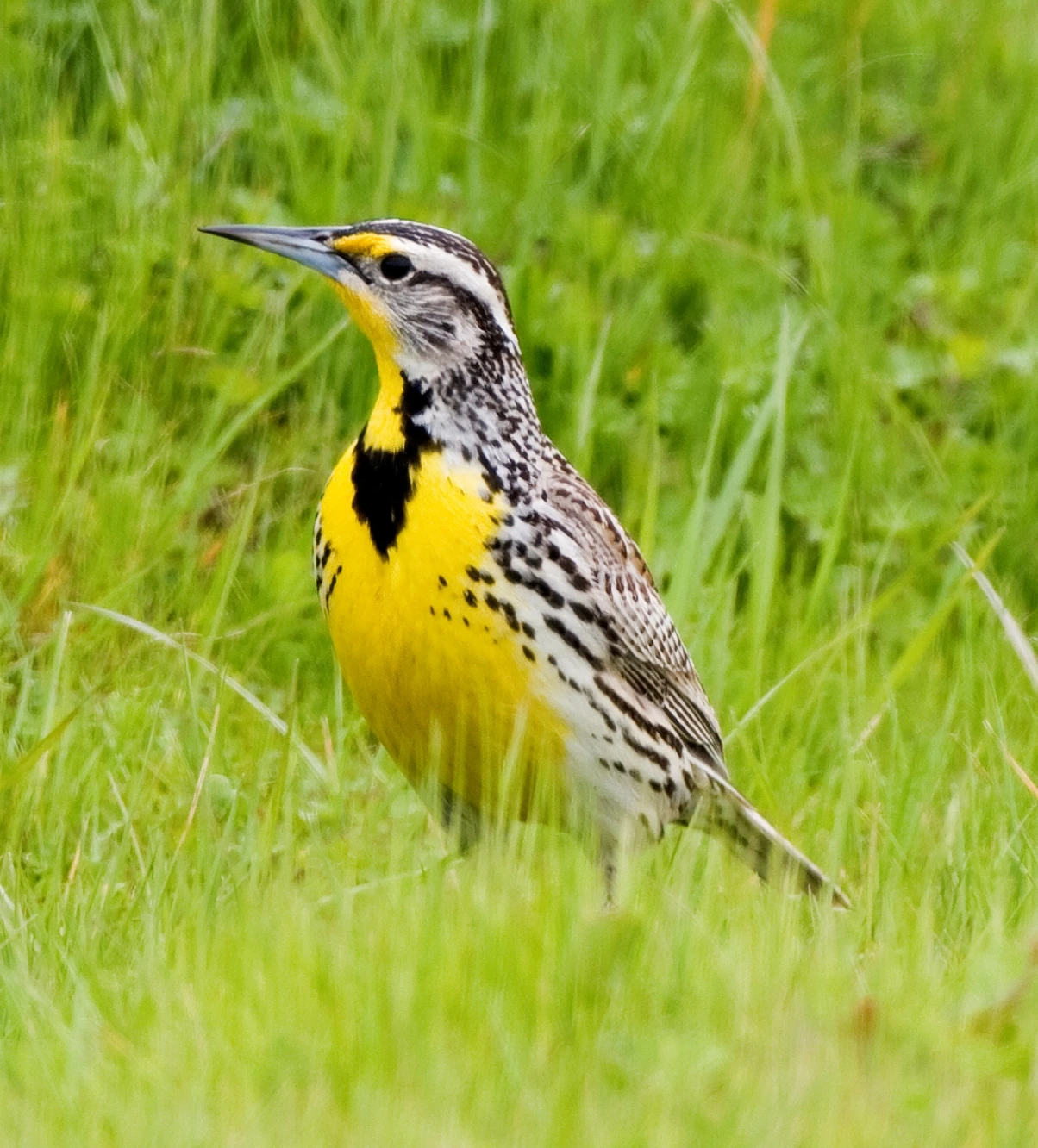
What Is Montana’s State Bird? Species ID and Facts
Montana’s state bird is the western meadowlark. Learn ID traits, facts, why it was chosen, and similar birds.
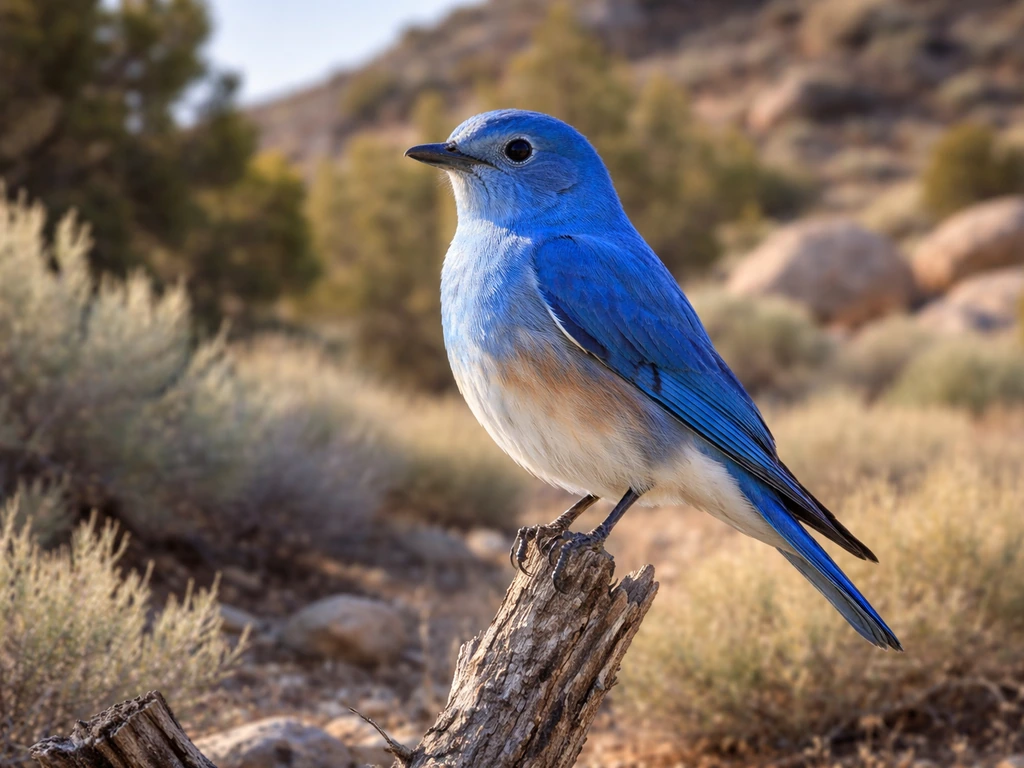
What Is the Nevada State Bird? Identification and Facts
Nevada state bird is the Mountain bluebird. Learn key ID traits, why it was chosen, and how it compares to other states.
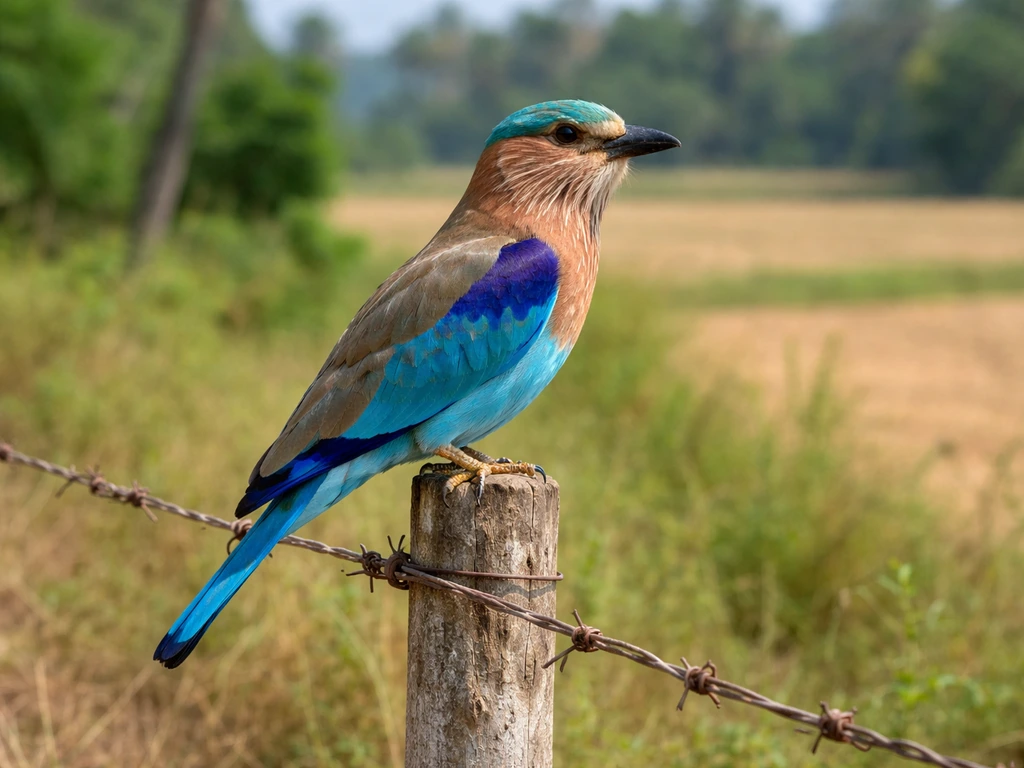
Which Is Karnataka State Bird? Identification and Facts
Discover Karnataka’s official state bird, key ID traits, where to spot it, and why it was chosen.