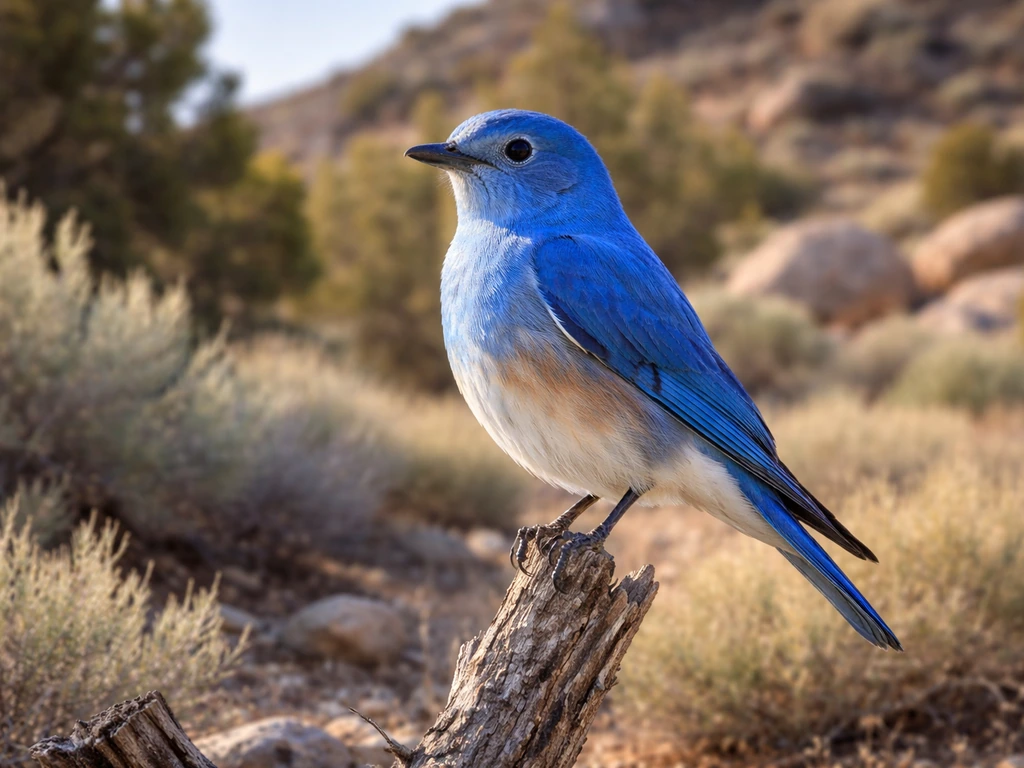
Nevada's official state bird is the Mountain Bluebird (Sialia currucoides), designated by the Nevada State Legislature in 1967 under NRS 235. If you want the short answer, Nevada’s official state bird is the Mountain Bluebird. 060. It's a striking, sky-blue bird of the American West, and once you've seen a male in good light, you won't confuse it with much else.
What Is the Nevada State Bird? Identification and Facts

Marcus Webb
23 Apr 2026
How Nevada ended up choosing the Mountain Bluebird
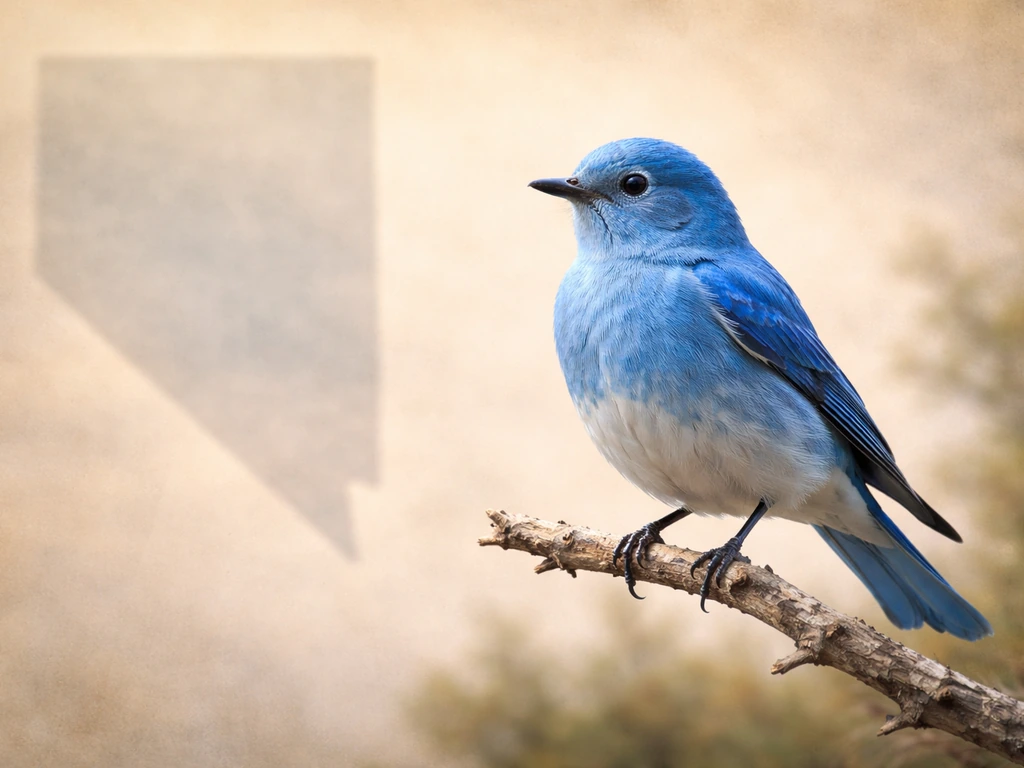
Nevada made the Mountain Bluebird its official state bird in 1967, when the legislature passed an act formally designating it alongside other state symbols. The designation is codified in Nevada Revised Statutes 235.060. The Mountain Bluebird was a natural fit for Nevada: it's a native, year-round and seasonal resident of the Great Basin, thriving in the open, high-elevation terrain that defines much of the state. The bird's preference for sagebrush flats, mountain meadows, and sparse woodland edges mirrors Nevada's own dominant landscape, which is one of the reasons the choice resonated beyond pure aesthetics.
Nevada isn't unique in picking this species. Idaho also claims the Mountain Bluebird as its state bird, making the two states the only ones to share this designation. That said, the Mountain Bluebird is genuinely representative of the interior West in a way that many state bird choices aren't. For more on the reasoning behind the specific selection, the companion piece on why the Mountain Bluebird became Nevada's state bird goes deeper into the cultural and ecological factors behind the decision.
What the Mountain Bluebird looks and sounds like
If you're trying to identify this bird in the field, the male is one of the easier calls in western birding. He's a clean, vivid sky-blue from head to tail, with slightly darker wings and tail and pale, almost whitish underparts. There's no reddish or orange coloration on the chest, which is the fastest way to separate him from Western and Eastern Bluebirds, both of which show warm, rusty tones on the breast. The bill is entirely black. Look under the tail and you'll see white, another reliable field mark.
Females are more subdued, mostly gray-brown overall, but keep an eye out for pale blue tinges in the wings and tail. Occasionally you'll notice a faint wash of orange-brown on the chest, though it's nowhere near as bold as on a Western Bluebird female. Juveniles are useful to know too: compared to young Eastern or Western Bluebirds, young Mountain Bluebirds have fewer spots and notably lack spotting on the back.
Calls and songs
At dawn, Mountain Bluebirds put out a loud, emphatic chirruping song that sounds fairly similar to an American Robin. Later in the day they shift to a softer, repetitive warbling that can go on for several minutes. The most common contact call is a soft, nasal note often described as 'tew' or 'peu,' and when alarmed, they give a higher-pitched 'tink.' If you get too close to a nest, expect beak-snapping as well. Audio recordings from sources like the Macaulay Library make it easy to get these sounds in your ear before heading out.
How Nevada's state bird compares to other states
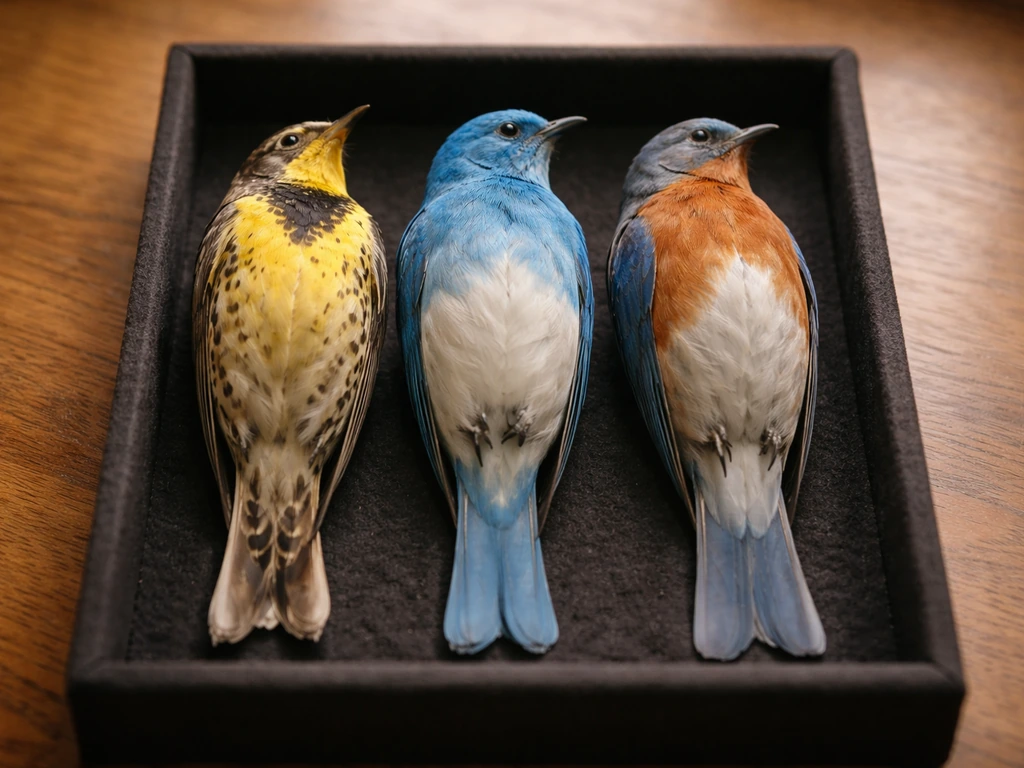
As mentioned, Nevada shares the Mountain Bluebird with Idaho. That's it at the state level. Most other western states went with different species: Montana picked the Western Meadowlark, as did Nebraska and North Dakota (and several others), making the meadowlark by far the most common state bird choice in the U. Most other western states went with different species: Montana picked the Western Meadowlark, as did Nebraska and North Dakota (and several others), making the meadowlark by far the most common state bird choice in the U, and you can see what is north dakota's state bird for the specific match. You might also be wondering what Montana’s state bird is what is montana's state bird. S. Nevada's Mountain Bluebird choice is less common nationally, which gives it a bit more character as a state symbol. The species is genuinely tied to the geography and elevation patterns of the Great Basin and surrounding ranges, so it doesn't feel like a generic or political pick.
| State | State Bird | Scientific Name |
|---|---|---|
| Nevada | Mountain Bluebird | Sialia currucoides |
| Idaho | Mountain Bluebird | Sialia currucoides |
| Montana | Western Meadowlark | Sturnella neglecta |
| Nebraska | Western Meadowlark | Sturnella neglecta |
| North Dakota | Western Meadowlark | Sturnella neglecta |
Nevada's state bird vs. Nevada's state flower
If you landed here looking for Nevada's state flower instead, the answer is Sagebrush (Artemisia tridentata), designated under NRS 235.050. The two official symbols sit right next to each other in Nevada's statutes: NRS 235.050 for the flower and NRS 235.060 for the bird. Both reflect the same core identity, Nevada as a Great Basin state defined by open desert, mountain terrain, and the scrubby, aromatic sagebrush that blankets so much of its landscape. The Mountain Bluebird and sagebrush actually share habitat, so in a sense, Nevada's two most prominent natural symbols go together in the wild as well as in the statutes.
Quick reference: Nevada's state bird at a glance
| Attribute | Detail |
|---|---|
| Common Name | Mountain Bluebird |
| Scientific Name | Sialia currucoides |
| Designated | 1967 |
| Statute | NRS 235.060 |
| Shared with | Idaho |
| Male plumage | Sky-blue overall, no reddish tones, white undertail, black bill |
| Female plumage | Gray-brown with pale blue tinges in wings and tail |
| Key ID tip | Males lack the rusty-orange chest of Western and Eastern Bluebirds |
| Habitat | Open meadows, sagebrush flats, high-elevation terrain |
FAQ
Is the Nevada state bird officially designated by law, or is it just commonly associated with the state?
No, the designation is “official state bird,” not just a commonly seen local bird. Nevada’s legislature codified the Mountain Bluebird as the state bird in 1967 under NRS 235.060.
Do Mountain Bluebirds look the same in every season and for both males and females?
The Mountain Bluebird is the same species Nevada recognizes, but you will still notice variation by season and sex. Males look brightest and most uniform, while females and juveniles are more muted and can be mistaken for other bluebird species if you rely on color alone.
What are the most common birds people confuse with the Nevada state bird?
The fastest common mix-up is with Western and Eastern Bluebirds, because all three can show blue tones. Use the chest coloration and overall pattern, the fully black bill, and the presence of white under the tail (for males) to confirm you have Mountain Bluebird.
How can I use song and calls to confirm I’m seeing a Mountain Bluebird?
Yes. For identification, hearing is useful but should be paired with sight marks. The dawn song is loud and emphatic (often compared to a robin), later becomes softer and repetitive, and alarm calls are higher pitched, but those sounds can overlap with other species.
Does habitat help confirm the Mountain Bluebird in Nevada, or is location by itself enough?
If you are unsure you are looking at the right species, don’t assume based on being in Nevada alone. Mountain Bluebirds depend on open, higher-elevation habitats like sagebrush flats and meadows, so habitat matching can be a practical confirmation step.
Why might I not see the Mountain Bluebird even though it is Nevada’s state bird?
Not necessarily. Mountain Bluebirds can breed where conditions fit, but some years and spots will have fewer sightings. A good next step is to check whether you are in open ground with scattered trees or appropriate nesting cavities, since they strongly favor those settings.
Which identification details are most reliable when I only get a quick glance?
The under-tail white and the fully black bill are key practical field marks. Also focus on the absence of rusty orange on the male’s chest, since Western and Eastern Bluebirds show warm tones there.
What should I do if I think I’m near a Mountain Bluebird nest?
Being close to a nest can change behavior. Expect beak-snapping and more intense alarm behavior if you are too near, so keep distance and observe from farther back, especially during active nesting.
Which other states have the same state bird as Nevada?
The state-level answer is Nevada’s Mountain Bluebird, but at the national level only two states share it, Idaho and Nevada. If you’re comparing state symbols, that shared designation is a common point of confusion.
Next Article
What Is the State Bird of South Carolina? Facts and History
South Carolina state bird is the Carolina wren, with key ID traits, habitat, and why it was chosen.