Alberta's official provincial bird is the Great Horned Owl (Bubo virginianus). It was formally adopted on May 3, 1977, after a province-wide children's vote, making it one of the more charming origin stories in Canadian provincial symbolism.
What Is Alberta's Provincial Bird? Official Name, Facts

Marcus Webb
2 Jun 2026
How to Spot the Great Horned Owl in Alberta
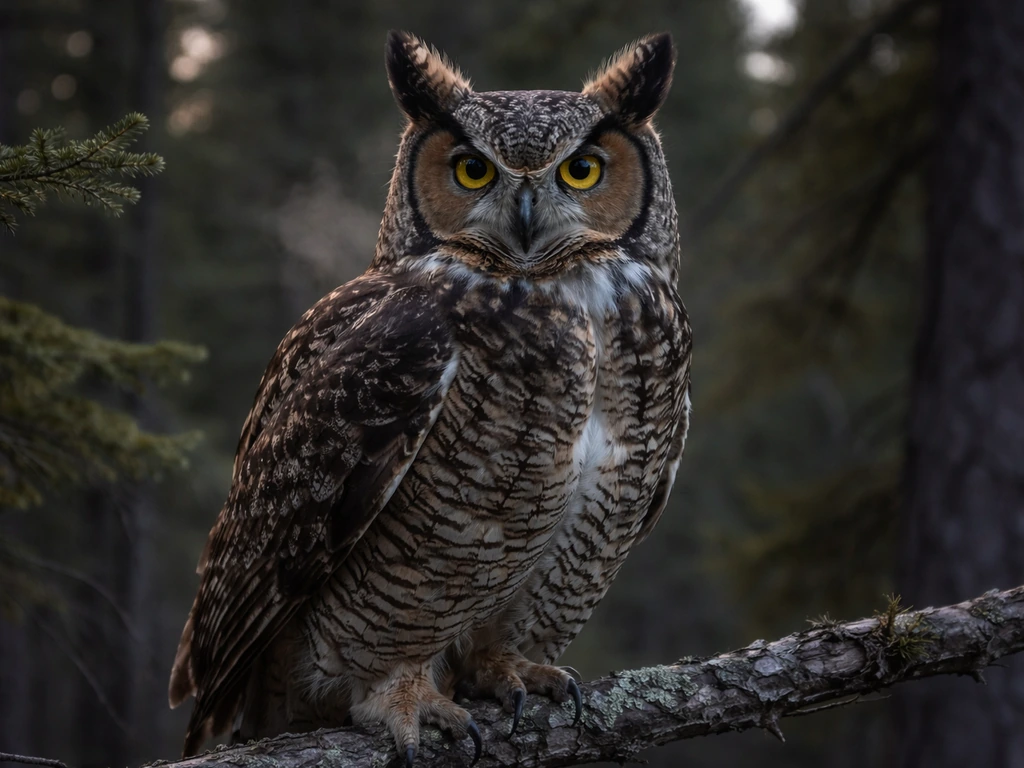
The Great Horned Owl is one of the easier large raptors to identify once you know what to look for. Its most distinctive feature is the pair of long feather tufts on its head that look like ears or horns (they are neither, just feathers). Up close, you will notice bright yellow eyes and a white throat patch against a mottled brown-and-grey body. It is a big bird, roughly the size of a small hawk, with a broad, rounded wingspan.
The call is just as recognizable as the silhouette. The Great Horned Owl produces a deep, resonant hooting in a staccato pattern that sounds something like "hoo-hoo, hoo-hoo, hoo-hoo." You are most likely to hear it on cold, clear nights, which in Alberta means it can carry across a remarkable distance. If you are out in a provincial park after dusk and hear a slow, deliberate hoot echoing through the trees, there is a very good chance you are listening to Alberta's provincial bird.
Alberta Parks confirms the Great Horned Owl is present and observable during Alberta summers. If you want a reliable spot to look for nesting birds, Miquelon Lake Provincial Park is specifically noted as a nesting ground for the species. Dawn and dusk are the best times to scan fence posts, large tree branches, and open field edges.
Species Basics: Habitat, Range, and Key Facts
The Great Horned Owl is one of North America's most widespread and adaptable raptors. It is not fussy about habitat, occupying forests, open fields, wetlands, pastures, and croplands with equal ease. That adaptability is a big part of why it thrives right across Alberta, from the boreal forest in the north to the prairie grasslands and foothills in the south and west.
| Feature | Detail |
|---|---|
| Scientific name | Bubo virginianus |
| Common name | Great Horned Owl |
| French name (Alberta official) | Grand-duc d'Amérique |
| Habitat | Forests, open fields, wetlands, pastures, croplands |
| Range | Across all of North America, including all of Alberta |
| Notable ID features | Feather ear tufts, yellow eyes, white throat patch, deep hooting call |
| Activity pattern | Primarily nocturnal; most active at dawn and dusk |
Great Horned Owls are also early nesters. In Alberta, they often begin nesting in late winter, sometimes while snow is still on the ground, borrowing old hawk or crow nests rather than building their own. They are apex predators among owls, capable of taking prey as large as rabbits, skunks, and even other raptors.
Why Alberta Chose the Great Horned Owl
The selection process is what makes this designation stand out. Rather than a legislative committee quietly picking a bird, Alberta put the decision to a province-wide vote among children and students. The Great Horned Owl won that vote, and on May 3, 1977, it was officially adopted as Alberta's provincial bird. The Alberta Legislative Assembly Hansard from that sitting records the discussion, confirming the children-and-schools context behind the choice.
It is a fitting choice on practical grounds too. The Great Horned Owl is found across every corner of Alberta, from urban parks to remote wilderness. It is large enough to be impressive, distinctive enough to be recognizable, and deeply woven into the natural landscape that defines the province. As a symbol, it reflects both Alberta's wild character and the broad ecological range of the land itself.
A Bit of Historical Context
Alberta's provincial symbols program gained momentum through the 1970s, when many Canadian provinces were formalizing their official emblems. The 1977 adoption of the Great Horned Owl fits that broader wave of provincial identity-building. What made Alberta's approach distinctive was the public, participatory vote rather than a top-down government selection, giving the symbol a grassroots legitimacy that most other provincial bird designations simply do not have. The Government of Canada's official provincial and territorial symbols compilation confirms the 1977 date and the children's vote rationale, so the record is well documented on both the provincial and federal level.
How Alberta's Bird Compares to Other Provincial Birds
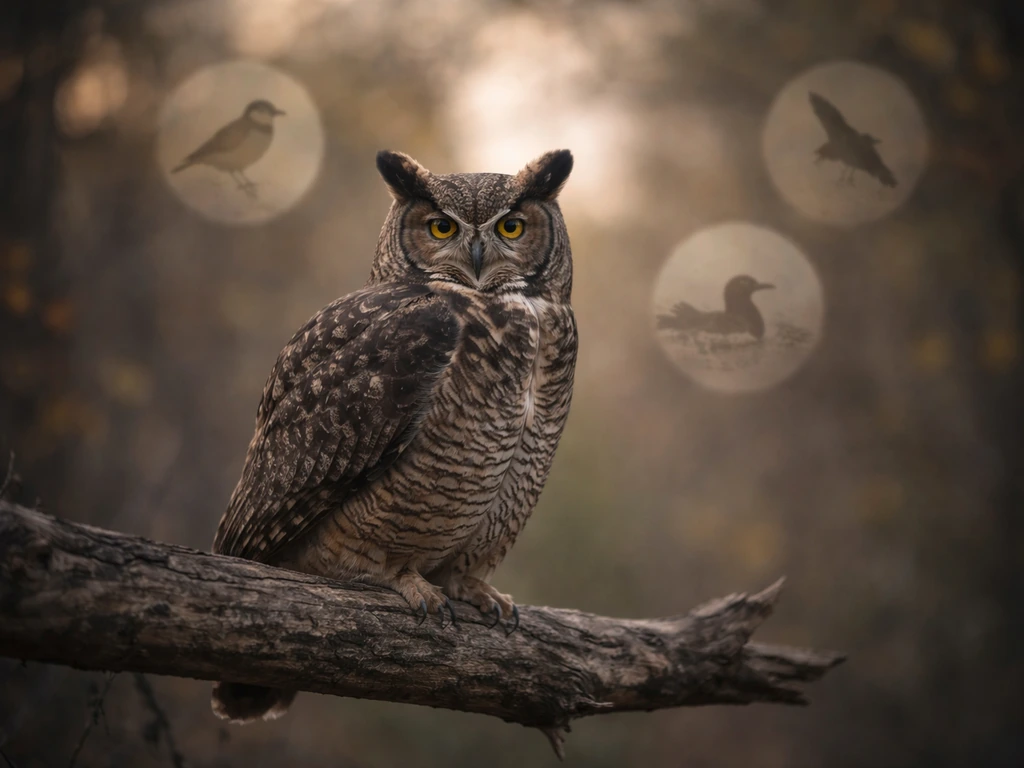
No other Canadian province has also claimed the Great Horned Owl as its official bird, so Alberta holds that designation uniquely among Canadian provinces. Manitoba's provincial bird is the Great Gray Owl, adopted in 1987. For comparison, Manitoba chose the Great Gray Owl as its provincial bird emblem, adopted on July 16, 1987 (a different owl species, but the owl-as-symbol theme carries across the prairie provinces). Quebec and Newfoundland and Labrador have their own distinct provincial bird designations as well. In Newfoundland and Labrador, the provincial bird is the Atlantic Puffin. Quebec’s provincial bird is the Snowy Owl.
If you enjoy tracking official bird symbols across regions, it is worth noting that the Great Horned Owl does not appear as an official state bird for any U. If you are also curious about other official birds around the world, you may want to look up what is the state bird of Queensland.
The state bird of Victoria is a different species, so it is worth checking Victoria's official bird listing if you are comparing provinces and states. S. state either, which makes Alberta's designation genuinely unique in North American official symbolism. The bird's wide range across the continent means it is well known to birders everywhere, but Alberta is the only jurisdiction to have made it an official emblem.
Alberta's Great Horned Owl sits alongside the province's other official emblems (including the wild rose as the provincial flower and the bighorn sheep as the provincial mammal) on the official Emblems of Alberta page maintained by the Alberta government. If you want to go deeper on Canadian provincial bird symbols, comparing Alberta's owl to the choices made by provinces like Quebec, Manitoba, or Newfoundland and Labrador gives a clear picture of how different regions approached the idea of a bird representing their identity. Quebec, too, has its own official provincial bird.
FAQ
What bird species does Alberta mean by “provincial bird,” and how do I avoid confusing it with other owls?
It is officially the Great Horned Owl, not another common owl species people sometimes mix up (like the Snowy Owl). If you are unsure in the field, look for the long feather “horn” tufts and the mottled brown and grey body, plus the bright yellow eyes and white throat patch.
If I rarely hear owls, where should I look to find Alberta’s provincial bird?
Yes, you can typically spot signs even if you do not hear much calling. Focus on dawn and dusk, scan fence posts, large branches, and open field edges, and look for the owl’s perching spots near hunting areas rather than only for nests.
When is the best time of year to watch for Alberta’s provincial bird, especially for nesting activity?
Great Horned Owls are most reliably observed during late winter to early spring breeding season, and Alberta records nesting that can begin while snow is still on the ground. After that, they may be less predictable day to day, so plan searches around dawn, dusk, and known nesting areas.
How can I confirm I’m hearing the Great Horned Owl and not misidentifying a different night call?
When you hear a single, deep hoot, do not assume it is always the provincial bird. Great Horned Owls are distinctive, but other raptors and nighttime calls can overlap, so confirm with visual traits like head tufts and the overall mottled pattern.
Do Great Horned Owls in Alberta live only in forests and wilderness?
No, it is not limited to “wild” landscapes. Great Horned Owls use many environments, including urban parks, pastures, and croplands, so you can search close to human areas where suitable perches and prey are present.
Do Great Horned Owls in Alberta build their own nests, or do they use existing ones?
They often rely on old nests rather than building their own, and they start nesting early. If you are trying to locate nesting, try to identify likely borrowed-nest sites (old hawk or crow nests) and watch for repeated activity near a consistent perch area.
What is the scientific name of Alberta’s provincial bird, and why does it matter for identification?
If you want to verify the exact species name, use “Bubo virginianus” for the Great Horned Owl. Field guides sometimes list similar-looking owls, but the scientific name helps you match the official provincial designation precisely.
Was Alberta’s provincial bird chosen by government officials only, or was the public involved?
Yes, Alberta’s choice has a special public origin story. The adoption happened after a province-wide children and students vote, which is different from a closed committee process that many other symbols follow.
Is Alberta the only place in Canada that chose the Great Horned Owl as an official bird symbol?
Alberta’s provincial bird designation is unique within Canada, but that does not mean other places will not have similar owl symbolism. Alberta is the only Canadian jurisdiction that chose the Great Horned Owl as its official provincial bird.
Next Article
Which Is Karnataka State Bird? Identification and Facts
Discover Karnataka’s official state bird, key ID traits, where to spot it, and why it was chosen.