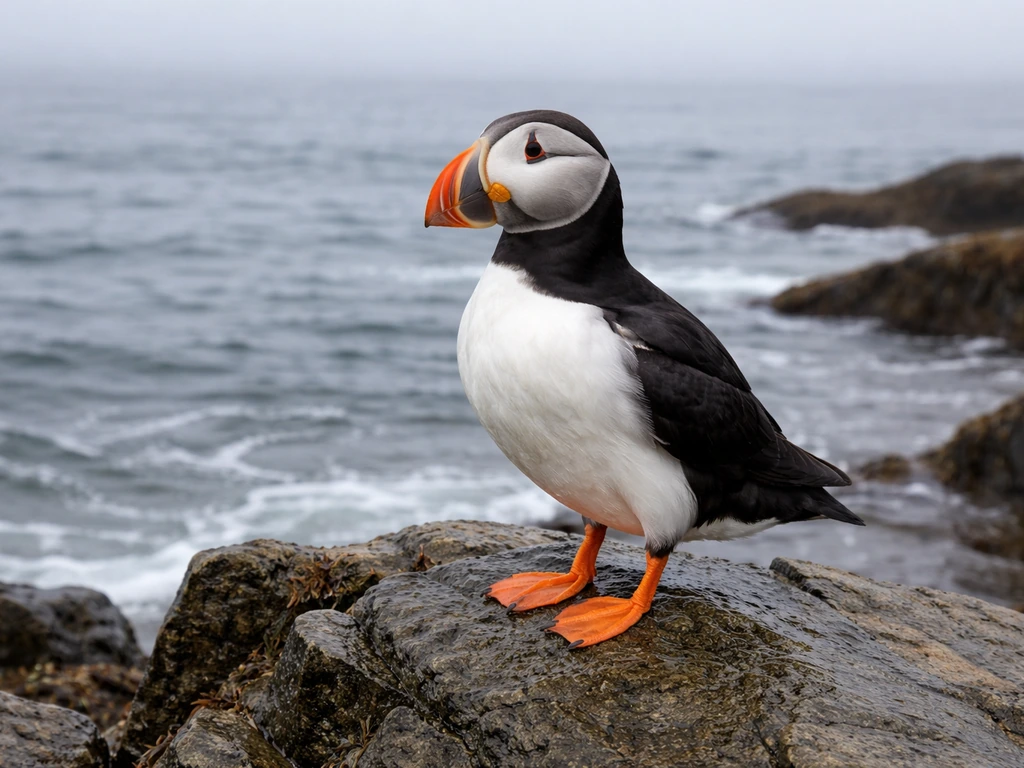
The provincial bird of Newfoundland and Labrador is the Atlantic Puffin (Fratercula arctica). It was officially designated under the Avian Emblem Act (SNL 1992, Chapter A-23), which names the species by both its scientific and common name. This is a Canadian provincial symbol, not a U.S. state bird, but if you're used to looking up state birds, the format here is exactly the same: one official species, one legal designation, and a clear reason why that bird represents the place.
What Is the Provincial Bird of Newfoundland and Labrador?

Marcus Webb
15 Jun 2026
The official designation: what "provincial bird" means here
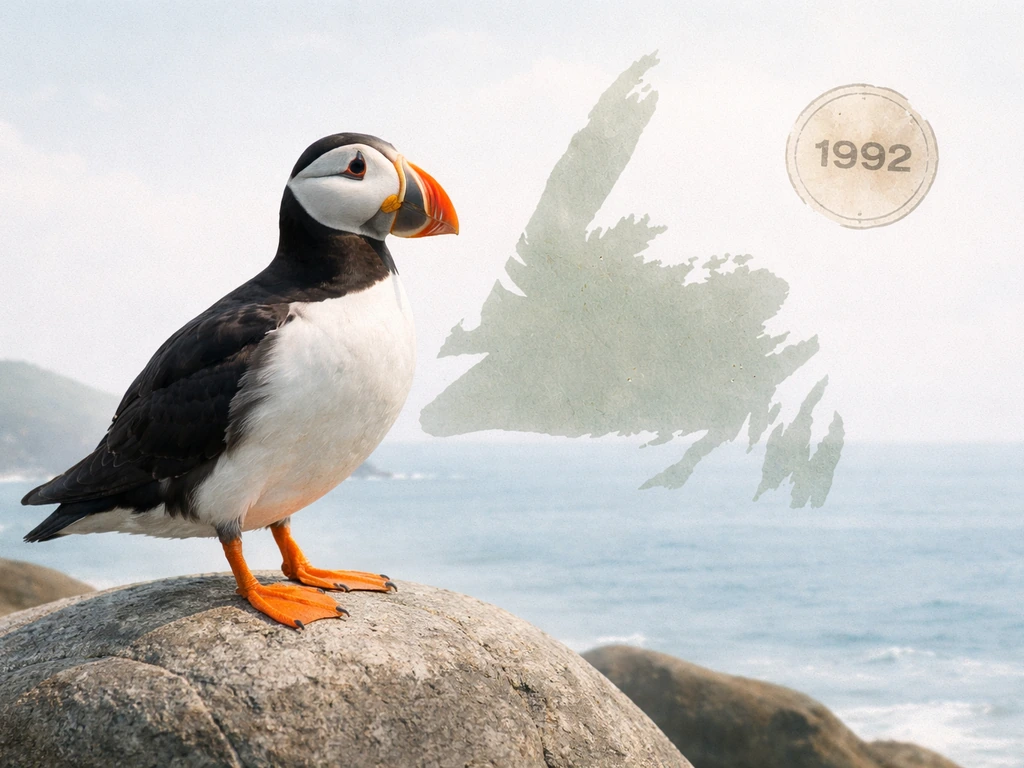
Canada's provinces use the term "provincial bird" or "avian emblem" the same way U.S. states use "state bird." In Newfoundland and Labrador's case, the Avian Emblem Act of 1992 (Chapter A-23 of the Statutes of Newfoundland) is the legal foundation. The act reads directly: "blank" rel="noopener noreferrer">The bird known scientifically as Fratercula arctica and popularly called the Atlantic puffin is the avian emblem of the province." That language is as clear and binding as any U.S. state bird statute. The province's Executive Council also lists it formally as "blank" rel="noopener noreferrer">Atlantic Puffin (Fratercula arctica)" on its official symbols registry.
The designation happened in 1992, making the Atlantic Puffin a relatively recent addition to the province's roster of official symbols. Before that, Newfoundland and Labrador had no formally recognized avian emblem.
Why the Atlantic Puffin? The ecological case is hard to argue with
The province's own government page makes the rationale simple: roughly 95% of all North America's Atlantic Puffins breed along the Newfoundland and Labrador coasts. That's not a marginal connection. When nearly the entire continental population of a species nests in one province, it's hard to imagine a more fitting symbol. The Atlantic Puffin isn't just common here; it's essentially a Newfoundland and Labrador bird in the context of North America. The Executive Council repeats this figure explicitly: "Ninety-five per cent of North America's Atlantic Puffins are found in this province." That ecological dominance is the core reason.
How to recognize an Atlantic Puffin
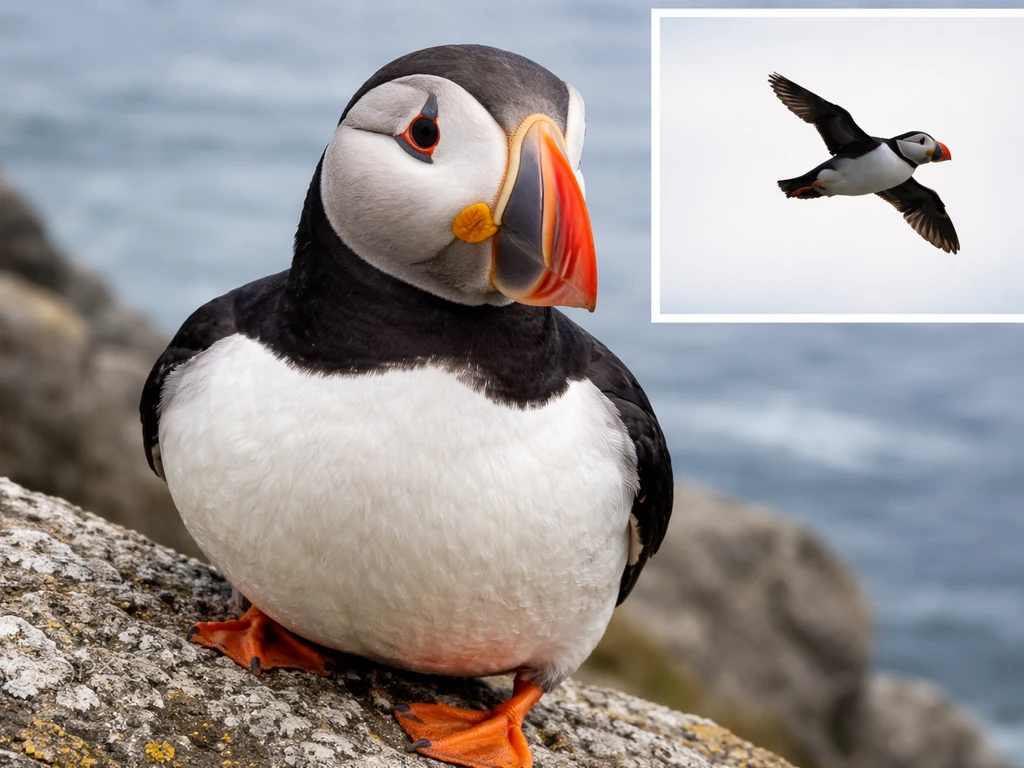
If you want to connect the name to the actual bird, the Atlantic Puffin is one of the easier species to identify. The most distinctive feature is its bill: large, triangular, and unmistakable. During breeding season, the bill is a bold combination of black, orange, and yellow. Year-round, the bird is black on top and white underneath. The bill also grows larger and develops more grooves as the bird ages, so older puffins look even more dramatic.
In flight, look for short, straight wings and rapid, constant wingbeats. Puffins don't soar or glide much; they beat their wings hard and fast to stay airborne. That combination of the outsized bill, black-and-white body, and buzzing wingbeats makes them fairly easy to identify when you see them.
How this compares to other Canadian and U.S. bird symbols
The Atlantic Puffin is not shared with any U.S. state as an official state bird, and it doesn't appear as any other Canadian province's avian emblem. That makes Newfoundland and Labrador unique among North American jurisdictions in claiming this species. Other Canadian provinces have taken very different approaches: Quebec's provincial bird is the Snowy Owl, Manitoba's is the Great Grey Owl, and Alberta's is the Great Horned Owl. None overlap with the Atlantic Puffin.
It's worth noting that the concept of comparing provincial and state birds across North America is genuinely useful context. Some species, like the Northern Cardinal, appear as the official bird of multiple U.S. states. The Atlantic Puffin has no such overlap; it stands alone as a regional symbol. If you're exploring provincial birds across Canada the way this site covers U.S. state birds, each province tends to pick something strongly tied to its own landscape and wildlife. If you are comparing other provincial symbols across Canada, see what is alberta's provincial bird next.
| Province/Territory | Official Bird | Designated |
|---|---|---|
| Newfoundland and Labrador | Atlantic Puffin | 1992 |
| Quebec | Snowy Owl | 1987 |
| Manitoba | Great Grey Owl | 1987 |
| Alberta | Great Horned Owl | 1977 |
How to verify this and where to look next
If you want to confirm this directly from authoritative sources, there are two reliable paths. The provincial bird of Manitoba is different, so it is worth looking up the province's own official symbol for the exact species. First, the Newfoundland and Labrador government's own provincial symbols registry (under "About Newfoundland and Labrador") lists the Atlantic Puffin as the official bird with its own dedicated page. Second, for the primary legal source, look up SNL 1992 Chapter A-23, the Avian Emblem Act, which you can find through the province's laws and statutes database. The act names the species explicitly in plain language, so there's no ambiguity.
- Search the Newfoundland and Labrador government site for "provincial symbols" to reach the official symbols index.
- Navigate to "Official Bird - Atlantic Puffin" within that index for the province's own description.
- For the legal source, search for "Avian Emblem Act SNL 1992 Chapter A-23" through the province's statutes database.
- Cross-reference with Cornell Lab's All About Birds for species identification details and range maps.
- If you're comparing Canadian provincial birds, repeat the same lookup process for each province's official government symbols page.
The bottom line: the Atlantic Puffin is the confirmed, legally designated provincial bird of Newfoundland and Labrador, named in statute since 1992, and backed by the strongest ecological rationale of any North American bird symbol. For Queensland’s state bird, you can look up Queensland’s official bird designation in a similar authoritative registry state bird of Queensland. If you are specifically asking about Victoria, the state bird of Victoria is a different, separate official symbol provincial bird. Manitoba’s provincial bird is the Loggerhead Shrike. Nearly the entire continental population of the species breeds there. That's as clear a reason for choosing a bird as you'll find anywhere.
FAQ
Is the Atlantic Puffin the provincial bird year-round, or is it only tied to breeding season?
It is the official provincial bird permanently. The bird’s strongest tie to the province shows up in breeding season because that’s when most North American puffins nest along Newfoundland and Labrador’s coasts, but the designation does not change by season.
Does Newfoundland and Labrador have another official bird symbol besides the Atlantic Puffin?
No. The Avian Emblem Act designates a single avian emblem for the province, and the provincial symbols registry lists the Atlantic Puffin as that emblem rather than multiple birds.
What if I see a similar seabird, like a Razorbill, is it sometimes mistaken for the puffin?
Yes, it can happen. Razorbills have a different bill shape (less triangular and typically not as vividly colored) and different proportions of the face. For a quick check, the Atlantic Puffin’s bold, triangular bill with black, orange, and yellow during breeding season is the most reliable distinguishing feature.
Why does the legal text include both the scientific name and the common name, what does that mean in practice?
It removes ambiguity. If someone argued about which species the emblem referred to, the statute’s combination of Fratercula arctica and “Atlantic puffin” makes it clear the intent is the same species regardless of whether you use scientific or everyday terminology.
Is the Atlantic Puffin designation unique compared with other provinces in Canada?
It is unique among Canadian provinces. The article notes that no other province’s avian emblem overlaps with the Atlantic Puffin, meaning Newfoundland and Labrador stands alone with that particular species as its official bird symbol.
When someone asks for the “provincial bird” online, could they accidentally get a U.S. state bird list instead?
Yes. The phrase “state bird” is common in the U.S., so search results can be mixed. The most reliable path is to use “Newfoundland and Labrador provincial bird” and then confirm with the province’s provincial symbols registry or the Avian Emblem Act.
Where is the best place to verify the answer if I need it for school or a formal reference?
Use the Newfoundland and Labrador provincial symbols registry for a quick confirmation, then cite the Avian Emblem Act (SNL 1992, Chapter A-23) for the legal wording. That pairing covers both accessibility and official authority.
Does the Atlantic Puffin’s large bill change with age, and could that affect identification?
Yes. The bill becomes larger and develops more grooves as puffins get older. If you are identifying birds across time or distance, older individuals may look even more dramatic, so try not to rely on bill size alone without also checking the overall black-and-white body pattern and flight behavior.
Next Articles
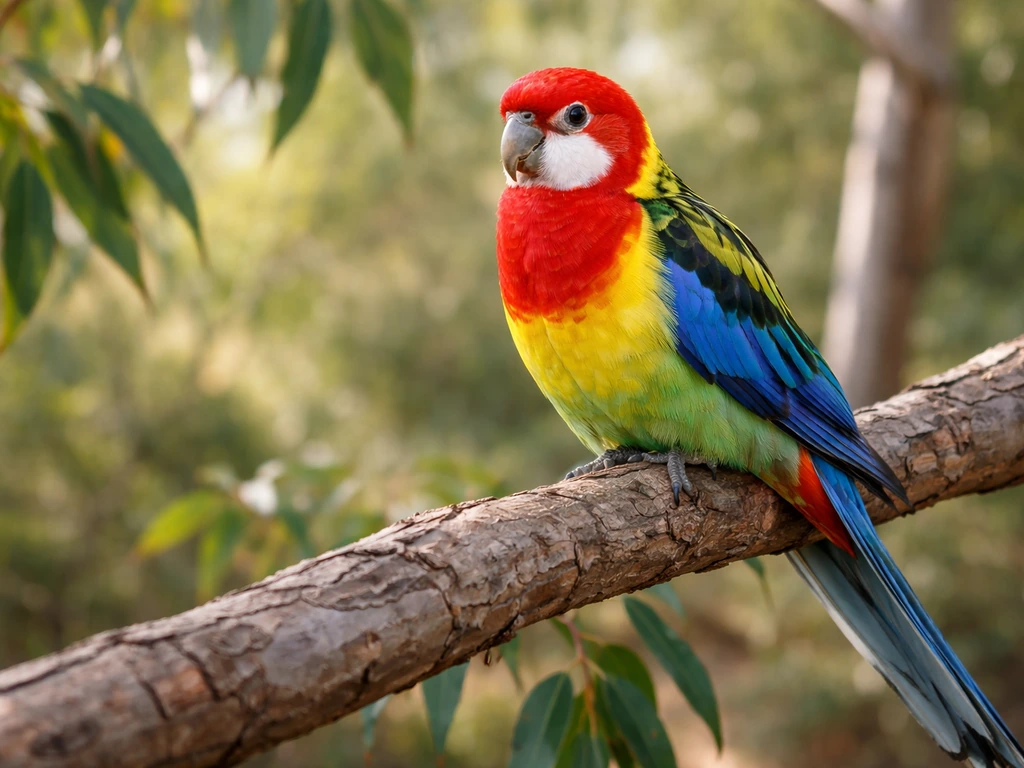
What Is the State Bird of Victoria? Official Answer
Clarifies Victoria vs other states, then gives the official state bird and key ID traits, habitat, and history.
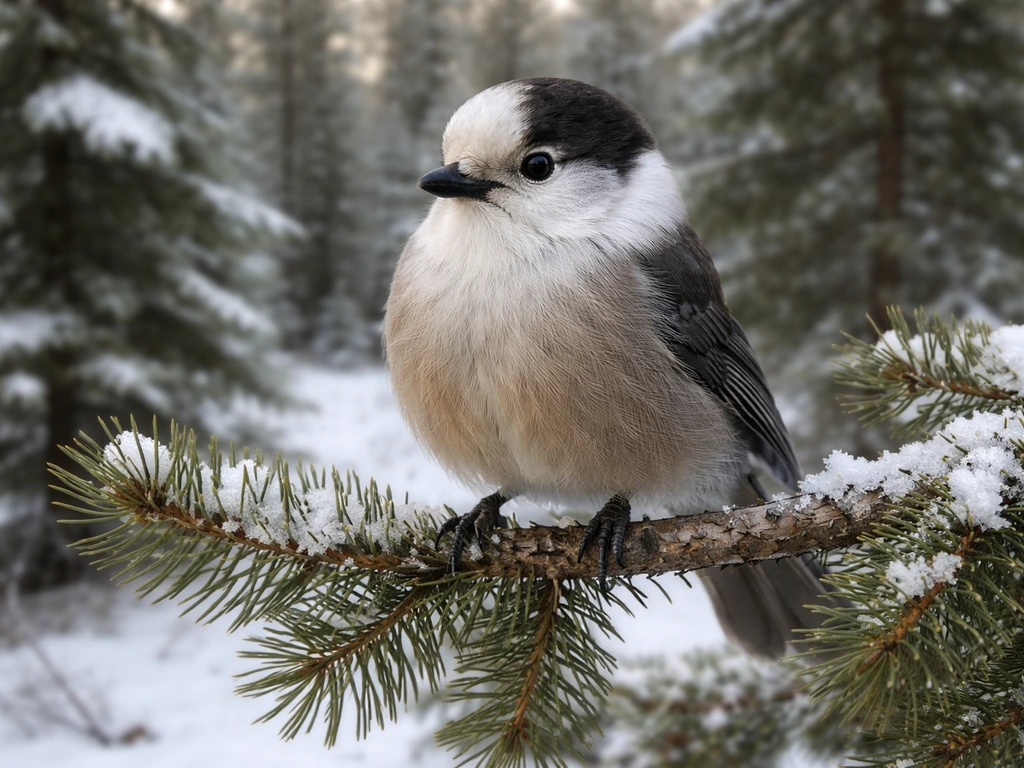
What Is Manitoba’s Provincial Bird? The Designated Species
Manitoba’s provincial bird is the Canada jay. Learn why it was chosen, how to verify, and how to spot it.
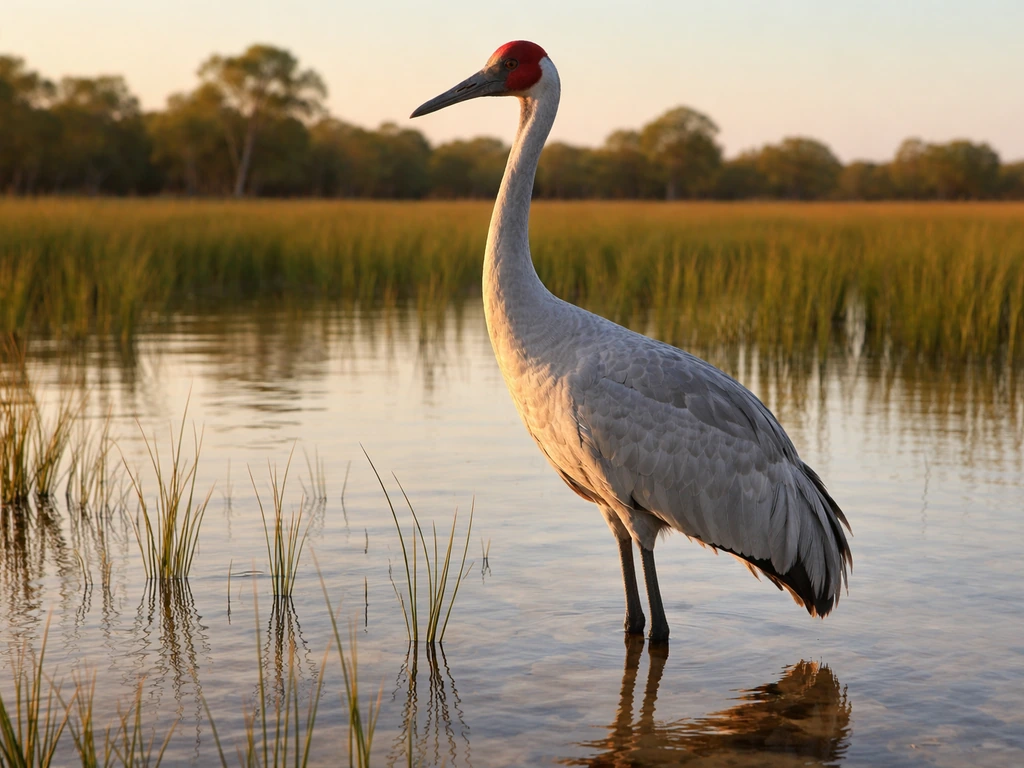
What Is the State Bird of Queensland? Official Answer
Direct answer to what is the state bird of Queensland, plus what it means, how to verify, and key identification tips.