Manitoba's official provincial bird is the Great Gray Owl (Strix nebulosa), designated as the province's avian emblem on July 16, 1987, under The Manitoba Emblems Act (C.C.S.M. c. E72). It's a striking choice: one of the largest owls in North America, found across Manitoba year-round, and a genuinely iconic symbol of the province's boreal wilderness.
What Is Manitoba’s Provincial Bird? The Designated Species

Marcus Webb
5 Jun 2026
Quick geography note before diving in: Manitoba is a Canadian province, not a U.S. state, so this is a provincial bird designation rather than a state bird. If you landed here from a state bird lookup, you're in the right place for the answer, the site covers provincial birds as well, since readers frequently search for them alongside U. If you're specifically looking for the state bird of Queensland, you'll find that information here as well. S. state bird queries.
Manitoba's Official Provincial Bird at a Glance
| Detail | Information |
|---|---|
| Common Name | Great Gray Owl (also spelled Great Grey Owl) |
| Scientific Name | Strix nebulosa |
| Designated | July 16, 1987 |
| Legal Authority | The Manitoba Emblems Act, C.C.S.M. c. E72, Section 5(2) |
| Year-Round Resident? | Yes — found across Manitoba in all seasons |
How to Recognize the Great Gray Owl
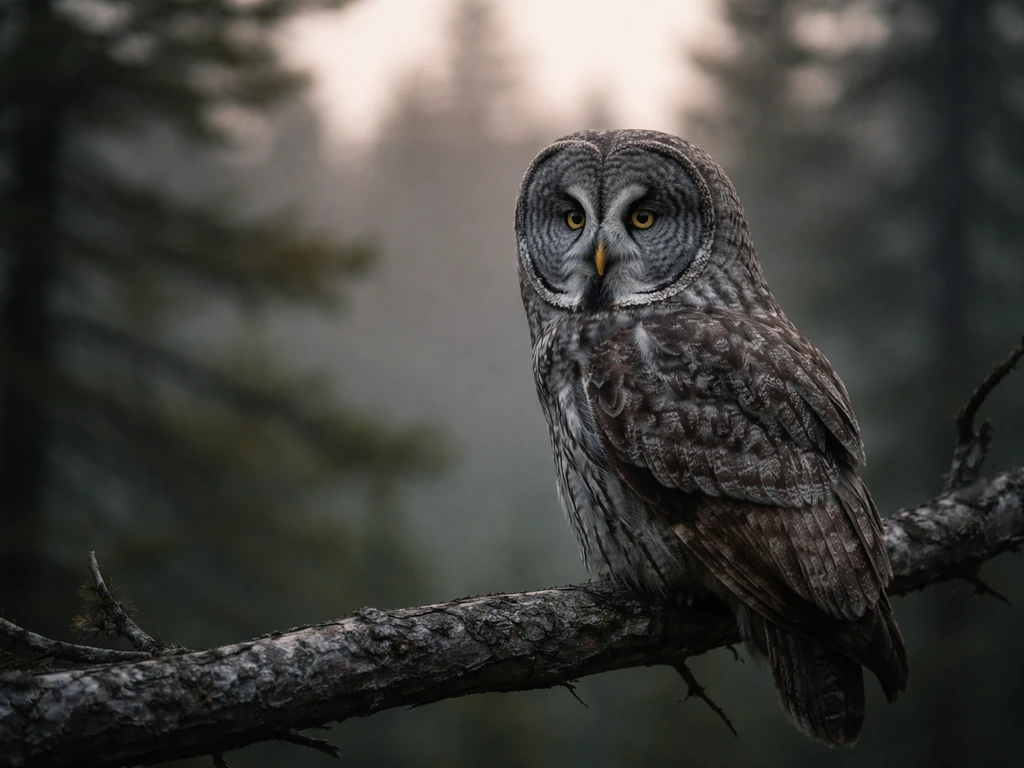
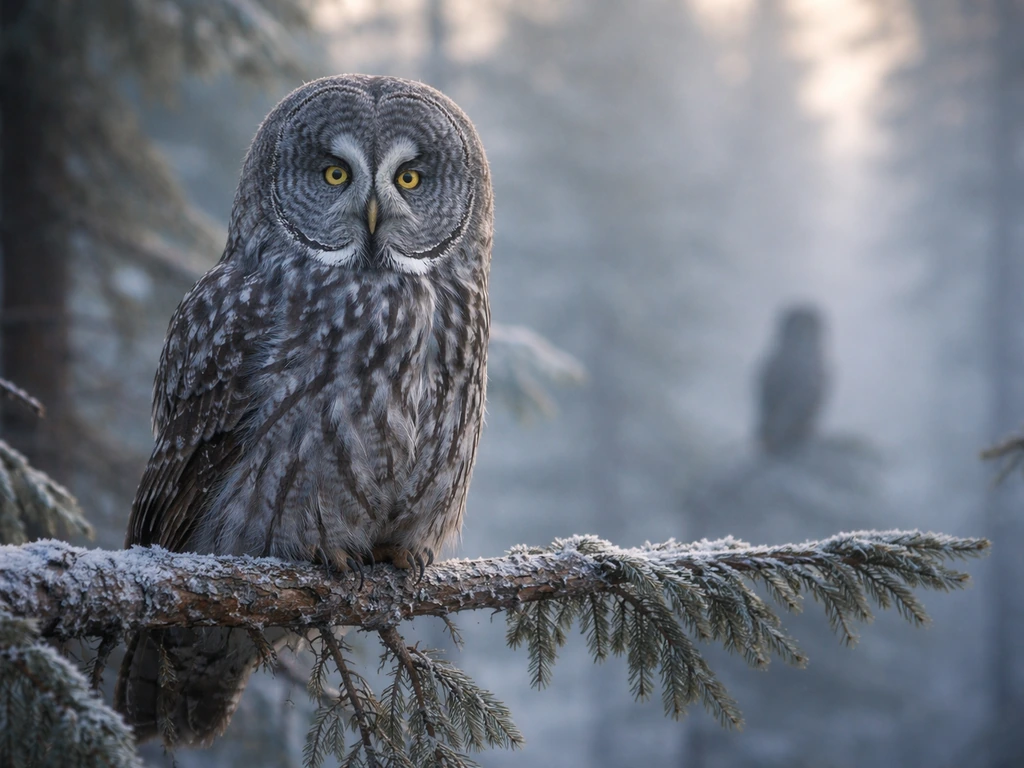
The Great Gray Owl is hard to mistake once you know what to look for. It's an impressively large bird with a massive, round head and no ear tufts, which gives it a distinctive flat-faced silhouette. The most recognizable feature is the facial disk: a broad, circular pattern of fine gray-and-brown concentric rings that frame two piercing yellow eyes. That combination of oversized head and geometric facial disk is the single best field mark.
- Facial disk: large, rounded, with concentric gray-and-brown rings — looks almost like a bullseye
- Eyes: bright yellow, striking against the gray facial disk
- Overall color: soft gray-brown throughout, with streaked underparts
- Size: enormous for an owl — wingspan can reach around 60 inches, though much of the bulk is feathers
- No ear tufts: the smooth, domed head profile sets it apart from Great Horned Owls
- Habitat in Manitoba: bogs, treed muskeg, forest edges, and openings with good perch availability
In Manitoba specifically, the species hunts year-round, often perching on exposed branches at forest edges while scanning for prey beneath the snow. It primarily hunts at night or at dawn and dusk, though daytime foraging does happen. If you're trying to spot one, scan forest margins and bog edges rather than deep interior forest. The Manitoba Breeding Bird Atlas describes exactly this kind of habitat use across the province.
One important caution: Great Gray Owls are sensitive to disturbance. If you find one, keep your distance and skip the call playback apps entirely. They're elusive birds and don't need the stress.
Why Manitoba Chose the Great Gray Owl
The selection process started well before the official 1987 legislative adoption. A Manitoba government news release from September 27, 1985, announced the Great Gray Owl as the province's bird emblem following a deliberate search process that lasted about six months. That 1985 proclamation kicked off the recognition process, and the designation was formally cemented in law on July 16, 1987, through the Emblems Act.
The reasoning is straightforward and fits the bird perfectly. The Great Gray Owl is native to Manitoba, resident there year-round rather than just a seasonal visitor, and it's closely associated with the boreal forest and wetland landscapes that define so much of the province. A 2005 provincial government statement described the owl as an "excellent representative" of Manitoba's natural areas. In a Manitoba archived news release dated Oct.
17, 2005, the government described the Great gray owl as [an "excellent representative" of Manitoba's natural areas](https://news. gov. mb. ca/news/index.
html? item=28093&posted=2005-10-17) and noted its provincial bird designation. There's also something fitting about choosing a bird that's both visually arresting and genuinely wild, not a common backyard species, but a creature that embodies the remote, forested character of Manitoba's interior.
How to Confirm the Designation Today
If you need to verify this for a school project, a quiz, or just want to be certain you have the right answer, there are several official sources that all say the same thing:
- The Manitoba Emblems Act (C.C.S.M. c. E72), Section 5(2): The statute uses the exact wording — 'The bird ornithologically known as Strix nebulosa and commonly called the Great Gray Owl is adopted as and is the avian emblem of Manitoba.' This is the definitive legal authority.
- Manitoba's Residents Portal (gov.mb.ca): The provincial government's own residents' reference page lists the Great Gray Owl as the provincial bird emblem, adopted July 16, 1987.
- Canada.ca (Canadian Heritage, Provincial/Territorial Symbols): The federal government's official symbols page confirms Manitoba's provincial bird as the great gray owl (Strix nebulosa), adopted 1987.
- The Manitoba Legislative Assembly's Official Emblems publication: A secondary official document from the Legislature itself that restates the bird as Strix nebulosa / Great Gray Owl with the July 16, 1987 date.
- The Manitoba Breeding Bird Atlas (MBBA): Useful for field context and habitat information, and it references the provincial bird designation directly.
For the most authoritative single source, go straight to the Manitoba Emblems Act text, which is publicly available through the Manitoba Laws publication. Every other source flows from that statute.
How Manitoba's Choice Compares to Other Provinces and States
The Great Gray Owl is not shared as an official symbol by any U.S. state, as far as official state bird designations go. The species does appear in parts of the northern United States (Minnesota has documented populations and the Minnesota DNR maintains a species page for it), but it hasn't been adopted as a state bird anywhere south of the Canadian border. That actually makes Manitoba's designation fairly unique in the broader North American context.
Among Canadian provinces, each tends to pick a species that reflects its own specific landscape and wildlife identity. Alberta's provincial bird is the Great Horned Owl, a close relative, also a large owl, but a much more widespread and common species across North America. Quebec and Newfoundland and Labrador each have their own distinct provincial bird designations that reflect their regional ecosystems.
If you are also curious about other provincial symbols, you can look up what is the provincial bird of Newfoundland and Labrador for the next official match. Quebec’s provincial bird is the Snowy Owl, a species known for its snowy plumage and arctic winter presence. The pattern across Canadian provinces mirrors what U. S.
states do: pick something native, recognizable, and symbolically tied to the local environment.
The Great Gray Owl stands out in that comparison because it's genuinely boreal in character, it's not a bird you find in urban parks or temperate forests, which gives Manitoba's emblem a particular sense of wild authenticity compared to some other provincial and state bird choices.
Bottom Line
Manitoba's provincial bird is the Great Gray Owl (Strix nebulosa), officially designated on July 16, 1987. It's a large, gray, yellow-eyed owl with a striking circular facial disk, resident in Manitoba year-round across boreal forest, bog, and muskeg habitats. The Manitoba Emblems Act is the authoritative source for verification, and Canada.ca confirms it as part of Canada's official provincial symbols record. If you're birding in Manitoba and want to find one, focus on forest edges and bog margins at dawn or dusk, and leave the playback apps at home.
FAQ
Is Manitoba’s provincial bird the same as a U.S. state bird? I found conflicting results online.
No. Manitoba’s emblem is the Great Gray Owl as a provincial symbol, while many U.S. “state bird” lookups search for the wrong country first. If you see “provincial” or “Manitoba Emblems Act” mentioned, that’s the correct jurisdiction.
What if I confuse the Great Gray Owl with another gray owl species in Manitoba?
It is specifically the Great Gray Owl, not other gray-looking owls. The key ID cues mentioned in the article are the flat-faced look (no ear tufts) and the broad, circular, ringed facial disk around the yellow eyes.
When is the best time to look for Manitoba’s provincial bird during the winter?
Because the Great Gray Owl is present year-round, it’s possible to spot it in winter, but sightings often improve at dawn or dusk when it hunts and when snow makes it easier to detect movement near forest margins and bog edges.
Are call playback apps okay if I’m trying to attract the Great Gray Owl for a sighting?
If you are using birding call playback apps, skip them. Even if the bird responds, playback can increase stress and lead to repeated disturbance, so the safest approach is to observe quietly from a distance.
Where in Manitoba should I focus my search, forest interior or the edges?
Look for habitat edges, not deep interior forest. The article notes perching on exposed branches at forest margins and scanning prey beneath snow, and it highlights bog and muskeg areas as good places to search.
Which date should I cite for the official adoption in a report, the 1985 announcement or the 1987 act date?
The “what” is the same, but the “when” can matter for school assignments. For verification, use the official law adoption date (July 16, 1987) rather than earlier announcement dates from 1985.
What are the best field marks to confirm it’s really the Great Gray Owl?
If you find a similar owl, do not rely only on color. Use multiple field marks together, especially the large round head, no ear tufts, and the distinctive circular facial disk pattern.
What’s the most reliable way to verify the answer for a school project?
If you want to be 100% certain for a quiz or assignment, cite the Manitoba Emblems Act as the primary source. The article emphasizes that other confirmations are downstream from that statute.