
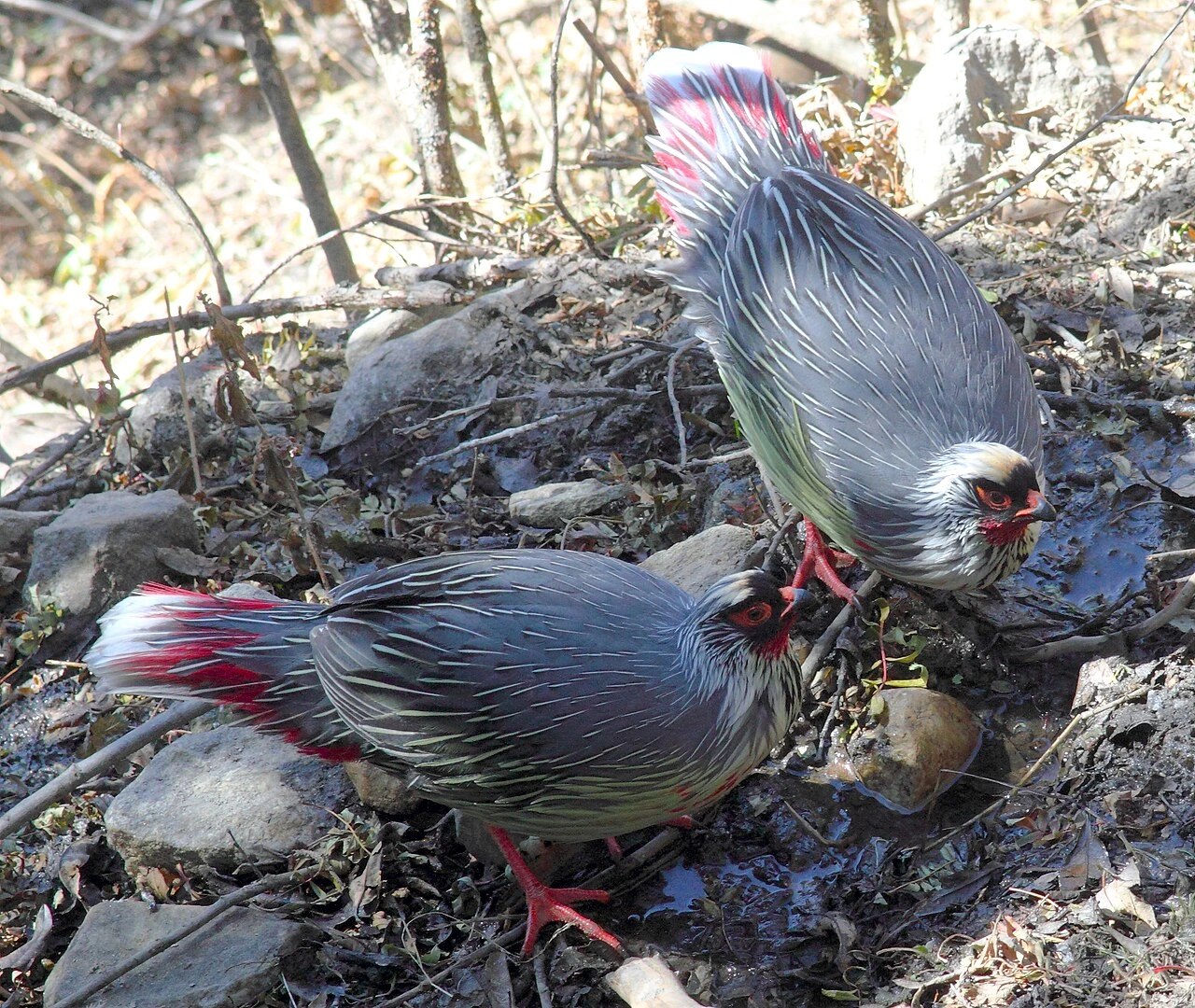
The state bird of Sikkim is the Blood Pheasant, scientific name Ithaginis cruentus. This is confirmed across multiple official Sikkim government sources, including the Government of Sikkim Tourism Department, the Sikkim Biodiversity Board, and the Sikkim Forest Department. There is no ambiguity here: it is the Blood Pheasant, and it has been documented as such in official publications going back at least to 2005.
What Is the State Bird of Sikkim? Official Answer

Marcus Webb
8 Jun 2026
Official designation: what makes it Sikkim's state bird
In India, state birds are officially adopted by state governments to represent the natural heritage and regional identity of that state. Sikkim's government recognizes the Blood Pheasant as its state bird through the Tourism, Civil Aviation Department, the Sikkim Biodiversity Board, and the Forest Department, all of which list it prominently in their official state symbols sections. The Sikkim Biodiversity Board specifically labels it "State Bird – BLOOD PHEASANT Ithaginis cruentus" and includes it under the state's biodiversity conservation framework. The bird is also protected under Schedule I of the Indian Wildlife (Protection) Act, 1972 (as amended up to 2003), which gives it the highest level of legal protection in India.
What the Blood Pheasant looks like (and sounds like)
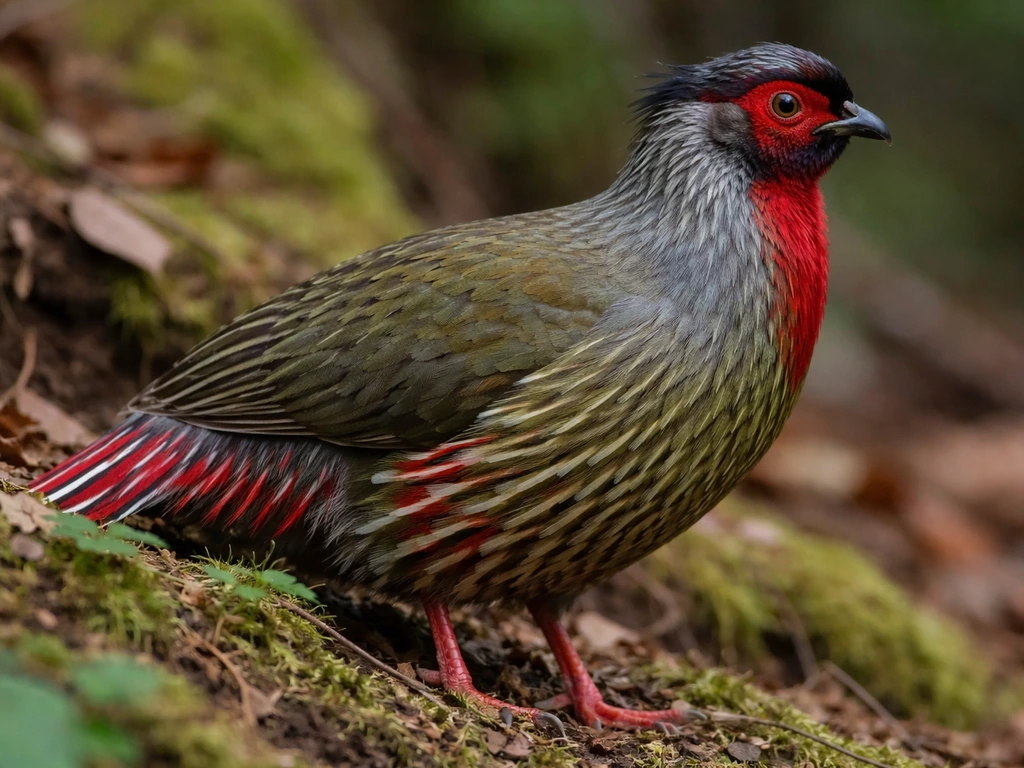
The Blood Pheasant is roughly the size of a partridge, which is a useful benchmark if you are out in the field. The male is the more striking of the two: olive-green overall with vivid red streaks across his chest, red legs, and a bright orangish-brown wash with black underparts. He also has distinctive white streaks on his face, a striped fluffy tail, and a red eye-ring that catches the eye at close range. The female is much plainer, wearing dull brown plumage that blends easily into forest undergrowth.
The call is distinctive once you have heard it: a weak cheeping or high-pitched squeal, quite different from the loud crowing you might expect from a pheasant. Blood Pheasants tend to move in large flocks or coveys, so if you hear that sound in the right habitat, there are likely several birds nearby rather than just one.
Where to find it in Sikkim
Blood Pheasants live in temperate and alpine zones, particularly in Rhododendron forests. In Sikkim, this means high-elevation terrain, typically ranging up toward the snowline. The famous ornithologist Salim Ali documented their distribution in Sikkim's high Himalayas in his 1962 book Birds of Sikkim, noting they push right up to the snowline. North Sikkim is a well-documented location for sightings. If you are planning to see one, go high, go into the Rhododendron belt, and listen for that quiet cheeping call.
Local names to know
The Blood Pheasant goes by different names among Sikkim's communities. In Nepali it is called Chilimey (also recorded as Chilme or Chilmili in older literature). In the Bhutia language it is known as Semu (also written as Samk or Soomoong in Salim Ali's records). Knowing these local names is genuinely useful if you are asking locals for directions to a sighting spot or checking regional field guides.
Why Sikkim chose the Blood Pheasant
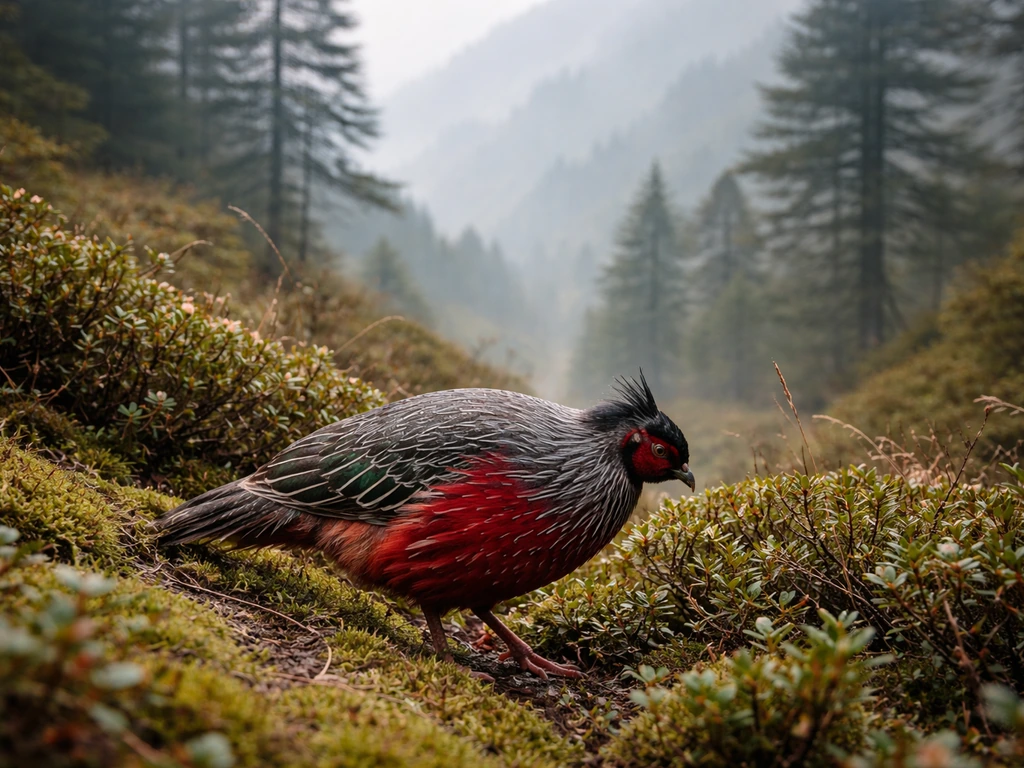
State bird selections in India typically reflect an animal that is ecologically significant, visually distinctive, and strongly associated with the region's identity and landscape. The Blood Pheasant checks all three boxes for Sikkim. It is native to the high-altitude Himalayan ecosystem that defines Sikkim's geography and environment. Its habitat, the alpine Rhododendron forests near the snowline, is synonymous with the state's landscape in the eyes of both residents and visitors. The bird's striking coloration, especially the male's red-streaked chest and red legs, gives it a visual boldness that suits a state symbol. It is also not a common lowland species found across most of India, which makes it a genuinely Sikkim-specific emblem rather than a generic choice.
There is also a conservation dimension. Because the Blood Pheasant is legally protected under Schedule I of India's Wildlife Protection Act, designating it as a state bird reinforces local conservation awareness. It signals that Sikkim recognizes the importance of protecting its alpine biodiversity, not just celebrating it symbolically.
Historical and legislative context
Sikkim became the 22nd state of India in 1975, after which it began formalizing its state symbols to reflect its cultural and natural identity. The Blood Pheasant's designation as the state bird is documented in official Forest Department publications at least as far back as 2005 (the Sikkim in Brief 2005 PDF), and it appears consistently across government tourism and biodiversity materials from that period onward. Salim Ali's Birds of Sikkim (1962) had already established the Blood Pheasant as a well-documented and characteristic species of the Sikkim highlands before statehood, which likely informed its eventual recognition as the official state bird. The Khangchendzonga-related Forest Department publication from around the same era also lists it explicitly as the state bird, tying it directly to Sikkim's most iconic natural landmark, Kangchenjunga.
There has occasionally been public confusion about which Himalayan pheasant is Sikkim's state bird, with some people mistaking it for the Satyr Tragopan or the Himalayan Monal (both of which also live in Sikkim and are visually striking). The Forest Department and news outlets like The Telegraph India have explicitly clarified that the Blood Pheasant, not either of those species, holds the official designation.
How Sikkim's state bird compares to other Indian states

The Blood Pheasant is unique to Sikkim among Indian state birds. No other Indian state has adopted Ithaginis cruentus as its state bird, making Sikkim's choice genuinely distinctive. This is worth noting because several Indian states do share state birds: for example, the Indian Peacock is shared between multiple states, and the Great Indian Hornbill appears in more than one northeastern state's symbolism discussions. Sikkim stands apart with a bird that is both ecologically specific to the alpine Himalayan zone and officially exclusive to its designation.
For comparison, neighboring northeastern and Himalayan states have their own distinctive choices. Neighboring Arunachal Pradesh has its own state bird as well state bird of Arunachal Pradesh. Maharashtra, for example, has its own official state bird as well state bird of maharashtra. If you are also looking for which is Punjab state bird, the official state-symbols references for Punjab are the best place to verify it For comparison, neighboring northeastern and Himalayan states have their own distinctive choices.. Uttarakhand's state bird is the Himalayan Monal, which shares high-altitude Himalayan habitat with the Blood Pheasant but is a different and more colorful species. Uttarakhand's state bird is the Himalayan Monal which shares high-altitude Himalayan habitat with the Blood Pheasant but is a different and more colorful species. Arunachal Pradesh has the Great Hornbill, Assam has the White-winged Wood Duck, and Jharkhand uses the Asian Koel. Odisha's state bird is the Indian Roller, while Rajasthan claims the Great Indian Bustard. Rajasthan’s state bird is the Great Indian Bustard what is the state bird of rajasthan. If you are wondering about Odisha specifically, its state bird is different from Sikkim’s Blood Pheasant Odisha's state bird. The regional contrast highlights how northeastern and Himalayan states tend to choose high-altitude or forest-dependent species, while drier western states gravitate toward arid-habitat birds.
| State | State Bird | Scientific Name |
|---|---|---|
| Sikkim | Blood Pheasant | Ithaginis cruentus |
| Uttarakhand | Himalayan Monal | Lophophorus impejanus |
| Arunachal Pradesh | Great Hornbill | Buceros bicornis |
| Assam | White-winged Wood Duck | Asarcornis scutulata |
| Jharkhand | Asian Koel | Eudynamys scolopaceus |
| Odisha | Indian Roller | Coracias benghalensis |
| Rajasthan | Great Indian Bustard | Ardeotis nigriceps |
How to verify this and find reliable sources
If you want to confirm the answer independently, these are the most reliable places to check today: If you are looking for Jharkhand's state bird, you can verify it in the same way using that state's official symbols sources what is the state bird of jharkhand.
- Sikkim Biodiversity Board (sikkimbiodiversity.org or the official Sikkim government portal): Look for the "State Bird" section, which explicitly names the Blood Pheasant with its scientific name, local names, and identification details.
- Sikkim Tourism's official "About Sikkim" or "State Symbols" page: The state bird is listed in the standard information box alongside other official symbols.
- Sikkim Forest Department publications (available as PDFs through official Sikkim government websites): Documents such as "Sikkim in Brief" and Khangchendzonga-related publications both confirm the designation with the same species name.
- BirdLife International's species database: Search for Ithaginis cruentus to confirm the species identity, its Himalayan range, and conservation status independently of any state-government source.
- Salim Ali's Birds of Sikkim (1962): Available through ornithological archives and libraries, this is the foundational field reference for Blood Pheasant distribution in Sikkim specifically.
One practical tip: if a source tells you Sikkim's state bird is the Himalayan Monal, the Satyr Tragopan, or any other pheasant, that source is wrong. Those species do live in Sikkim, but only the Blood Pheasant holds the official state bird designation. The Government of Sikkim's own tourism and biodiversity materials are the definitive check.
FAQ
Is the Blood Pheasant definitely the only official state bird of Sikkim?
Yes, Sikkim’s official state bird designation is the Blood Pheasant (Ithaginis cruentus), and it is not listed alongside any alternate bird as a co-state symbol. If you see multiple “state birds” in a guide, it is usually mixing unofficial local preferences with the formal government symbol.
What’s the fastest way to tell the Blood Pheasant from similar Himalayan birds?
Use a combination of habitat and field marks. It favors high-elevation Rhododendron belts near the snowline, and its call is a weak cheeping or high-pitched squeal rather than the loud crowing typical of many pheasants. A male’s red-streaked chest and red legs are the key visual cues when you get a clear view.
Why do some websites claim Sikkim’s state bird is the Himalayan Monal or Satyr Tragopan?
That confusion usually comes from mixing “birds commonly found in Sikkim” with “birds officially designated as state symbols.” While the Monal and Satyr Tragopan are both present in Sikkim, they are not the state bird. The reliable check is Sikkim government state symbols materials rather than general bird lists.
When is the best time to spot or hear the Blood Pheasant?
Plan for early morning and late afternoon, when forest birds are most vocal and movement is easier to detect. Since it lives in alpine and temperate zones, being at the right elevation (often in the Rhododendron belt) matters more than time of year alone, but clearer visibility after light snowfall can also help locate birds against the terrain.
Where in Sikkim should I go if I want the highest chance of seeing it?
Prioritize north Sikkim areas with higher Himalayan terrain and look specifically for Rhododendron forests near the snowline. General lowland sites are much less likely because the species is strongly associated with temperate to alpine elevations.
Are there safe or ethical guidelines if I’m trying to observe it in the wild?
Keep distance and avoid playback or calls to “lure” birds, because it can disrupt flock behavior and increase stress during critical alpine periods. Stick to established viewpoints or paths when possible, and avoid entering dense undergrowth where coveys may flush.
Can I use local names like Chilimey or Semu to ask guides, and will people recognize them?
Often yes. Chilimey (also spelled Chilme or Chilmili) in Nepali contexts, and Semu (also recorded as Samk or Soomoong) in Bhutia records, can be helpful vocabulary when talking to local community members or field guides. Pronunciation and spelling vary by region, so showing a photo can reduce misunderstandings.
Does the Blood Pheasant being Schedule I affect visitors or birdwatching rules?
It means the species receives the highest legal protection level under India’s wildlife law, so any harm, capture, or disturbance is prohibited. For birdwatchers, the practical takeaway is to avoid actions that could be interpreted as harassment, such as chasing, setting up obstructive gear in travel paths, or attempting to bait.
Is the Blood Pheasant truly unique among Indian state birds?
According to the article’s comparison, yes, Sikkim is the only state that has officially adopted Ithaginis cruentus as its state bird. If you find the same scientific name listed elsewhere, treat it as either a different status (not a state bird) or an error.
Next Articles
What Is the State Bird of Arunachal Pradesh?
Clarifies Arunachal Pradesh state bird status and identifies the official or commonly claimed bird with quick verificati
What Is the State Bird of Assam? Official Symbol Explained
Assam’s bird symbol explained: confirm whether there’s an official state bird and compare with India’s national bird.
Which Is Punjab State Bird? Correct Answer and Checks
Find which bird fits Punjab context and learn how to verify the official U.S. state bird for the right state