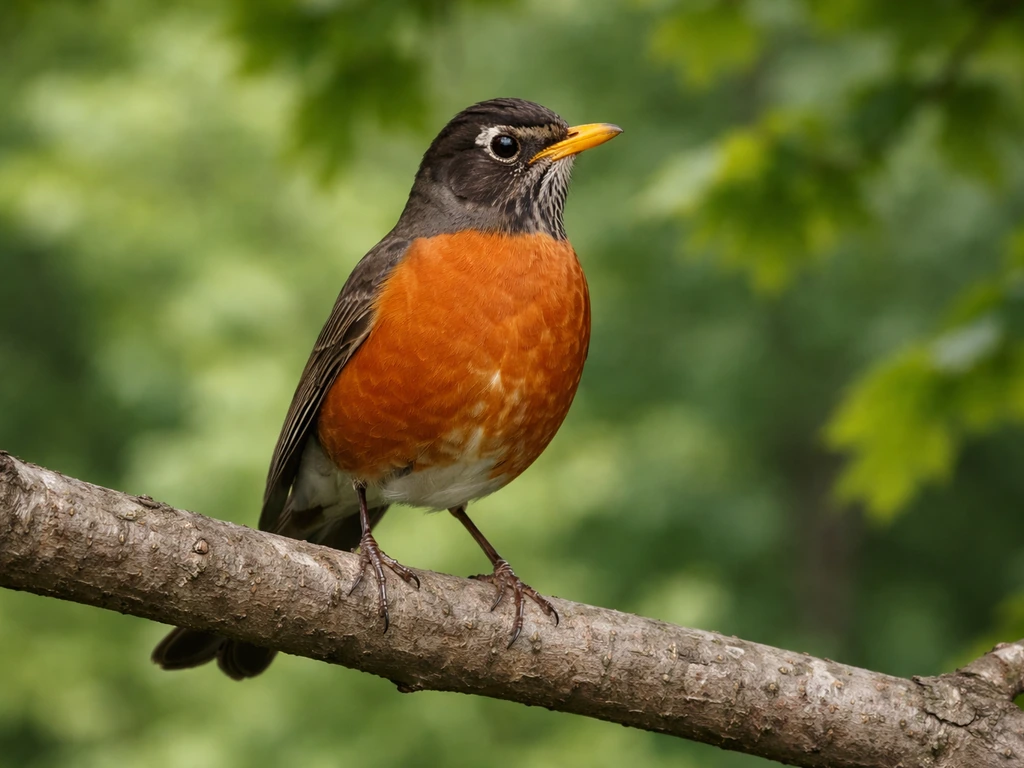
Three U.S. states have the American Robin (Turdus migratorius) as their official state bird: Connecticut, Michigan, and Wisconsin. If you're wondering what that means day to day, the answer is simple: Connecticut's official state bird is the American Robin. That's it. No other state has designated any species called a "robin" as its official bird, so the count is clean and confirmed across every major ornithological and legislative source.
How Many States Have the American Robin as State Bird

Marcus Webb
11 May 2026
Which "robin" counts in state-bird terms?
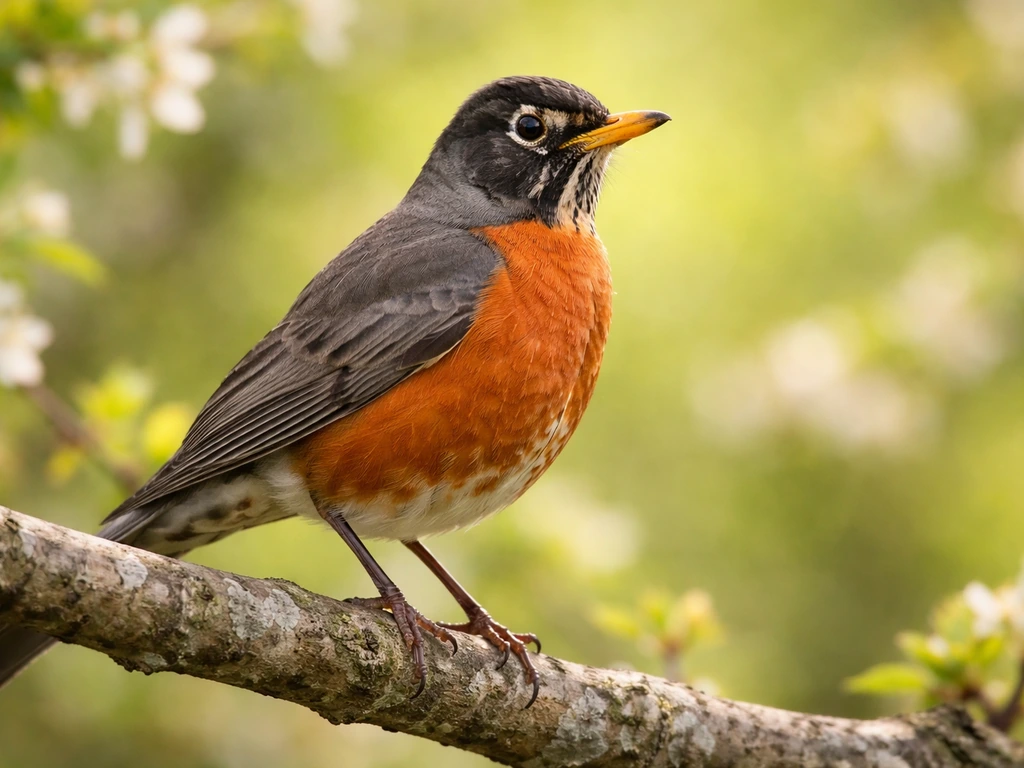
Before diving into the list, it's worth clarifying what "robin" actually means here. In North America, "robin" almost always refers to the American Robin, a thrush with a burnt-orange breast, dark gray-to-black back, and a cheerful, rolling song. Its scientific name is Turdus migratorius. This is the bird all three states officially recognize, and it's the only robin species native to the continental U.S.
The confusion can come from the European Robin (Erithacus rubecula), a smaller, rounder bird with a red-orange face patch that is familiar to anyone who's spent time in the UK. Connecticut's own state-symbol history actually includes a footnote here: there was an early proposal to adopt the European Robin before the General Assembly settled on the American Robin. The two birds look similar enough to share a name, but they're not closely related and belong to different families. Only the American Robin, Turdus migratorius, counts when we're talking about U.S. state birds.
The three states with the American Robin as their state bird
| State | Official Designation Year | How the Law Names It |
|---|---|---|
| Connecticut | 1943 | American robin, Turdus migratorius (Connecticut General Statutes § 3-109) |
| Michigan | 1931 | Robin redbreast (common documentation: American Robin, Turdus migratorius) |
| Wisconsin | 1949 | American robin, Turdus migratorius |
Connecticut is the most explicit of the three. The state statute reads directly: "The American robin, Turdus migratorius, shall be the state bird. Connecticut General Assembly Chapter 33, section 3-109, provides the same wording naming the American robin (Turdus migratorius) as Connecticut's state bird [The state statute reads directly: "The American robin, Turdus migratorius, shall be the state bird. ](https://www.
cga. ct. gov/2019/pub/chap_033. htm).
" That was codified in 1943, making Connecticut one of the earlier states to lock in a formal designation with the scientific name included. Michigan got there first, designating its state bird in 1931, though some historical documents refer to it as "robin redbreast," which is simply a traditional English name for the same bird. Wisconsin rounded out the trio in 1949.
If you're wondering why, the answer is tied to the American Robin's strong cultural fit for Wisconsin communities and its place in local seasonal life Wisconsin rounded out the trio in 1949. .
Why these three states chose the robin
The American Robin is one of the most recognizable birds in the eastern and midwestern United States. It's an early spring arrival, which made it a culturally significant symbol of seasonal change for communities in Connecticut, Michigan, and Wisconsin. All three states sit in the robin's core migration path and breeding range, so residents grew up associating the bird's return with the end of winter.
Schoolchildren in Michigan voted for the robin in a statewide poll that influenced the official designation, and Wisconsin's choice reflected a similar grassroots familiarity. Michigan chose the American Robin as its state bird because it is a familiar early-spring presence that symbolizes the end of winter. Connecticut's selection was partly practical: the robin was already beloved, widely identifiable, and unambiguously a local species.
Watch out for misleading "robin" names in other state symbols
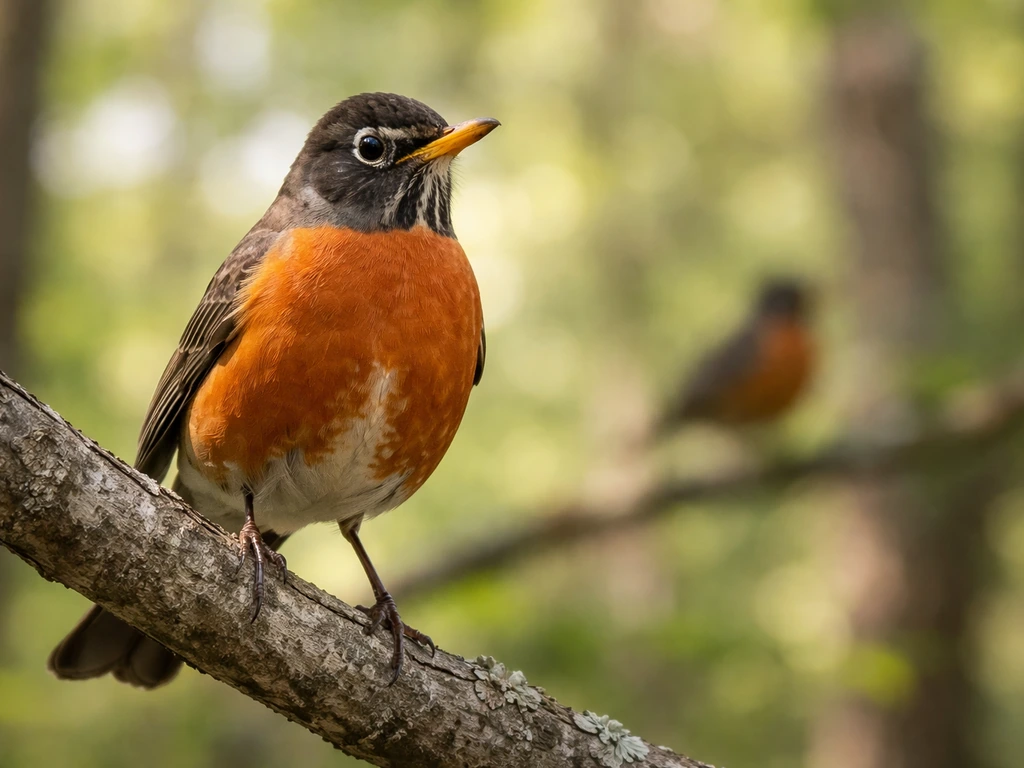
A quick scan of all 50 state birds confirms that no other state uses the word "robin" in its official bird name. You won't find a state with a "rufous-backed robin," "clay-colored robin," or any other Turdus species on the list. The potential for confusion is low but worth checking if you're researching state symbols in depth. If you are trying to answer whether the crow is the crow a state bird, check the same official-state list approach used for the robin. Some birds share superficial coloring with the American Robin (the Eastern Towhee, for instance, has an orange-rufous side), but none are named robins and none are designated as state birds.
The European Robin point is worth repeating because it comes up in Connecticut's history specifically. If someone references "the robin" as a potential state bird in a historical document from the early 20th century, they might mean either species. In modern official records for all three states, however, the American Robin (Turdus migratorius) is unambiguous.
How to verify each state on this site
Each state has its own dedicated page here, and each page follows a consistent structure that makes cross-checking straightforward. Here's what to look for when you visit a state's bird page to confirm the robin designation:
- Official common name: Should read "American Robin" (not just "robin" or "robin redbreast," though Michigan's historical name appears in context).
- Scientific name: Look for Turdus migratorius. This eliminates any ambiguity about which robin species is meant.
- Designation year: Connecticut (1943), Michigan (1931), Wisconsin (1949). If the year on a page doesn't match, dig into the historical notes.
- Why it was chosen: Each page explains the cultural and historical reasoning behind the selection, including the schoolchildren's vote in Michigan and the legislative context in Connecticut and Wisconsin.
- Species facts: Size (about 10 inches long), the distinctive orange-red breast, dark back, and yellow bill are all markers that confirm you're reading about the right bird.
If you want to go deeper on any individual state, the pages covering Connecticut's state bird, Michigan's state bird, and Wisconsin's state bird each have dedicated articles exploring why that state chose the American Robin specifically. Those pages also cover the bird's range, nesting habits, and how the designation came about legislatively.
Three states sharing one bird: what that tells you
The American Robin is one of a handful of species shared by multiple states. The Northern Cardinal holds the record, claimed by seven states (Illinois, Indiana, Kentucky, North Carolina, Ohio, Virginia, and West Virginia). The Western Meadowlark is the state bird of six states. At three states, the American Robin sits in a mid-tier group of shared birds, which is actually less common than you might expect given how ubiquitous the robin is across the country.
The fact that all three robin states are in the northeastern and upper Midwest is not a coincidence. The American Robin is especially visible in those regions during spring migration, arriving conspicuously after months of winter and becoming a reliable marker of the season changing. States in the South and West, where the robin is also present but perhaps less symbolically tied to seasonal renewal, chose different birds that better represented their regional identity.
If you're building out a broader study of shared state birds, comparing why Connecticut, Michigan, and Wisconsin each independently landed on the same species is a genuinely interesting case study in how regional culture shapes official symbols. Each state has its own story, but the common thread is the same: the American Robin arriving in spring felt like something worth celebrating officially.
FAQ
What is the exact count for how many states have the robin as their state bird?
Three. Connecticut, Michigan, and Wisconsin each list the American Robin as the official state bird, and none of the other 47 states officially use the word “robin” in the state-bird title.
Do any states officially use the term “European robin” as their state bird?
No. Even when a state’s history mentions “robin” in older discussions, the modern official designation in the robin states specifies the American Robin with the scientific name, Turdus migratorius.
If a state bird page just says “robin” without a scientific name, should I still treat it as the American Robin?
In this case, you should verify the exact official wording. The three robin states explicitly identify the American Robin (or refer to it in a way that maps to “robin redbreast,” which is the same bird), but for other states you should not assume the name alone will be unambiguous.
Could any state have a robin-related bird symbol that is not the official state bird?
Yes, it can happen for other state symbols, such as state songbirds, state animals, or other wildlife honors. The article’s count is specifically for the official “state bird,” not for every symbol that may involve the word robin.
Are there states whose official state bird is a “type of robin,” like a different Turdus species?
No. The article’s cross-check indicates there are no official state birds using “robin” as part of the name for other Turdus species, such as “clay-colored robin” or similar labels.
Why do people sometimes say Michigan chose the “robin redbreast” instead of the American Robin?
“Robin redbreast” is a traditional English name that has been used historically for the American Robin. For accuracy in your research, match the common name to the official designation that identifies Turdus migratorius.
If I am checking other state symbols, what is the fastest way to avoid the European-versus-American robin mix-up?
Look for the scientific name (Turdus migratorius) or the explicit statutory wording. If the text only says “robin,” confirm whether it references the thrush species rather than the European red-faced robin.
Do the robin state birds have the same legislative timeline, or are the dates different?
They are different. Michigan designated the American Robin in 1931, Connecticut codified it in 1943, and Wisconsin followed in 1949, so the overlap is not due to a single statewide trend.
If I’m doing a study of shared state birds, which other birds are commonly shared?
Beyond robins, the article notes the Northern Cardinal is the most widely shared state bird (seven states), and the Western Meadowlark is shared by six. That can help you compare whether shared choices cluster by region or by “recognizability” during migration.
Next Article
What State Bird Is the Robin? Which State Chose It
Find which U.S. state bird is the robin, what robin species it names, and why that state adopted it.