New Mexico's official state bird is the Greater Roadrunner (Geococcyx californianus). what is the delaware state bird The New Mexico Legislature made it official on March 16, 1949, and the designation has stuck ever since. If you've ever seen one sprinting across a desert road, you already understand why this bird has a reputation all its own. what state has the blue jay as the state bird
What Is the State Bird of New Mexico? Answer and ID Tips

Marcus Webb
23 Mar 2026
New Mexico's Official State Bird
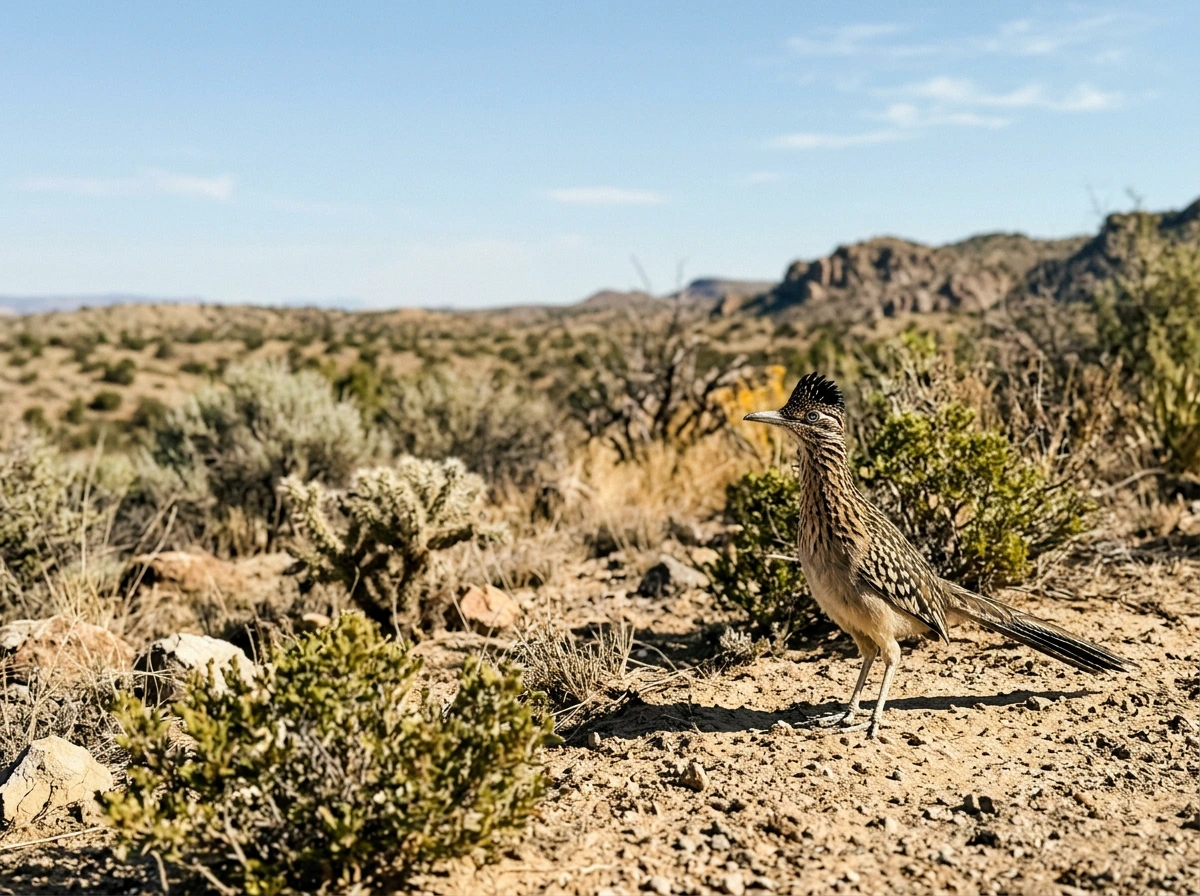
The Greater Roadrunner goes by a couple of names. You'll hear it called the Chaparral Bird, which is actually the name the New Mexico Legislature used when it formally adopted the species as the state bird. Both names refer to the same species: Geococcyx californianus. It's a member of the cuckoo family, which surprises a lot of people who picture cuckoos as small, secretive woodland birds. The roadrunner is neither small nor secretive.
No other U.S. state has chosen the Greater Roadrunner as its official state bird. New Mexico stands alone on that one, which makes the choice feel very intentional rather than default. The bird is deeply tied to the landscape and culture of the Southwest, and New Mexico is really its heartland.
How to Identify a Greater Roadrunner
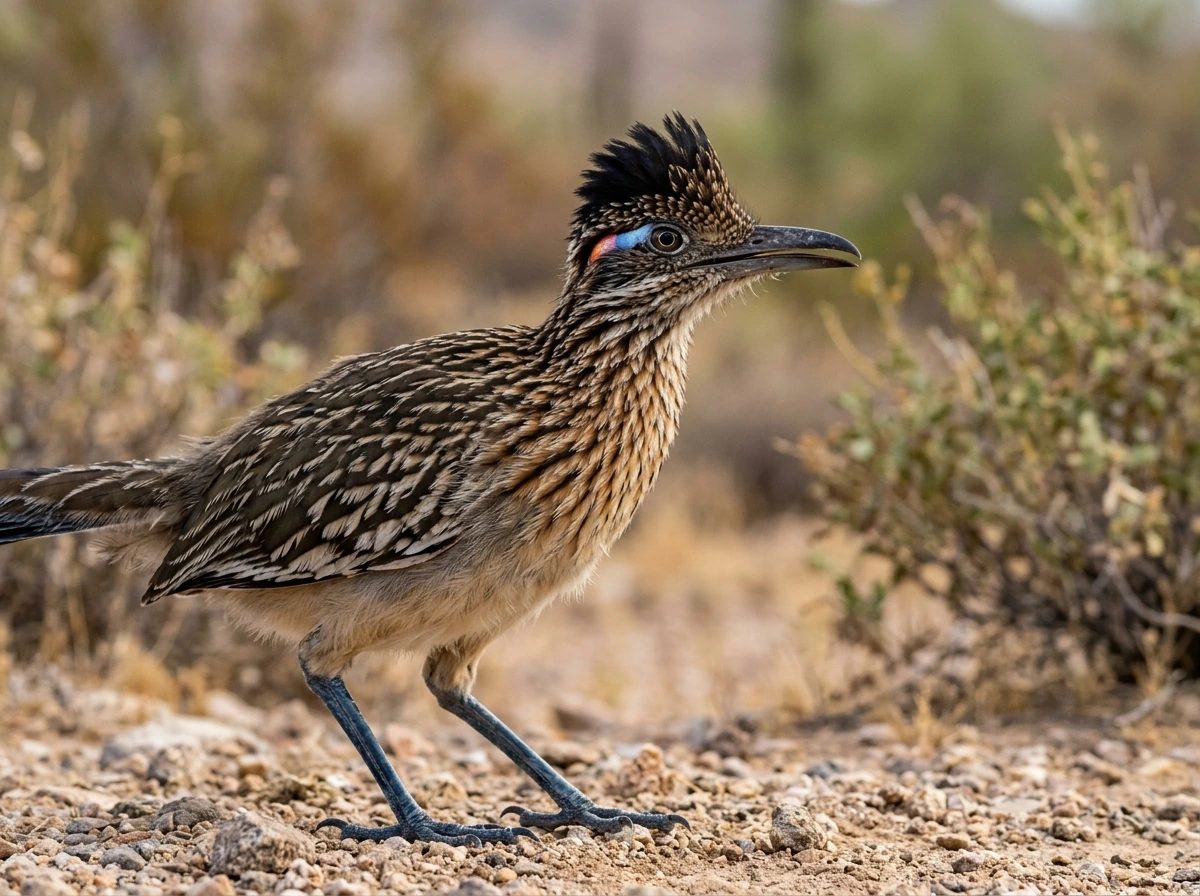
Once you've seen a roadrunner, you don't forget it. At about 22 inches in length, it's a big bird by most standards, with a silhouette that's immediately distinctive: long legs, a very long tail held low for balance, and a bushy dark crest on top of the head. The body is heavily streaked and mottled in brown and white, which actually helps it blend into the scrubby, dusty desert shrubs where it forages. It looks like a bird that was designed specifically for running, because it was.
The head markings are one of the easiest field marks to lock in. The head is dark and extensively spotted, and behind the eye there's a patch of bare skin that shows blue (with a red margin at the rear in males). That bare facial patch is subtle but distinctive once you know to look for it. The tail has white tips on the outer feathers, visible when the bird turns or fans slightly. You'll rarely see it in flight, but when you do, it's short and low to the ground.
Key Field Marks at a Glance
- Length: about 22 inches, with much of that being the tail
- Bushy dark crest on the head, often raised when alert
- Heavily streaked and mottled brown-and-white plumage
- Bare skin patch behind the eye: blue with red margin (males)
- Long, dark tail with white tips on outer feathers
- Strong, sturdy legs built for running on the ground
What Does It Sound Like?
Don't expect a classic bird song from this one. The Greater Roadrunner is known for a blank" rel="noopener noreferrer">rattling bill-clatter and a short, sharp barking call. Hearing that bill rattle in thick desert scrub before you see the bird is actually a pretty common experience. It's not a melodic bird, but the sounds are distinctive enough that once you've heard them, they become a reliable indicator that a roadrunner is nearby.
Where to Find Roadrunners in New Mexico
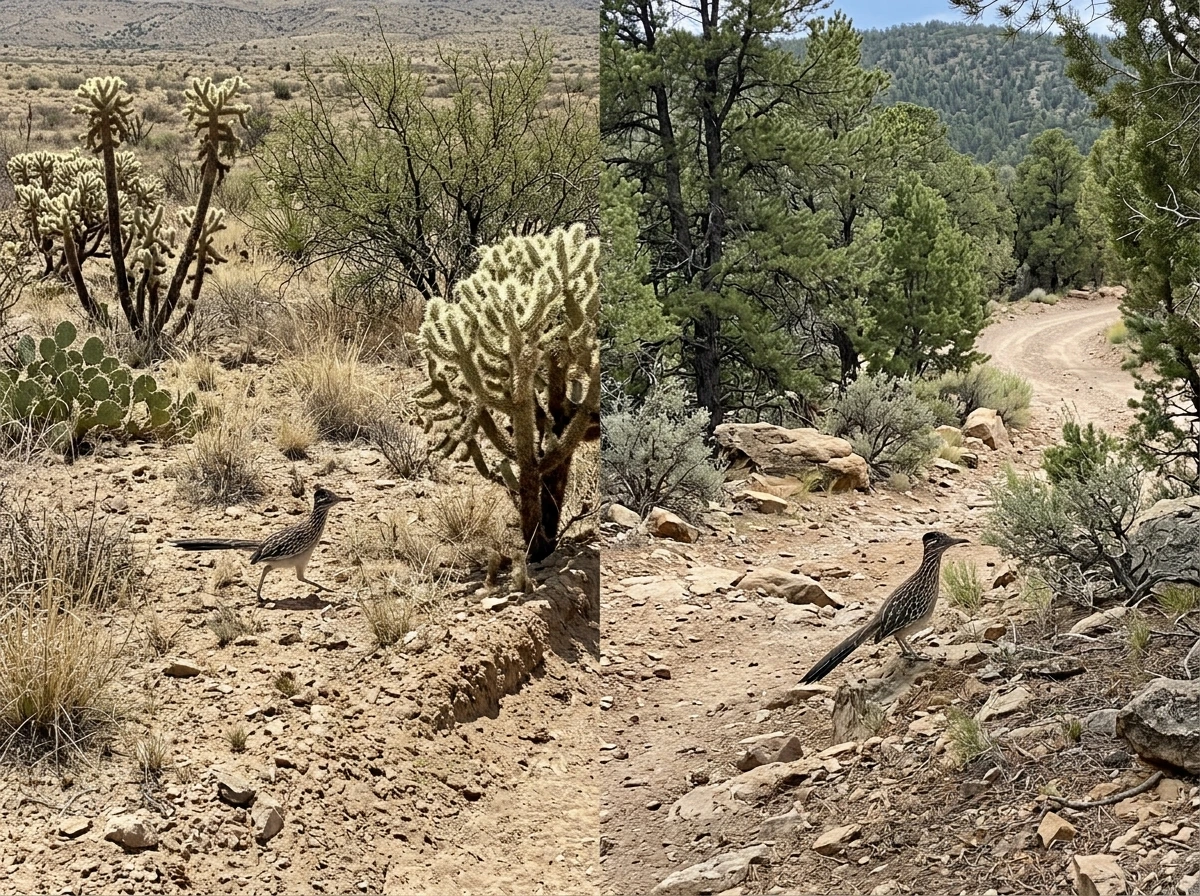
The Greater Roadrunner lives year-round across New Mexico, and its range within the state covers a wide variety of terrain. In lower elevations, look for it in dry desert habitats with patches of thick vegetation: creosote flats, desert scrub, and areas with low shrubs where it can both forage and hide. The Greater Roadrunner occurs in desert and shrubby habitats across the Southwest, often including northern Mexico. It often shows up on dirt roads, open paths, and streambeds where the ground is exposed and it can sprint after prey.
At higher elevations, the species moves into pinyon-juniper woodlands and cholla grasslands. So if you're hiking in the juniper country of central or northern New Mexico and you catch a long, streaky bird running between trees, a roadrunner is exactly what you're looking at. The bird is a ground forager first and foremost, so keep your eyes low rather than scanning the treetops.
The best sighting opportunities come when roadrunners move out into open areas: fence lines, rocky outcrops, and the edges of desert roads. When a roadrunner is singing or calling, it will sometimes perch on a fence post or a low rock, which gives you an unusually clear look at a bird that usually keeps moving. Early morning is a reliable time to find them, when they're warming up and actively hunting.
Why New Mexico Chose the Roadrunner
The New Mexico Legislature adopted the Greater Roadrunner as the state bird on March 16, 1949. The official name used in the designation was "Chaparral Bird," which reflects the bird's deep association with the chaparral and scrubland habitat that defines so much of New Mexico's landscape. The choice wasn't arbitrary. The roadrunner is one of the most recognizable and culturally significant birds in the Southwest, with roots in the traditions of Native peoples who have lived in the region for centuries.
The roadrunner also just fits. It's a tough, fast, clever bird that thrives in conditions most species can't handle. It eats rattlesnakes. It runs instead of flies. It survives in desert heat and high-elevation cold. For a state that prides itself on resilience and independence, the Greater Roadrunner is about as fitting a symbol as you could pick. New Jersey's state bird is the eastern goldfinch. That combination of practical toughness and cultural resonance is what puts it on the state flag equivalent of bird symbolism.
How New Mexico's Pick Compares to Other State Birds
New Mexico is the only state in the U.S. to claim the Greater Roadrunner as its official bird. No other state has chosen this species, which makes it one of the more distinctive state bird designations in the country. Compare that to something like the Northern Cardinal, which is the state bird of seven states, or the Western Meadowlark, which belongs to six. The roadrunner is exclusively New Mexico's, and that exclusivity feels appropriate given how closely tied the bird is to the region. New York state's official bird is the American goldfinch. If you're curious about Pennsylvania's state bird too, check out what is the pennsylvania state bird. New Jersey's state bird is the Eastern Goldfinch.
Looking at the broader pattern of state bird choices, the Southwest is represented by a fairly unique set of birds compared to the East. New Hampshire's official state bird is the purple finch. New Mexico went a different direction, picking a bird that is genuinely unusual, immediately recognizable, and inseparable from the specific landscape of the American Southwest.
| State | State Bird | Shared With Other States? |
|---|---|---|
| New Mexico | Greater Roadrunner | No — exclusive to New Mexico |
| New York | Eastern Bluebird | Yes — also Missouri |
| Pennsylvania | Ruffed Grouse | No — exclusive to Pennsylvania |
| New Jersey | Eastern Goldfinch | Yes — also Iowa and Washington |
| New Hampshire | Purple Finch | No — exclusive to New Hampshire |
| Delaware | Delaware Blue Hen (Chicken) | No — exclusive to Delaware |
The takeaway here is that New Mexico's choice stands out even among states that went with unique picks. The Greater Roadrunner is one of the most culturally iconic birds in North America, and New Mexico locking it in as the sole state bird of that species gives the designation real weight.
Don't Confuse It With Look-Alikes
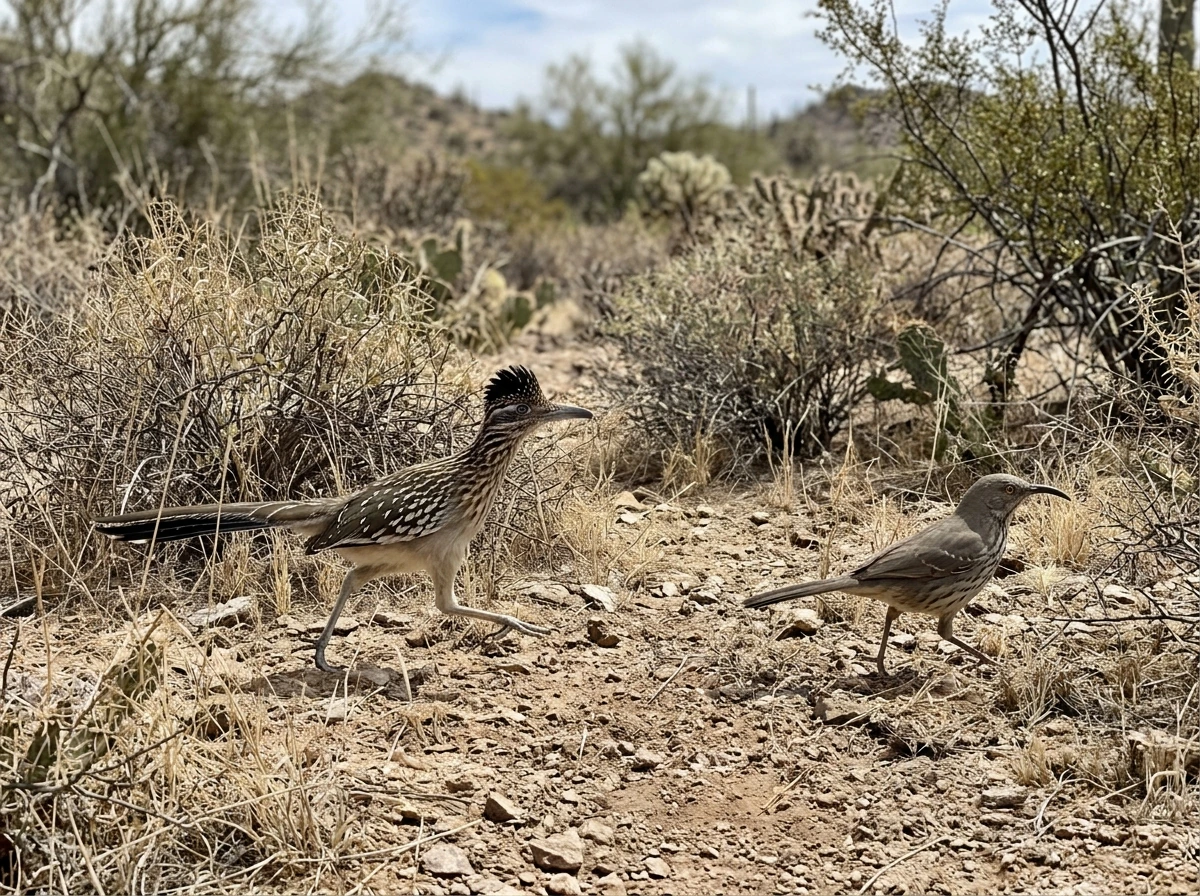
In New Mexico, the Greater Roadrunner doesn't have many true look-alikes, but beginners sometimes mistake it for a large thrasher or a pheasant seen running through brush. The easiest way to rule those out: no thrasher approaches 22 inches in length, and no thrasher has that distinctively long, white-tipped tail and bare facial patch. The Lesser Roadrunner (Geococcyx velox) is a real species, but it lives in Mexico and Central America and is not found in New Mexico, so you won't encounter it in the field here.
If you're new to birding and you spot a large, long-tailed, crested bird running on the ground in New Mexico's desert scrub, trust your instincts. There really isn't much else it's going to be. The roadrunner's combination of size, crest, streaked body, and ground-running behavior is unique enough that a solid sighting is usually a confident one.
FAQ
What is the state bird of New Mexico, and what is it called officially?
New Mexico’s state bird is the Greater Roadrunner, and the formal designation used the name “Chaparral Bird” (both refer to the same species, Geococcyx californianus).
Is “Chaparral Bird” a different bird than the roadrunner?
No. “Chaparral Bird” was the wording in the state’s official adoption, but it points to the Greater Roadrunner species, not a separate species or subspecies.
Do Greater Roadrunners migrate out of New Mexico?
Generally no, they stay year-round. If you do not see one in a particular area, it’s more likely a matter of habitat and visibility than seasonal absence.
When is the best time of day to spot one?
Early morning is often best because roadrunners become more active when they are warming up and hunting, and they sometimes pause to call from a fence post or low rock.
What sound clues can help me identify the bird before I see it?
Listen for a rattling bill-clatter and a short, sharp barking call coming from desert scrub. That non-melodic sound pattern is a strong lead even when the bird is partially hidden.
How can I tell a roadrunner apart from big thrasher or other ground birds?
Focus on the combination of traits: about 22 inches long, long white-tipped outer tail feathers, a bushy crest, and the bare facial patch behind the eye. Those features together are hard to match.
Could I confuse it with a pheasant?
It’s possible for beginners, especially when birds are running in brush. Pheasants are not known for the same bare facial patch and extremely long, low tail posture, so check those field marks when you get a look.
Are there any Lesser Roadrunners in New Mexico?
No. The Lesser Roadrunner (Geococcyx velox) is not present in New Mexico, so sightings in the state should be the Greater Roadrunner if the field marks match.
Where within New Mexico should I look for a higher chance of seeing one?
Try open areas and linear edges like dirt roads, exposed streambeds, fence lines, and rocky outcrops, then adjust by elevation (desert scrub at lower elevations, pinyon-juniper and cholla grasslands at higher elevations).
What should I do if I only see movement in scrub?
Keep your gaze low and scan at ground level. Roadrunners forage on the ground first, and they often sprint after prey rather than staying in trees.
Is the Greater Roadrunner the only state to have it as a state bird?
Yes. New Mexico is the only state that has chosen the Greater Roadrunner as its official state bird, so the designation is uniquely tied to New Mexico.